Boeseman’s Rainbowfish - Melanotaenia boesemani "Lake Ajamaru"
Boeseman’s Rainbowfish – Lake Ajamaru Locality (Melanotaenia boesemani “Lake Ajamaru”)
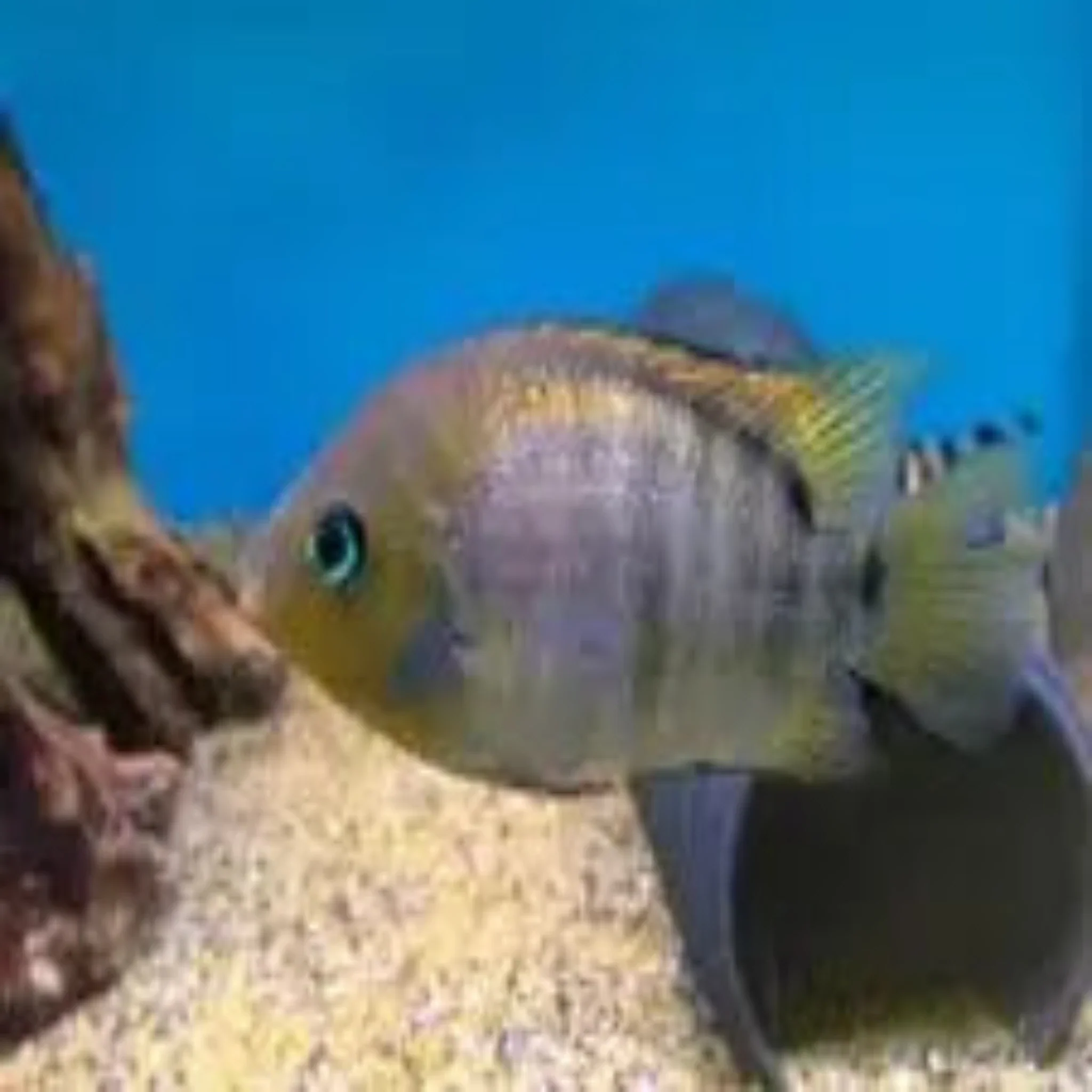
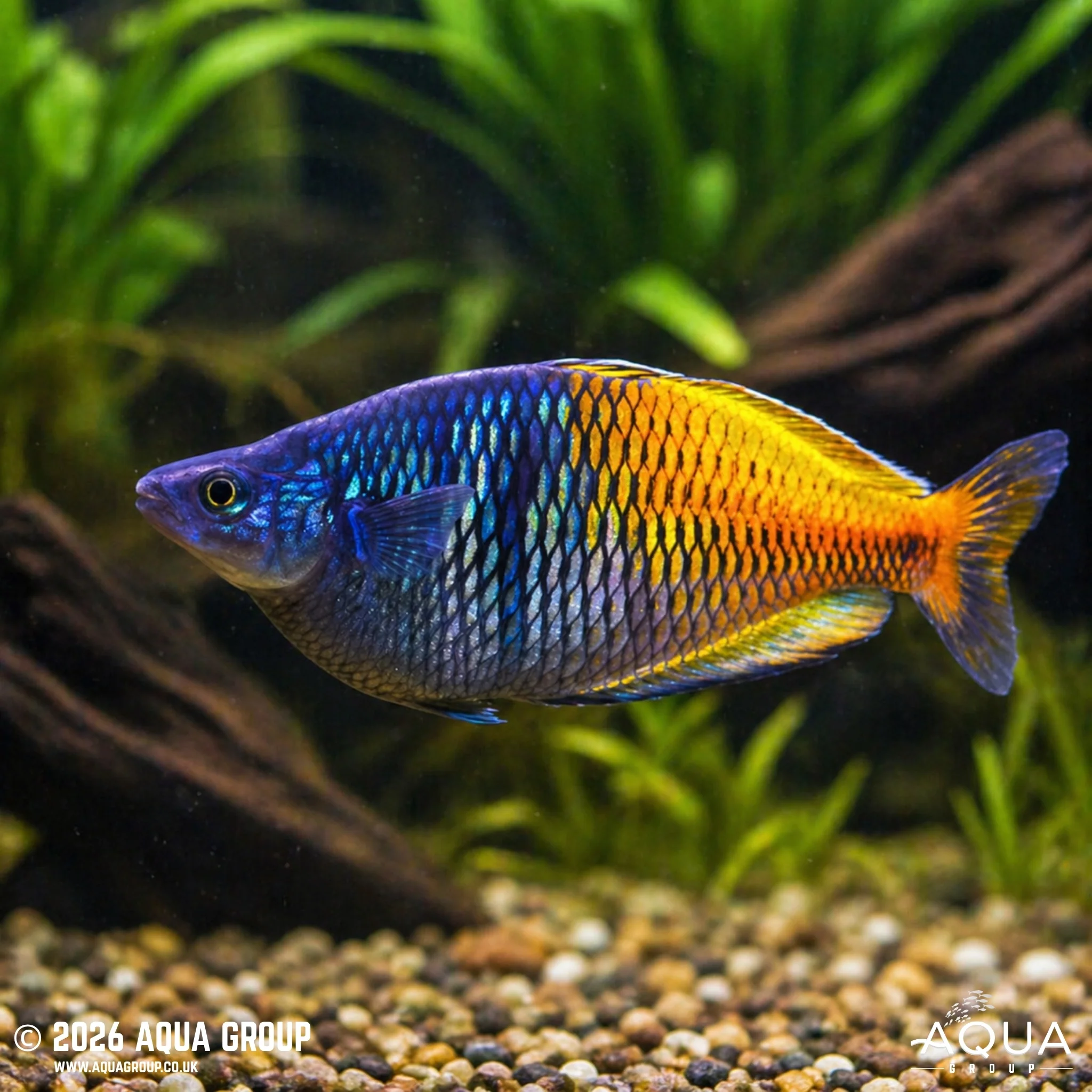
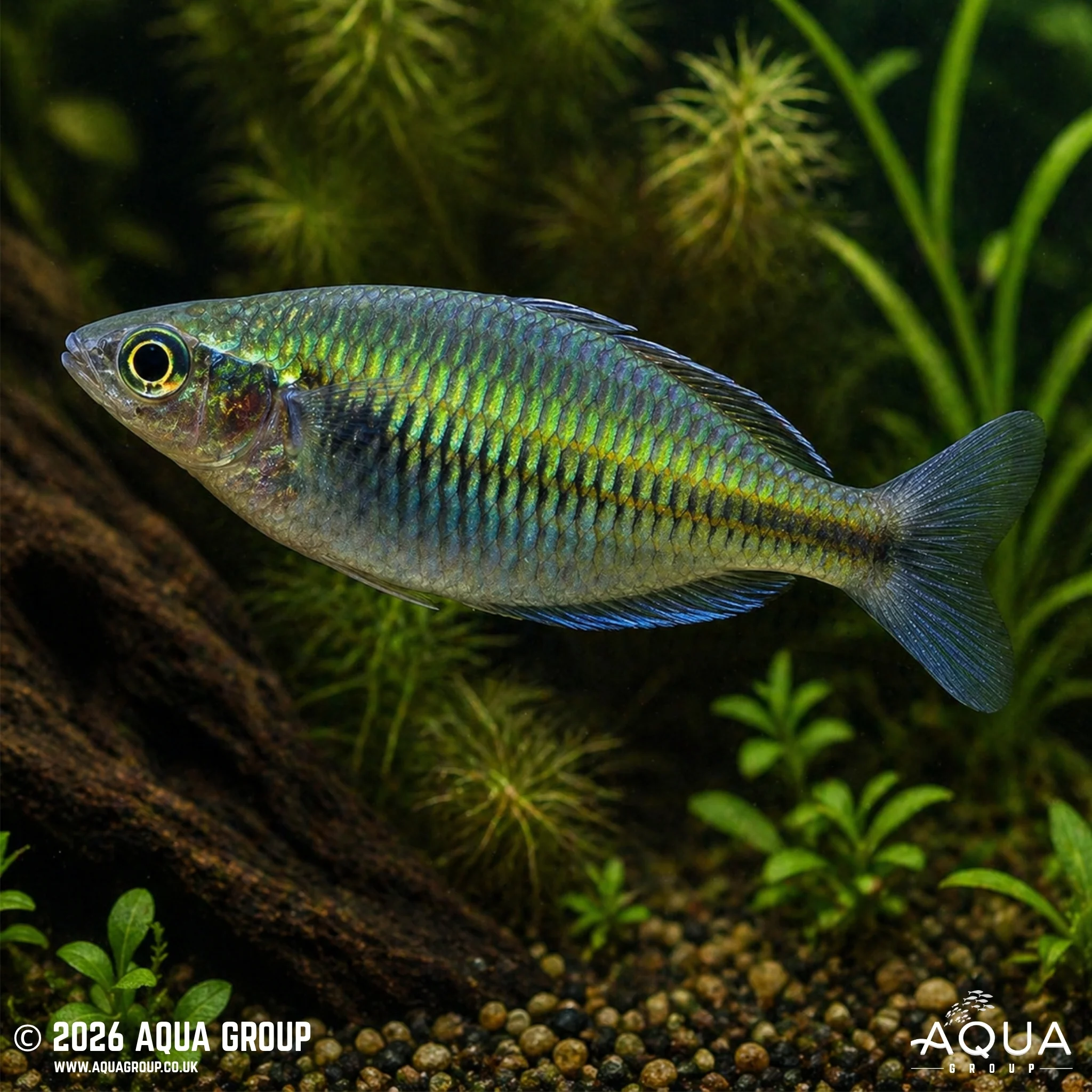
The Boeseman’s Rainbowfish from Lake Ajamaru is one of the most iconic and colourful rainbowfish in the aquarium hobby. This locality form is prized for the classic Boesemani colour split, with mature males developing a blue-grey to purplish front half and a bright yellow, orange or golden rear half. When kept in a proper group, males become deeper-bodied, more intense in colour and regularly display to one another, making this a superb centrepiece shoaling fish for a spacious planted freshwater aquarium.
Common Name:
Boeseman’s Rainbowfish. Also commonly referred to as Boesemani Rainbowfish, Lake Ajamaru Boesemani, Ajamaru Boesemani, Boeseman’s Rainbow or Bicolour Rainbowfish.
Scientific Name (Latin):
Melanotaenia boesemani “Lake Ajamaru”
Maximum Size:
Around 10–12 cm in captivity, with mature males usually becoming larger, deeper-bodied and more colourful than females.
Water Type:
Freshwater
Origin / Natural Habitat:
This locality form is associated with Lake Ajamaru, also written as Lake Ayamaru, in the Vogelkop Peninsula of West Papua, Indonesia. The species has a very restricted natural range in the Ajamaru Lakes region and nearby connected waters. In the wild, Boeseman’s Rainbowfish are found in clear freshwater lake margins, creeks, vegetated shallows and slow-moving connected habitats where they have open swimming space and access to plant cover.
Water Parameters:
Temperature: 24–28°C
pH Range: 7.0–8.0
Hardness: moderately hard water preferred
Temperament:
Peaceful and suitable for a well-planned community aquarium. Males will display to each other, especially in breeding condition, but this is usually harmless when the group is kept in a spacious aquarium.
Diet:
Omnivorous. It should be offered a varied diet including quality flake, small pellets, colour-enhancing foods, frozen brineshrimp, daphnia, bloodworm, mosquito larvae and occasional live foods. A varied diet helps support strong yellow, orange, blue and purple colouration in mature males.
Minimum Tank Size:
A practical recommendation is at least 200 litres, with a 4ft aquarium or larger strongly preferred due to their active swimming behaviour.
Behaviour & Activity:
This is an active mid-to-upper level shoaling fish that should be kept in a group of at least 6, ideally 8 or more. Males show their best colour when kept with females and rival males, especially in a mature aquarium with planted margins, open swimming space and stable water quality. Like many rainbowfish, they may jump when startled, so a secure lid is recommended.
Aquarium Category:
Community Fish
This species is peaceful and works well with other robust, non-aggressive community fish that enjoy similar water conditions. Suitable tank mates include other rainbowfish, peaceful barbs, larger tetras, danios, Corydoras, bristlenose plecos and calm dwarf cichlids. Avoid aggressive cichlids, persistent fin nippers, very shy fish and soft acidic blackwater species that prefer very different conditions.
Special Requirements or Care Notes:
Best kept in a mature, well-filtered aquarium with excellent oxygenation, regular maintenance and plenty of open swimming space. Darker substrate, planted sides and good-quality lighting can help enhance colour, while the centre of the aquarium should remain open for swimming. The wild species is considered endangered, so locality forms should be kept responsibly and captive-bred stock is strongly preferred wherever available.
Suitable for:
Beginner to intermediate fishkeepers
Availability:
Occasional in trade, especially as a locality strain
All images are a visual representation of the fish you will receive, made to be as accurate as possible. Please note that Mother Nature is a wonderful thing, and variation in patterns and colours will occur — that is part of the unique beauty of these animals.
Product Information
Product Information
Shipping & Returns
Shipping & Returns
Boeseman’s Rainbowfish - Melanotaenia boesemani "Lake Ajamaru"
Boeseman’s Rainbowfish - Melanotaenia boesemani "Lake Ajamaru"
Boeseman’s Rainbowfish – Lake Ajamaru Locality (Melanotaenia boesemani “Lake Ajamaru”)
The Boeseman’s Rainbowfish from Lake Ajamaru is one of the most iconic and colourful rainbowfish in the aquarium hobby. This locality form is prized for the classic Boesemani colour split, with mature males developing a blue-grey to purplish front half and a bright yellow, orange or golden rear half. When kept in a proper group, males become deeper-bodied, more intense in colour and regularly display to one another, making this a superb centrepiece shoaling fish for a spacious planted freshwater aquarium.
Common Name:
Boeseman’s Rainbowfish. Also commonly referred to as Boesemani Rainbowfish, Lake Ajamaru Boesemani, Ajamaru Boesemani, Boeseman’s Rainbow or Bicolour Rainbowfish.
Scientific Name (Latin):
Melanotaenia boesemani “Lake Ajamaru”
Maximum Size:
Around 10–12 cm in captivity, with mature males usually becoming larger, deeper-bodied and more colourful than females.
Water Type:
Freshwater
Origin / Natural Habitat:
This locality form is associated with Lake Ajamaru, also written as Lake Ayamaru, in the Vogelkop Peninsula of West Papua, Indonesia. The species has a very restricted natural range in the Ajamaru Lakes region and nearby connected waters. In the wild, Boeseman’s Rainbowfish are found in clear freshwater lake margins, creeks, vegetated shallows and slow-moving connected habitats where they have open swimming space and access to plant cover.
Water Parameters:
Temperature: 24–28°C
pH Range: 7.0–8.0
Hardness: moderately hard water preferred
Temperament:
Peaceful and suitable for a well-planned community aquarium. Males will display to each other, especially in breeding condition, but this is usually harmless when the group is kept in a spacious aquarium.
Diet:
Omnivorous. It should be offered a varied diet including quality flake, small pellets, colour-enhancing foods, frozen brineshrimp, daphnia, bloodworm, mosquito larvae and occasional live foods. A varied diet helps support strong yellow, orange, blue and purple colouration in mature males.
Minimum Tank Size:
A practical recommendation is at least 200 litres, with a 4ft aquarium or larger strongly preferred due to their active swimming behaviour.
Behaviour & Activity:
This is an active mid-to-upper level shoaling fish that should be kept in a group of at least 6, ideally 8 or more. Males show their best colour when kept with females and rival males, especially in a mature aquarium with planted margins, open swimming space and stable water quality. Like many rainbowfish, they may jump when startled, so a secure lid is recommended.
Aquarium Category:
Community Fish
This species is peaceful and works well with other robust, non-aggressive community fish that enjoy similar water conditions. Suitable tank mates include other rainbowfish, peaceful barbs, larger tetras, danios, Corydoras, bristlenose plecos and calm dwarf cichlids. Avoid aggressive cichlids, persistent fin nippers, very shy fish and soft acidic blackwater species that prefer very different conditions.
Special Requirements or Care Notes:
Best kept in a mature, well-filtered aquarium with excellent oxygenation, regular maintenance and plenty of open swimming space. Darker substrate, planted sides and good-quality lighting can help enhance colour, while the centre of the aquarium should remain open for swimming. The wild species is considered endangered, so locality forms should be kept responsibly and captive-bred stock is strongly preferred wherever available.
Suitable for:
Beginner to intermediate fishkeepers
Availability:
Occasional in trade, especially as a locality strain
All images are a visual representation of the fish you will receive, made to be as accurate as possible. Please note that Mother Nature is a wonderful thing, and variation in patterns and colours will occur — that is part of the unique beauty of these animals.
Original: $10.78
-65%$10.78
$3.77Product Information
Product Information
Shipping & Returns
Shipping & Returns
Description
Boeseman’s Rainbowfish – Lake Ajamaru Locality (Melanotaenia boesemani “Lake Ajamaru”)
The Boeseman’s Rainbowfish from Lake Ajamaru is one of the most iconic and colourful rainbowfish in the aquarium hobby. This locality form is prized for the classic Boesemani colour split, with mature males developing a blue-grey to purplish front half and a bright yellow, orange or golden rear half. When kept in a proper group, males become deeper-bodied, more intense in colour and regularly display to one another, making this a superb centrepiece shoaling fish for a spacious planted freshwater aquarium.
Common Name:
Boeseman’s Rainbowfish. Also commonly referred to as Boesemani Rainbowfish, Lake Ajamaru Boesemani, Ajamaru Boesemani, Boeseman’s Rainbow or Bicolour Rainbowfish.
Scientific Name (Latin):
Melanotaenia boesemani “Lake Ajamaru”
Maximum Size:
Around 10–12 cm in captivity, with mature males usually becoming larger, deeper-bodied and more colourful than females.
Water Type:
Freshwater
Origin / Natural Habitat:
This locality form is associated with Lake Ajamaru, also written as Lake Ayamaru, in the Vogelkop Peninsula of West Papua, Indonesia. The species has a very restricted natural range in the Ajamaru Lakes region and nearby connected waters. In the wild, Boeseman’s Rainbowfish are found in clear freshwater lake margins, creeks, vegetated shallows and slow-moving connected habitats where they have open swimming space and access to plant cover.
Water Parameters:
Temperature: 24–28°C
pH Range: 7.0–8.0
Hardness: moderately hard water preferred
Temperament:
Peaceful and suitable for a well-planned community aquarium. Males will display to each other, especially in breeding condition, but this is usually harmless when the group is kept in a spacious aquarium.
Diet:
Omnivorous. It should be offered a varied diet including quality flake, small pellets, colour-enhancing foods, frozen brineshrimp, daphnia, bloodworm, mosquito larvae and occasional live foods. A varied diet helps support strong yellow, orange, blue and purple colouration in mature males.
Minimum Tank Size:
A practical recommendation is at least 200 litres, with a 4ft aquarium or larger strongly preferred due to their active swimming behaviour.
Behaviour & Activity:
This is an active mid-to-upper level shoaling fish that should be kept in a group of at least 6, ideally 8 or more. Males show their best colour when kept with females and rival males, especially in a mature aquarium with planted margins, open swimming space and stable water quality. Like many rainbowfish, they may jump when startled, so a secure lid is recommended.
Aquarium Category:
Community Fish
This species is peaceful and works well with other robust, non-aggressive community fish that enjoy similar water conditions. Suitable tank mates include other rainbowfish, peaceful barbs, larger tetras, danios, Corydoras, bristlenose plecos and calm dwarf cichlids. Avoid aggressive cichlids, persistent fin nippers, very shy fish and soft acidic blackwater species that prefer very different conditions.
Special Requirements or Care Notes:
Best kept in a mature, well-filtered aquarium with excellent oxygenation, regular maintenance and plenty of open swimming space. Darker substrate, planted sides and good-quality lighting can help enhance colour, while the centre of the aquarium should remain open for swimming. The wild species is considered endangered, so locality forms should be kept responsibly and captive-bred stock is strongly preferred wherever available.
Suitable for:
Beginner to intermediate fishkeepers
Availability:
Occasional in trade, especially as a locality strain
All images are a visual representation of the fish you will receive, made to be as accurate as possible. Please note that Mother Nature is a wonderful thing, and variation in patterns and colours will occur — that is part of the unique beauty of these animals.