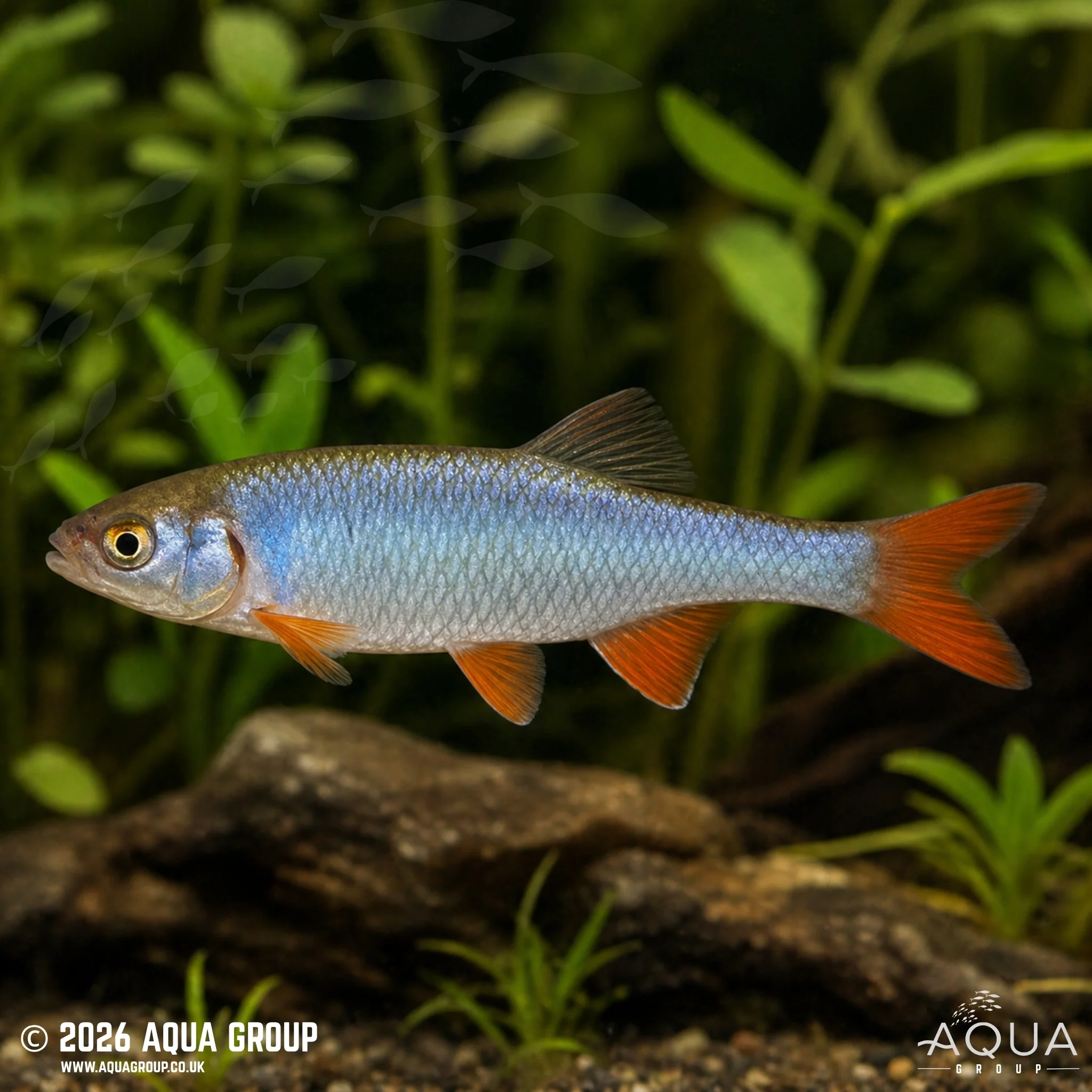
Golden Red Line Denison Barb - Dawkinsia denisonii
Golden Red Striped Torpedo Barb (Dawkinsia denisonii)
The Golden Red Striped Torpedo Barb is best understood as a golden colour form of the fish more widely known as the Denison Barb or Red-line Torpedo Barb. The scientific name you provided, “Dysarthria denisoni”, appears to be incorrect; current major taxonomic references list the accepted name as Dawkinsia denisonii. This is a fast-swimming, shoaling freshwater barb from the Western Ghats of southern India, where it inhabits clear, fast-flowing hill streams with rocky pools and heavy bankside vegetation. In the aquarium it is a striking, active fish, but it is not a small community barb and does best in a spacious, mature setup with excellent oxygenation and plenty of swimming room.
Common Name:
Golden Red Striped Torpedo Barb. It is closely related to, and generally treated within the same species as, the Denison Barb, Red-line Torpedo Barb or Roseline Shark.
Scientific Name (Latin):
Dawkinsia denisonii
Older aquarium and scientific usage has also used Sahyadria denisonii, Puntius denisonii and other earlier combinations.
Maximum Size:
Up to 15 cm in length, with many aquarium specimens commonly seen a little smaller than that.
Water Type:
Freshwater.
Origin / Natural Habitat:
Endemic to the Western Ghats of southern India, where it occurs in clear, fast-flowing hill streams and rivers with rocky substrates, high oxygen levels and shaded, vegetated banks.
Water Parameters:
Temperature: 18–25°C
pH Range: 6.5–7.8
Hardness: soft to moderately hard water
These are sensible aquarium-care parameters based on current husbandry references for the species.
Temperament:
Generally peaceful, but very active and sometimes boisterous. It is a shoaling species and can become nervous, skittish or overly pushy if kept in too small a group or in an undersized aquarium.
Diet:
Omnivorous. In the wild it feeds on worms, insects, crustaceans, plant material and other organic matter. In captivity it should be offered a varied diet of quality flakes or pellets, alongside frozen or live foods and some vegetable matter.
Minimum Tank Size:
A practical long-term recommendation is at least 300 litres, with a 4-foot tank or larger strongly preferred because this is a powerful, constantly active swimmer that should be kept in a group.
Behaviour & Activity:
This is a diurnal, shoaling fish that spends much of the day in open water, especially through the middle and upper levels, and it thrives with strong current and high oxygen levels. It should be kept in a group of at least 6, with larger groups usually giving the most natural and relaxed behaviour.
Aquarium Category:
Semi-Aggressive / Specialist
Although not truly aggressive, this species is not a standard small community fish. It is best kept with active, medium-sized, peaceful tankmates that enjoy cooler, well-oxygenated water and can cope with its speed and energy. Good companions are usually other robust shoaling fish of similar size, larger danios, rainbowfish and suitable loaches. Avoid tiny community fish, very slow species, long-finned fish, or keeping this species singly or in small groups, as that often leads to stress, skittishness and poor compatibility. This category choice is based on its size, need for group living, high-flow habitat and active swimming behaviour.
Special Requirements or Care Notes:
This fish does best in a mature aquarium with excellent filtration, strong water movement, high oxygen levels and plenty of open swimming space. Shaded areas and planting around the sides help it feel secure, but the centre of the tank should remain open for movement. Because wild populations have been under heavy pressure from the aquarium trade, captive-bred specimens are the more responsible choice where possible.
Suitable for:
Intermediate fishkeepers. It is not especially difficult to feed, but its size, need for a large group, demand for flow and oxygen, and requirement for a spacious aquarium make it less suitable for beginners expecting a typical small barb.
Availability:
Occasional in trade. The standard species is well known in the hobby, but the golden form is far less routine and should be treated as a more specialist variant.
All images are a visual representation of the fish you will receive, made to be as accurate as possible. Please note that Mother Nature is a wonderful thing, and variation in patterns and colours will occur — that is part of the unique beauty of these animals.
Product Information
Product Information
Shipping & Returns
Shipping & Returns
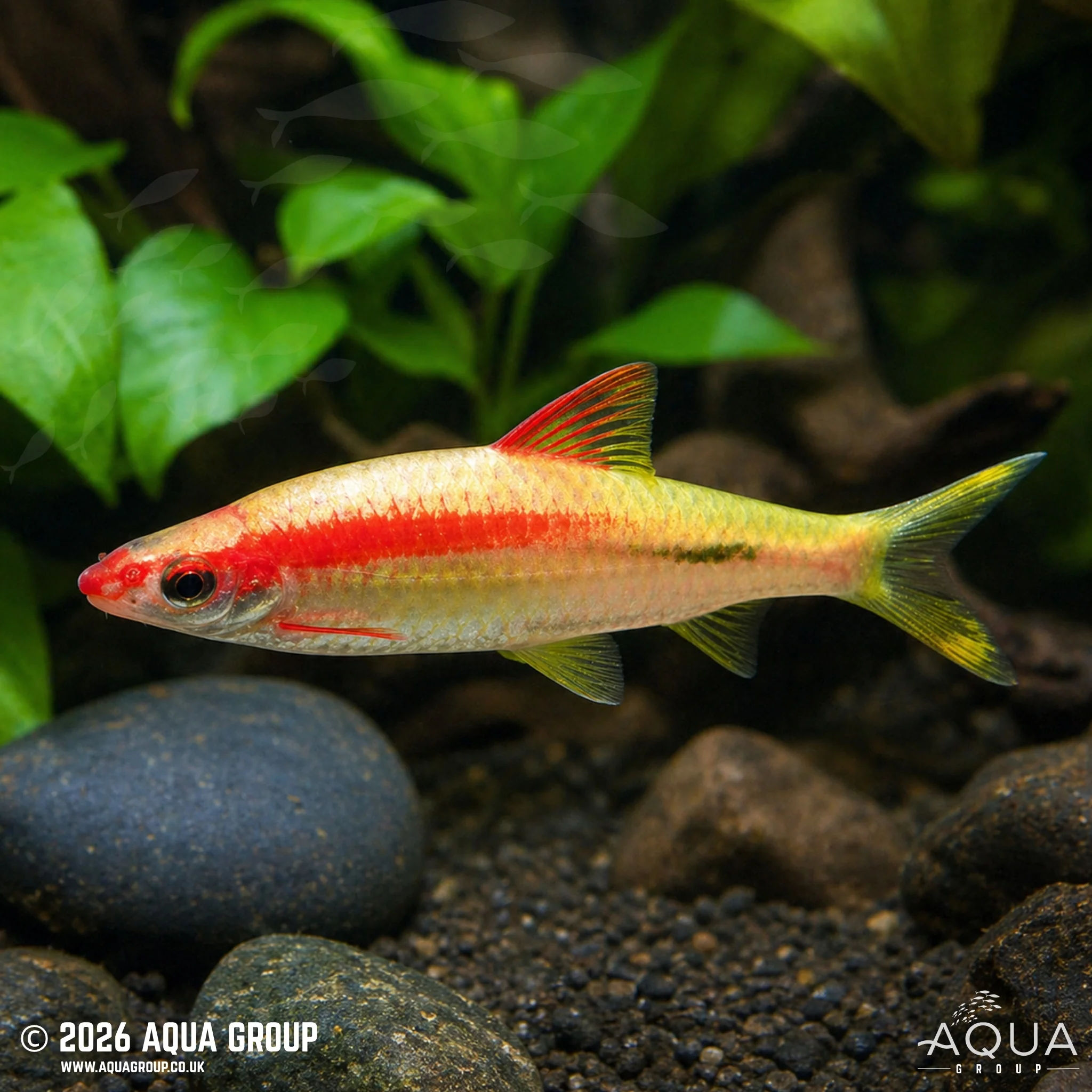
Golden Red Line Denison Barb - Dawkinsia denisonii
Golden Red Line Denison Barb - Dawkinsia denisonii
Golden Red Striped Torpedo Barb (Dawkinsia denisonii)
The Golden Red Striped Torpedo Barb is best understood as a golden colour form of the fish more widely known as the Denison Barb or Red-line Torpedo Barb. The scientific name you provided, “Dysarthria denisoni”, appears to be incorrect; current major taxonomic references list the accepted name as Dawkinsia denisonii. This is a fast-swimming, shoaling freshwater barb from the Western Ghats of southern India, where it inhabits clear, fast-flowing hill streams with rocky pools and heavy bankside vegetation. In the aquarium it is a striking, active fish, but it is not a small community barb and does best in a spacious, mature setup with excellent oxygenation and plenty of swimming room.
Common Name:
Golden Red Striped Torpedo Barb. It is closely related to, and generally treated within the same species as, the Denison Barb, Red-line Torpedo Barb or Roseline Shark.
Scientific Name (Latin):
Dawkinsia denisonii
Older aquarium and scientific usage has also used Sahyadria denisonii, Puntius denisonii and other earlier combinations.
Maximum Size:
Up to 15 cm in length, with many aquarium specimens commonly seen a little smaller than that.
Water Type:
Freshwater.
Origin / Natural Habitat:
Endemic to the Western Ghats of southern India, where it occurs in clear, fast-flowing hill streams and rivers with rocky substrates, high oxygen levels and shaded, vegetated banks.
Water Parameters:
Temperature: 18–25°C
pH Range: 6.5–7.8
Hardness: soft to moderately hard water
These are sensible aquarium-care parameters based on current husbandry references for the species.
Temperament:
Generally peaceful, but very active and sometimes boisterous. It is a shoaling species and can become nervous, skittish or overly pushy if kept in too small a group or in an undersized aquarium.
Diet:
Omnivorous. In the wild it feeds on worms, insects, crustaceans, plant material and other organic matter. In captivity it should be offered a varied diet of quality flakes or pellets, alongside frozen or live foods and some vegetable matter.
Minimum Tank Size:
A practical long-term recommendation is at least 300 litres, with a 4-foot tank or larger strongly preferred because this is a powerful, constantly active swimmer that should be kept in a group.
Behaviour & Activity:
This is a diurnal, shoaling fish that spends much of the day in open water, especially through the middle and upper levels, and it thrives with strong current and high oxygen levels. It should be kept in a group of at least 6, with larger groups usually giving the most natural and relaxed behaviour.
Aquarium Category:
Semi-Aggressive / Specialist
Although not truly aggressive, this species is not a standard small community fish. It is best kept with active, medium-sized, peaceful tankmates that enjoy cooler, well-oxygenated water and can cope with its speed and energy. Good companions are usually other robust shoaling fish of similar size, larger danios, rainbowfish and suitable loaches. Avoid tiny community fish, very slow species, long-finned fish, or keeping this species singly or in small groups, as that often leads to stress, skittishness and poor compatibility. This category choice is based on its size, need for group living, high-flow habitat and active swimming behaviour.
Special Requirements or Care Notes:
This fish does best in a mature aquarium with excellent filtration, strong water movement, high oxygen levels and plenty of open swimming space. Shaded areas and planting around the sides help it feel secure, but the centre of the tank should remain open for movement. Because wild populations have been under heavy pressure from the aquarium trade, captive-bred specimens are the more responsible choice where possible.
Suitable for:
Intermediate fishkeepers. It is not especially difficult to feed, but its size, need for a large group, demand for flow and oxygen, and requirement for a spacious aquarium make it less suitable for beginners expecting a typical small barb.
Availability:
Occasional in trade. The standard species is well known in the hobby, but the golden form is far less routine and should be treated as a more specialist variant.
All images are a visual representation of the fish you will receive, made to be as accurate as possible. Please note that Mother Nature is a wonderful thing, and variation in patterns and colours will occur — that is part of the unique beauty of these animals.
Original: $33.82
-65%$33.82
$11.84Product Information
Product Information
Shipping & Returns
Shipping & Returns
Description
Golden Red Striped Torpedo Barb (Dawkinsia denisonii)
The Golden Red Striped Torpedo Barb is best understood as a golden colour form of the fish more widely known as the Denison Barb or Red-line Torpedo Barb. The scientific name you provided, “Dysarthria denisoni”, appears to be incorrect; current major taxonomic references list the accepted name as Dawkinsia denisonii. This is a fast-swimming, shoaling freshwater barb from the Western Ghats of southern India, where it inhabits clear, fast-flowing hill streams with rocky pools and heavy bankside vegetation. In the aquarium it is a striking, active fish, but it is not a small community barb and does best in a spacious, mature setup with excellent oxygenation and plenty of swimming room.
Common Name:
Golden Red Striped Torpedo Barb. It is closely related to, and generally treated within the same species as, the Denison Barb, Red-line Torpedo Barb or Roseline Shark.
Scientific Name (Latin):
Dawkinsia denisonii
Older aquarium and scientific usage has also used Sahyadria denisonii, Puntius denisonii and other earlier combinations.
Maximum Size:
Up to 15 cm in length, with many aquarium specimens commonly seen a little smaller than that.
Water Type:
Freshwater.
Origin / Natural Habitat:
Endemic to the Western Ghats of southern India, where it occurs in clear, fast-flowing hill streams and rivers with rocky substrates, high oxygen levels and shaded, vegetated banks.
Water Parameters:
Temperature: 18–25°C
pH Range: 6.5–7.8
Hardness: soft to moderately hard water
These are sensible aquarium-care parameters based on current husbandry references for the species.
Temperament:
Generally peaceful, but very active and sometimes boisterous. It is a shoaling species and can become nervous, skittish or overly pushy if kept in too small a group or in an undersized aquarium.
Diet:
Omnivorous. In the wild it feeds on worms, insects, crustaceans, plant material and other organic matter. In captivity it should be offered a varied diet of quality flakes or pellets, alongside frozen or live foods and some vegetable matter.
Minimum Tank Size:
A practical long-term recommendation is at least 300 litres, with a 4-foot tank or larger strongly preferred because this is a powerful, constantly active swimmer that should be kept in a group.
Behaviour & Activity:
This is a diurnal, shoaling fish that spends much of the day in open water, especially through the middle and upper levels, and it thrives with strong current and high oxygen levels. It should be kept in a group of at least 6, with larger groups usually giving the most natural and relaxed behaviour.
Aquarium Category:
Semi-Aggressive / Specialist
Although not truly aggressive, this species is not a standard small community fish. It is best kept with active, medium-sized, peaceful tankmates that enjoy cooler, well-oxygenated water and can cope with its speed and energy. Good companions are usually other robust shoaling fish of similar size, larger danios, rainbowfish and suitable loaches. Avoid tiny community fish, very slow species, long-finned fish, or keeping this species singly or in small groups, as that often leads to stress, skittishness and poor compatibility. This category choice is based on its size, need for group living, high-flow habitat and active swimming behaviour.
Special Requirements or Care Notes:
This fish does best in a mature aquarium with excellent filtration, strong water movement, high oxygen levels and plenty of open swimming space. Shaded areas and planting around the sides help it feel secure, but the centre of the tank should remain open for movement. Because wild populations have been under heavy pressure from the aquarium trade, captive-bred specimens are the more responsible choice where possible.
Suitable for:
Intermediate fishkeepers. It is not especially difficult to feed, but its size, need for a large group, demand for flow and oxygen, and requirement for a spacious aquarium make it less suitable for beginners expecting a typical small barb.
Availability:
Occasional in trade. The standard species is well known in the hobby, but the golden form is far less routine and should be treated as a more specialist variant.
All images are a visual representation of the fish you will receive, made to be as accurate as possible. Please note that Mother Nature is a wonderful thing, and variation in patterns and colours will occur — that is part of the unique beauty of these animals.