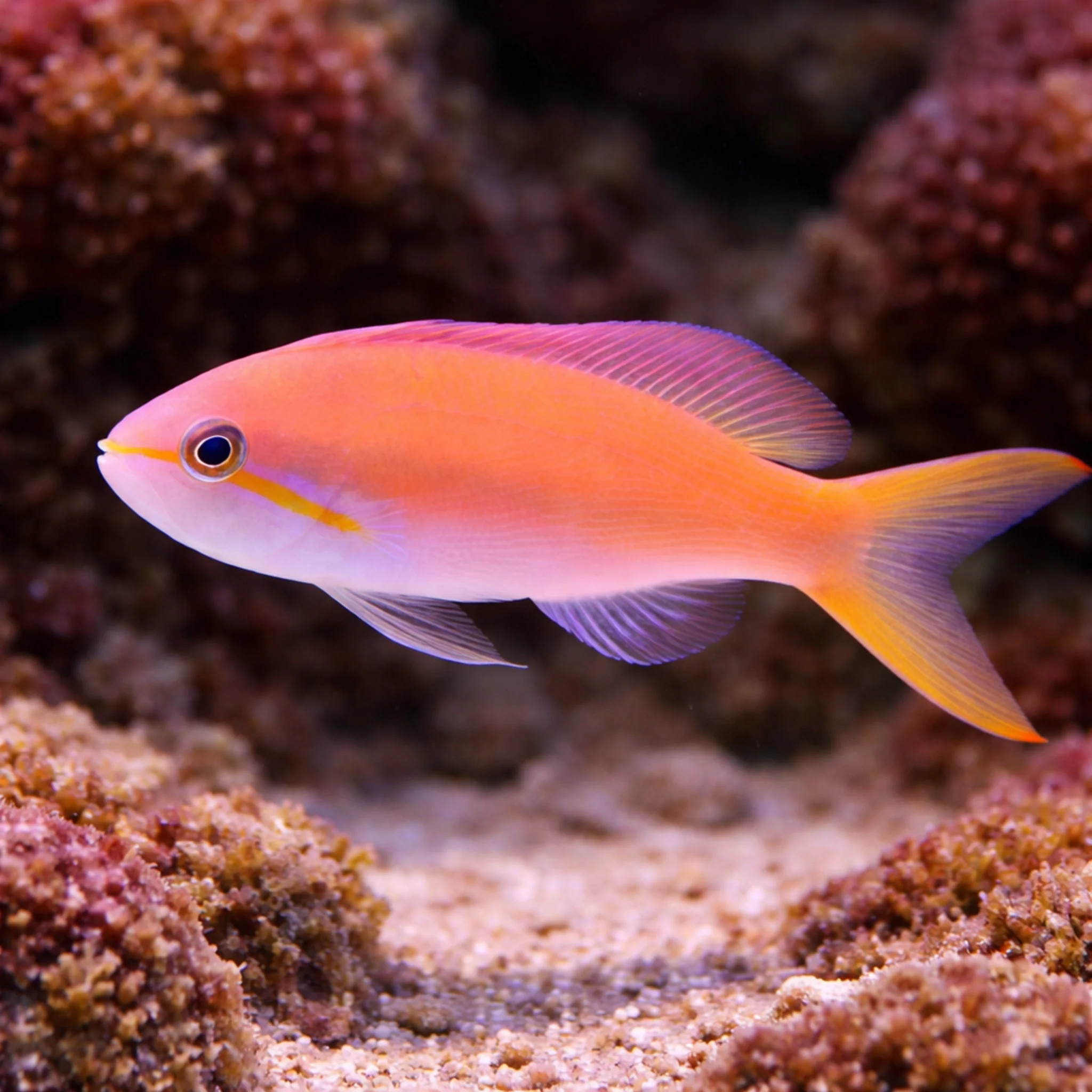
Japanese Cherry Anthias - Sacura margaritacea
Japanese Cherry Anthias (Sacura margaritacea)
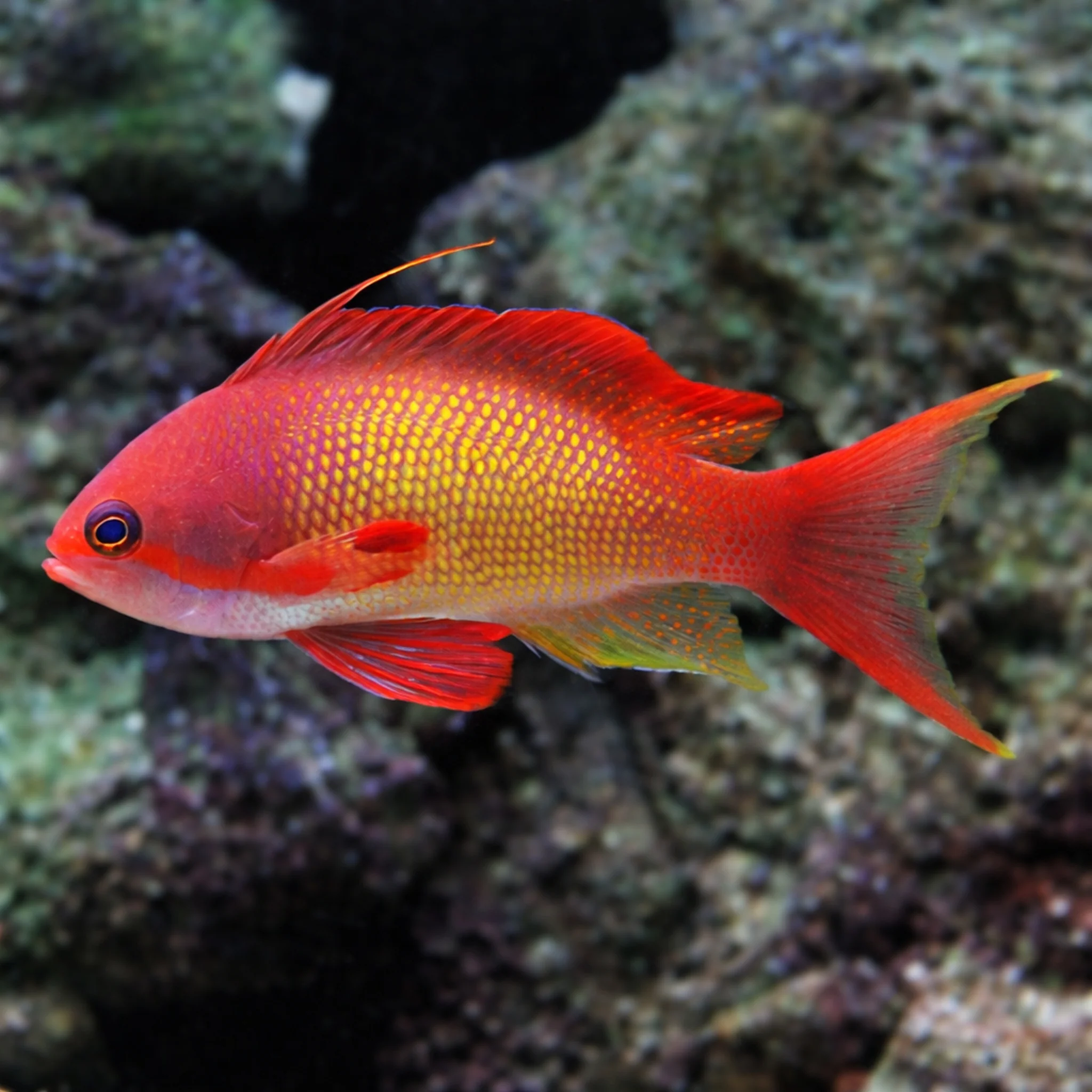
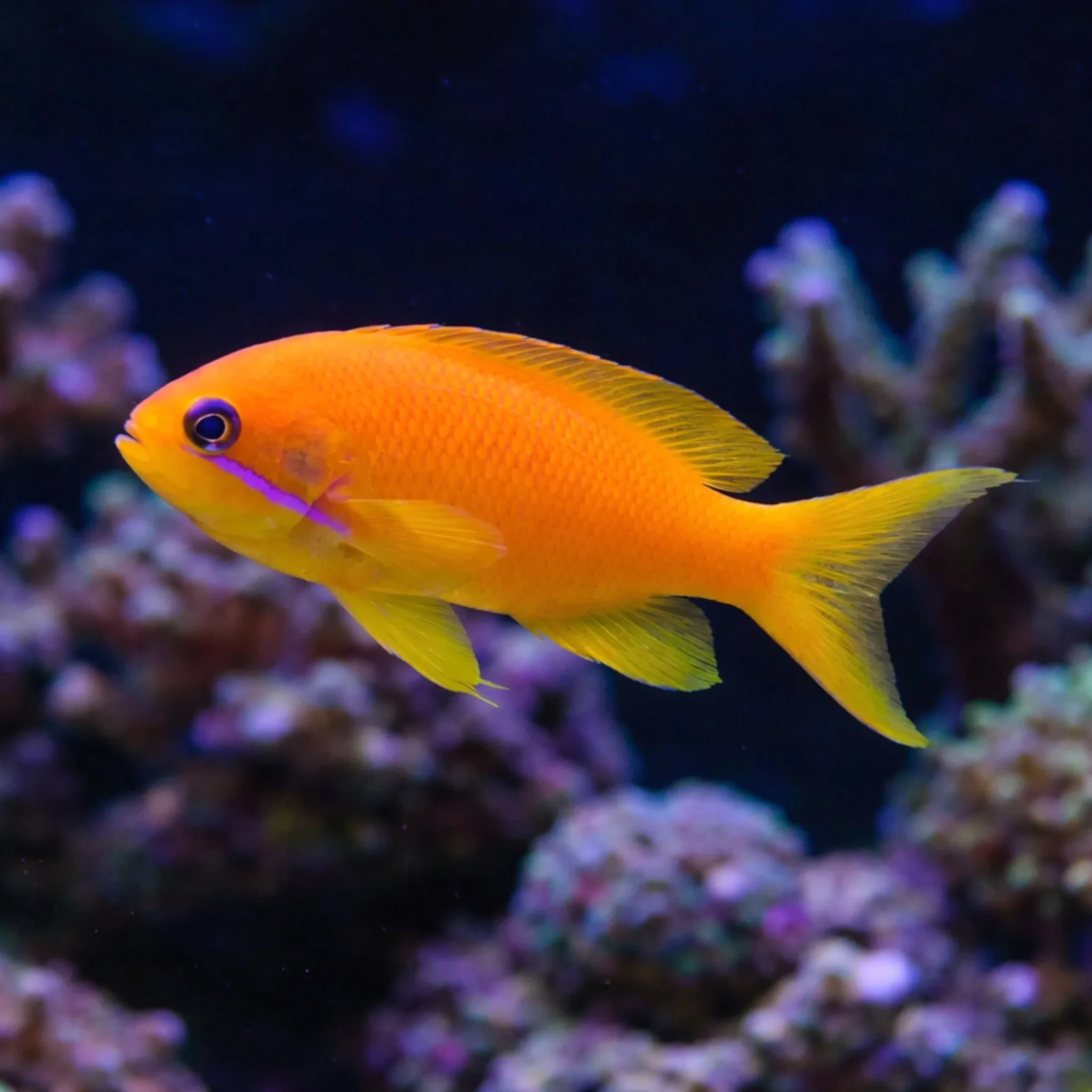
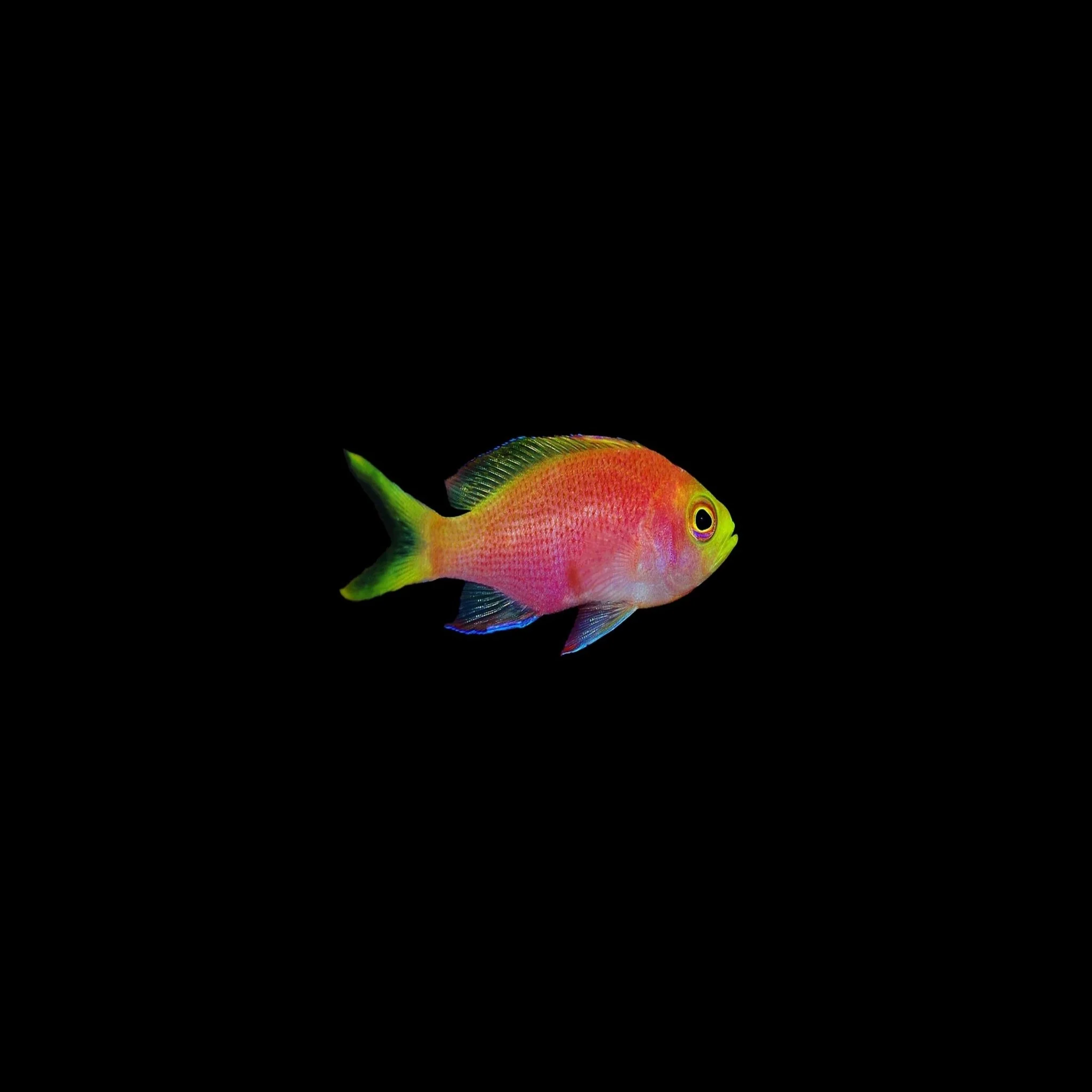
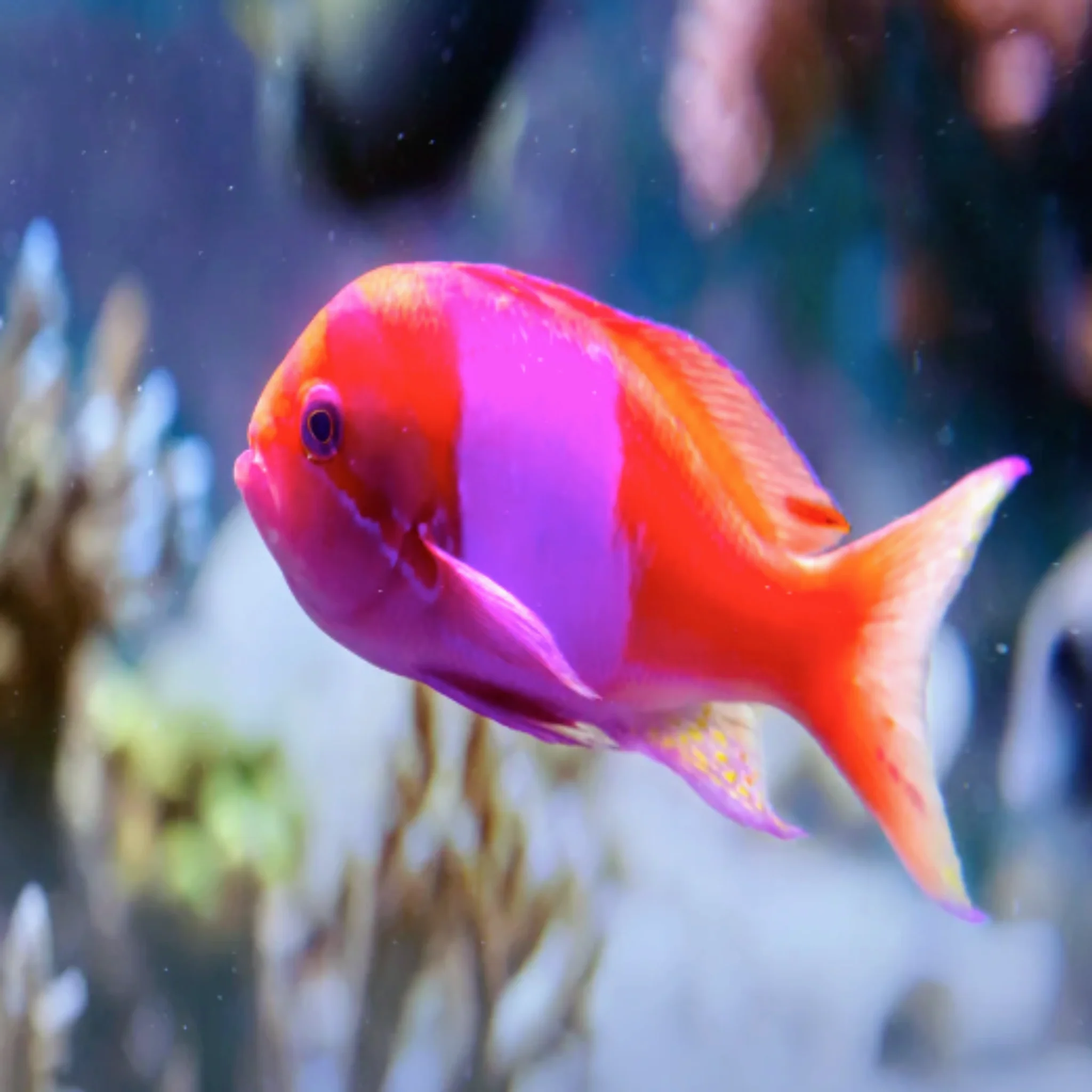
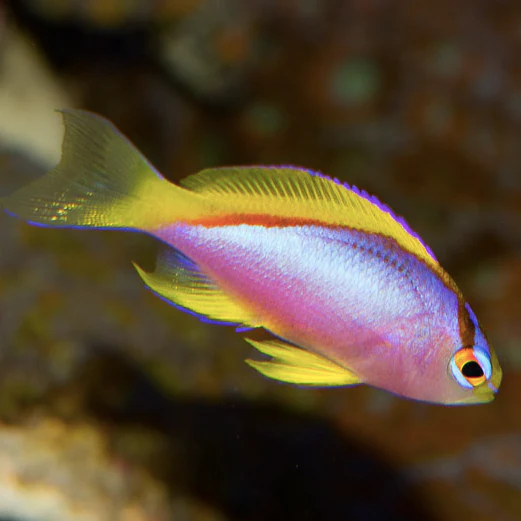
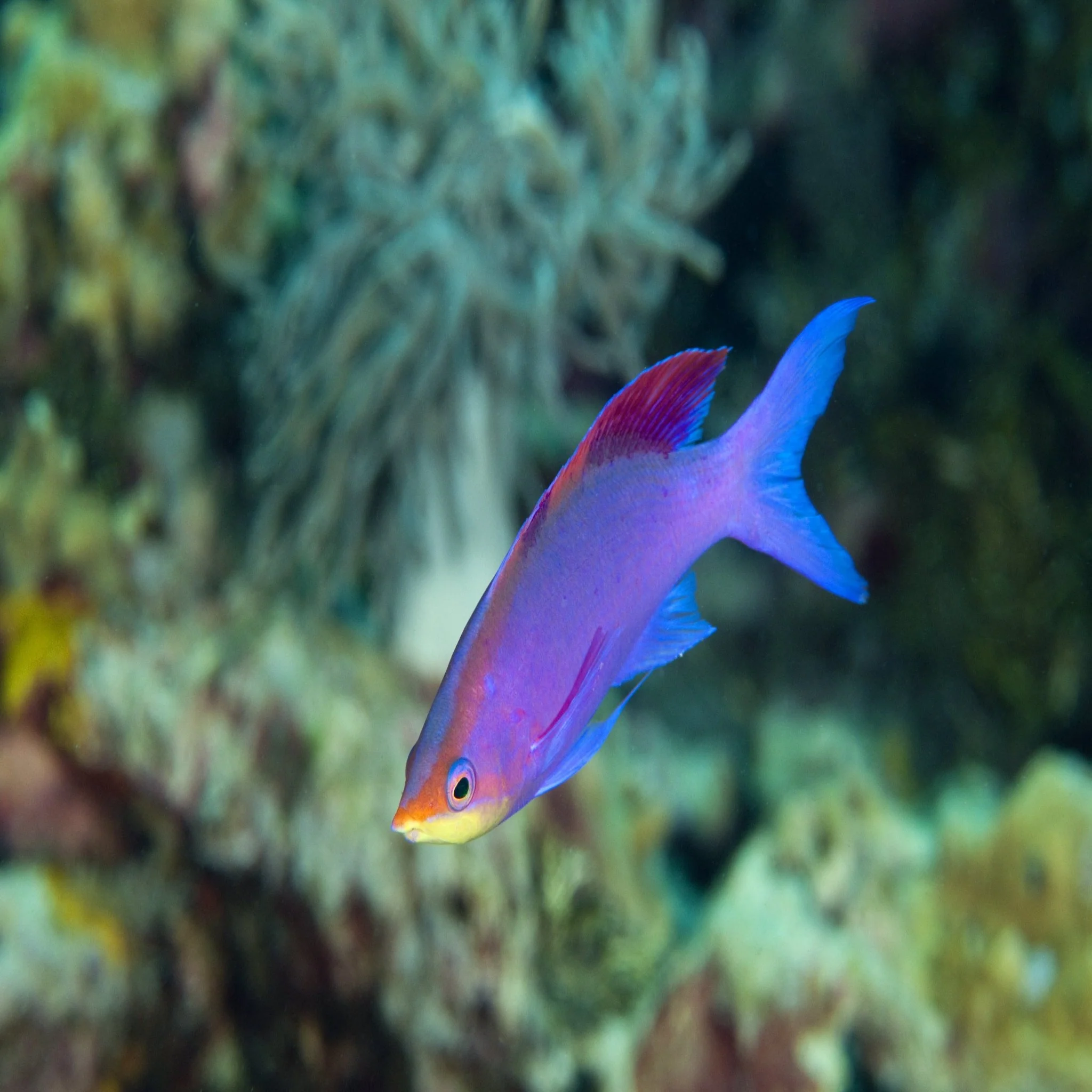
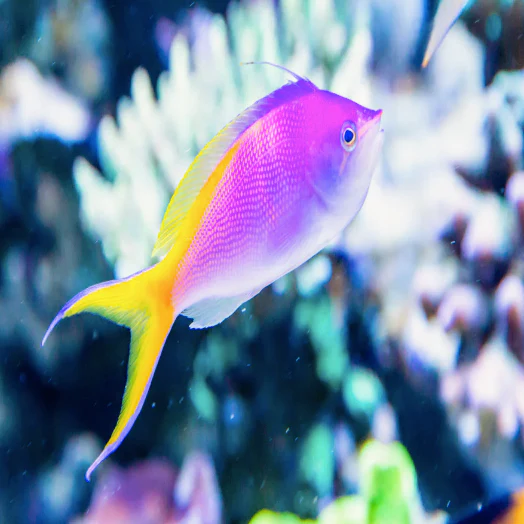
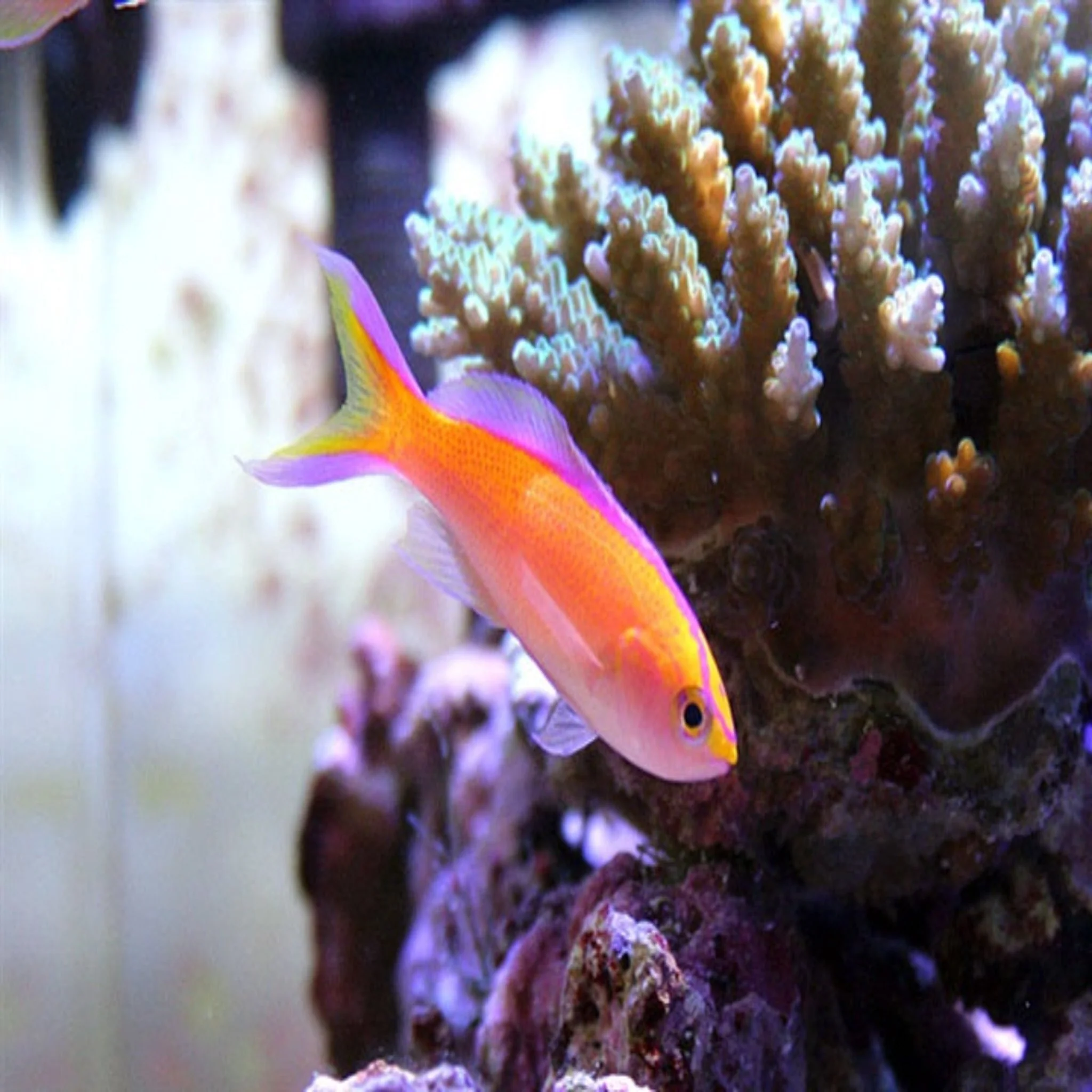
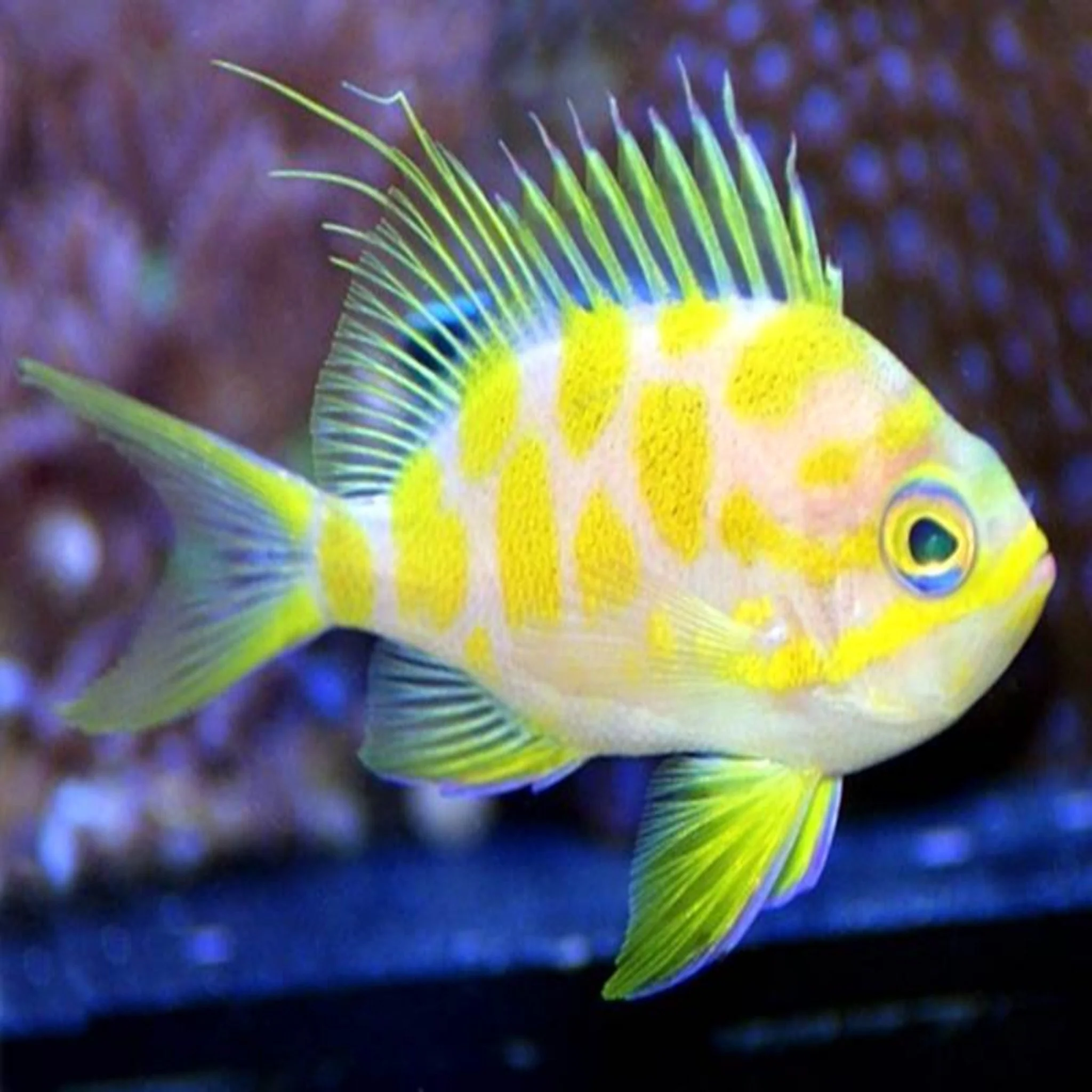
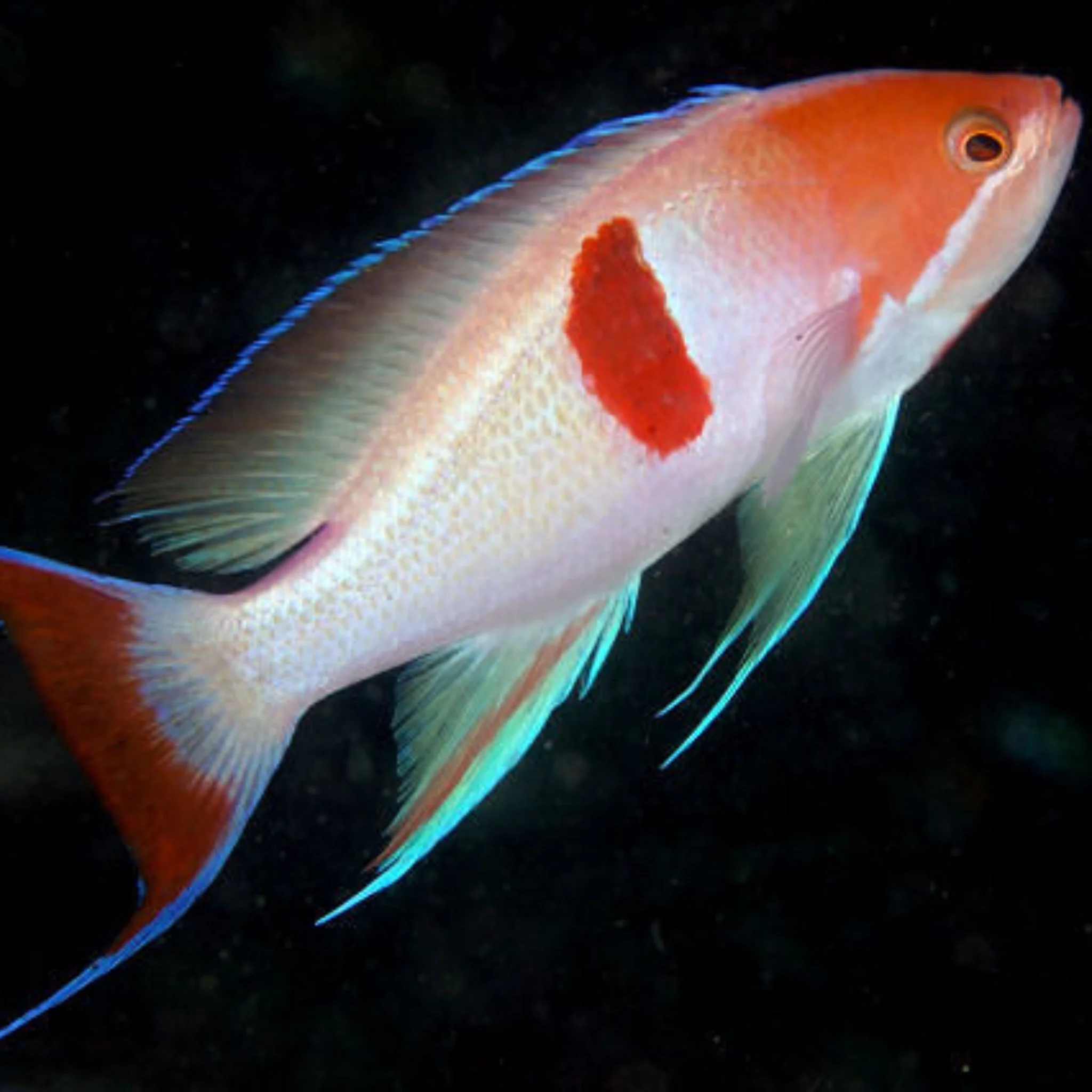
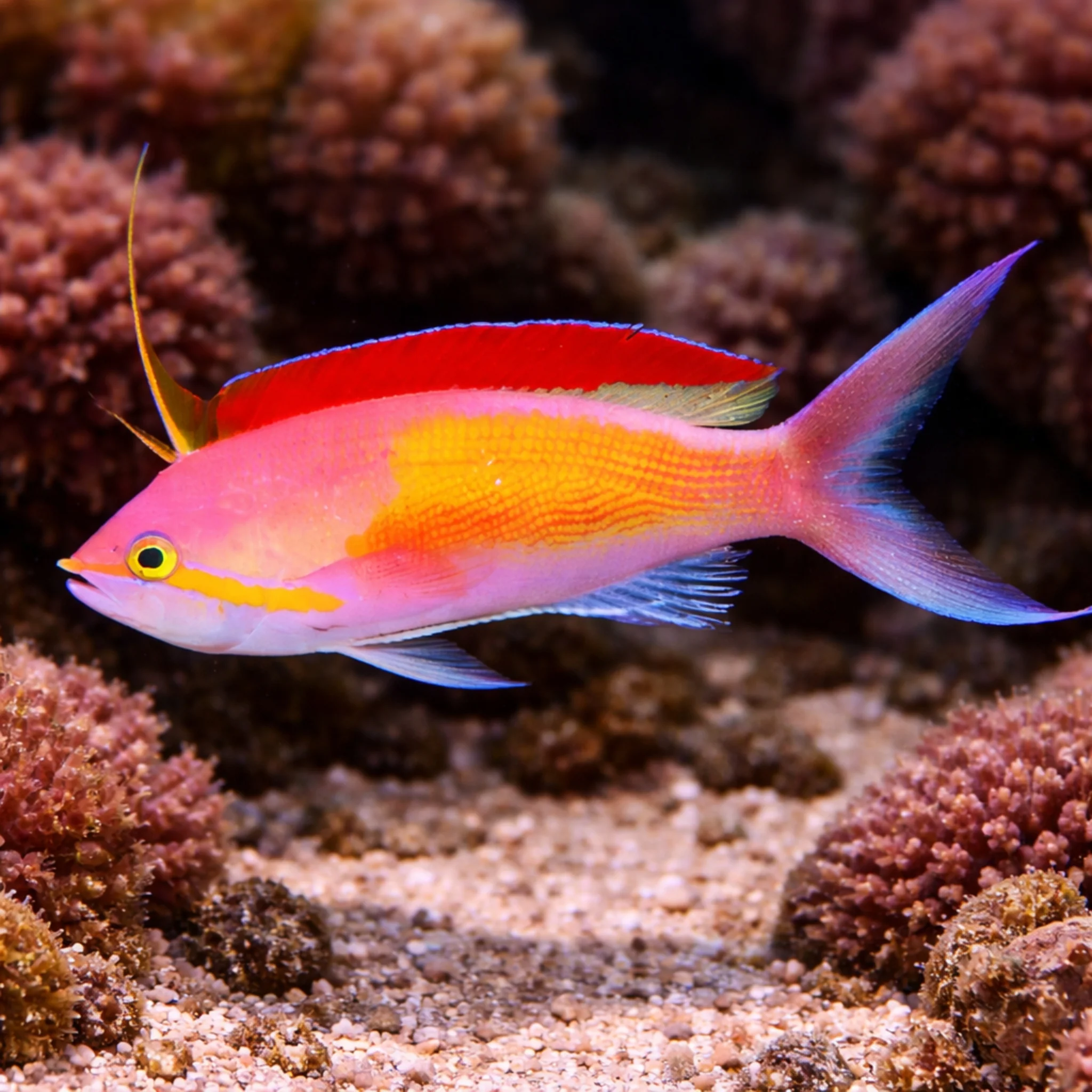
The Japanese Cherry Anthias is a striking deep-water anthias admired for its rich cherry-red to pink colouration and elegant, elongated shape. In the wild it occurs in the Western Pacific, particularly around Japan, Korea, Taiwan and New Caledonia, where it forms large schools in rocky areas at moderate depths. It is a beautiful but more specialist anthias, best suited to a mature marine aquarium with stable conditions, regular feeding and plenty of shelter.
Common Name:
Japanese Cherry Anthias. It is also commonly known as the Cherry Anthias or Sakura Anthias.
Scientific Name (Latin):
Sacura margaritacea
Maximum Size:
Up to 13 cm for males, with females generally smaller at around 10 cm.
Water Type:
Marine.
Origin / Natural Habitat:
Found in the Western Pacific, including Japan, Korea, Taiwan and New Caledonia. This species lives in rocky reef areas at around 15–50 metres depth and is often associated with deeper or cooler reef habitat than many commonly kept anthias.
Water Parameters:
Temperature: 23–26°C
pH Range: 8.1–8.4
Salinity: 1.020–1.025 SG
These are sensible stable aquarium parameters for long-term captive care of this species.
Temperament:
Generally peaceful to semi-aggressive. Like many anthias, it can become stressed or pushy if overcrowded, and hierarchy issues are more likely if too many are kept without enough space.
Diet:
Carnivorous / planktivorous. It should be offered a varied diet of small meaty marine foods such as mysis, krill, enriched brineshrimp and other crustacean-based foods. Frequent feeding is especially important when newly introduced.
Minimum Tank Size:
A sensible long-term recommendation is 400 litres minimum, with more space required if keeping more than one.
Behaviour & Activity:
This species is an active mid-water anthias that does best with good hiding places among rockwork and open swimming space. It is also protogynous, meaning individuals are born female and can later change sex to male as they mature.
Reef Safe:
Reef Safe with Caution
It is generally suitable for reef aquaria, but caution is advised around very small crustaceans, as aquarium references note it can pose a threat to small shrimps and similar invertebrates. Monitor carefully in mixed reef systems.
Special Requirements or Care Notes:
This species benefits from a well-established aquarium, regular small feeds, and plenty of rockwork for shelter. It can be sensitive during transport and acclimation, so it is best introduced into a calm, stable system rather than a newly set-up tank.
Suitable for:
Intermediate to Experienced fishkeepers. It is considered hardy once established, but its feeding demands and sensitivity during acclimation make it better suited to keepers with some marine experience.
Availability:
Rare in trade. This is an inference based on its specialist nature, deeper-water habitat and the way it is commonly treated as an uncommon species in aquarium references and public aquarium material.
Product Information
Product Information
Shipping & Returns
Shipping & Returns
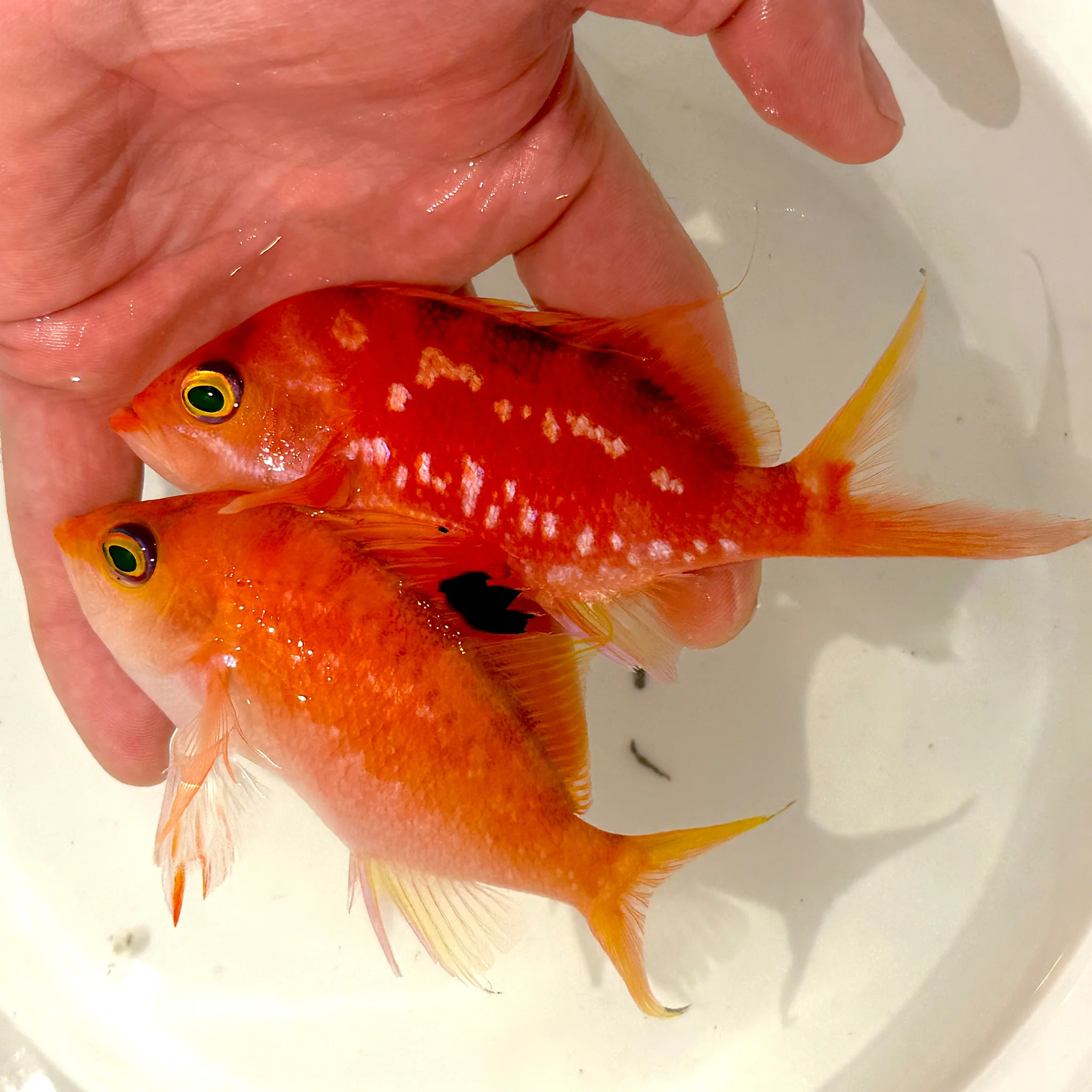
Japanese Cherry Anthias - Sacura margaritacea
Japanese Cherry Anthias - Sacura margaritacea
Japanese Cherry Anthias (Sacura margaritacea)
The Japanese Cherry Anthias is a striking deep-water anthias admired for its rich cherry-red to pink colouration and elegant, elongated shape. In the wild it occurs in the Western Pacific, particularly around Japan, Korea, Taiwan and New Caledonia, where it forms large schools in rocky areas at moderate depths. It is a beautiful but more specialist anthias, best suited to a mature marine aquarium with stable conditions, regular feeding and plenty of shelter.
Common Name:
Japanese Cherry Anthias. It is also commonly known as the Cherry Anthias or Sakura Anthias.
Scientific Name (Latin):
Sacura margaritacea
Maximum Size:
Up to 13 cm for males, with females generally smaller at around 10 cm.
Water Type:
Marine.
Origin / Natural Habitat:
Found in the Western Pacific, including Japan, Korea, Taiwan and New Caledonia. This species lives in rocky reef areas at around 15–50 metres depth and is often associated with deeper or cooler reef habitat than many commonly kept anthias.
Water Parameters:
Temperature: 23–26°C
pH Range: 8.1–8.4
Salinity: 1.020–1.025 SG
These are sensible stable aquarium parameters for long-term captive care of this species.
Temperament:
Generally peaceful to semi-aggressive. Like many anthias, it can become stressed or pushy if overcrowded, and hierarchy issues are more likely if too many are kept without enough space.
Diet:
Carnivorous / planktivorous. It should be offered a varied diet of small meaty marine foods such as mysis, krill, enriched brineshrimp and other crustacean-based foods. Frequent feeding is especially important when newly introduced.
Minimum Tank Size:
A sensible long-term recommendation is 400 litres minimum, with more space required if keeping more than one.
Behaviour & Activity:
This species is an active mid-water anthias that does best with good hiding places among rockwork and open swimming space. It is also protogynous, meaning individuals are born female and can later change sex to male as they mature.
Reef Safe:
Reef Safe with Caution
It is generally suitable for reef aquaria, but caution is advised around very small crustaceans, as aquarium references note it can pose a threat to small shrimps and similar invertebrates. Monitor carefully in mixed reef systems.
Special Requirements or Care Notes:
This species benefits from a well-established aquarium, regular small feeds, and plenty of rockwork for shelter. It can be sensitive during transport and acclimation, so it is best introduced into a calm, stable system rather than a newly set-up tank.
Suitable for:
Intermediate to Experienced fishkeepers. It is considered hardy once established, but its feeding demands and sensitivity during acclimation make it better suited to keepers with some marine experience.
Availability:
Rare in trade. This is an inference based on its specialist nature, deeper-water habitat and the way it is commonly treated as an uncommon species in aquarium references and public aquarium material.
Original: $1,218.67
-65%$1,218.67
$426.53Product Information
Product Information
Shipping & Returns
Shipping & Returns
Description
Japanese Cherry Anthias (Sacura margaritacea)
The Japanese Cherry Anthias is a striking deep-water anthias admired for its rich cherry-red to pink colouration and elegant, elongated shape. In the wild it occurs in the Western Pacific, particularly around Japan, Korea, Taiwan and New Caledonia, where it forms large schools in rocky areas at moderate depths. It is a beautiful but more specialist anthias, best suited to a mature marine aquarium with stable conditions, regular feeding and plenty of shelter.
Common Name:
Japanese Cherry Anthias. It is also commonly known as the Cherry Anthias or Sakura Anthias.
Scientific Name (Latin):
Sacura margaritacea
Maximum Size:
Up to 13 cm for males, with females generally smaller at around 10 cm.
Water Type:
Marine.
Origin / Natural Habitat:
Found in the Western Pacific, including Japan, Korea, Taiwan and New Caledonia. This species lives in rocky reef areas at around 15–50 metres depth and is often associated with deeper or cooler reef habitat than many commonly kept anthias.
Water Parameters:
Temperature: 23–26°C
pH Range: 8.1–8.4
Salinity: 1.020–1.025 SG
These are sensible stable aquarium parameters for long-term captive care of this species.
Temperament:
Generally peaceful to semi-aggressive. Like many anthias, it can become stressed or pushy if overcrowded, and hierarchy issues are more likely if too many are kept without enough space.
Diet:
Carnivorous / planktivorous. It should be offered a varied diet of small meaty marine foods such as mysis, krill, enriched brineshrimp and other crustacean-based foods. Frequent feeding is especially important when newly introduced.
Minimum Tank Size:
A sensible long-term recommendation is 400 litres minimum, with more space required if keeping more than one.
Behaviour & Activity:
This species is an active mid-water anthias that does best with good hiding places among rockwork and open swimming space. It is also protogynous, meaning individuals are born female and can later change sex to male as they mature.
Reef Safe:
Reef Safe with Caution
It is generally suitable for reef aquaria, but caution is advised around very small crustaceans, as aquarium references note it can pose a threat to small shrimps and similar invertebrates. Monitor carefully in mixed reef systems.
Special Requirements or Care Notes:
This species benefits from a well-established aquarium, regular small feeds, and plenty of rockwork for shelter. It can be sensitive during transport and acclimation, so it is best introduced into a calm, stable system rather than a newly set-up tank.
Suitable for:
Intermediate to Experienced fishkeepers. It is considered hardy once established, but its feeding demands and sensitivity during acclimation make it better suited to keepers with some marine experience.
Availability:
Rare in trade. This is an inference based on its specialist nature, deeper-water habitat and the way it is commonly treated as an uncommon species in aquarium references and public aquarium material.