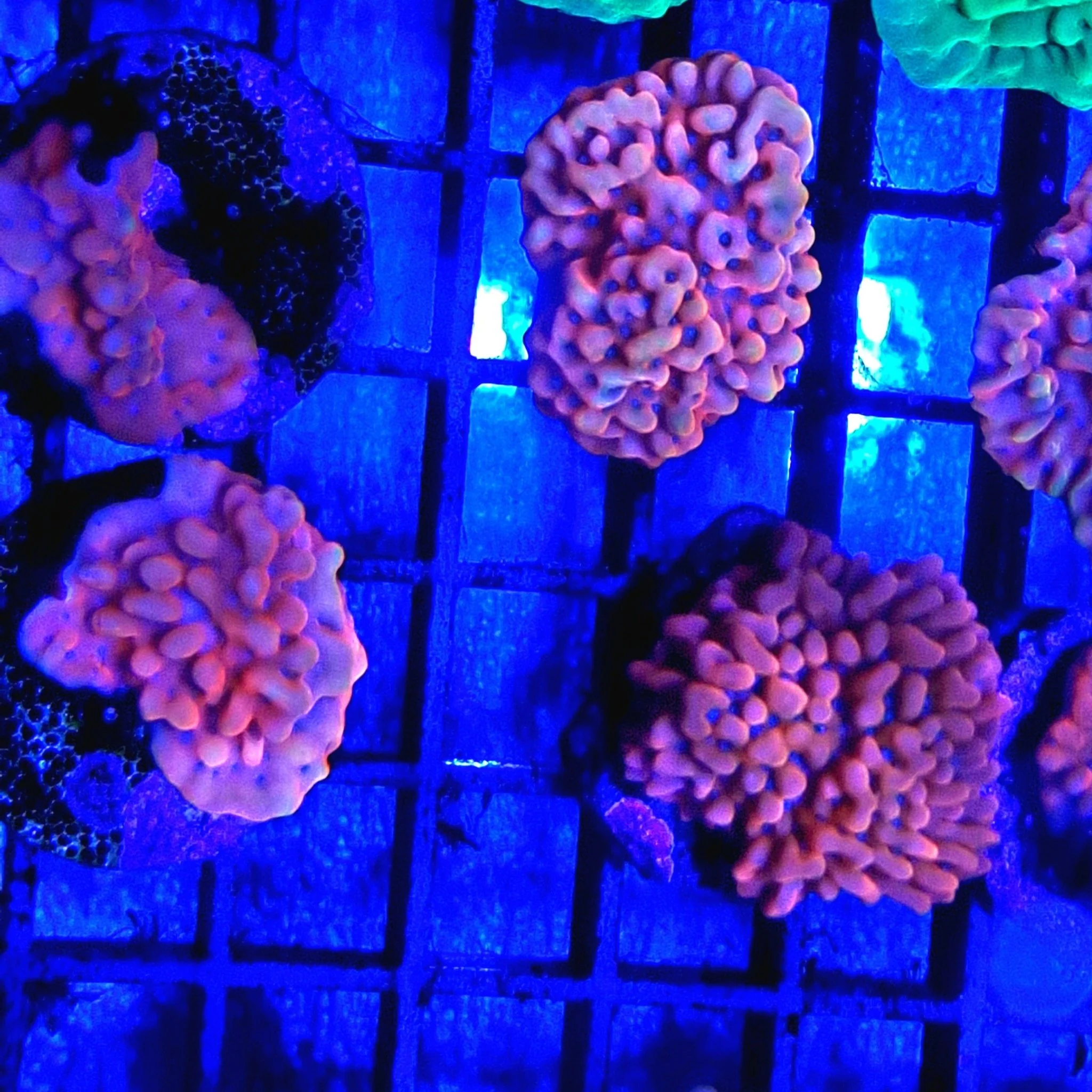
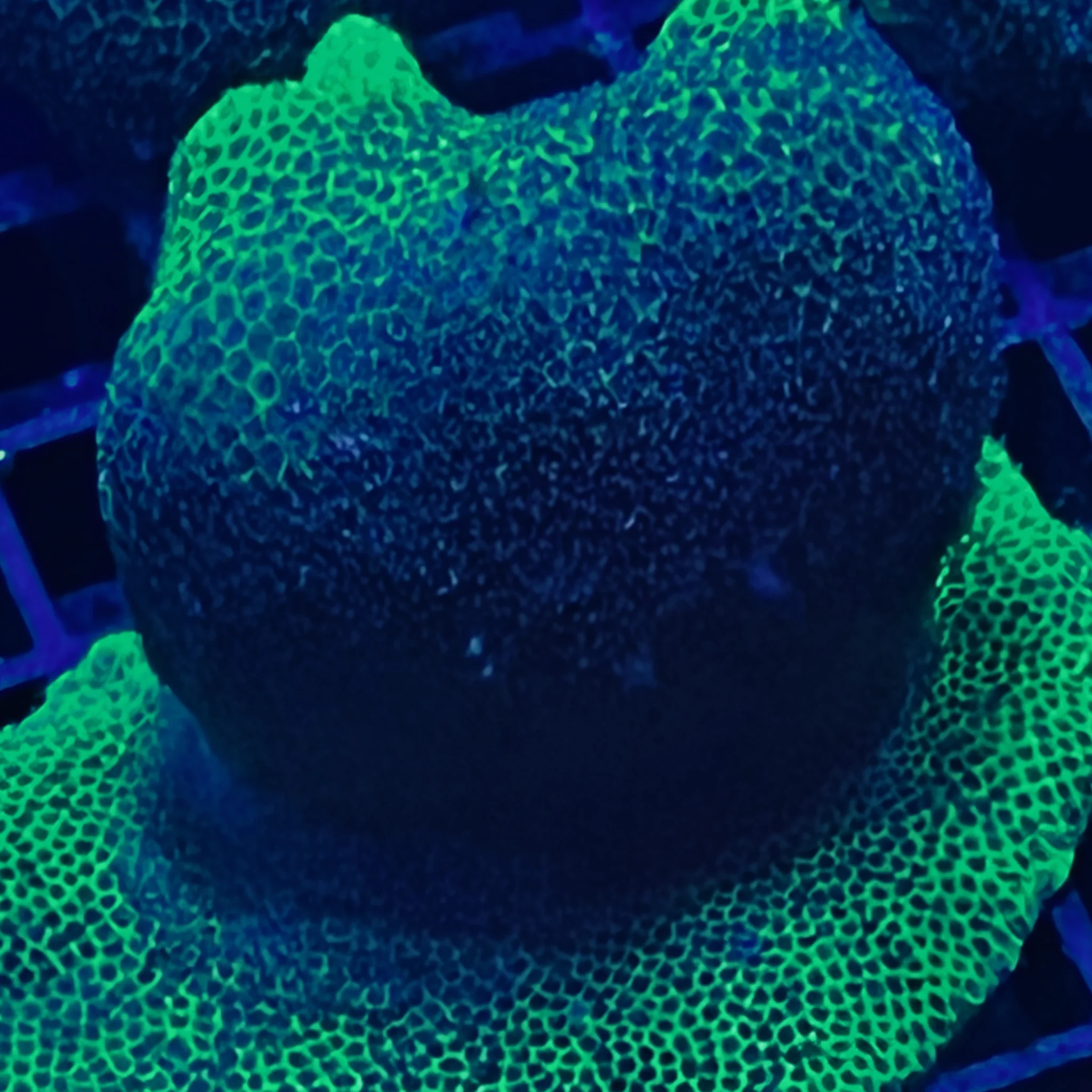
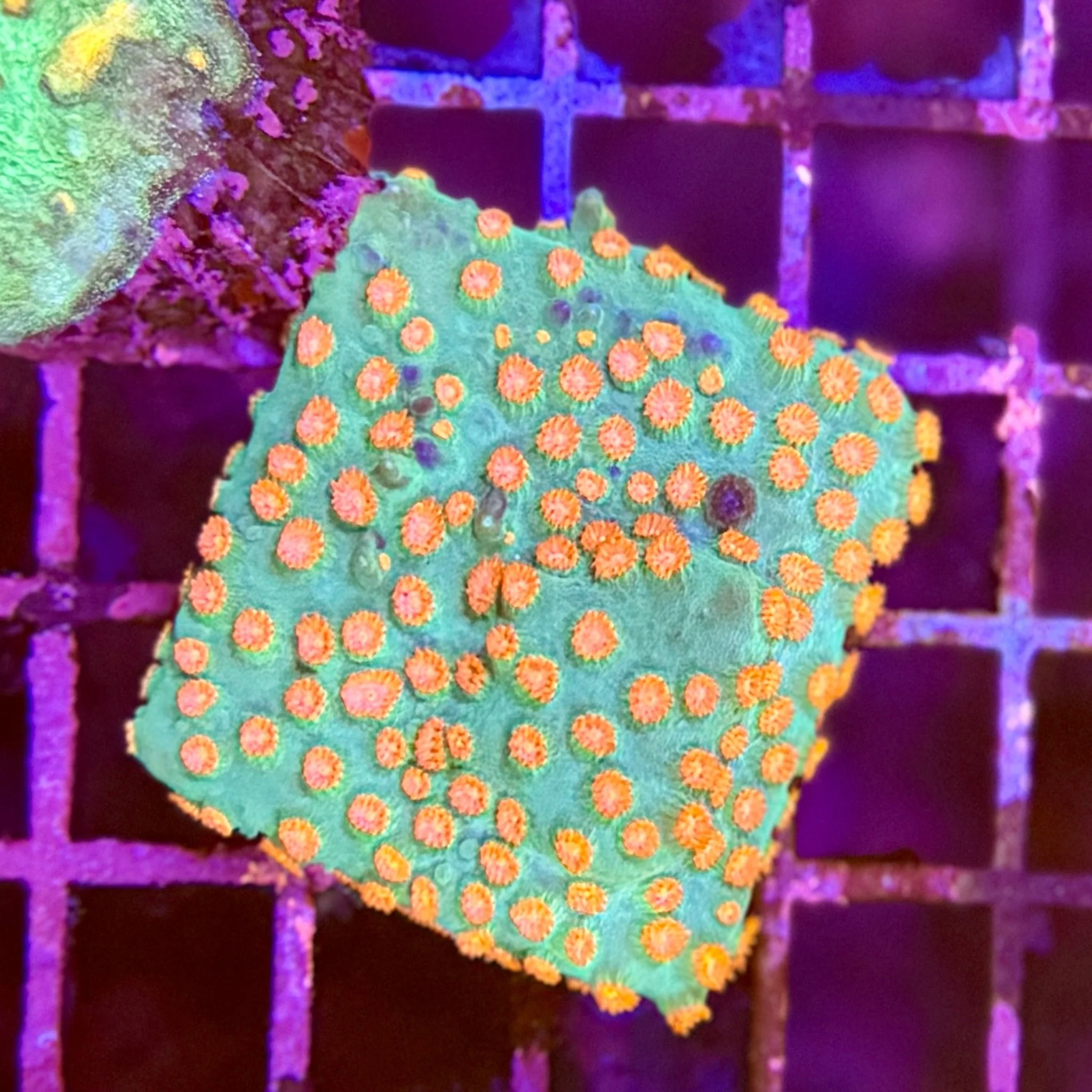
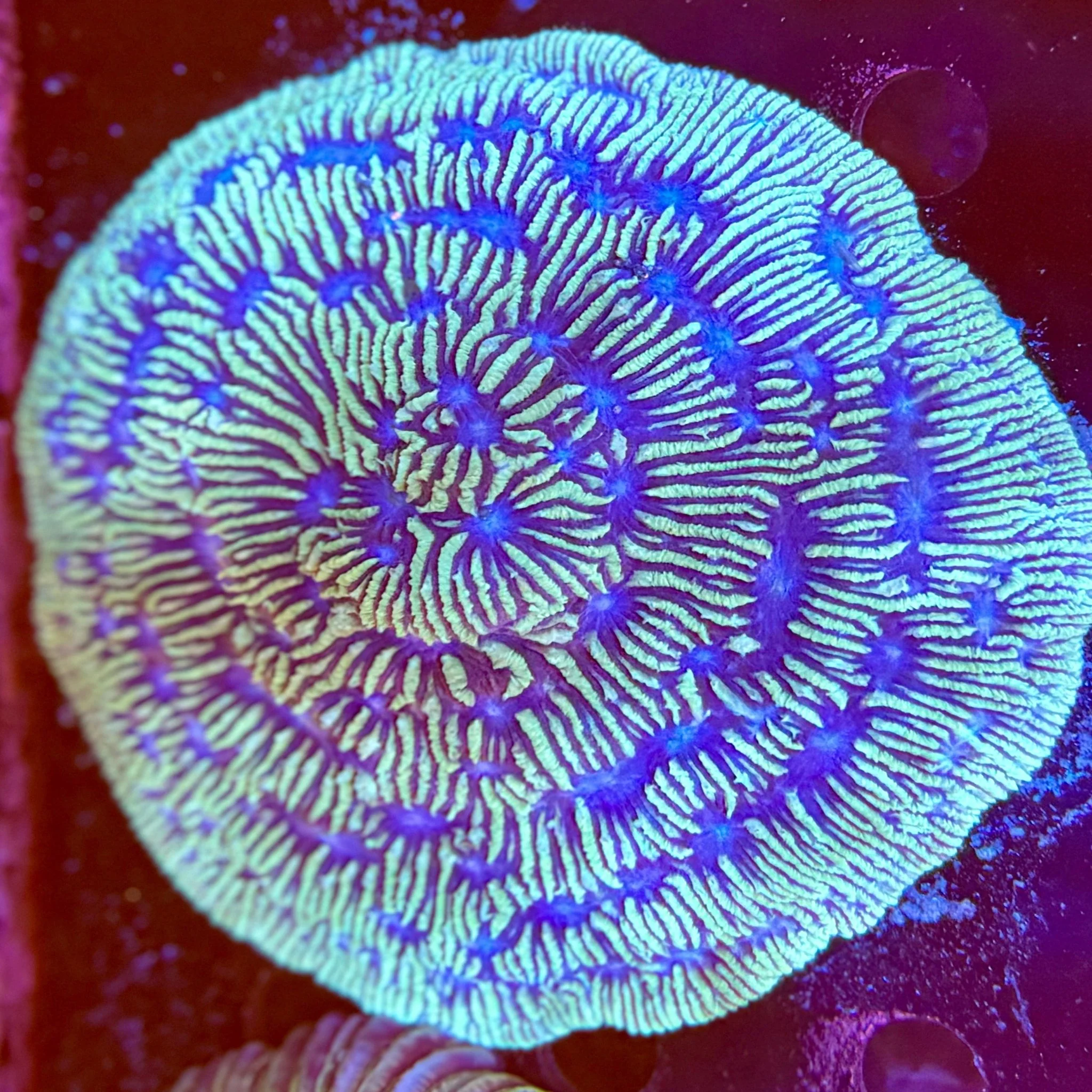
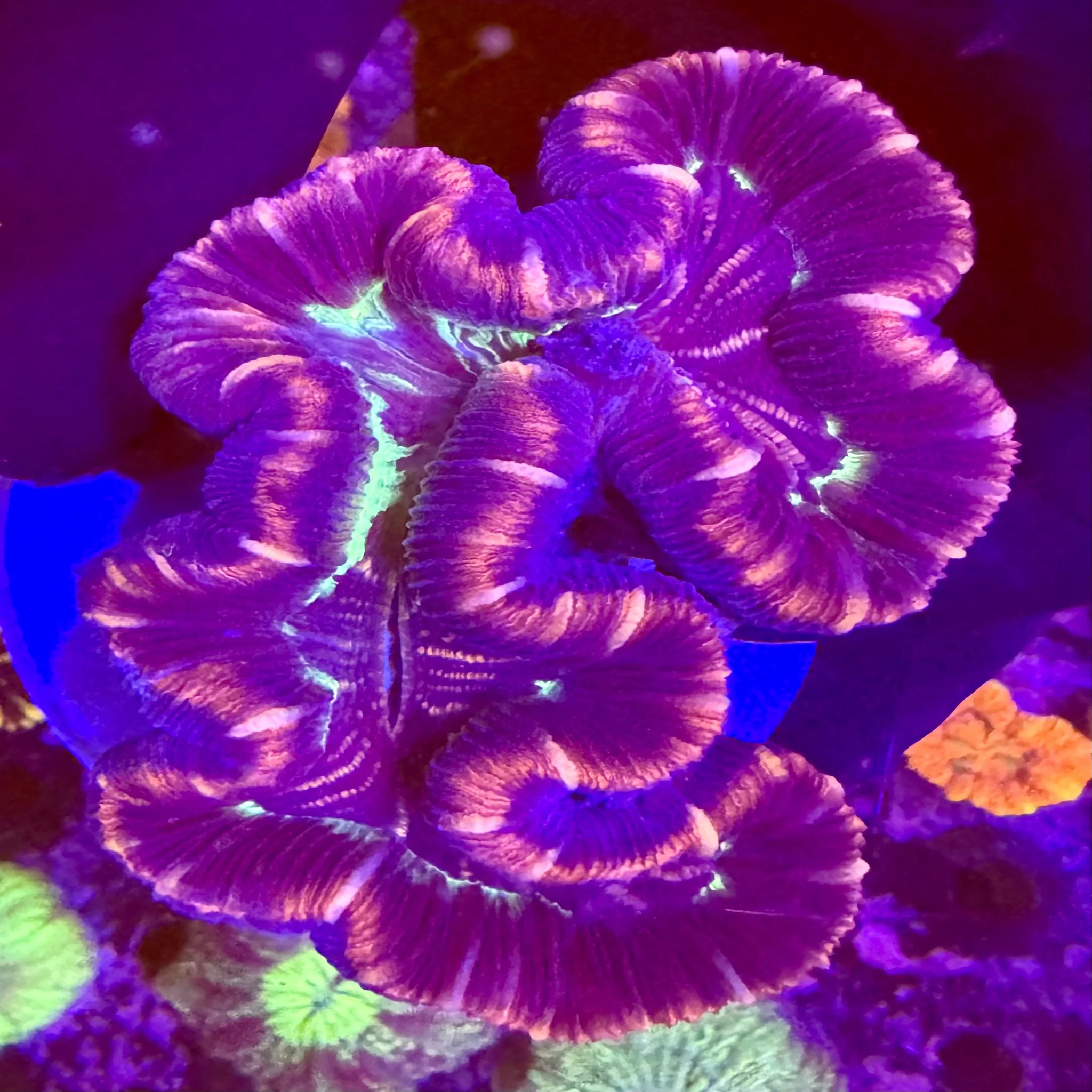
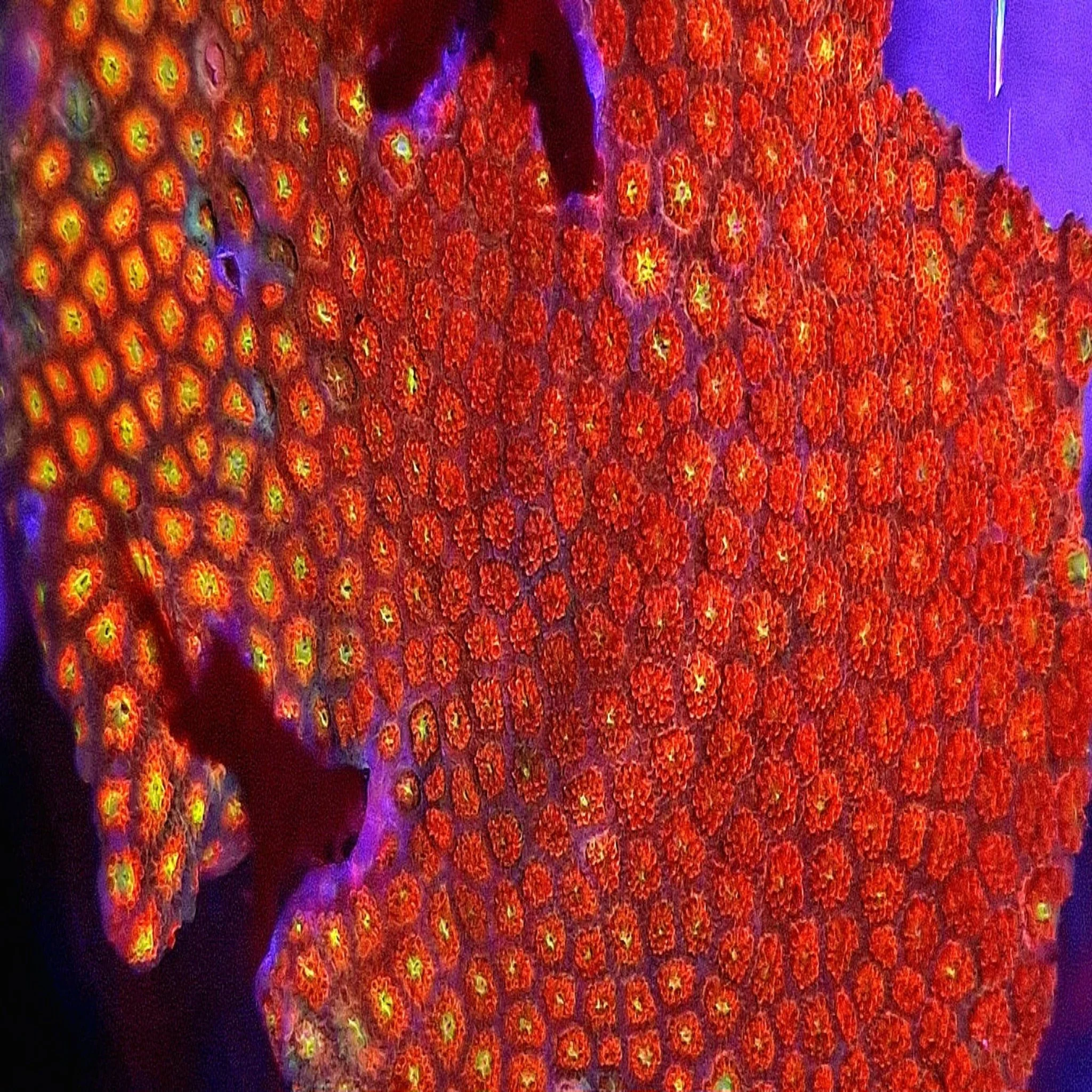
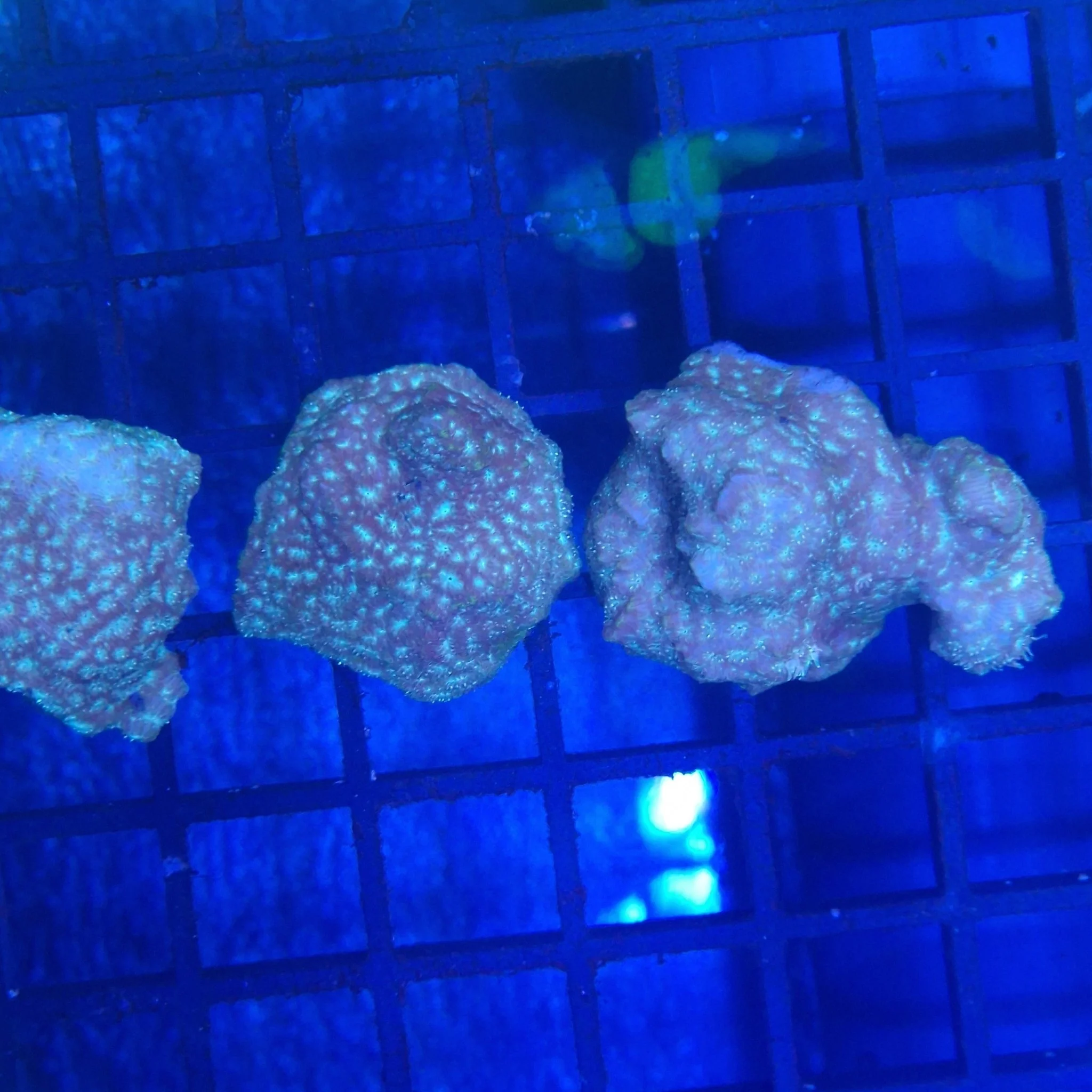
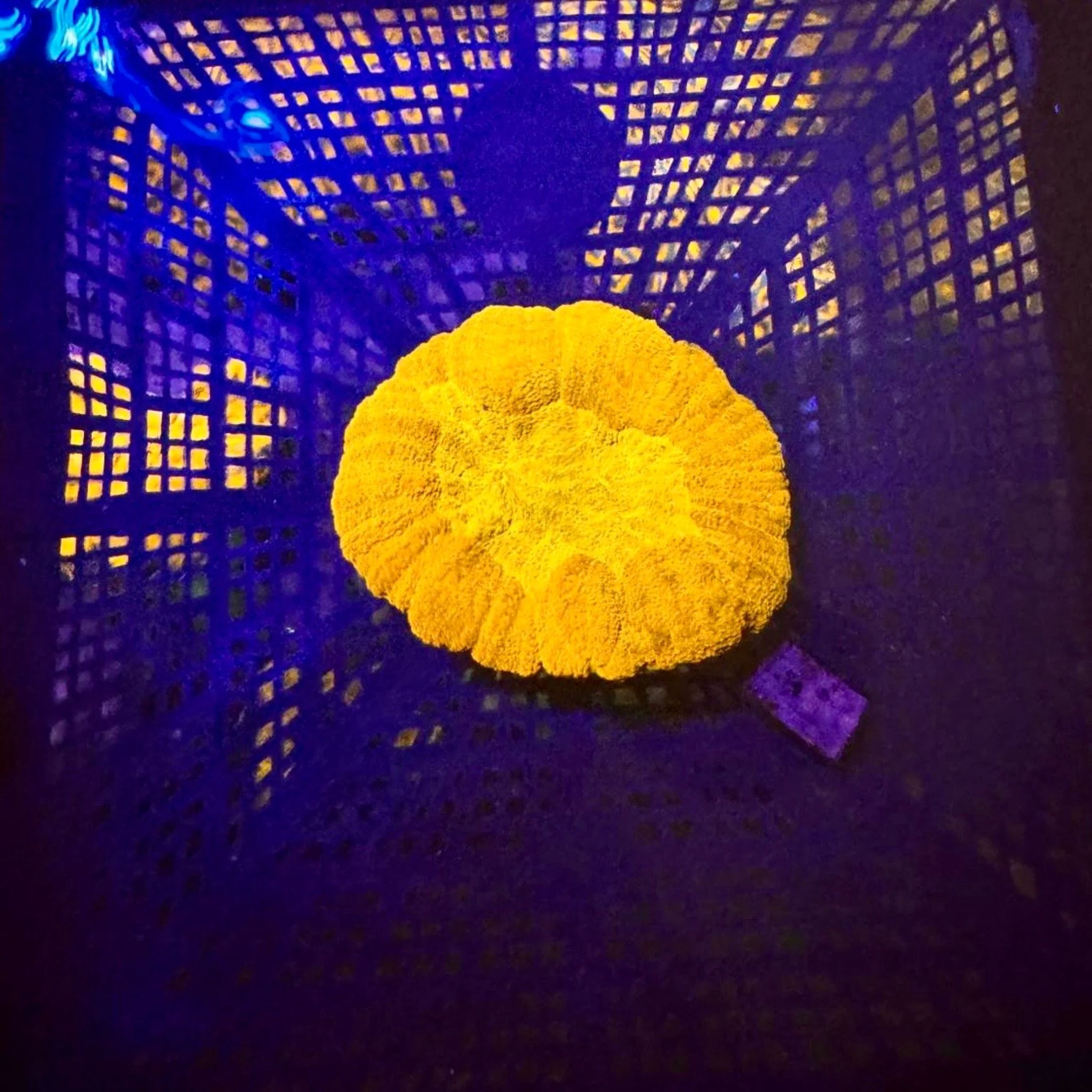
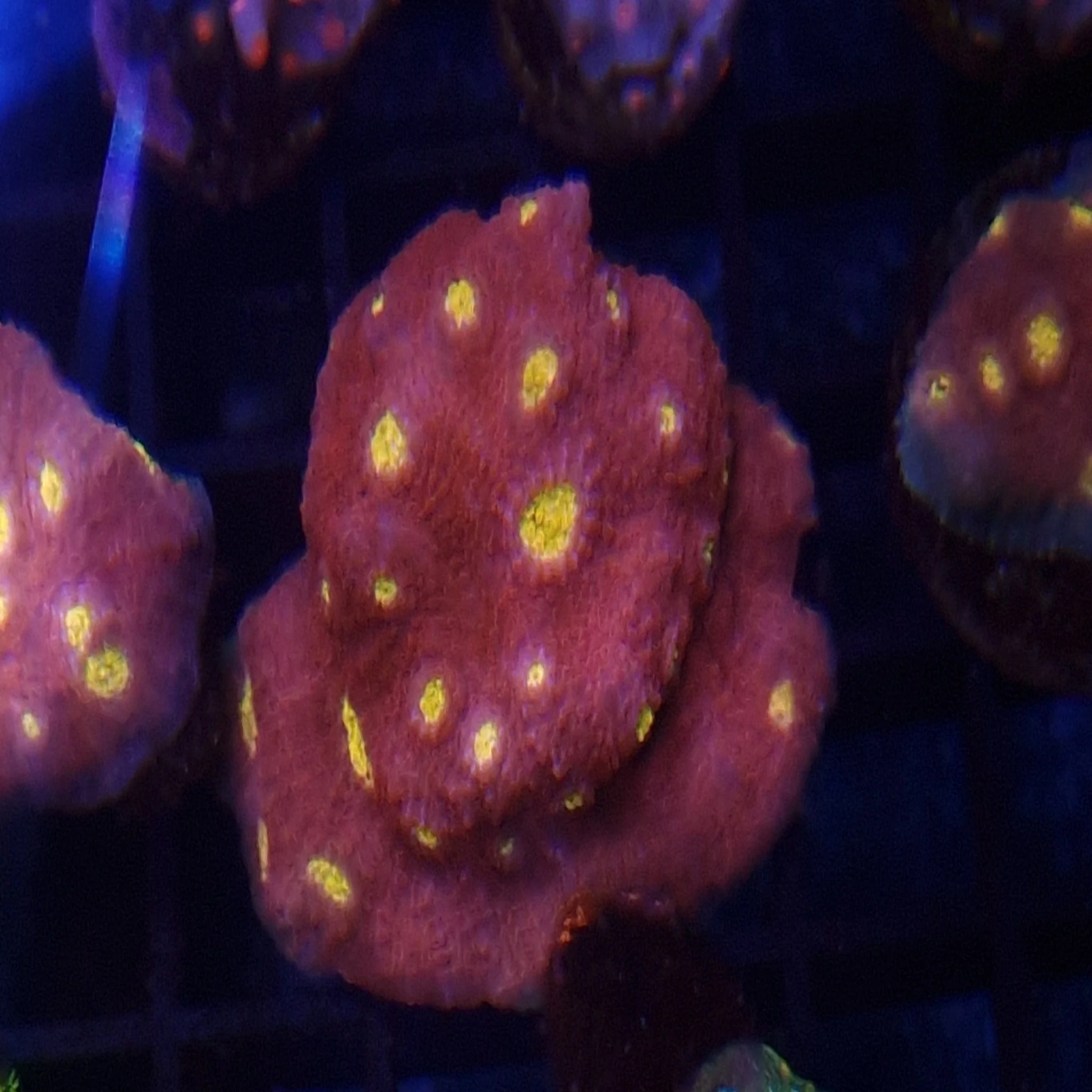
Orange Pearl Cynarina Coral
Cynarina corals (Meat Corals) are hardy, slow-growing LPS corals ideal for sandy bottoms in reef tanks. They require low-to-moderate, indirect flow and low-to-moderate lighting. They thrive with weekly spot-feeding of meaty foods (e.g., mysis) and stable parameters, generally making them suitable for beginners with established tanks.
Key Care Requirements:
Lighting: Low to moderate. Avoid high intensity to prevent bleaching; they display great color under blue/actinic lights.
Flow: Low to moderate, indirect flow is critical. Too much flow can damage their delicate, fleshy tissue.
Placement: Place directly on the sandbed or on low rockwork. Ensure they have space, as they can produce sweeper tentacles at night.
Feeding: Although photosynthetic, weekly feeding with mysis shrimp, brine shrimp, or LPS pellets significantly boosts growth and health.
Water Parameters:
Maintain stable levels:
Temperature 75–81°F (24–27°C)
Salinity 1.024–1.026 SG
Alkalinity 8–9.5 dKH
Calcium 420–450 ppm
Magnesium 1300–1400 ppm.
Handling: Be careful when moving them. Do not lift them out of the water while inflated, as the weight of the water can tear their tissue.
Common Issues:
Tissue Damage: High flow or falling onto sharp rocks can cause rapid tissue decay.
Reduced Inflation: Often caused by too much flow, poor water quality, or, if new, an adjustment period to the tank's lighting.
Product Information
Product Information
Shipping & Returns
Shipping & Returns
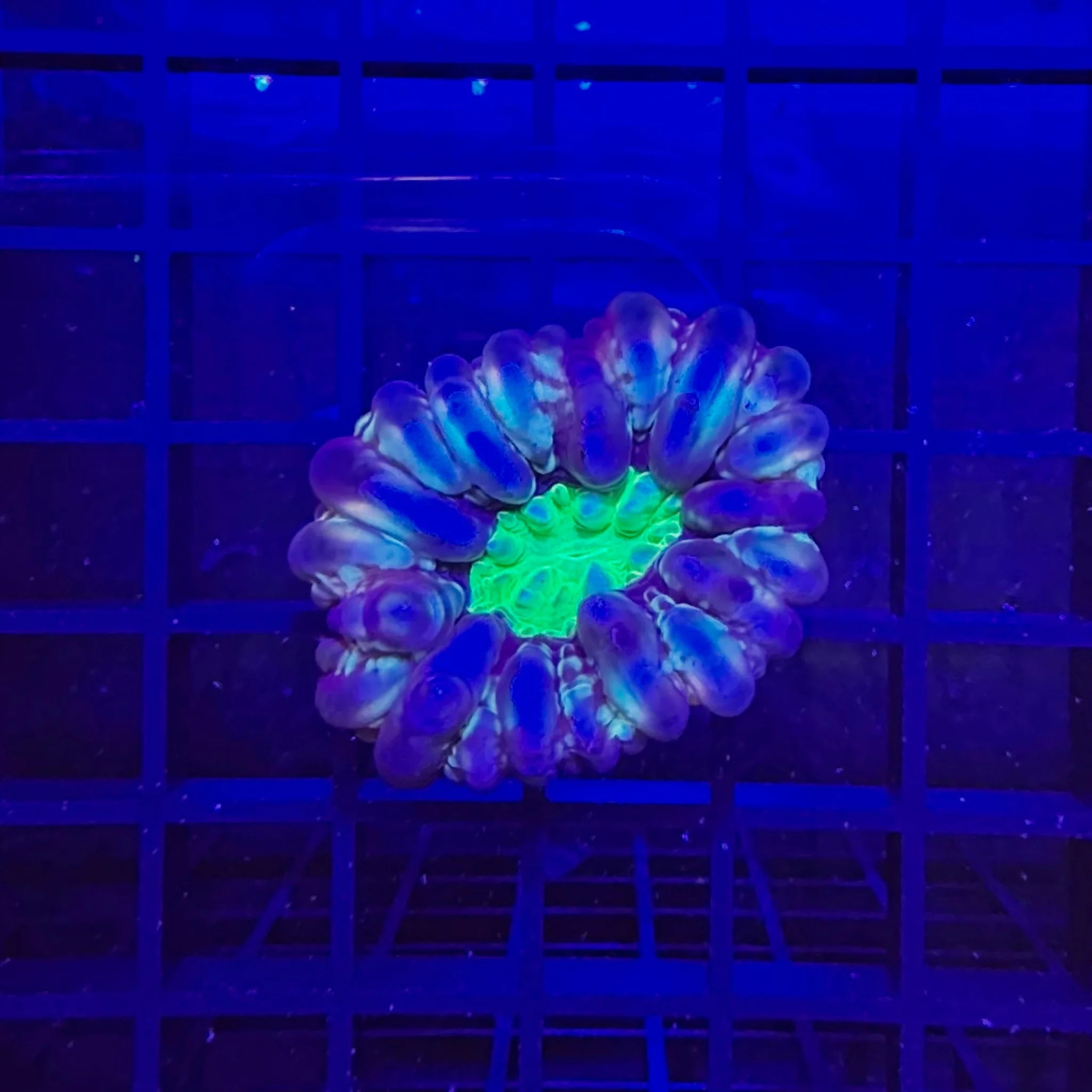
Orange Pearl Cynarina Coral
Orange Pearl Cynarina Coral
Cynarina corals (Meat Corals) are hardy, slow-growing LPS corals ideal for sandy bottoms in reef tanks. They require low-to-moderate, indirect flow and low-to-moderate lighting. They thrive with weekly spot-feeding of meaty foods (e.g., mysis) and stable parameters, generally making them suitable for beginners with established tanks.
Key Care Requirements:
Lighting: Low to moderate. Avoid high intensity to prevent bleaching; they display great color under blue/actinic lights.
Flow: Low to moderate, indirect flow is critical. Too much flow can damage their delicate, fleshy tissue.
Placement: Place directly on the sandbed or on low rockwork. Ensure they have space, as they can produce sweeper tentacles at night.
Feeding: Although photosynthetic, weekly feeding with mysis shrimp, brine shrimp, or LPS pellets significantly boosts growth and health.
Water Parameters:
Maintain stable levels:
Temperature 75–81°F (24–27°C)
Salinity 1.024–1.026 SG
Alkalinity 8–9.5 dKH
Calcium 420–450 ppm
Magnesium 1300–1400 ppm.
Handling: Be careful when moving them. Do not lift them out of the water while inflated, as the weight of the water can tear their tissue.
Common Issues:
Tissue Damage: High flow or falling onto sharp rocks can cause rapid tissue decay.
Reduced Inflation: Often caused by too much flow, poor water quality, or, if new, an adjustment period to the tank's lighting.
Product Information
Product Information
Shipping & Returns
Shipping & Returns
Description
Cynarina corals (Meat Corals) are hardy, slow-growing LPS corals ideal for sandy bottoms in reef tanks. They require low-to-moderate, indirect flow and low-to-moderate lighting. They thrive with weekly spot-feeding of meaty foods (e.g., mysis) and stable parameters, generally making them suitable for beginners with established tanks.
Key Care Requirements:
Lighting: Low to moderate. Avoid high intensity to prevent bleaching; they display great color under blue/actinic lights.
Flow: Low to moderate, indirect flow is critical. Too much flow can damage their delicate, fleshy tissue.
Placement: Place directly on the sandbed or on low rockwork. Ensure they have space, as they can produce sweeper tentacles at night.
Feeding: Although photosynthetic, weekly feeding with mysis shrimp, brine shrimp, or LPS pellets significantly boosts growth and health.
Water Parameters:
Maintain stable levels:
Temperature 75–81°F (24–27°C)
Salinity 1.024–1.026 SG
Alkalinity 8–9.5 dKH
Calcium 420–450 ppm
Magnesium 1300–1400 ppm.
Handling: Be careful when moving them. Do not lift them out of the water while inflated, as the weight of the water can tear their tissue.
Common Issues:
Tissue Damage: High flow or falling onto sharp rocks can cause rapid tissue decay.
Reduced Inflation: Often caused by too much flow, poor water quality, or, if new, an adjustment period to the tank's lighting.