Blue Spotted Tamarin Wrasse - Anampses caeruleopunctatus
Blue Spotted Wrasse (Anampses caeruleopunctatus)
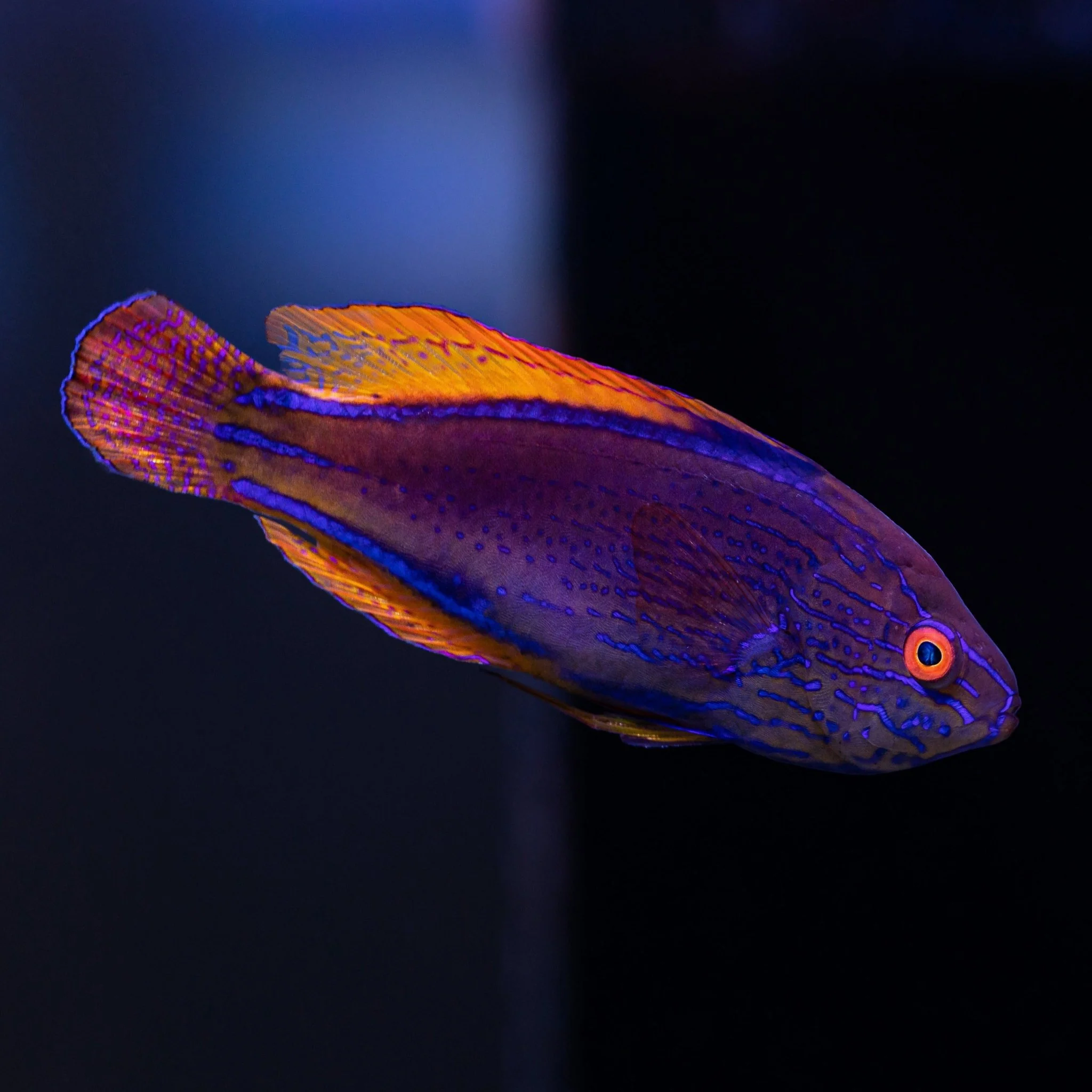
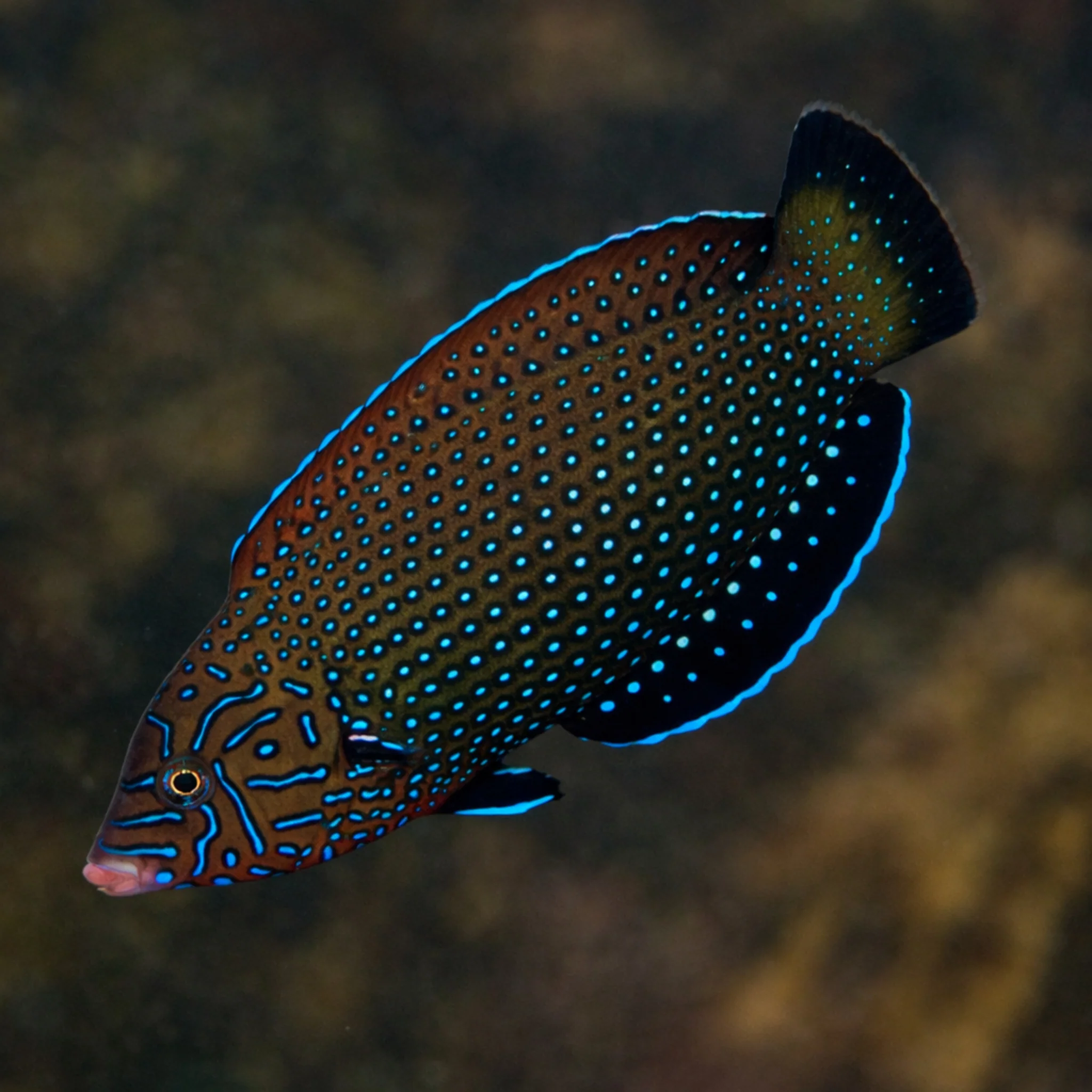
The Blue Spotted Wrasse, also often sold as the Blue Spotted Tamarin Wrasse, is a striking marine wrasse that changes noticeably with age and sex. Juveniles and females are usually reddish-brown to orange-brown with rows of vivid blue spots, while males develop a darker bluish-green body with brighter facial markings and a more dramatic overall appearance. In the wild, adults are found around surge zones on coral reefs and rocky coasts, usually singly or in pairs, while very small juveniles drift in a leaf-like manner for camouflage. Because this species grows large, buries in sand, can be shy on arrival and is considered one of the more delicate Anampses wrasses, it is best suited to a mature, spacious marine aquarium run by an experienced keeper.
Common Name:
Blue Spotted Wrasse, also commonly traded as Blue Spotted Tamarin Wrasse.
Scientific Name (Latin):
Anampses caeruleopunctatus
Maximum Size:
Up to 42 cm.
Water Type:
Marine.
Origin / Natural Habitat:
Widespread across the Indo-Pacific, with records from the Atlantic coast of South Africa through the Indian Ocean to Japan and Australia, including reef and rocky coastal habitats. Adults are especially associated with surge zones on coral reefs or rocky coasts.
Water Parameters:
Temperature: 22–26°C
pH Range: 7.8–8.5
Salinity: 1.022–1.026 SG
Temperament:
Generally peaceful, though often timid at first and potentially aggressive towards similar wrasses or fish of the same sex once established. It does best with calm, non-bullying tankmates.
Diet:
Primarily carnivorous, feeding naturally on crustaceans, molluscs and polychaete worms. In captivity, offer a varied diet of quality meaty marine foods such as mysis, enriched brine, finely chopped crustacean foods and, if needed during acclimation, tempting live foods to encourage feeding.
Minimum Tank Size:
At least 1,000 litres is the safer long-term recommendation for this species, particularly given its adult size, activity level and delicate nature. Some retailers list smaller minimums, but larger, mature systems are more consistent with its husbandry needs.
Behaviour & Activity:
An active wrasse that spends much of the day foraging and exploring rockwork and open areas. Like other Anampses wrasses, it is a burrower and should be expected to dive into the substrate at night or when startled, so a suitable sand bed is important.
Reef Safe:
Reef Safe with Caution
There is mixed trade guidance on this species. Some sellers list it as reef safe, while others rate it as not reef safe or reef safe with caution. The safest practical view is reef safe with caution, especially around ornamental shrimps, small crabs, clams and other small motile invertebrates, as its natural diet includes crustaceans and molluscs. Monitor closely in mixed reef systems.
Special Requirements or Care Notes:
This species does best in a well-established aquarium with plenty of rockwork, cracks, caves and crevices, along with a thick sandy substrate for burying. It may not feed readily when first imported, and the broader Anampses group is widely regarded as sensitive during acclimation, so quiet surroundings, low competition and careful settling-in are important. A tight-fitting lid is also sensible for wrasses generally.
Suitable for:
Experienced fishkeepers. This is based on the species’ size, sensitivity during acclimation and the general reputation of Anampses wrasses as more challenging long-term aquarium fish.
Availability:
Occasional in trade. It does appear through specialist marine suppliers, but it is not typically treated as a routine beginner stock item.
Product Information
Product Information
Shipping & Returns
Shipping & Returns
Blue Spotted Tamarin Wrasse - Anampses caeruleopunctatus
Blue Spotted Tamarin Wrasse - Anampses caeruleopunctatus
Blue Spotted Wrasse (Anampses caeruleopunctatus)
The Blue Spotted Wrasse, also often sold as the Blue Spotted Tamarin Wrasse, is a striking marine wrasse that changes noticeably with age and sex. Juveniles and females are usually reddish-brown to orange-brown with rows of vivid blue spots, while males develop a darker bluish-green body with brighter facial markings and a more dramatic overall appearance. In the wild, adults are found around surge zones on coral reefs and rocky coasts, usually singly or in pairs, while very small juveniles drift in a leaf-like manner for camouflage. Because this species grows large, buries in sand, can be shy on arrival and is considered one of the more delicate Anampses wrasses, it is best suited to a mature, spacious marine aquarium run by an experienced keeper.
Common Name:
Blue Spotted Wrasse, also commonly traded as Blue Spotted Tamarin Wrasse.
Scientific Name (Latin):
Anampses caeruleopunctatus
Maximum Size:
Up to 42 cm.
Water Type:
Marine.
Origin / Natural Habitat:
Widespread across the Indo-Pacific, with records from the Atlantic coast of South Africa through the Indian Ocean to Japan and Australia, including reef and rocky coastal habitats. Adults are especially associated with surge zones on coral reefs or rocky coasts.
Water Parameters:
Temperature: 22–26°C
pH Range: 7.8–8.5
Salinity: 1.022–1.026 SG
Temperament:
Generally peaceful, though often timid at first and potentially aggressive towards similar wrasses or fish of the same sex once established. It does best with calm, non-bullying tankmates.
Diet:
Primarily carnivorous, feeding naturally on crustaceans, molluscs and polychaete worms. In captivity, offer a varied diet of quality meaty marine foods such as mysis, enriched brine, finely chopped crustacean foods and, if needed during acclimation, tempting live foods to encourage feeding.
Minimum Tank Size:
At least 1,000 litres is the safer long-term recommendation for this species, particularly given its adult size, activity level and delicate nature. Some retailers list smaller minimums, but larger, mature systems are more consistent with its husbandry needs.
Behaviour & Activity:
An active wrasse that spends much of the day foraging and exploring rockwork and open areas. Like other Anampses wrasses, it is a burrower and should be expected to dive into the substrate at night or when startled, so a suitable sand bed is important.
Reef Safe:
Reef Safe with Caution
There is mixed trade guidance on this species. Some sellers list it as reef safe, while others rate it as not reef safe or reef safe with caution. The safest practical view is reef safe with caution, especially around ornamental shrimps, small crabs, clams and other small motile invertebrates, as its natural diet includes crustaceans and molluscs. Monitor closely in mixed reef systems.
Special Requirements or Care Notes:
This species does best in a well-established aquarium with plenty of rockwork, cracks, caves and crevices, along with a thick sandy substrate for burying. It may not feed readily when first imported, and the broader Anampses group is widely regarded as sensitive during acclimation, so quiet surroundings, low competition and careful settling-in are important. A tight-fitting lid is also sensible for wrasses generally.
Suitable for:
Experienced fishkeepers. This is based on the species’ size, sensitivity during acclimation and the general reputation of Anampses wrasses as more challenging long-term aquarium fish.
Availability:
Occasional in trade. It does appear through specialist marine suppliers, but it is not typically treated as a routine beginner stock item.
Original: $74.56
-65%$74.56
$26.10Product Information
Product Information
Shipping & Returns
Shipping & Returns
Description
Blue Spotted Wrasse (Anampses caeruleopunctatus)
The Blue Spotted Wrasse, also often sold as the Blue Spotted Tamarin Wrasse, is a striking marine wrasse that changes noticeably with age and sex. Juveniles and females are usually reddish-brown to orange-brown with rows of vivid blue spots, while males develop a darker bluish-green body with brighter facial markings and a more dramatic overall appearance. In the wild, adults are found around surge zones on coral reefs and rocky coasts, usually singly or in pairs, while very small juveniles drift in a leaf-like manner for camouflage. Because this species grows large, buries in sand, can be shy on arrival and is considered one of the more delicate Anampses wrasses, it is best suited to a mature, spacious marine aquarium run by an experienced keeper.
Common Name:
Blue Spotted Wrasse, also commonly traded as Blue Spotted Tamarin Wrasse.
Scientific Name (Latin):
Anampses caeruleopunctatus
Maximum Size:
Up to 42 cm.
Water Type:
Marine.
Origin / Natural Habitat:
Widespread across the Indo-Pacific, with records from the Atlantic coast of South Africa through the Indian Ocean to Japan and Australia, including reef and rocky coastal habitats. Adults are especially associated with surge zones on coral reefs or rocky coasts.
Water Parameters:
Temperature: 22–26°C
pH Range: 7.8–8.5
Salinity: 1.022–1.026 SG
Temperament:
Generally peaceful, though often timid at first and potentially aggressive towards similar wrasses or fish of the same sex once established. It does best with calm, non-bullying tankmates.
Diet:
Primarily carnivorous, feeding naturally on crustaceans, molluscs and polychaete worms. In captivity, offer a varied diet of quality meaty marine foods such as mysis, enriched brine, finely chopped crustacean foods and, if needed during acclimation, tempting live foods to encourage feeding.
Minimum Tank Size:
At least 1,000 litres is the safer long-term recommendation for this species, particularly given its adult size, activity level and delicate nature. Some retailers list smaller minimums, but larger, mature systems are more consistent with its husbandry needs.
Behaviour & Activity:
An active wrasse that spends much of the day foraging and exploring rockwork and open areas. Like other Anampses wrasses, it is a burrower and should be expected to dive into the substrate at night or when startled, so a suitable sand bed is important.
Reef Safe:
Reef Safe with Caution
There is mixed trade guidance on this species. Some sellers list it as reef safe, while others rate it as not reef safe or reef safe with caution. The safest practical view is reef safe with caution, especially around ornamental shrimps, small crabs, clams and other small motile invertebrates, as its natural diet includes crustaceans and molluscs. Monitor closely in mixed reef systems.
Special Requirements or Care Notes:
This species does best in a well-established aquarium with plenty of rockwork, cracks, caves and crevices, along with a thick sandy substrate for burying. It may not feed readily when first imported, and the broader Anampses group is widely regarded as sensitive during acclimation, so quiet surroundings, low competition and careful settling-in are important. A tight-fitting lid is also sensible for wrasses generally.
Suitable for:
Experienced fishkeepers. This is based on the species’ size, sensitivity during acclimation and the general reputation of Anampses wrasses as more challenging long-term aquarium fish.
Availability:
Occasional in trade. It does appear through specialist marine suppliers, but it is not typically treated as a routine beginner stock item.