Yellow Boxfish - Ostracion cubicus
Yellow Boxfish (Ostracion cubicus)
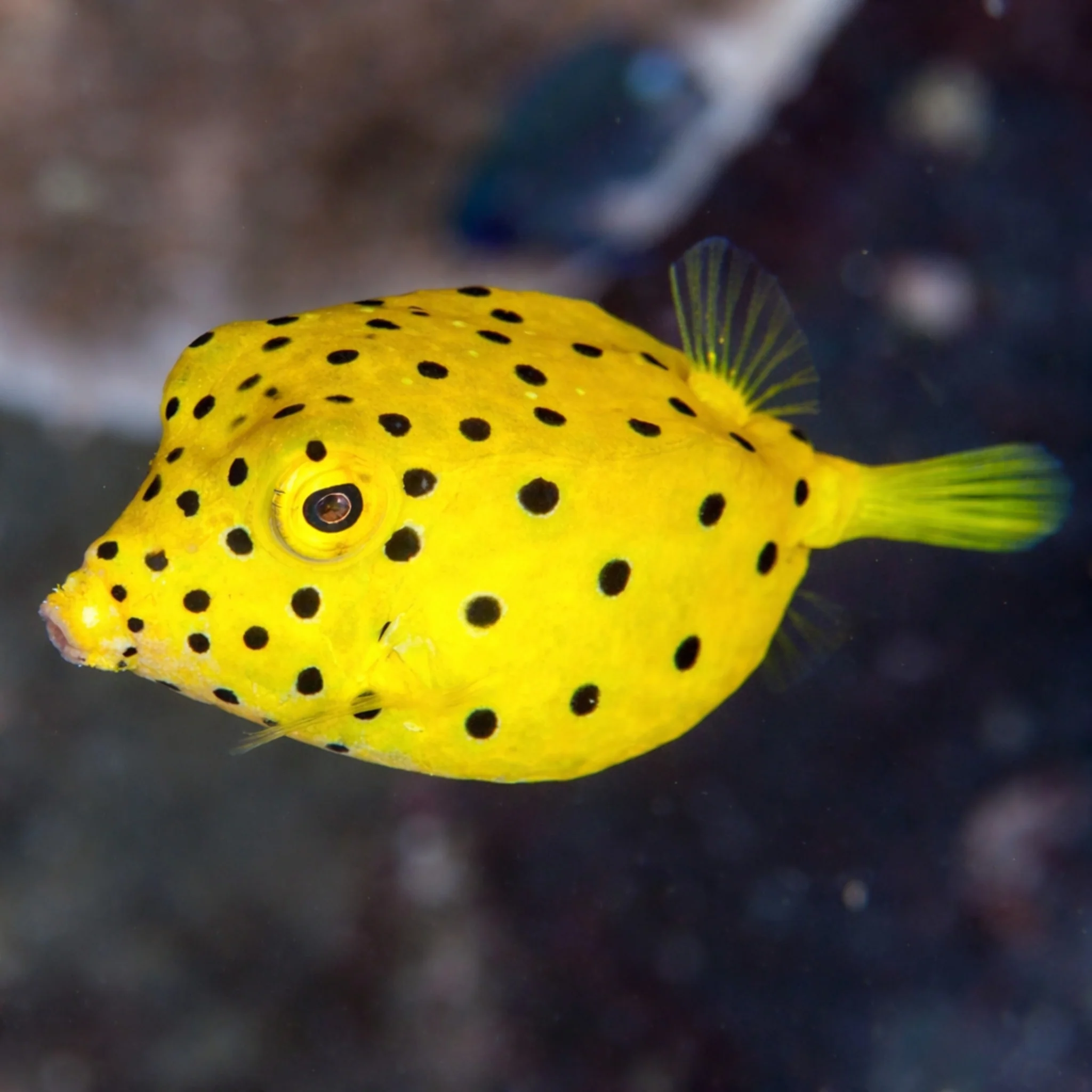
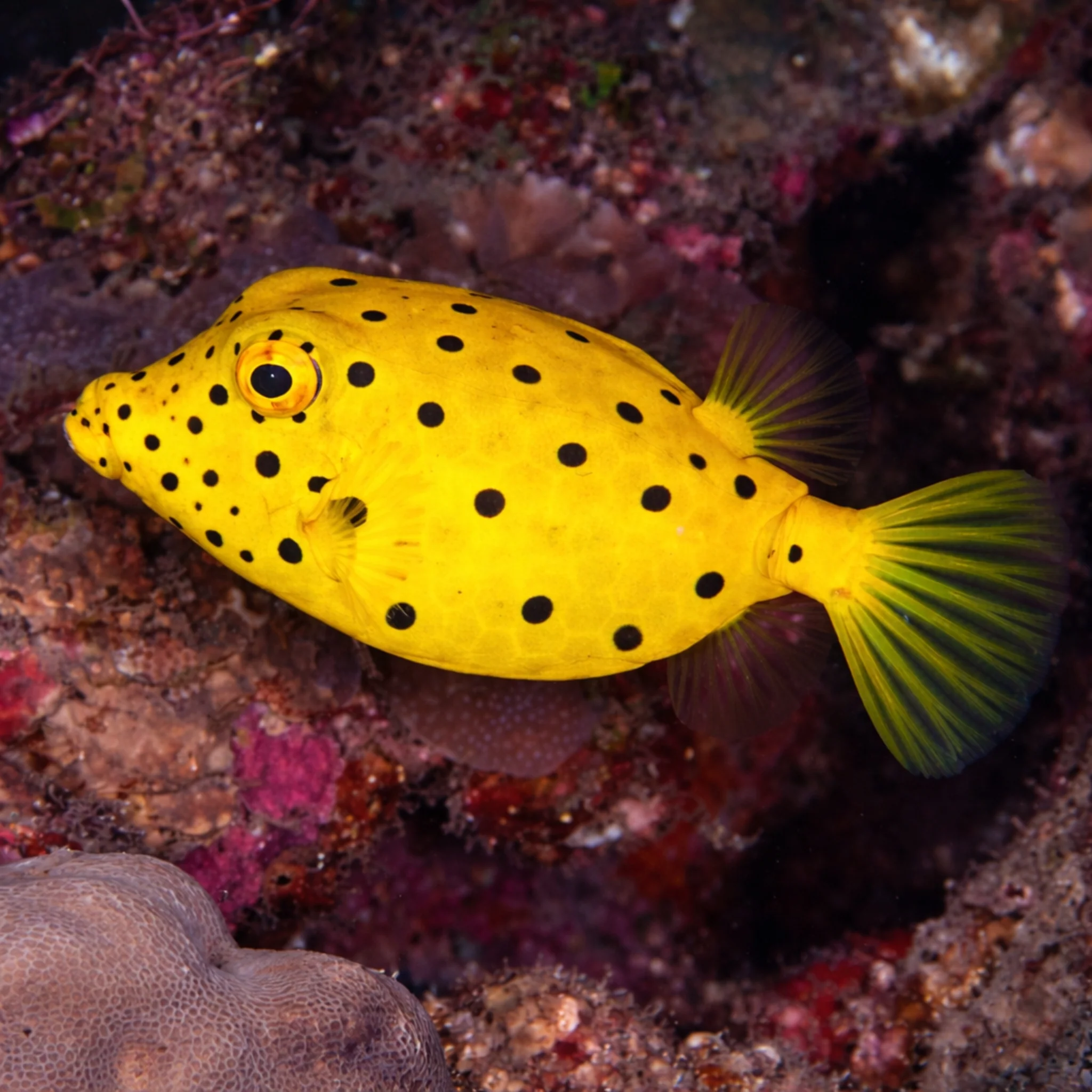
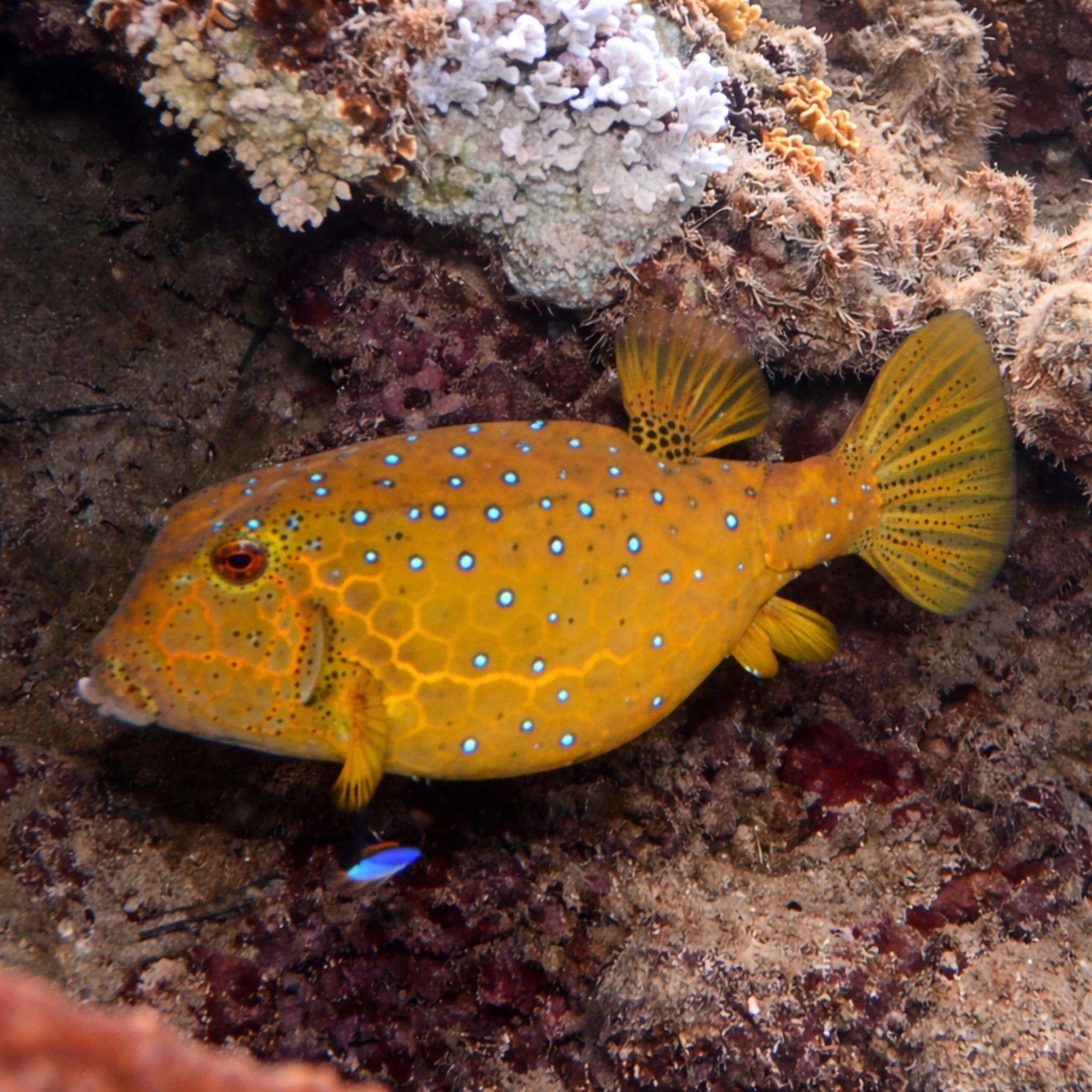
The Yellow Boxfish is one of the most recognisable marine fish in the hobby, especially as a juvenile, when it shows a bright yellow body covered in bold black spots. As it matures, the colouration darkens and becomes more muted, with older fish taking on a mustard, brownish or bluish appearance. In the wild it inhabits lagoons, coral reefs and semi-sheltered seaward reef areas across the Indo-Pacific, and adults are usually solitary. Although undeniably eye-catching, it is a specialist species that is best suited to experienced marine aquarists because it grows large, can be delicate in captivity and may release toxic mucus if severely stressed.
Common Name:
Yellow Boxfish. It is also commonly known as the Cube Trunkfish.
Scientific Name (Latin):
Ostracion cubicus
Some scientific references also render the species name as Ostracion cubicum.
Maximum Size:
Up to 45 cm in length.
Water Type:
Marine.
Origin / Natural Habitat:
Found across the Indo-Pacific, from the Persian Gulf, Red Sea and East Africa east to Hawaii and the Tuamotu Islands, north to the Ryukyu Islands and south to Lord Howe Island. It inhabits lagoons, coral reefs, rocky reefs and semi-sheltered seaward reefs, with juveniles often associated with Acropora corals and adults more often found on deeper coastal slopes with ledges and crevices for shelter.
Water Parameters:
Temperature: 23–27°C
pH Range: 8.1–8.4
Salinity: 1.020–1.025 SG
Temperament:
Generally peaceful but easily stressed, and not a good choice for aggressive or boisterous tankmates. It is usually best kept singly, as conspecific aggression can be risky in this species.
Diet:
Omnivorous. In the wild it feeds on algae, microorganisms and a range of benthic foods including invertebrates, molluscs, sponges, crustaceans, polychaete worms and small fishes. In captivity it should be offered a varied diet of marine algae and small meaty foods, fed in small amounts several times a day.
Minimum Tank Size:
800 litres minimum is the safer long-term recommendation for this species, especially given its adult size, waste load and sensitivity to stress.
Behaviour & Activity:
This is a solitary species that spends much of its time moving slowly around rockwork and reef structure, browsing for food. Juveniles are more secretive and often stay tucked into crevices or coral branches, while adults are more often seen on deeper reef slopes and sheltered reef areas.
Reef Safe:
Not Reef Safe
This species is not recommended for reef aquaria. It may eat soft corals, LPS corals, tube worms and other invertebrates, and it is better suited to a carefully planned fish-only marine system.
Special Requirements or Care Notes:
This species needs a very spacious, mature marine aquarium with open swimming room, stable water quality and a calm environment. It should be kept away from sudden lighting changes, heavy traffic and aggressive fish. A tight-fitting lid is recommended, and foods are best offered lower in the tank rather than at the surface. One of the biggest cautions with this species is that it may release ostracitoxin when highly stressed, which can endanger other aquarium inhabitants.
Suitable for:
Experienced fishkeepers
Availability:
Occasional in trade. This is an inference based on the species being present in the aquarium trade, while also being a specialist fish with demanding care requirements.
All images are a visual representation of the fish you will receive, made to be as accurate as possible. Please note that Mother Nature is a wonderful thing, and variation in patterns and colours will occur — that is part of the unique beauty of these animals.
Product Information
Product Information
Shipping & Returns
Shipping & Returns

Yellow Boxfish - Ostracion cubicus
Yellow Boxfish - Ostracion cubicus
Yellow Boxfish (Ostracion cubicus)
The Yellow Boxfish is one of the most recognisable marine fish in the hobby, especially as a juvenile, when it shows a bright yellow body covered in bold black spots. As it matures, the colouration darkens and becomes more muted, with older fish taking on a mustard, brownish or bluish appearance. In the wild it inhabits lagoons, coral reefs and semi-sheltered seaward reef areas across the Indo-Pacific, and adults are usually solitary. Although undeniably eye-catching, it is a specialist species that is best suited to experienced marine aquarists because it grows large, can be delicate in captivity and may release toxic mucus if severely stressed.
Common Name:
Yellow Boxfish. It is also commonly known as the Cube Trunkfish.
Scientific Name (Latin):
Ostracion cubicus
Some scientific references also render the species name as Ostracion cubicum.
Maximum Size:
Up to 45 cm in length.
Water Type:
Marine.
Origin / Natural Habitat:
Found across the Indo-Pacific, from the Persian Gulf, Red Sea and East Africa east to Hawaii and the Tuamotu Islands, north to the Ryukyu Islands and south to Lord Howe Island. It inhabits lagoons, coral reefs, rocky reefs and semi-sheltered seaward reefs, with juveniles often associated with Acropora corals and adults more often found on deeper coastal slopes with ledges and crevices for shelter.
Water Parameters:
Temperature: 23–27°C
pH Range: 8.1–8.4
Salinity: 1.020–1.025 SG
Temperament:
Generally peaceful but easily stressed, and not a good choice for aggressive or boisterous tankmates. It is usually best kept singly, as conspecific aggression can be risky in this species.
Diet:
Omnivorous. In the wild it feeds on algae, microorganisms and a range of benthic foods including invertebrates, molluscs, sponges, crustaceans, polychaete worms and small fishes. In captivity it should be offered a varied diet of marine algae and small meaty foods, fed in small amounts several times a day.
Minimum Tank Size:
800 litres minimum is the safer long-term recommendation for this species, especially given its adult size, waste load and sensitivity to stress.
Behaviour & Activity:
This is a solitary species that spends much of its time moving slowly around rockwork and reef structure, browsing for food. Juveniles are more secretive and often stay tucked into crevices or coral branches, while adults are more often seen on deeper reef slopes and sheltered reef areas.
Reef Safe:
Not Reef Safe
This species is not recommended for reef aquaria. It may eat soft corals, LPS corals, tube worms and other invertebrates, and it is better suited to a carefully planned fish-only marine system.
Special Requirements or Care Notes:
This species needs a very spacious, mature marine aquarium with open swimming room, stable water quality and a calm environment. It should be kept away from sudden lighting changes, heavy traffic and aggressive fish. A tight-fitting lid is recommended, and foods are best offered lower in the tank rather than at the surface. One of the biggest cautions with this species is that it may release ostracitoxin when highly stressed, which can endanger other aquarium inhabitants.
Suitable for:
Experienced fishkeepers
Availability:
Occasional in trade. This is an inference based on the species being present in the aquarium trade, while also being a specialist fish with demanding care requirements.
All images are a visual representation of the fish you will receive, made to be as accurate as possible. Please note that Mother Nature is a wonderful thing, and variation in patterns and colours will occur — that is part of the unique beauty of these animals.
Original: $47.45
-65%$47.45
$16.61Product Information
Product Information
Shipping & Returns
Shipping & Returns
Description
Yellow Boxfish (Ostracion cubicus)
The Yellow Boxfish is one of the most recognisable marine fish in the hobby, especially as a juvenile, when it shows a bright yellow body covered in bold black spots. As it matures, the colouration darkens and becomes more muted, with older fish taking on a mustard, brownish or bluish appearance. In the wild it inhabits lagoons, coral reefs and semi-sheltered seaward reef areas across the Indo-Pacific, and adults are usually solitary. Although undeniably eye-catching, it is a specialist species that is best suited to experienced marine aquarists because it grows large, can be delicate in captivity and may release toxic mucus if severely stressed.
Common Name:
Yellow Boxfish. It is also commonly known as the Cube Trunkfish.
Scientific Name (Latin):
Ostracion cubicus
Some scientific references also render the species name as Ostracion cubicum.
Maximum Size:
Up to 45 cm in length.
Water Type:
Marine.
Origin / Natural Habitat:
Found across the Indo-Pacific, from the Persian Gulf, Red Sea and East Africa east to Hawaii and the Tuamotu Islands, north to the Ryukyu Islands and south to Lord Howe Island. It inhabits lagoons, coral reefs, rocky reefs and semi-sheltered seaward reefs, with juveniles often associated with Acropora corals and adults more often found on deeper coastal slopes with ledges and crevices for shelter.
Water Parameters:
Temperature: 23–27°C
pH Range: 8.1–8.4
Salinity: 1.020–1.025 SG
Temperament:
Generally peaceful but easily stressed, and not a good choice for aggressive or boisterous tankmates. It is usually best kept singly, as conspecific aggression can be risky in this species.
Diet:
Omnivorous. In the wild it feeds on algae, microorganisms and a range of benthic foods including invertebrates, molluscs, sponges, crustaceans, polychaete worms and small fishes. In captivity it should be offered a varied diet of marine algae and small meaty foods, fed in small amounts several times a day.
Minimum Tank Size:
800 litres minimum is the safer long-term recommendation for this species, especially given its adult size, waste load and sensitivity to stress.
Behaviour & Activity:
This is a solitary species that spends much of its time moving slowly around rockwork and reef structure, browsing for food. Juveniles are more secretive and often stay tucked into crevices or coral branches, while adults are more often seen on deeper reef slopes and sheltered reef areas.
Reef Safe:
Not Reef Safe
This species is not recommended for reef aquaria. It may eat soft corals, LPS corals, tube worms and other invertebrates, and it is better suited to a carefully planned fish-only marine system.
Special Requirements or Care Notes:
This species needs a very spacious, mature marine aquarium with open swimming room, stable water quality and a calm environment. It should be kept away from sudden lighting changes, heavy traffic and aggressive fish. A tight-fitting lid is recommended, and foods are best offered lower in the tank rather than at the surface. One of the biggest cautions with this species is that it may release ostracitoxin when highly stressed, which can endanger other aquarium inhabitants.
Suitable for:
Experienced fishkeepers
Availability:
Occasional in trade. This is an inference based on the species being present in the aquarium trade, while also being a specialist fish with demanding care requirements.
All images are a visual representation of the fish you will receive, made to be as accurate as possible. Please note that Mother Nature is a wonderful thing, and variation in patterns and colours will occur — that is part of the unique beauty of these animals.