Candy Cane Wrasse - Hologymnosus doliatus
Candy Cane Wrasse (Hologymnosus doliatus)
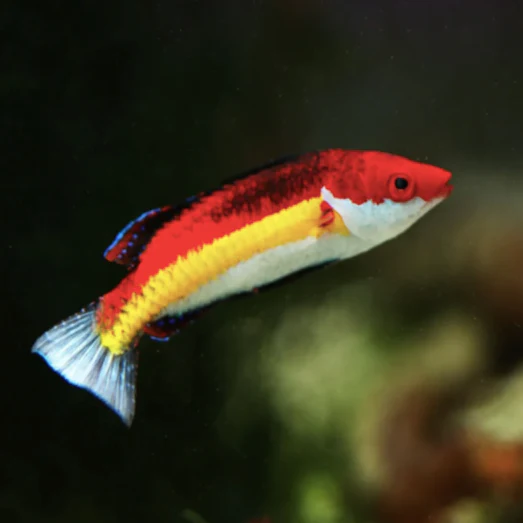
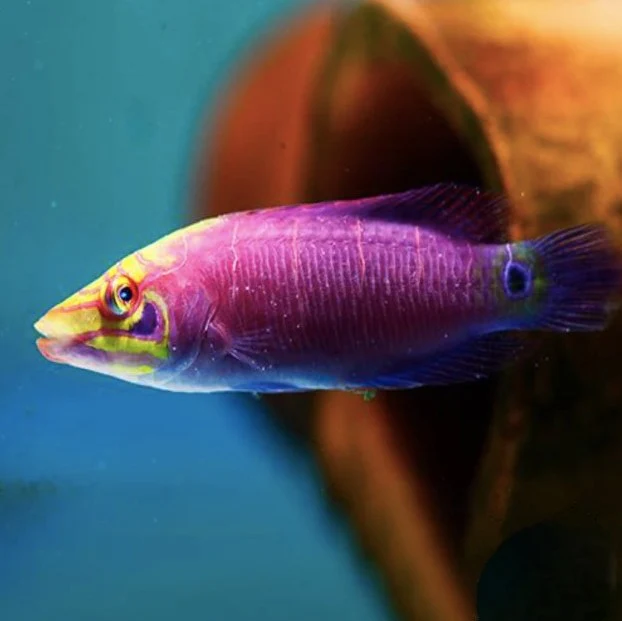
The Candy Cane Wrasse, also commonly called the Pastel Ring Wrasse or Longface Wrasse, is a striking, elongated marine wrasse that changes noticeably as it matures. Juveniles are pale with fine red-orange striping, while adults develop far bolder green, blue and lavender tones. In the wild it inhabits seaward reefs over mixed sand, rubble and coral, with juveniles and females often seen in small groups while adult males become solitary and territorial. Because it grows very large and is an active predator, it is best suited to spacious, mature marine aquaria.
Common Name:
Candy Cane Wrasse.
Scientific Name (Latin):
Hologymnosus doliatus.
Maximum Size:
Up to 50 cm (in captivity).
Water Type:
Marine.
Origin / Natural Habitat:
Widespread across the Indo-Pacific, from East Africa and the Red Sea eastwards to Samoa and the Line Islands. It is found on seaward reefs in areas of mixed sand, rubble and coral, typically from around 1–35 metres depth.
Water Parameters:
Temperature: 22–26°C
pH Range: 8.1–8.4
Salinity: 1.020–1.025 SG
Temperament:
Semi-aggressive. Adult males can become territorial, so this species is usually best kept singly and with suitably robust tankmates.
Diet:
Carnivorous. In the wild it feeds mainly on small fishes and crustaceans, with brittlestars and polychaete worms also recorded. In captivity it should be offered a varied diet of meaty marine foods, ideally fed multiple times daily.
Minimum Tank Size:
At least 946 litres (250 gallons).
Behaviour & Activity:
A very active wrasse that spends much of the day cruising open areas and foraging around the reef structure. If frightened, it may bury itself in the sand, and it may also sift mouthfuls of sand while hunting for food. Juveniles and females are more social, whereas adult males are more solitary and patrol larger areas.
Reef Safe:
Reef Safe with Caution
This species may prey on ornamental shrimps, smaller crustaceans, worms, brittlestars and very small fish, so it should be monitored carefully in reef systems, particularly where decorative mobile invertebrates are kept. This rating is supported by retailer guidance and by its documented natural diet.
Special Requirements or Care Notes:
Best kept in a well-established aquarium with ample rockwork, crevices and a deep sand bed. It is generally recommended to keep only one specimen per tank due to territorial behaviour, and it does best with regular feeding and plenty of swimming space.
Suitable for:
Experienced fishkeepers. This is an inference based on its large adult size, active nature, predatory feeding habits and substantial tank requirement.
Availability:
Occasional in trade.
Product Information
Product Information
Shipping & Returns
Shipping & Returns
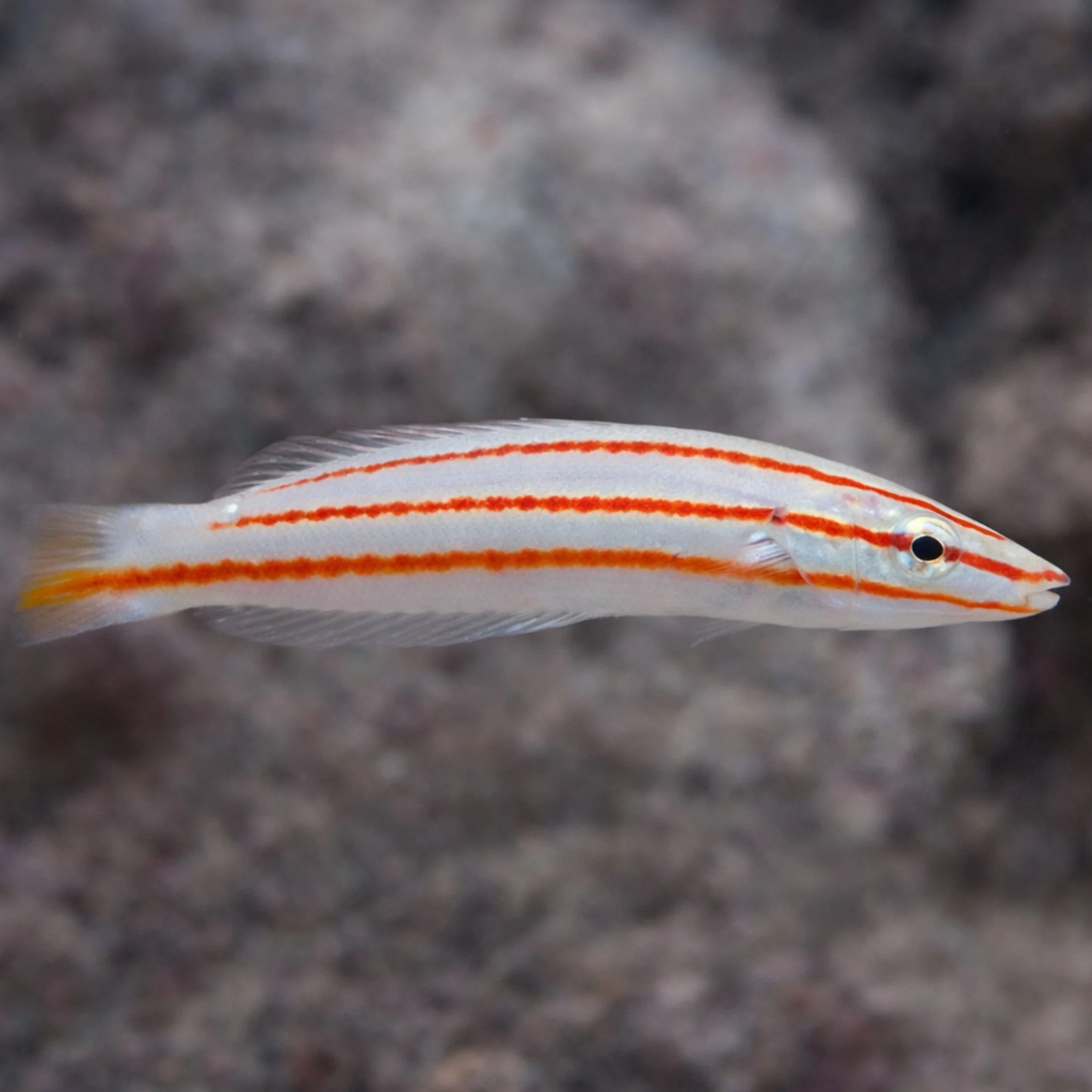
Candy Cane Wrasse - Hologymnosus doliatus
Candy Cane Wrasse - Hologymnosus doliatus
Candy Cane Wrasse (Hologymnosus doliatus)
The Candy Cane Wrasse, also commonly called the Pastel Ring Wrasse or Longface Wrasse, is a striking, elongated marine wrasse that changes noticeably as it matures. Juveniles are pale with fine red-orange striping, while adults develop far bolder green, blue and lavender tones. In the wild it inhabits seaward reefs over mixed sand, rubble and coral, with juveniles and females often seen in small groups while adult males become solitary and territorial. Because it grows very large and is an active predator, it is best suited to spacious, mature marine aquaria.
Common Name:
Candy Cane Wrasse.
Scientific Name (Latin):
Hologymnosus doliatus.
Maximum Size:
Up to 50 cm (in captivity).
Water Type:
Marine.
Origin / Natural Habitat:
Widespread across the Indo-Pacific, from East Africa and the Red Sea eastwards to Samoa and the Line Islands. It is found on seaward reefs in areas of mixed sand, rubble and coral, typically from around 1–35 metres depth.
Water Parameters:
Temperature: 22–26°C
pH Range: 8.1–8.4
Salinity: 1.020–1.025 SG
Temperament:
Semi-aggressive. Adult males can become territorial, so this species is usually best kept singly and with suitably robust tankmates.
Diet:
Carnivorous. In the wild it feeds mainly on small fishes and crustaceans, with brittlestars and polychaete worms also recorded. In captivity it should be offered a varied diet of meaty marine foods, ideally fed multiple times daily.
Minimum Tank Size:
At least 946 litres (250 gallons).
Behaviour & Activity:
A very active wrasse that spends much of the day cruising open areas and foraging around the reef structure. If frightened, it may bury itself in the sand, and it may also sift mouthfuls of sand while hunting for food. Juveniles and females are more social, whereas adult males are more solitary and patrol larger areas.
Reef Safe:
Reef Safe with Caution
This species may prey on ornamental shrimps, smaller crustaceans, worms, brittlestars and very small fish, so it should be monitored carefully in reef systems, particularly where decorative mobile invertebrates are kept. This rating is supported by retailer guidance and by its documented natural diet.
Special Requirements or Care Notes:
Best kept in a well-established aquarium with ample rockwork, crevices and a deep sand bed. It is generally recommended to keep only one specimen per tank due to territorial behaviour, and it does best with regular feeding and plenty of swimming space.
Suitable for:
Experienced fishkeepers. This is an inference based on its large adult size, active nature, predatory feeding habits and substantial tank requirement.
Availability:
Occasional in trade.
Product Information
Product Information
Shipping & Returns
Shipping & Returns
Description
Candy Cane Wrasse (Hologymnosus doliatus)
The Candy Cane Wrasse, also commonly called the Pastel Ring Wrasse or Longface Wrasse, is a striking, elongated marine wrasse that changes noticeably as it matures. Juveniles are pale with fine red-orange striping, while adults develop far bolder green, blue and lavender tones. In the wild it inhabits seaward reefs over mixed sand, rubble and coral, with juveniles and females often seen in small groups while adult males become solitary and territorial. Because it grows very large and is an active predator, it is best suited to spacious, mature marine aquaria.
Common Name:
Candy Cane Wrasse.
Scientific Name (Latin):
Hologymnosus doliatus.
Maximum Size:
Up to 50 cm (in captivity).
Water Type:
Marine.
Origin / Natural Habitat:
Widespread across the Indo-Pacific, from East Africa and the Red Sea eastwards to Samoa and the Line Islands. It is found on seaward reefs in areas of mixed sand, rubble and coral, typically from around 1–35 metres depth.
Water Parameters:
Temperature: 22–26°C
pH Range: 8.1–8.4
Salinity: 1.020–1.025 SG
Temperament:
Semi-aggressive. Adult males can become territorial, so this species is usually best kept singly and with suitably robust tankmates.
Diet:
Carnivorous. In the wild it feeds mainly on small fishes and crustaceans, with brittlestars and polychaete worms also recorded. In captivity it should be offered a varied diet of meaty marine foods, ideally fed multiple times daily.
Minimum Tank Size:
At least 946 litres (250 gallons).
Behaviour & Activity:
A very active wrasse that spends much of the day cruising open areas and foraging around the reef structure. If frightened, it may bury itself in the sand, and it may also sift mouthfuls of sand while hunting for food. Juveniles and females are more social, whereas adult males are more solitary and patrol larger areas.
Reef Safe:
Reef Safe with Caution
This species may prey on ornamental shrimps, smaller crustaceans, worms, brittlestars and very small fish, so it should be monitored carefully in reef systems, particularly where decorative mobile invertebrates are kept. This rating is supported by retailer guidance and by its documented natural diet.
Special Requirements or Care Notes:
Best kept in a well-established aquarium with ample rockwork, crevices and a deep sand bed. It is generally recommended to keep only one specimen per tank due to territorial behaviour, and it does best with regular feeding and plenty of swimming space.
Suitable for:
Experienced fishkeepers. This is an inference based on its large adult size, active nature, predatory feeding habits and substantial tank requirement.
Availability:
Occasional in trade.