Dussumieri Tang - Acanthurus dussumieri
Dussumieri Tang (Acanthurus dussumieri)
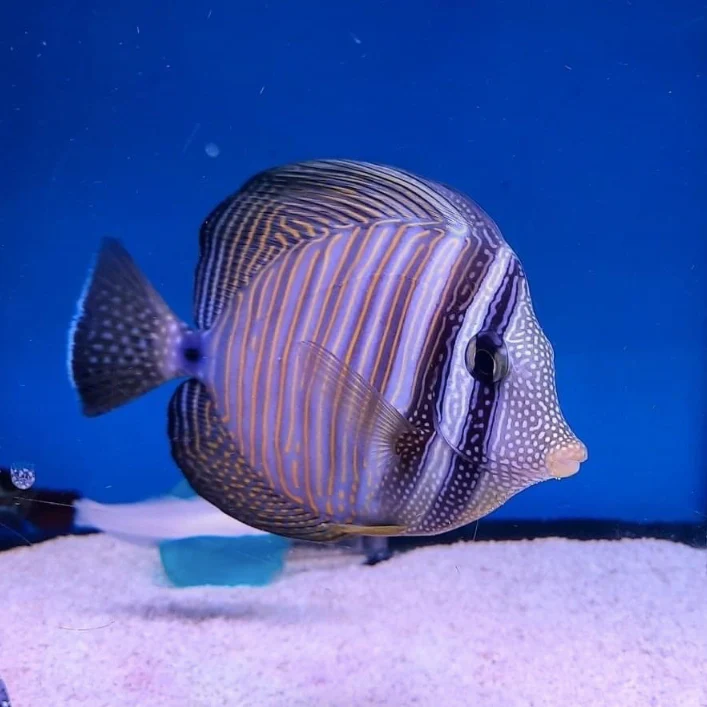
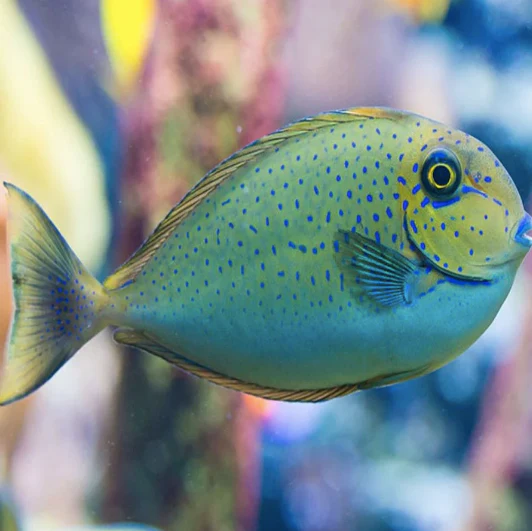
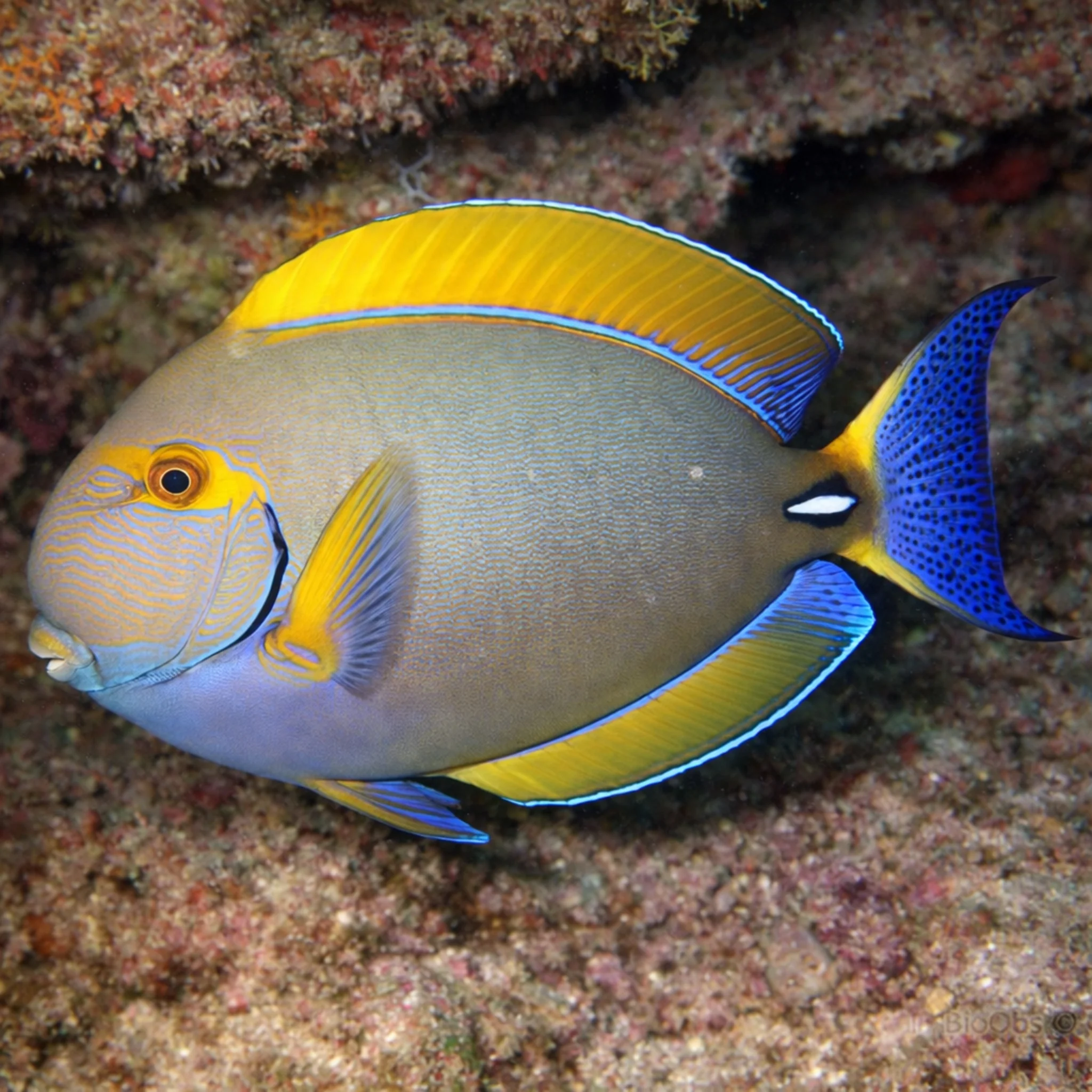
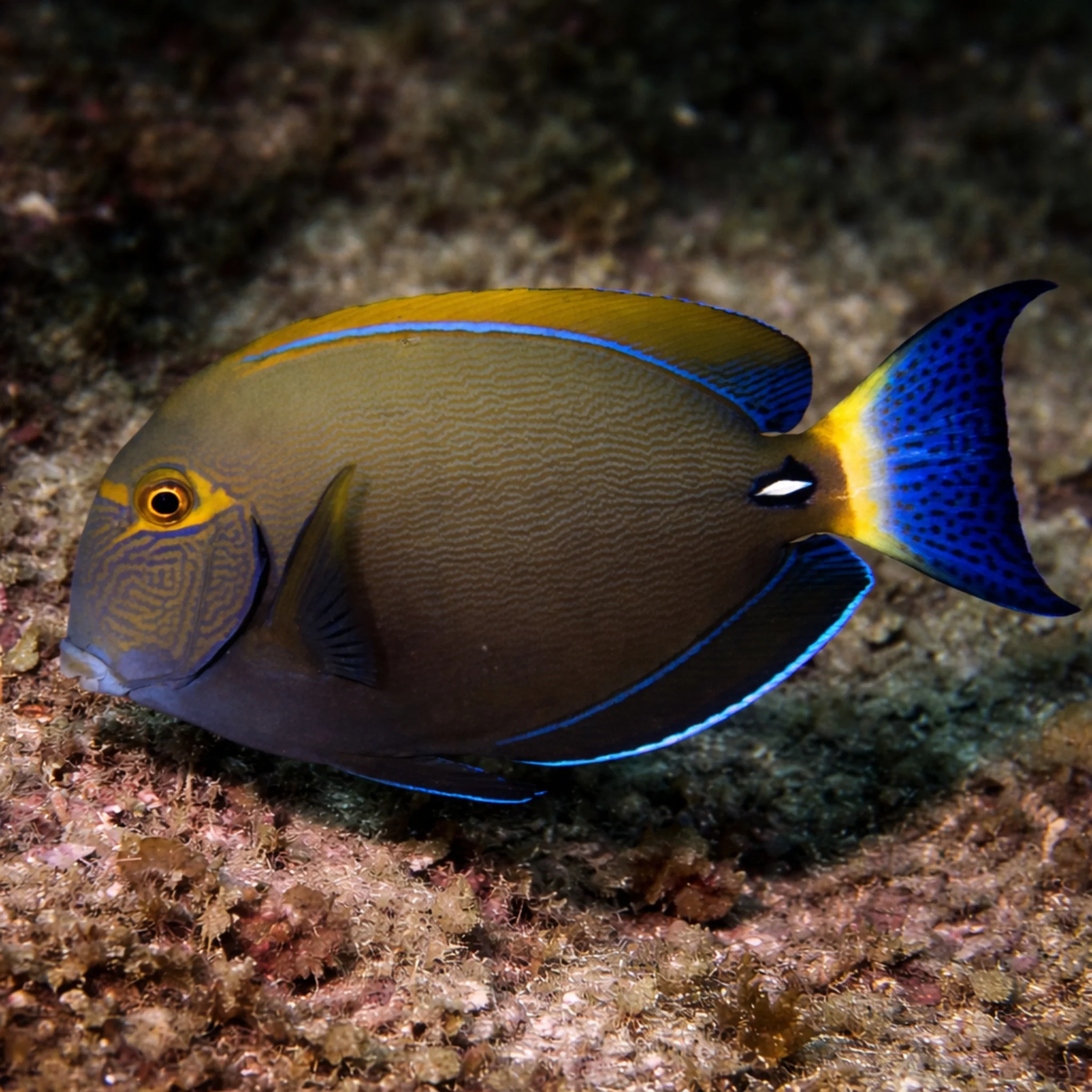
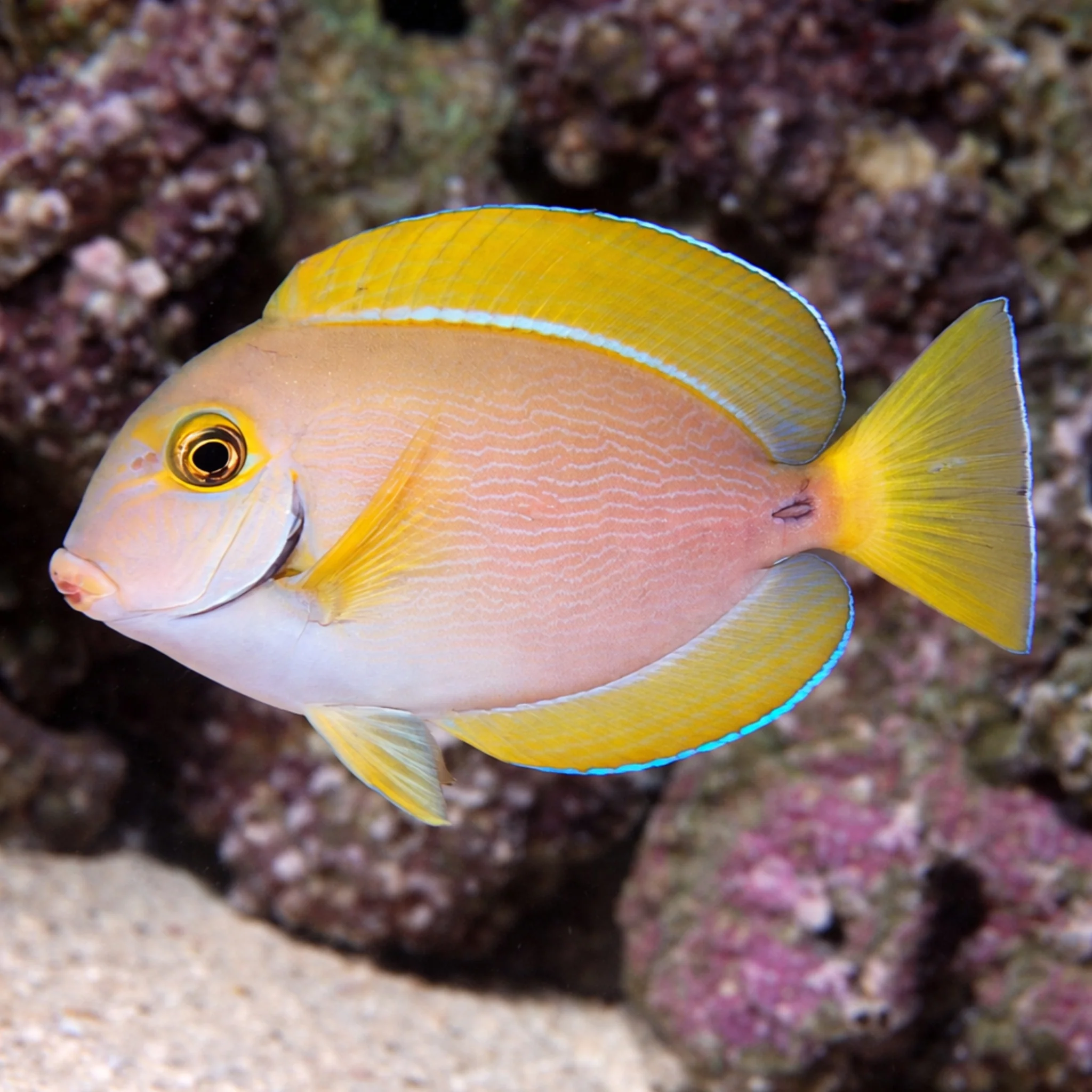
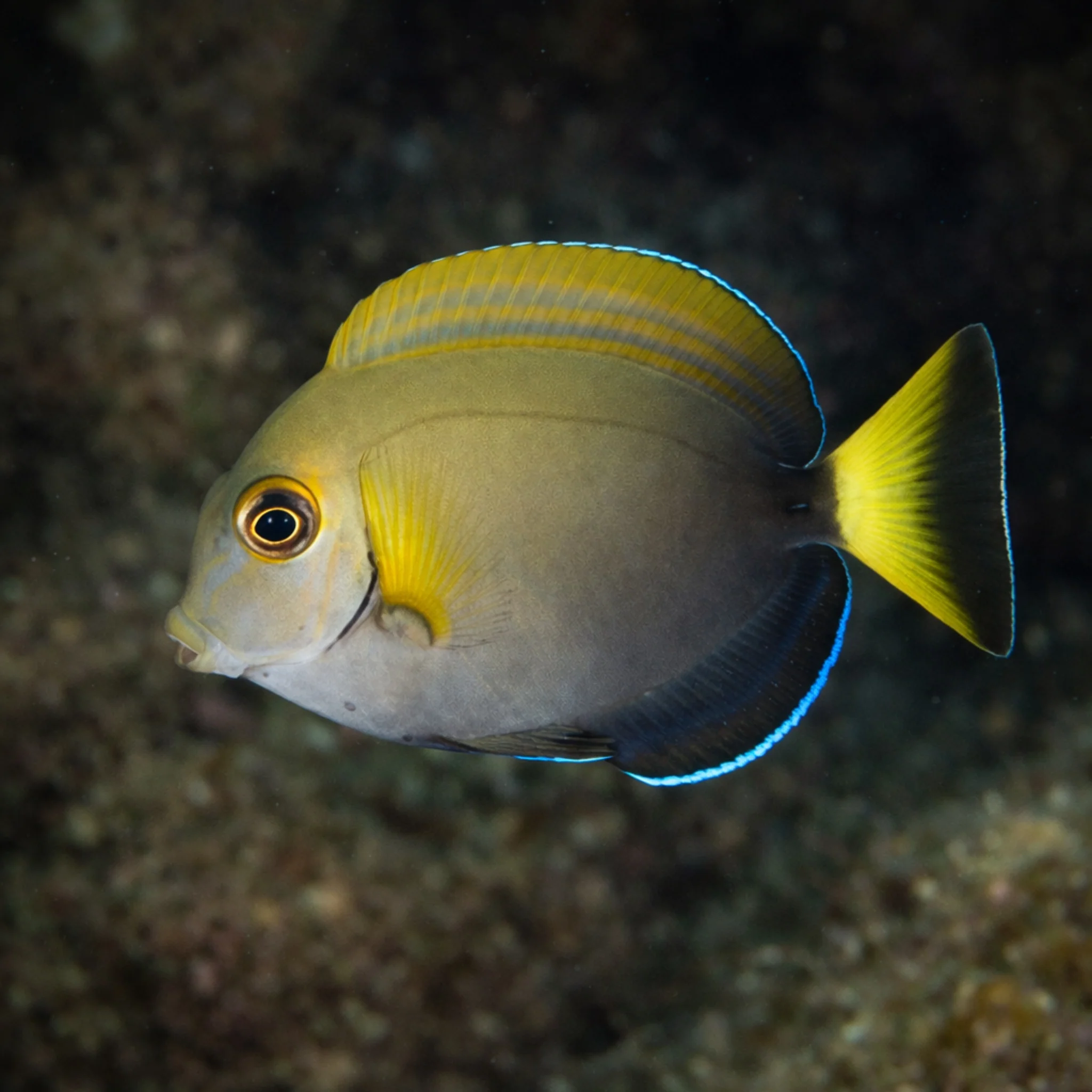
The Dussumieri Tang, also known as the Eyestripe Surgeonfish and sometimes sold in the trade as the Australian Blue Tail Tang, is a large, elegant surgeonfish with a pale brown to bluish body, fine wavy markings and a distinctive orange band running between and behind the eyes. In the wild it is found across the Indo-Pacific on outer reef slopes and coastal reef walls, often in deeper seaward reef areas. It is an active grazer that can be relatively peaceful for a large tang, but its eventual size means it is best suited to a very spacious, mature marine aquarium run by an experienced keeper.
Common Name:
Dussumieri Tang. Also commonly referred to as the Eyestripe Surgeonfish.
Scientific Name (Latin):
Acanthurus dussumieri
Maximum Size:
Up to 50–54 cm in captivity and in the wild, depending on source; it is a genuinely large tang and should be planned for as such.
Water Type:
Marine.
Origin / Natural Habitat:
Widespread across the Indo-Pacific, including the Red Sea, East Africa, the Indian Ocean and across to the Pacific. Adults are typically found on deep coastal reef slopes, outer reef walls and seaward reefs, while juveniles are more often associated with algae-covered rocky reef areas.
Water Parameters:
Temperature: 22–26°C
pH Range: 8.1–8.4
Salinity: 1.020–1.025 SG
Temperament:
Generally mostly peaceful, but like many tangs it can become aggressive towards other tangs, surgeonfish or similar-shaped competitors, especially if space is limited.
Diet:
Primarily herbivorous / algivorous. It should be offered a diet rich in marine algae, seaweed and spirulina-based foods, with regular grazing opportunities in a mature aquarium. Some sources also note small crustaceans in the diet.
Minimum Tank Size:
At least 1,200 litres is the safer long-term recommendation, with some trade guidance going even larger for adults.
Behaviour & Activity:
A very active, open-water grazer that spends much of the day swimming and browsing surfaces for algae and detritus. It may occur singly or in groups in nature and needs substantial open swimming space in captivity.
Reef Safe:
Reef Safe
This species is generally regarded as safe with corals and most invertebrates, though normal tang aggression towards other fish can still be an issue in mixed communities.
Special Requirements or Care Notes:
Best kept in a well-established marine aquarium with excellent oxygenation, strong water movement, abundant swimming room and plenty of natural grazing. Because of its adult size, it is not a species for average-sized reef tanks.
Suitable for:
Experienced fishkeepers. TMC lists it as Intermediate, but given the adult size and tank requirement, experienced care is the safer retail recommendation.
Availability:
Occasional in trade.
All images are a visual representation of the fish you will receive, made to be as accurate as possible. Please note that Mother Nature is a wonderful thing, and variation in patterns and colours will occur — that is part of the unique beauty of these animals.
Product Information
Product Information
Shipping & Returns
Shipping & Returns
Dussumieri Tang - Acanthurus dussumieri
Dussumieri Tang - Acanthurus dussumieri
Dussumieri Tang (Acanthurus dussumieri)
The Dussumieri Tang, also known as the Eyestripe Surgeonfish and sometimes sold in the trade as the Australian Blue Tail Tang, is a large, elegant surgeonfish with a pale brown to bluish body, fine wavy markings and a distinctive orange band running between and behind the eyes. In the wild it is found across the Indo-Pacific on outer reef slopes and coastal reef walls, often in deeper seaward reef areas. It is an active grazer that can be relatively peaceful for a large tang, but its eventual size means it is best suited to a very spacious, mature marine aquarium run by an experienced keeper.
Common Name:
Dussumieri Tang. Also commonly referred to as the Eyestripe Surgeonfish.
Scientific Name (Latin):
Acanthurus dussumieri
Maximum Size:
Up to 50–54 cm in captivity and in the wild, depending on source; it is a genuinely large tang and should be planned for as such.
Water Type:
Marine.
Origin / Natural Habitat:
Widespread across the Indo-Pacific, including the Red Sea, East Africa, the Indian Ocean and across to the Pacific. Adults are typically found on deep coastal reef slopes, outer reef walls and seaward reefs, while juveniles are more often associated with algae-covered rocky reef areas.
Water Parameters:
Temperature: 22–26°C
pH Range: 8.1–8.4
Salinity: 1.020–1.025 SG
Temperament:
Generally mostly peaceful, but like many tangs it can become aggressive towards other tangs, surgeonfish or similar-shaped competitors, especially if space is limited.
Diet:
Primarily herbivorous / algivorous. It should be offered a diet rich in marine algae, seaweed and spirulina-based foods, with regular grazing opportunities in a mature aquarium. Some sources also note small crustaceans in the diet.
Minimum Tank Size:
At least 1,200 litres is the safer long-term recommendation, with some trade guidance going even larger for adults.
Behaviour & Activity:
A very active, open-water grazer that spends much of the day swimming and browsing surfaces for algae and detritus. It may occur singly or in groups in nature and needs substantial open swimming space in captivity.
Reef Safe:
Reef Safe
This species is generally regarded as safe with corals and most invertebrates, though normal tang aggression towards other fish can still be an issue in mixed communities.
Special Requirements or Care Notes:
Best kept in a well-established marine aquarium with excellent oxygenation, strong water movement, abundant swimming room and plenty of natural grazing. Because of its adult size, it is not a species for average-sized reef tanks.
Suitable for:
Experienced fishkeepers. TMC lists it as Intermediate, but given the adult size and tank requirement, experienced care is the safer retail recommendation.
Availability:
Occasional in trade.
All images are a visual representation of the fish you will receive, made to be as accurate as possible. Please note that Mother Nature is a wonderful thing, and variation in patterns and colours will occur — that is part of the unique beauty of these animals.
Original: $298.23
-65%$298.23
$104.38Product Information
Product Information
Shipping & Returns
Shipping & Returns
Description
Dussumieri Tang (Acanthurus dussumieri)
The Dussumieri Tang, also known as the Eyestripe Surgeonfish and sometimes sold in the trade as the Australian Blue Tail Tang, is a large, elegant surgeonfish with a pale brown to bluish body, fine wavy markings and a distinctive orange band running between and behind the eyes. In the wild it is found across the Indo-Pacific on outer reef slopes and coastal reef walls, often in deeper seaward reef areas. It is an active grazer that can be relatively peaceful for a large tang, but its eventual size means it is best suited to a very spacious, mature marine aquarium run by an experienced keeper.
Common Name:
Dussumieri Tang. Also commonly referred to as the Eyestripe Surgeonfish.
Scientific Name (Latin):
Acanthurus dussumieri
Maximum Size:
Up to 50–54 cm in captivity and in the wild, depending on source; it is a genuinely large tang and should be planned for as such.
Water Type:
Marine.
Origin / Natural Habitat:
Widespread across the Indo-Pacific, including the Red Sea, East Africa, the Indian Ocean and across to the Pacific. Adults are typically found on deep coastal reef slopes, outer reef walls and seaward reefs, while juveniles are more often associated with algae-covered rocky reef areas.
Water Parameters:
Temperature: 22–26°C
pH Range: 8.1–8.4
Salinity: 1.020–1.025 SG
Temperament:
Generally mostly peaceful, but like many tangs it can become aggressive towards other tangs, surgeonfish or similar-shaped competitors, especially if space is limited.
Diet:
Primarily herbivorous / algivorous. It should be offered a diet rich in marine algae, seaweed and spirulina-based foods, with regular grazing opportunities in a mature aquarium. Some sources also note small crustaceans in the diet.
Minimum Tank Size:
At least 1,200 litres is the safer long-term recommendation, with some trade guidance going even larger for adults.
Behaviour & Activity:
A very active, open-water grazer that spends much of the day swimming and browsing surfaces for algae and detritus. It may occur singly or in groups in nature and needs substantial open swimming space in captivity.
Reef Safe:
Reef Safe
This species is generally regarded as safe with corals and most invertebrates, though normal tang aggression towards other fish can still be an issue in mixed communities.
Special Requirements or Care Notes:
Best kept in a well-established marine aquarium with excellent oxygenation, strong water movement, abundant swimming room and plenty of natural grazing. Because of its adult size, it is not a species for average-sized reef tanks.
Suitable for:
Experienced fishkeepers. TMC lists it as Intermediate, but given the adult size and tank requirement, experienced care is the safer retail recommendation.
Availability:
Occasional in trade.
All images are a visual representation of the fish you will receive, made to be as accurate as possible. Please note that Mother Nature is a wonderful thing, and variation in patterns and colours will occur — that is part of the unique beauty of these animals.