Eastern Triangle Butterflyfish - Chaetodon Baronessa
Eastern Triangle Butterflyfish (Chaetodon baronessa)
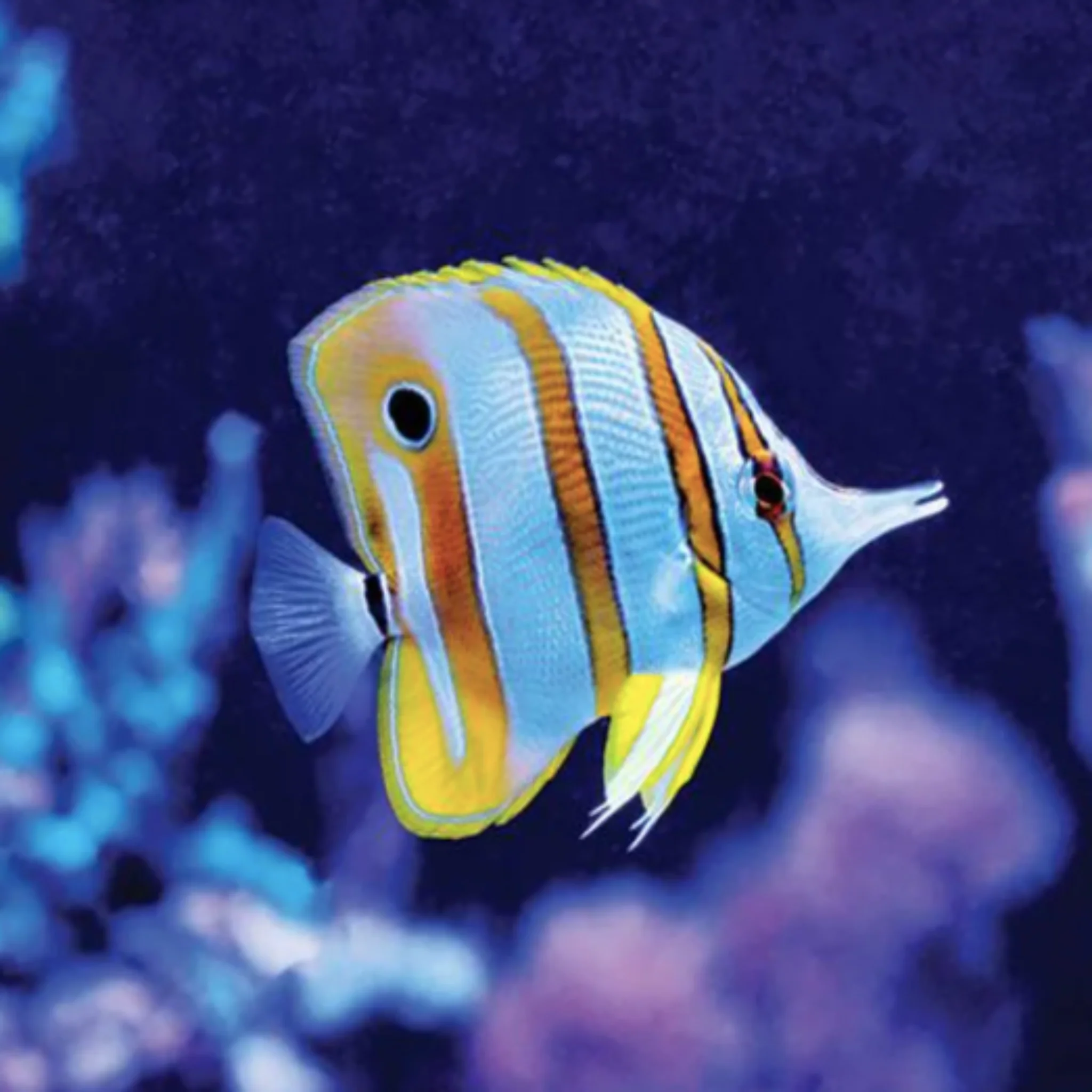
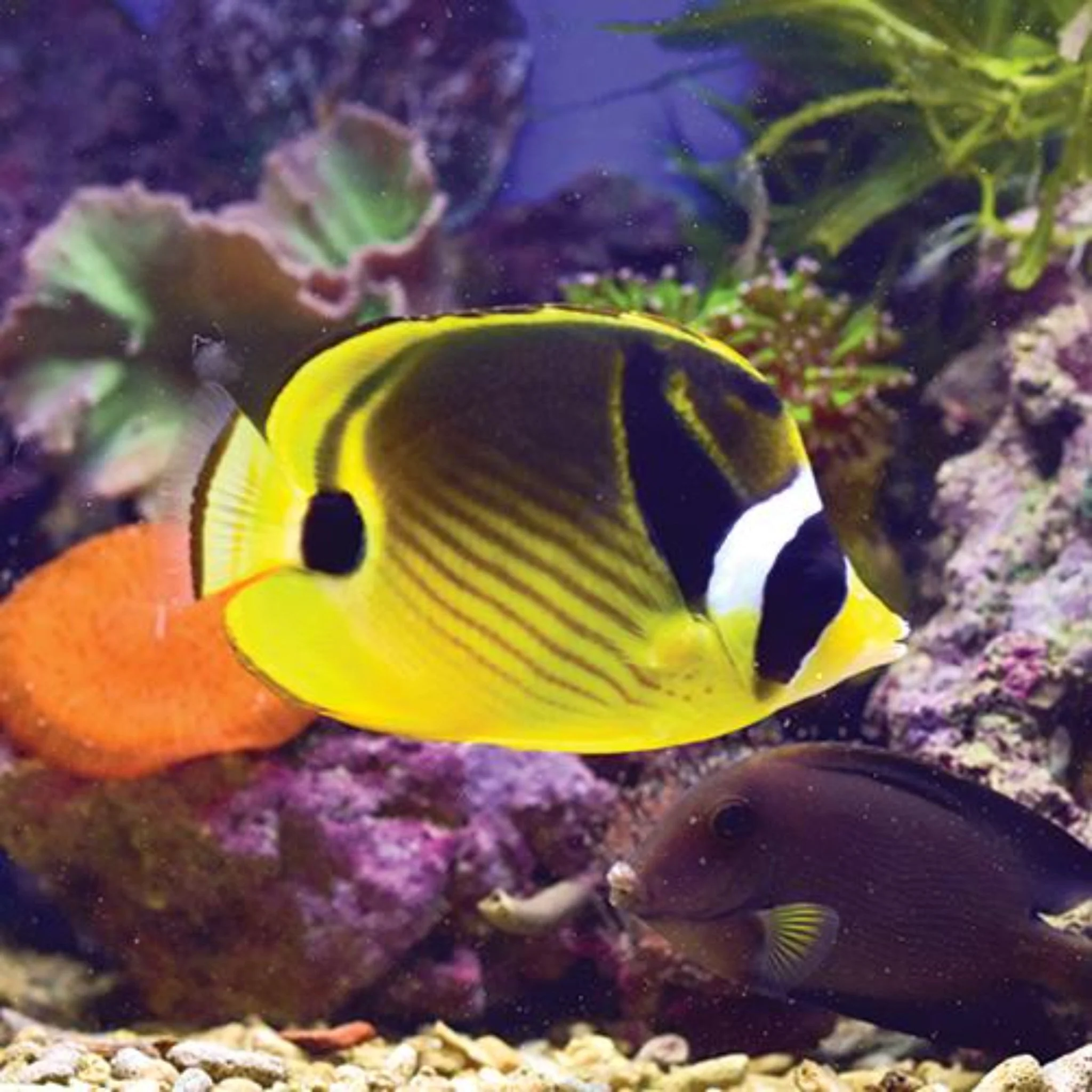
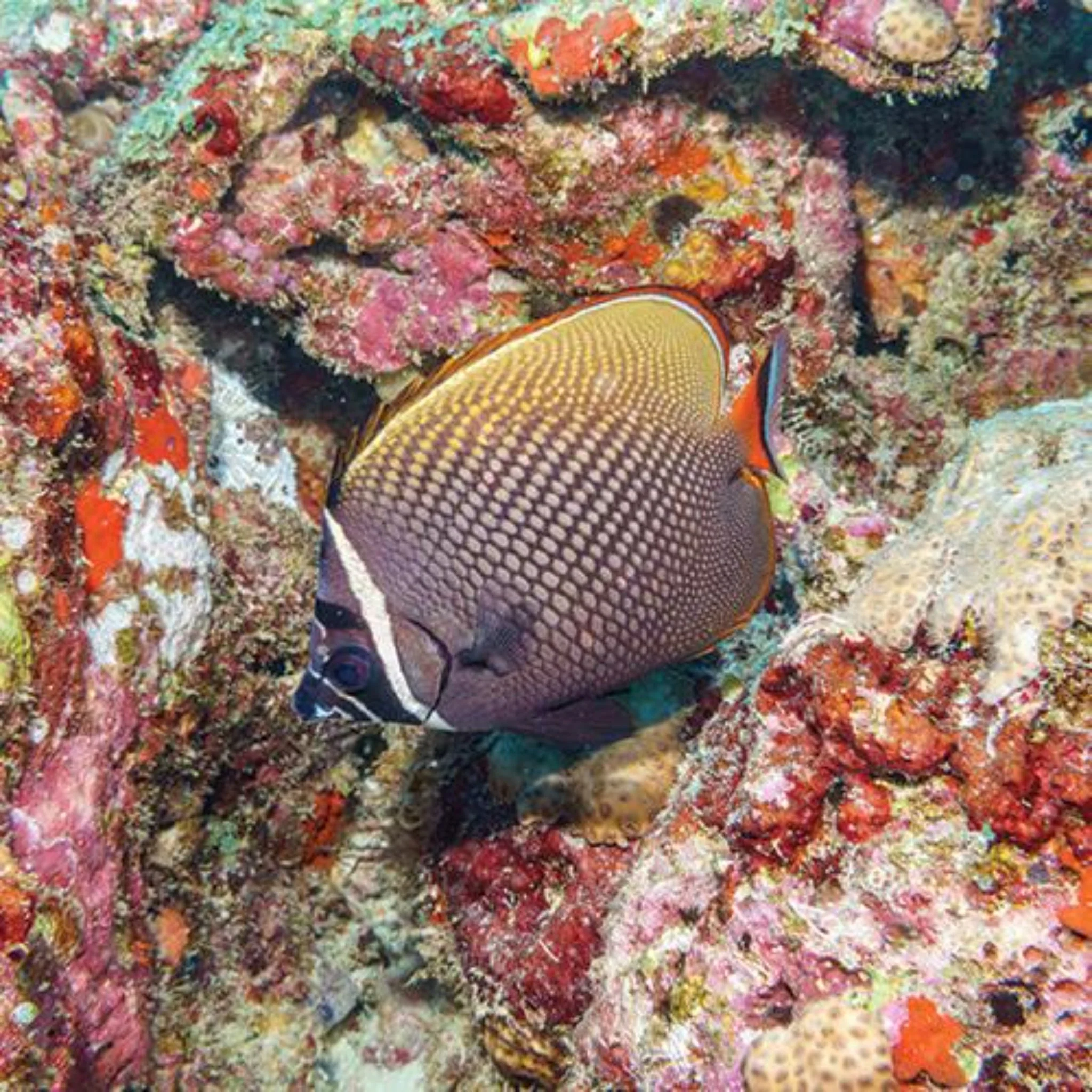
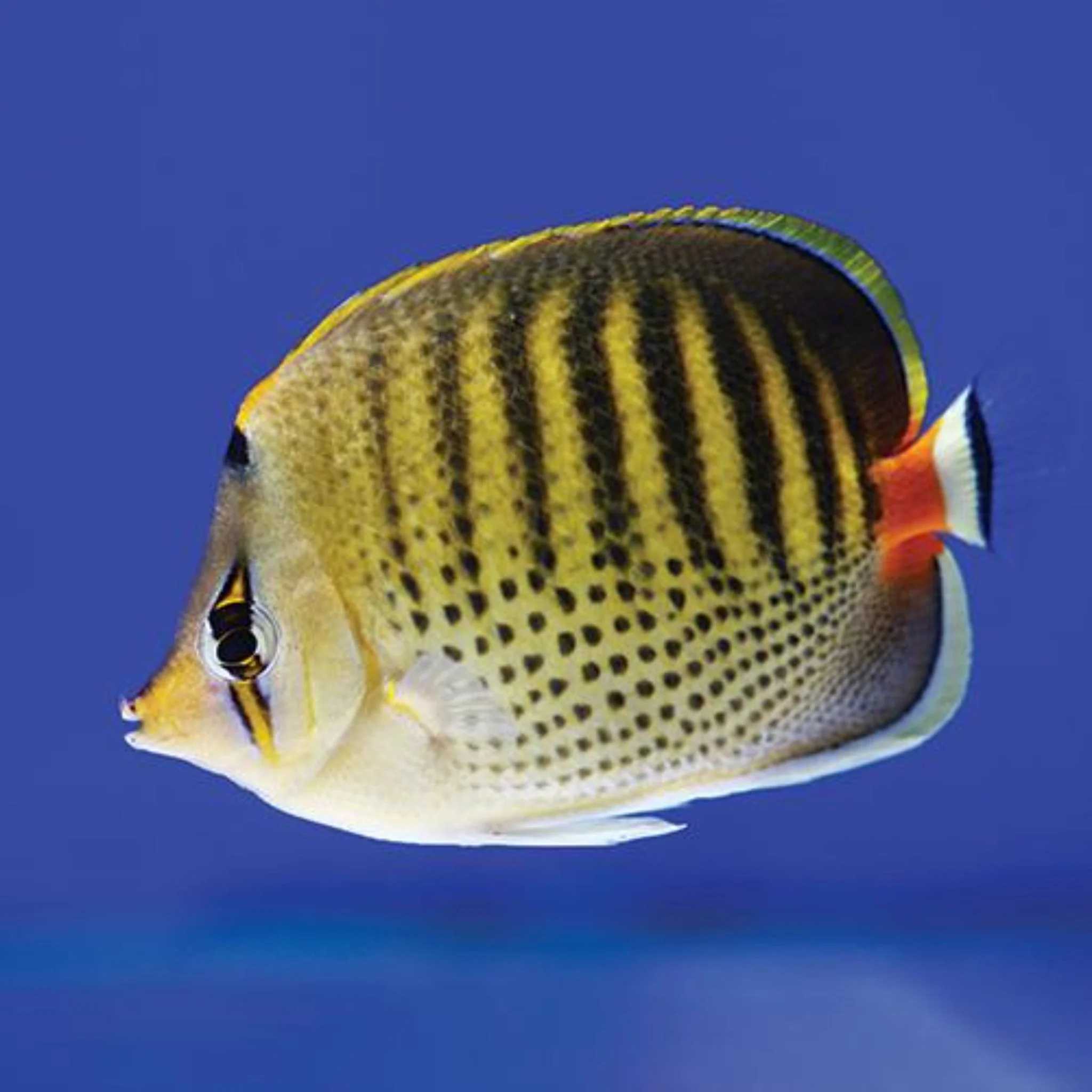
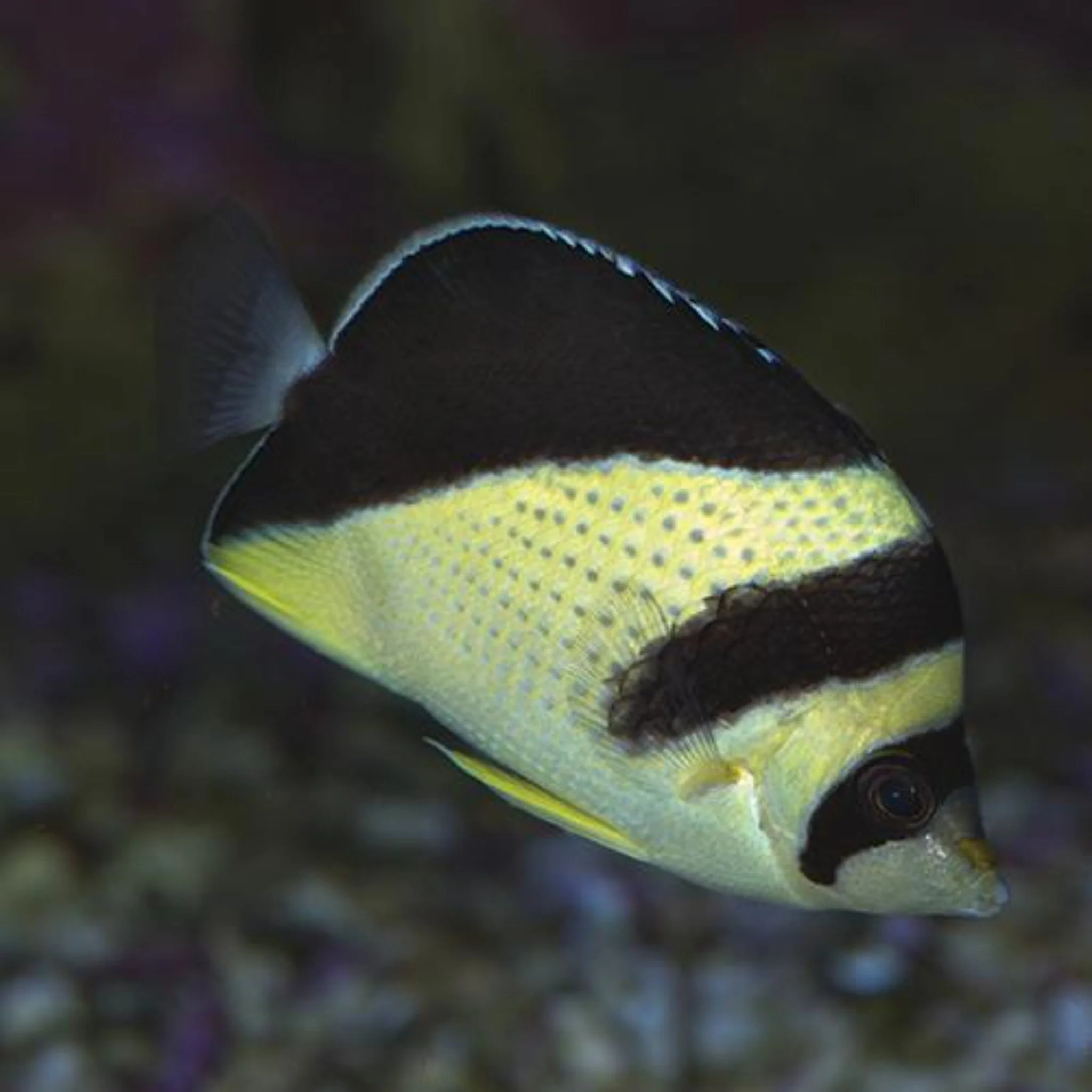
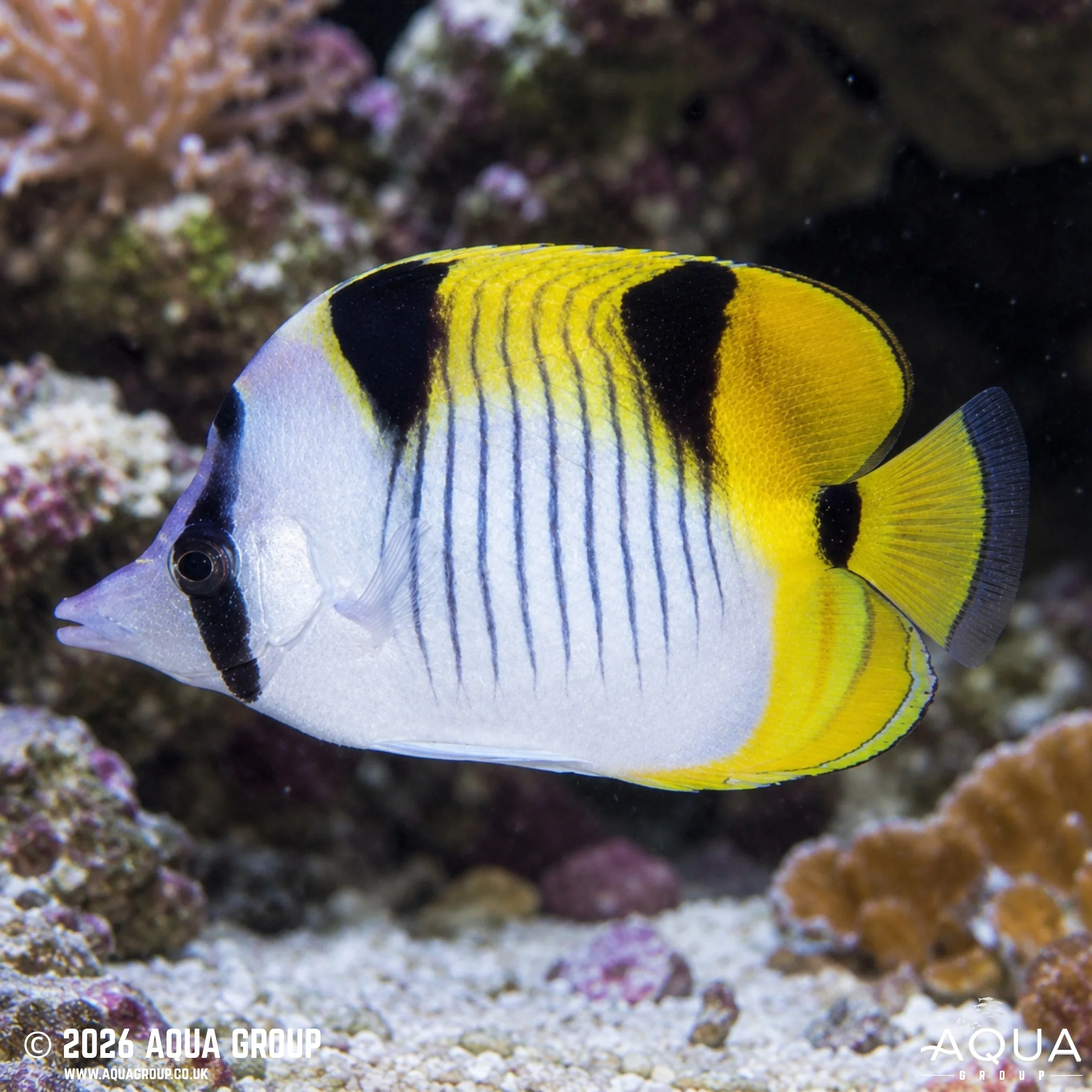
The Eastern Triangle Butterflyfish is a beautiful but highly specialist marine butterflyfish, recognised by its triangular body shape, yellow fins, fine diagonal striping and bold black wedge-shaped markings across the upper body. Also known as the Eastern Triangular Butterflyfish or Baroness Butterflyfish, this species is best suited to expert marine keepers only. In the wild it feeds almost exclusively on Acropora coral polyps, which makes it very difficult to maintain long-term in captivity unless it is already feeding well and specialist care can be provided.
Common Name:
Eastern Triangle Butterflyfish. Also commonly referred to as the Eastern Triangular Butterflyfish, Baroness Butterflyfish, Baronessa Butterflyfish or Triangular Butterflyfish.
Scientific Name (Latin):
Chaetodon baronessa
Maximum Size:
Around 15–16 cm, making it a medium-sized butterflyfish.
Water Type:
Marine.
Origin / Natural Habitat:
Found across the central Indo-West Pacific, including Indonesia, the Cocos-Keeling region, Fiji, Tonga, southern Japan, New Caledonia and eastern Australia. In the wild it is associated with lagoon reefs, seaward reefs and coral-rich reef slopes, usually living in pairs and defending feeding territories.
Water Parameters:
Temperature: 24–27°C
pH Range: 8.1–8.4
Salinity: 1.020–1.025 SG
Temperament:
Generally peaceful to semi-aggressive, but territorial towards similar butterflyfish and competitors, especially in smaller aquariums. It is not an aggressive predator, but its specialist feeding behaviour makes it unsuitable for most standard mixed reef communities.
Diet:
Highly specialist corallivore. In the wild it feeds almost exclusively on Acropora coral polyps. In captivity, some individuals may accept finely chopped clam, mussel, prawn, mysis, brineshrimp, specialist frozen marine blends or food presented on coral skeletons, but many specimens are difficult to convert to prepared foods. Only purchase if feeding has been confirmed.
Minimum Tank Size:
A practical recommendation is at least 500 litres for a single specimen, with a mature, stable system and plenty of swimming space. Larger aquariums are strongly preferred due to its specialist feeding needs and sensitivity.
Behaviour & Activity:
This is an active reef-associated butterflyfish that spends much of the day browsing coral surfaces and moving around reef structure. In nature it is often seen in pairs and can be territorial around feeding areas. In the aquarium it needs open swimming space, mature rockwork, low stress levels and very stable water quality.
Reef Safe:
Not Reef Safe
This species is not suitable for reef aquariums with corals. It naturally feeds on coral polyps and may also pick at tube worms, clams and other sessile invertebrates. It is best considered a specialist fish-only or expert-only species rather than a normal reef-safe butterflyfish.
Special Requirements or Care Notes:
This is one of the more difficult butterflyfish to maintain because of its obligate coral-feeding nature. It should only be attempted by experienced marine keepers with a mature aquarium, excellent water quality, peaceful tank mates and a clear plan for frequent specialist feeding. Quarantine and careful acclimation are strongly recommended. Avoid adding to new systems, aggressive fish communities or standard coral reef displays.
Suitable for:
Expert marine fishkeepers only
Availability:
Rare / occasional in trade
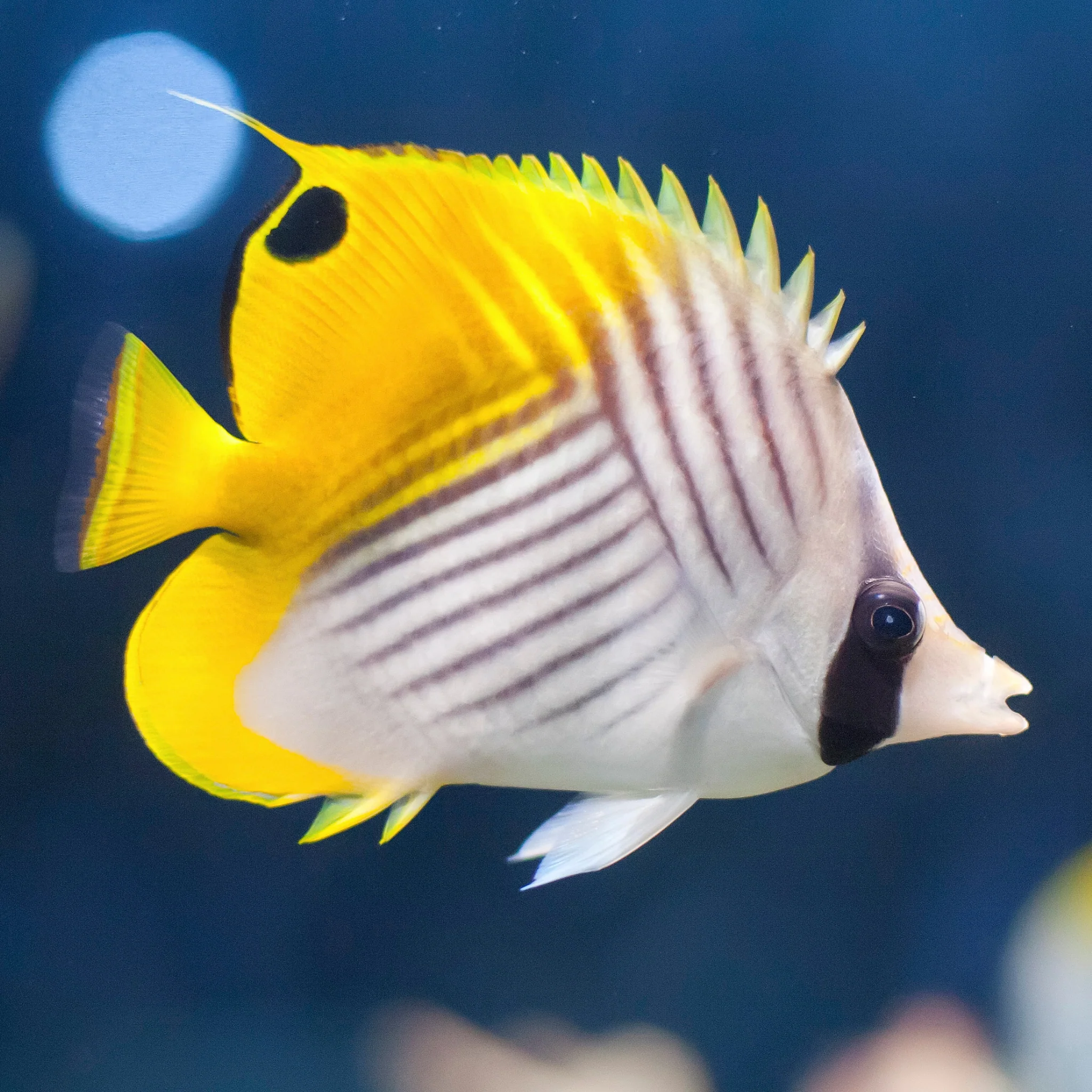
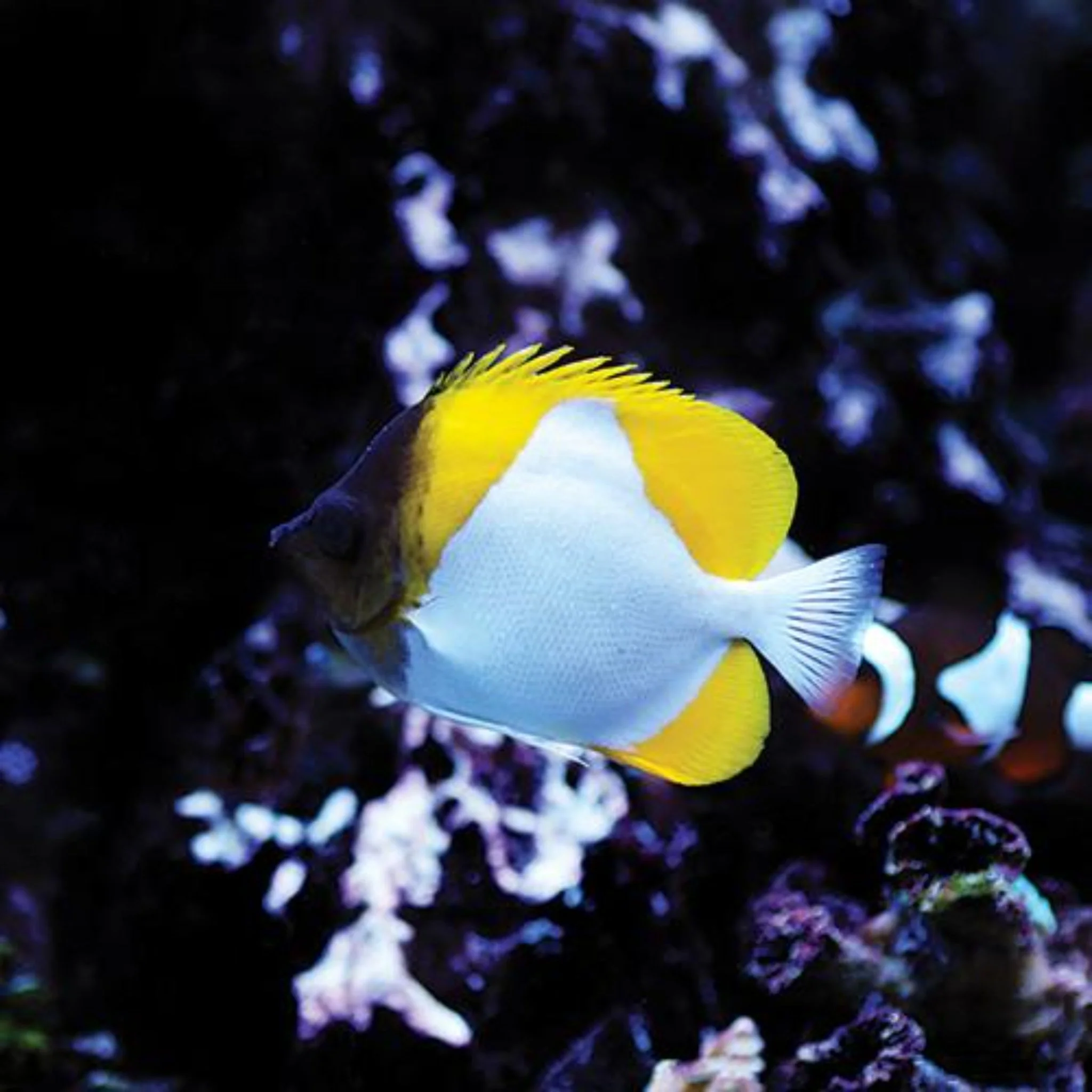
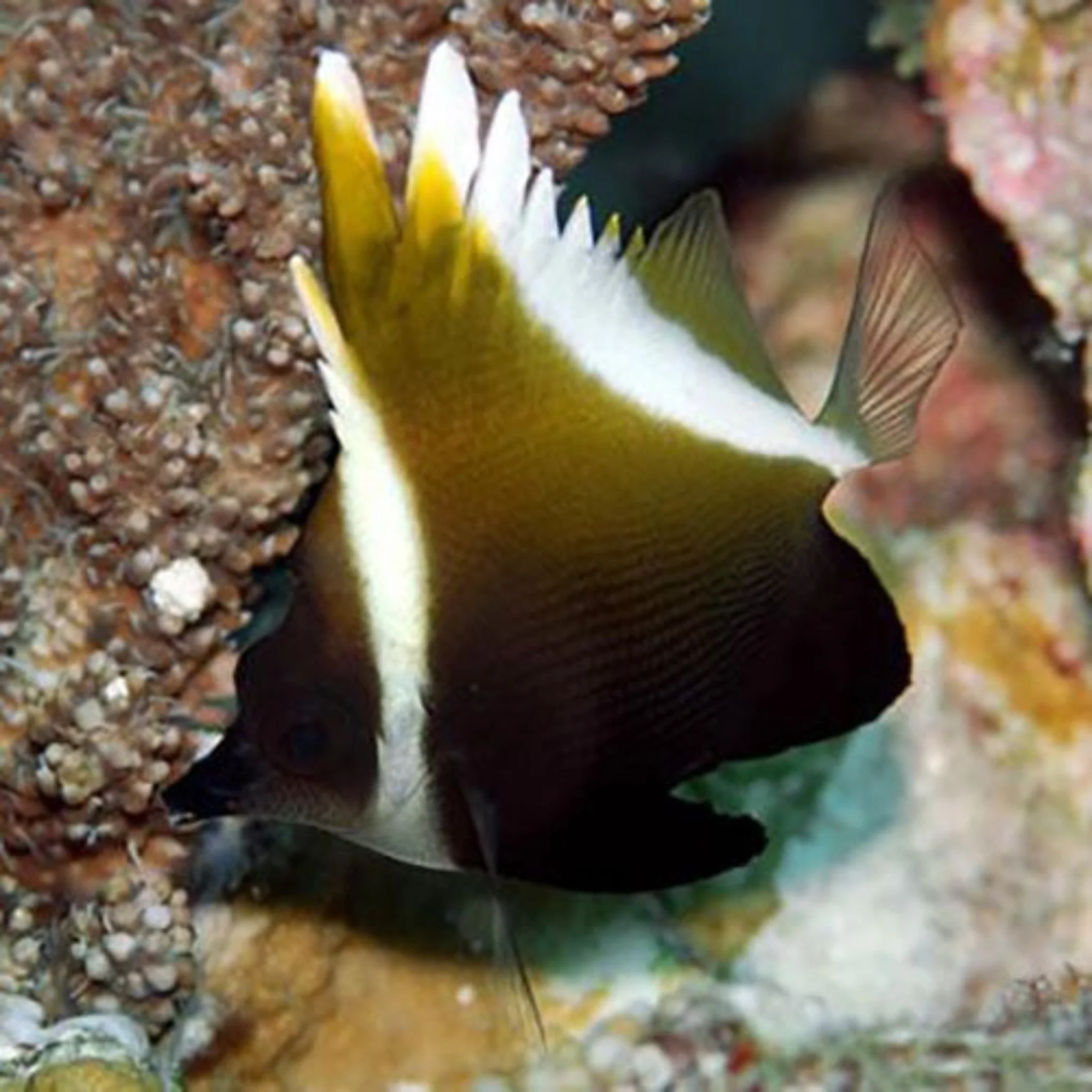
All images are a visual representation of the fish you will receive, made to be as accurate as possible. Please note that Mother Nature is a wonderful thing, and variation in patterns and colours will occur — that is part of the unique beauty of these animals.
Product Information
Product Information
Shipping & Returns
Shipping & Returns
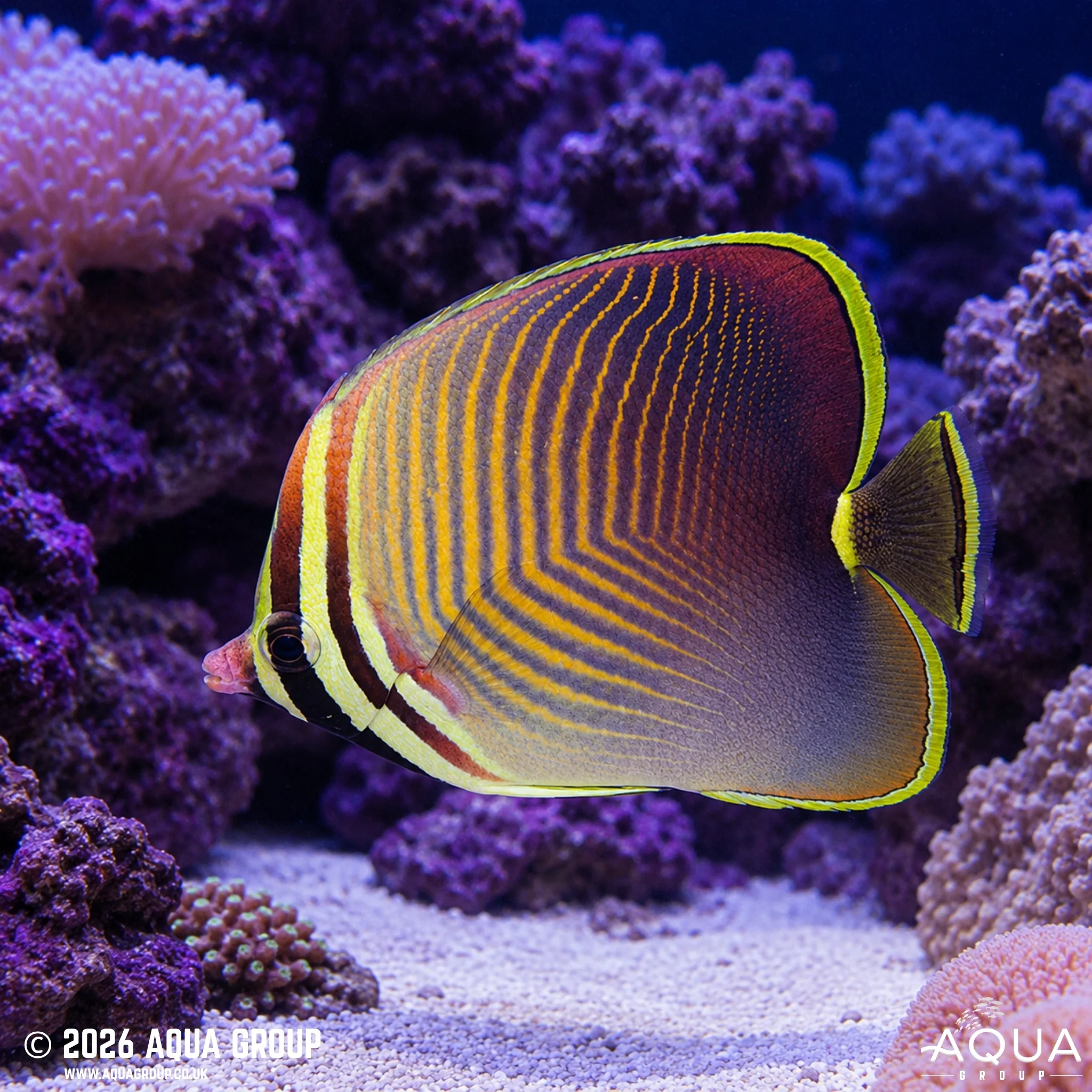
Eastern Triangle Butterflyfish - Chaetodon Baronessa
Eastern Triangle Butterflyfish - Chaetodon Baronessa
Eastern Triangle Butterflyfish (Chaetodon baronessa)
The Eastern Triangle Butterflyfish is a beautiful but highly specialist marine butterflyfish, recognised by its triangular body shape, yellow fins, fine diagonal striping and bold black wedge-shaped markings across the upper body. Also known as the Eastern Triangular Butterflyfish or Baroness Butterflyfish, this species is best suited to expert marine keepers only. In the wild it feeds almost exclusively on Acropora coral polyps, which makes it very difficult to maintain long-term in captivity unless it is already feeding well and specialist care can be provided.
Common Name:
Eastern Triangle Butterflyfish. Also commonly referred to as the Eastern Triangular Butterflyfish, Baroness Butterflyfish, Baronessa Butterflyfish or Triangular Butterflyfish.
Scientific Name (Latin):
Chaetodon baronessa
Maximum Size:
Around 15–16 cm, making it a medium-sized butterflyfish.
Water Type:
Marine.
Origin / Natural Habitat:
Found across the central Indo-West Pacific, including Indonesia, the Cocos-Keeling region, Fiji, Tonga, southern Japan, New Caledonia and eastern Australia. In the wild it is associated with lagoon reefs, seaward reefs and coral-rich reef slopes, usually living in pairs and defending feeding territories.
Water Parameters:
Temperature: 24–27°C
pH Range: 8.1–8.4
Salinity: 1.020–1.025 SG
Temperament:
Generally peaceful to semi-aggressive, but territorial towards similar butterflyfish and competitors, especially in smaller aquariums. It is not an aggressive predator, but its specialist feeding behaviour makes it unsuitable for most standard mixed reef communities.
Diet:
Highly specialist corallivore. In the wild it feeds almost exclusively on Acropora coral polyps. In captivity, some individuals may accept finely chopped clam, mussel, prawn, mysis, brineshrimp, specialist frozen marine blends or food presented on coral skeletons, but many specimens are difficult to convert to prepared foods. Only purchase if feeding has been confirmed.
Minimum Tank Size:
A practical recommendation is at least 500 litres for a single specimen, with a mature, stable system and plenty of swimming space. Larger aquariums are strongly preferred due to its specialist feeding needs and sensitivity.
Behaviour & Activity:
This is an active reef-associated butterflyfish that spends much of the day browsing coral surfaces and moving around reef structure. In nature it is often seen in pairs and can be territorial around feeding areas. In the aquarium it needs open swimming space, mature rockwork, low stress levels and very stable water quality.
Reef Safe:
Not Reef Safe
This species is not suitable for reef aquariums with corals. It naturally feeds on coral polyps and may also pick at tube worms, clams and other sessile invertebrates. It is best considered a specialist fish-only or expert-only species rather than a normal reef-safe butterflyfish.
Special Requirements or Care Notes:
This is one of the more difficult butterflyfish to maintain because of its obligate coral-feeding nature. It should only be attempted by experienced marine keepers with a mature aquarium, excellent water quality, peaceful tank mates and a clear plan for frequent specialist feeding. Quarantine and careful acclimation are strongly recommended. Avoid adding to new systems, aggressive fish communities or standard coral reef displays.
Suitable for:
Expert marine fishkeepers only
Availability:
Rare / occasional in trade
All images are a visual representation of the fish you will receive, made to be as accurate as possible. Please note that Mother Nature is a wonderful thing, and variation in patterns and colours will occur — that is part of the unique beauty of these animals.
Original: $47.45
-65%$47.45
$16.61Product Information
Product Information
Shipping & Returns
Shipping & Returns
Description
Eastern Triangle Butterflyfish (Chaetodon baronessa)
The Eastern Triangle Butterflyfish is a beautiful but highly specialist marine butterflyfish, recognised by its triangular body shape, yellow fins, fine diagonal striping and bold black wedge-shaped markings across the upper body. Also known as the Eastern Triangular Butterflyfish or Baroness Butterflyfish, this species is best suited to expert marine keepers only. In the wild it feeds almost exclusively on Acropora coral polyps, which makes it very difficult to maintain long-term in captivity unless it is already feeding well and specialist care can be provided.
Common Name:
Eastern Triangle Butterflyfish. Also commonly referred to as the Eastern Triangular Butterflyfish, Baroness Butterflyfish, Baronessa Butterflyfish or Triangular Butterflyfish.
Scientific Name (Latin):
Chaetodon baronessa
Maximum Size:
Around 15–16 cm, making it a medium-sized butterflyfish.
Water Type:
Marine.
Origin / Natural Habitat:
Found across the central Indo-West Pacific, including Indonesia, the Cocos-Keeling region, Fiji, Tonga, southern Japan, New Caledonia and eastern Australia. In the wild it is associated with lagoon reefs, seaward reefs and coral-rich reef slopes, usually living in pairs and defending feeding territories.
Water Parameters:
Temperature: 24–27°C
pH Range: 8.1–8.4
Salinity: 1.020–1.025 SG
Temperament:
Generally peaceful to semi-aggressive, but territorial towards similar butterflyfish and competitors, especially in smaller aquariums. It is not an aggressive predator, but its specialist feeding behaviour makes it unsuitable for most standard mixed reef communities.
Diet:
Highly specialist corallivore. In the wild it feeds almost exclusively on Acropora coral polyps. In captivity, some individuals may accept finely chopped clam, mussel, prawn, mysis, brineshrimp, specialist frozen marine blends or food presented on coral skeletons, but many specimens are difficult to convert to prepared foods. Only purchase if feeding has been confirmed.
Minimum Tank Size:
A practical recommendation is at least 500 litres for a single specimen, with a mature, stable system and plenty of swimming space. Larger aquariums are strongly preferred due to its specialist feeding needs and sensitivity.
Behaviour & Activity:
This is an active reef-associated butterflyfish that spends much of the day browsing coral surfaces and moving around reef structure. In nature it is often seen in pairs and can be territorial around feeding areas. In the aquarium it needs open swimming space, mature rockwork, low stress levels and very stable water quality.
Reef Safe:
Not Reef Safe
This species is not suitable for reef aquariums with corals. It naturally feeds on coral polyps and may also pick at tube worms, clams and other sessile invertebrates. It is best considered a specialist fish-only or expert-only species rather than a normal reef-safe butterflyfish.
Special Requirements or Care Notes:
This is one of the more difficult butterflyfish to maintain because of its obligate coral-feeding nature. It should only be attempted by experienced marine keepers with a mature aquarium, excellent water quality, peaceful tank mates and a clear plan for frequent specialist feeding. Quarantine and careful acclimation are strongly recommended. Avoid adding to new systems, aggressive fish communities or standard coral reef displays.
Suitable for:
Expert marine fishkeepers only
Availability:
Rare / occasional in trade
All images are a visual representation of the fish you will receive, made to be as accurate as possible. Please note that Mother Nature is a wonderful thing, and variation in patterns and colours will occur — that is part of the unique beauty of these animals.