Edwardi Pencil Wrasse - Pseudojuloides edwardi
Edwardi Pencil Wrasse (Pseudojuloides edwardi)
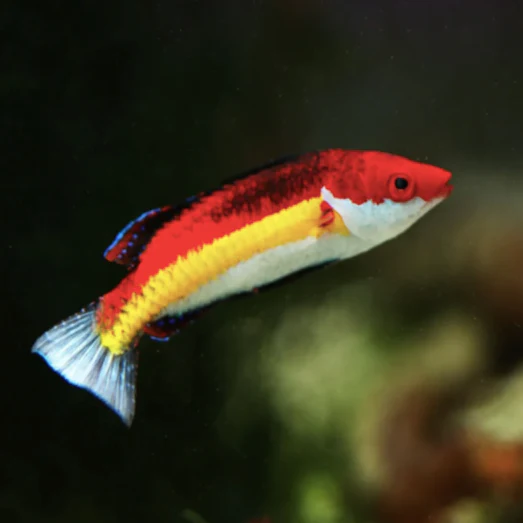
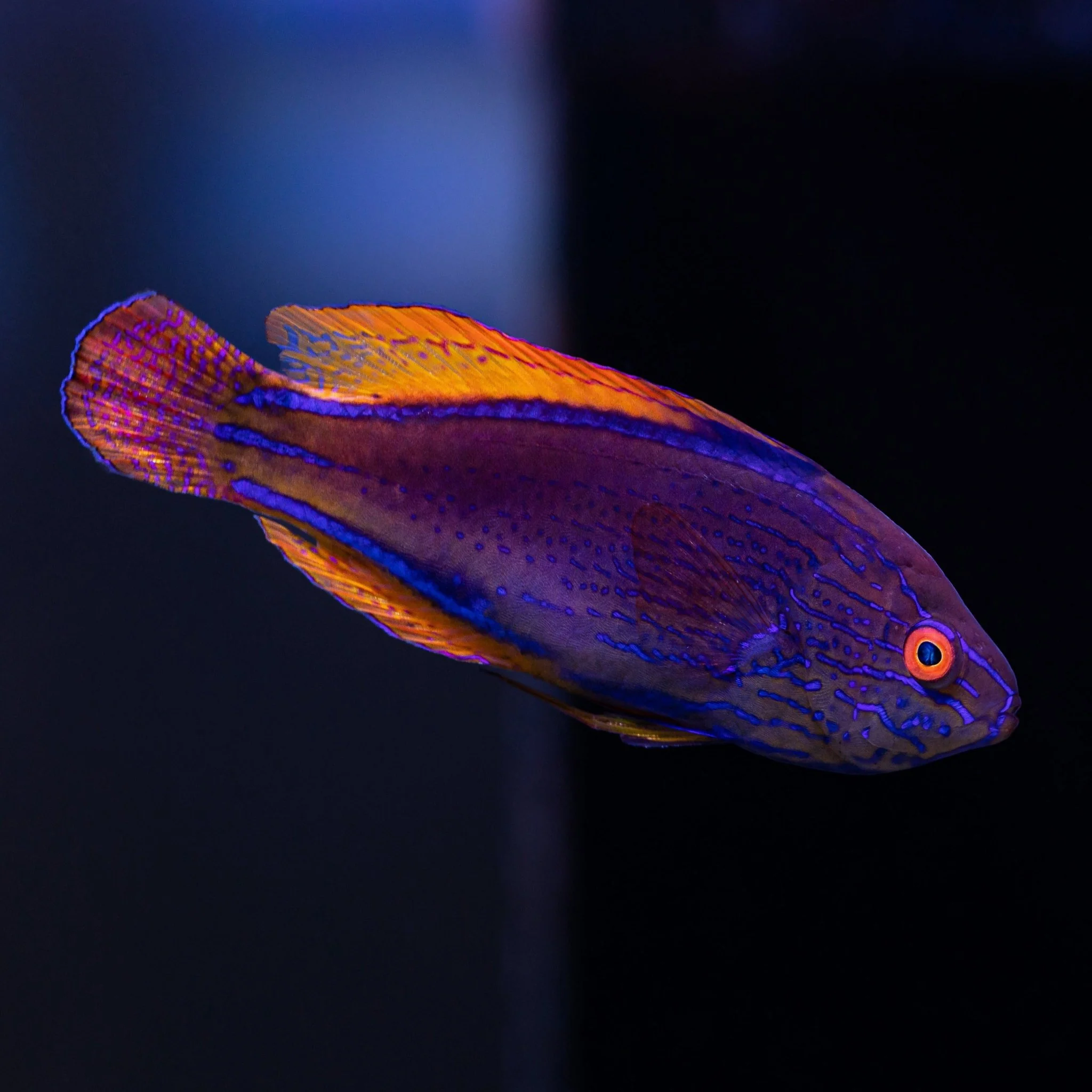
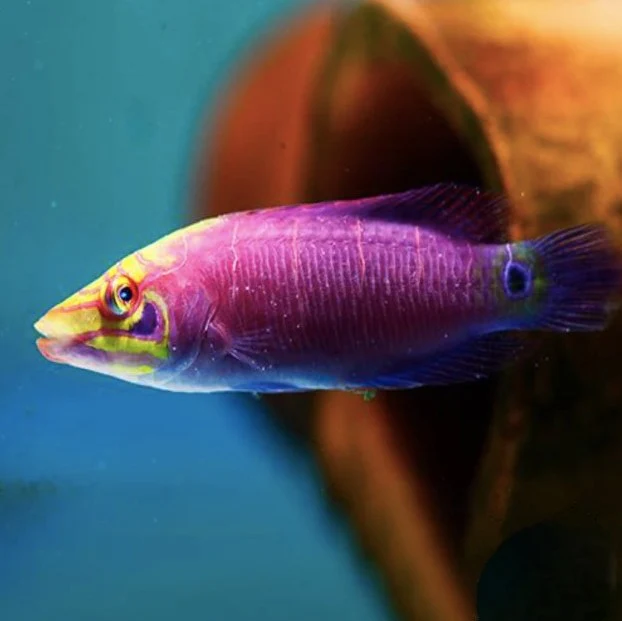
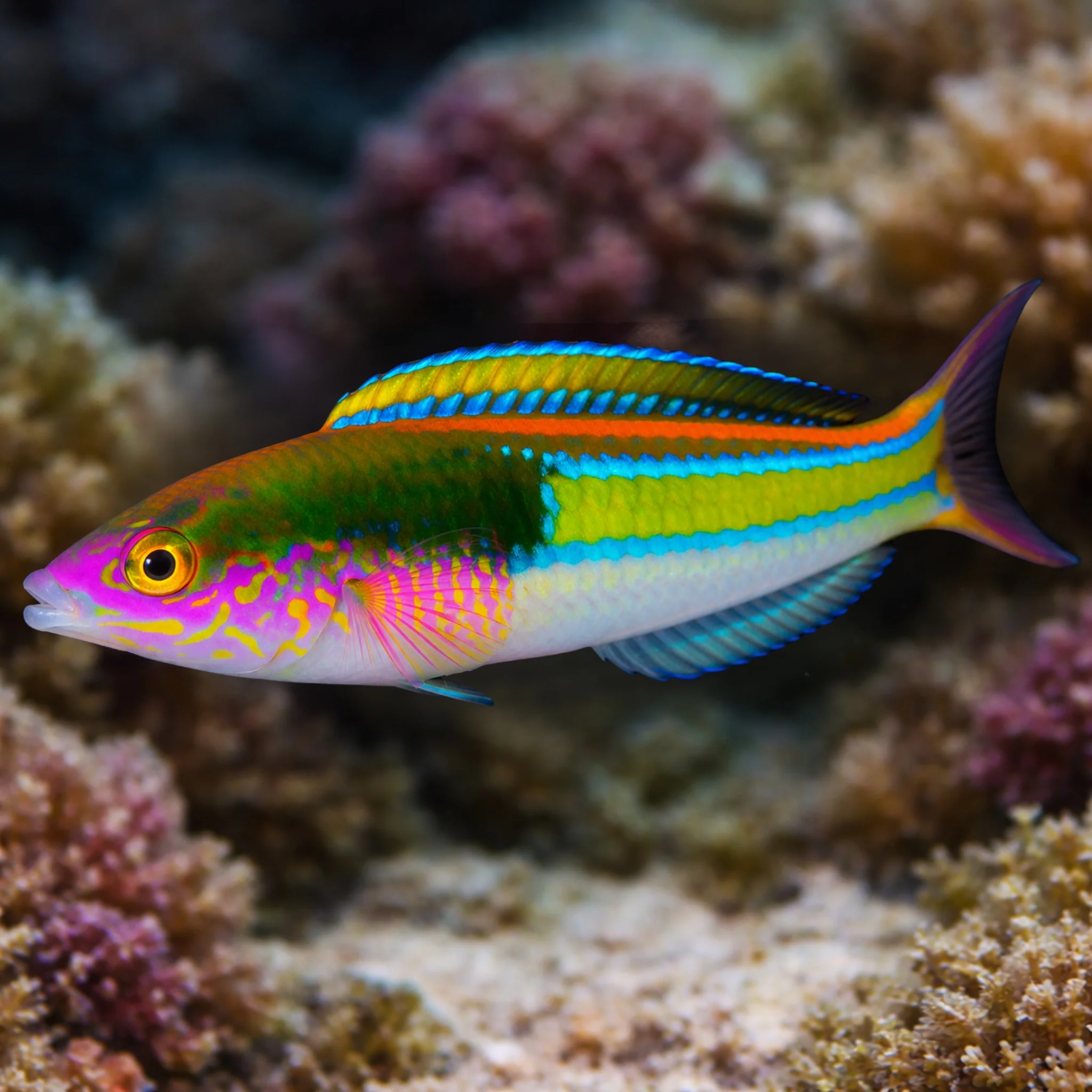
The Edwardi Pencil Wrasse is a rare and exceptionally striking pencil wrasse, admired for its slender shape and vivid adult male colouration, including bright blue striping and yellow-on-magenta patterning across the head and forebody. It is known from the Kenyan coast in the western Indian Ocean, where it occurs in shallow tropical marine habitat. Like other pencil wrasses, it is active, delicate during acclimation and best suited to a calm, mature marine aquarium with stable conditions and experienced care.
Common Name:
Edwardi Pencil Wrasse. It is also commonly referred to as the Mombasa Pencil Wrasse.
Scientific Name (Latin):
Pseudojuloides edwardi
Maximum Size:
Up to around 7–8 cm. The documented maximum is 7.3 cm standard length.
Water Type:
Marine.
Origin / Natural Habitat:
Known from Kenya in the western Indian Ocean, at recorded depths of around 5–20 metres in tropical marine habitat.
Water Parameters:
Temperature: 24–26°C
pH Range: 8.1–8.4
Salinity: 1.023–1.025 SG
These are sensible stable reef conditions for a tropical pencil wrasse and reflect cautious aquarium husbandry rather than a species-specific wild-water measurement.
Temperament:
Generally peaceful, though it may become defensive towards very similar wrasses. It is a passive genus overall and does not mix well with much more aggressive tankmates.
Diet:
Carnivorous / micro-predatory. Offer a varied diet of small meaty marine foods such as mysis, enriched brineshrimp, copepods, cyclops and other small crustacean-based foods. Frequent feeding is important, especially while the fish is settling in.
Minimum Tank Size:
450 litres minimum is a sensible long-term recommendation. Direct species-specific aquarium guidance is limited, so this is a cautious estimate based on the care needs of similar pencil wrasses, which are active, delicate and do best in larger, mature systems.
Behaviour & Activity:
An active, slender wrasse that spends much of the day hunting through the aquarium for food. This genus requires a sand bed, as it will bury itself at night or when frightened. Distinct pairing during breeding is recorded for the species.
Reef Safe:
Reef Safe
Pencil wrasses are generally regarded as reef-compatible, but caution is sensible around very small ornamental shrimps and other tiny mobile invertebrates. Monitor carefully in mixed reef systems, particularly while the fish is settling and hunting naturally through the substrate. This rating is based mainly on genus-level husbandry and closely related species, as species-specific aquarium data for P. edwardi is limited.
Special Requirements or Care Notes:
This species is best kept in a well-established aquarium with a fine sand bed of at least 5 cm, plenty of rockwork, abundant natural microfauna and a tight-fitting lid. Pencil wrasses are known to be sensitive during shipping and acclimation, and long-term success is much better when the fish is already feeding well before purchase.
Suitable for:
Experienced fishkeepers. This is the safest recommendation because pencil wrasses are widely regarded as delicate, feed heavily, and can struggle long term if not established carefully in the right environment.
Availability:
Rare in trade. That is an inference based on its very limited currently documented range in Kenya and the scarcity of species-specific aquarium information.
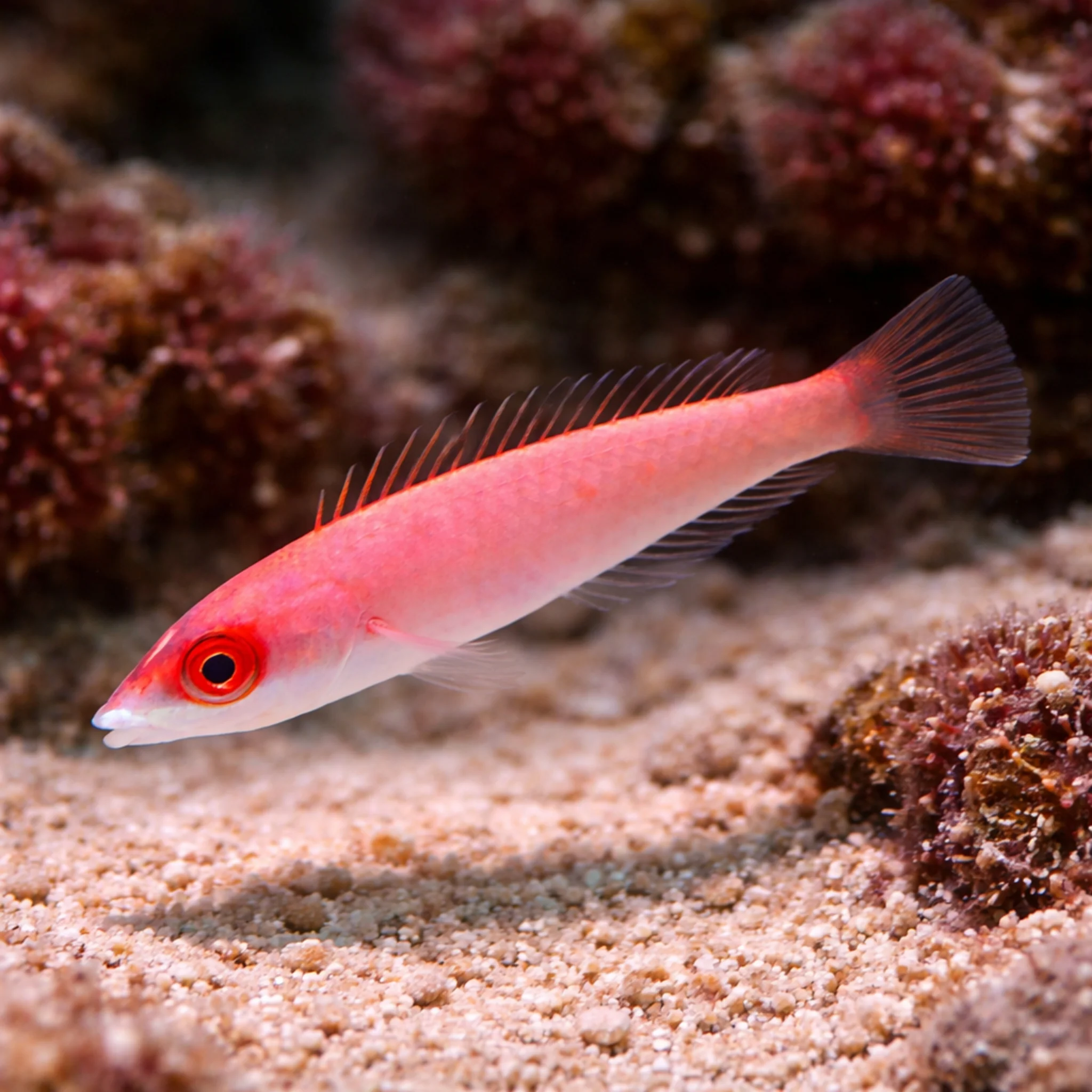
All images are a visual representation of the fish you will receive, made to be as accurate as possible. Please note that Mother Nature is a wonderful thing, and variation in patterns and colours will occur — that is part of the unique beauty of these animals.
Product Information
Product Information
Shipping & Returns
Shipping & Returns
Edwardi Pencil Wrasse - Pseudojuloides edwardi
Edwardi Pencil Wrasse - Pseudojuloides edwardi
Edwardi Pencil Wrasse (Pseudojuloides edwardi)
The Edwardi Pencil Wrasse is a rare and exceptionally striking pencil wrasse, admired for its slender shape and vivid adult male colouration, including bright blue striping and yellow-on-magenta patterning across the head and forebody. It is known from the Kenyan coast in the western Indian Ocean, where it occurs in shallow tropical marine habitat. Like other pencil wrasses, it is active, delicate during acclimation and best suited to a calm, mature marine aquarium with stable conditions and experienced care.
Common Name:
Edwardi Pencil Wrasse. It is also commonly referred to as the Mombasa Pencil Wrasse.
Scientific Name (Latin):
Pseudojuloides edwardi
Maximum Size:
Up to around 7–8 cm. The documented maximum is 7.3 cm standard length.
Water Type:
Marine.
Origin / Natural Habitat:
Known from Kenya in the western Indian Ocean, at recorded depths of around 5–20 metres in tropical marine habitat.
Water Parameters:
Temperature: 24–26°C
pH Range: 8.1–8.4
Salinity: 1.023–1.025 SG
These are sensible stable reef conditions for a tropical pencil wrasse and reflect cautious aquarium husbandry rather than a species-specific wild-water measurement.
Temperament:
Generally peaceful, though it may become defensive towards very similar wrasses. It is a passive genus overall and does not mix well with much more aggressive tankmates.
Diet:
Carnivorous / micro-predatory. Offer a varied diet of small meaty marine foods such as mysis, enriched brineshrimp, copepods, cyclops and other small crustacean-based foods. Frequent feeding is important, especially while the fish is settling in.
Minimum Tank Size:
450 litres minimum is a sensible long-term recommendation. Direct species-specific aquarium guidance is limited, so this is a cautious estimate based on the care needs of similar pencil wrasses, which are active, delicate and do best in larger, mature systems.
Behaviour & Activity:
An active, slender wrasse that spends much of the day hunting through the aquarium for food. This genus requires a sand bed, as it will bury itself at night or when frightened. Distinct pairing during breeding is recorded for the species.
Reef Safe:
Reef Safe
Pencil wrasses are generally regarded as reef-compatible, but caution is sensible around very small ornamental shrimps and other tiny mobile invertebrates. Monitor carefully in mixed reef systems, particularly while the fish is settling and hunting naturally through the substrate. This rating is based mainly on genus-level husbandry and closely related species, as species-specific aquarium data for P. edwardi is limited.
Special Requirements or Care Notes:
This species is best kept in a well-established aquarium with a fine sand bed of at least 5 cm, plenty of rockwork, abundant natural microfauna and a tight-fitting lid. Pencil wrasses are known to be sensitive during shipping and acclimation, and long-term success is much better when the fish is already feeding well before purchase.
Suitable for:
Experienced fishkeepers. This is the safest recommendation because pencil wrasses are widely regarded as delicate, feed heavily, and can struggle long term if not established carefully in the right environment.
Availability:
Rare in trade. That is an inference based on its very limited currently documented range in Kenya and the scarcity of species-specific aquarium information.
All images are a visual representation of the fish you will receive, made to be as accurate as possible. Please note that Mother Nature is a wonderful thing, and variation in patterns and colours will occur — that is part of the unique beauty of these animals.
Product Information
Product Information
Shipping & Returns
Shipping & Returns
Description
Edwardi Pencil Wrasse (Pseudojuloides edwardi)
The Edwardi Pencil Wrasse is a rare and exceptionally striking pencil wrasse, admired for its slender shape and vivid adult male colouration, including bright blue striping and yellow-on-magenta patterning across the head and forebody. It is known from the Kenyan coast in the western Indian Ocean, where it occurs in shallow tropical marine habitat. Like other pencil wrasses, it is active, delicate during acclimation and best suited to a calm, mature marine aquarium with stable conditions and experienced care.
Common Name:
Edwardi Pencil Wrasse. It is also commonly referred to as the Mombasa Pencil Wrasse.
Scientific Name (Latin):
Pseudojuloides edwardi
Maximum Size:
Up to around 7–8 cm. The documented maximum is 7.3 cm standard length.
Water Type:
Marine.
Origin / Natural Habitat:
Known from Kenya in the western Indian Ocean, at recorded depths of around 5–20 metres in tropical marine habitat.
Water Parameters:
Temperature: 24–26°C
pH Range: 8.1–8.4
Salinity: 1.023–1.025 SG
These are sensible stable reef conditions for a tropical pencil wrasse and reflect cautious aquarium husbandry rather than a species-specific wild-water measurement.
Temperament:
Generally peaceful, though it may become defensive towards very similar wrasses. It is a passive genus overall and does not mix well with much more aggressive tankmates.
Diet:
Carnivorous / micro-predatory. Offer a varied diet of small meaty marine foods such as mysis, enriched brineshrimp, copepods, cyclops and other small crustacean-based foods. Frequent feeding is important, especially while the fish is settling in.
Minimum Tank Size:
450 litres minimum is a sensible long-term recommendation. Direct species-specific aquarium guidance is limited, so this is a cautious estimate based on the care needs of similar pencil wrasses, which are active, delicate and do best in larger, mature systems.
Behaviour & Activity:
An active, slender wrasse that spends much of the day hunting through the aquarium for food. This genus requires a sand bed, as it will bury itself at night or when frightened. Distinct pairing during breeding is recorded for the species.
Reef Safe:
Reef Safe
Pencil wrasses are generally regarded as reef-compatible, but caution is sensible around very small ornamental shrimps and other tiny mobile invertebrates. Monitor carefully in mixed reef systems, particularly while the fish is settling and hunting naturally through the substrate. This rating is based mainly on genus-level husbandry and closely related species, as species-specific aquarium data for P. edwardi is limited.
Special Requirements or Care Notes:
This species is best kept in a well-established aquarium with a fine sand bed of at least 5 cm, plenty of rockwork, abundant natural microfauna and a tight-fitting lid. Pencil wrasses are known to be sensitive during shipping and acclimation, and long-term success is much better when the fish is already feeding well before purchase.
Suitable for:
Experienced fishkeepers. This is the safest recommendation because pencil wrasses are widely regarded as delicate, feed heavily, and can struggle long term if not established carefully in the right environment.
Availability:
Rare in trade. That is an inference based on its very limited currently documented range in Kenya and the scarcity of species-specific aquarium information.
All images are a visual representation of the fish you will receive, made to be as accurate as possible. Please note that Mother Nature is a wonderful thing, and variation in patterns and colours will occur — that is part of the unique beauty of these animals.