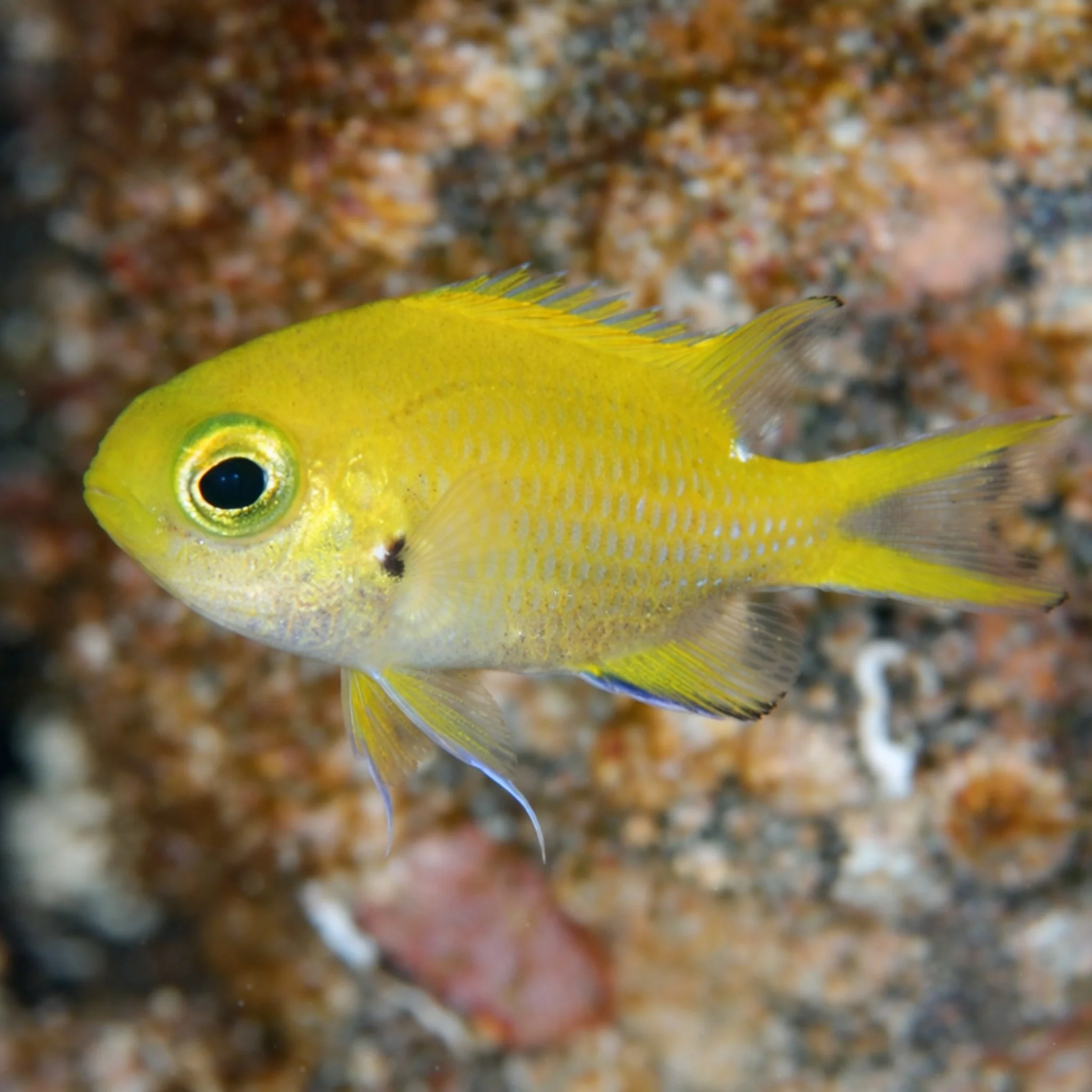
Yellow Tail Damsel - Chrysiptera parasema
Yellow Tail Damsel - Chrysiptera parasema
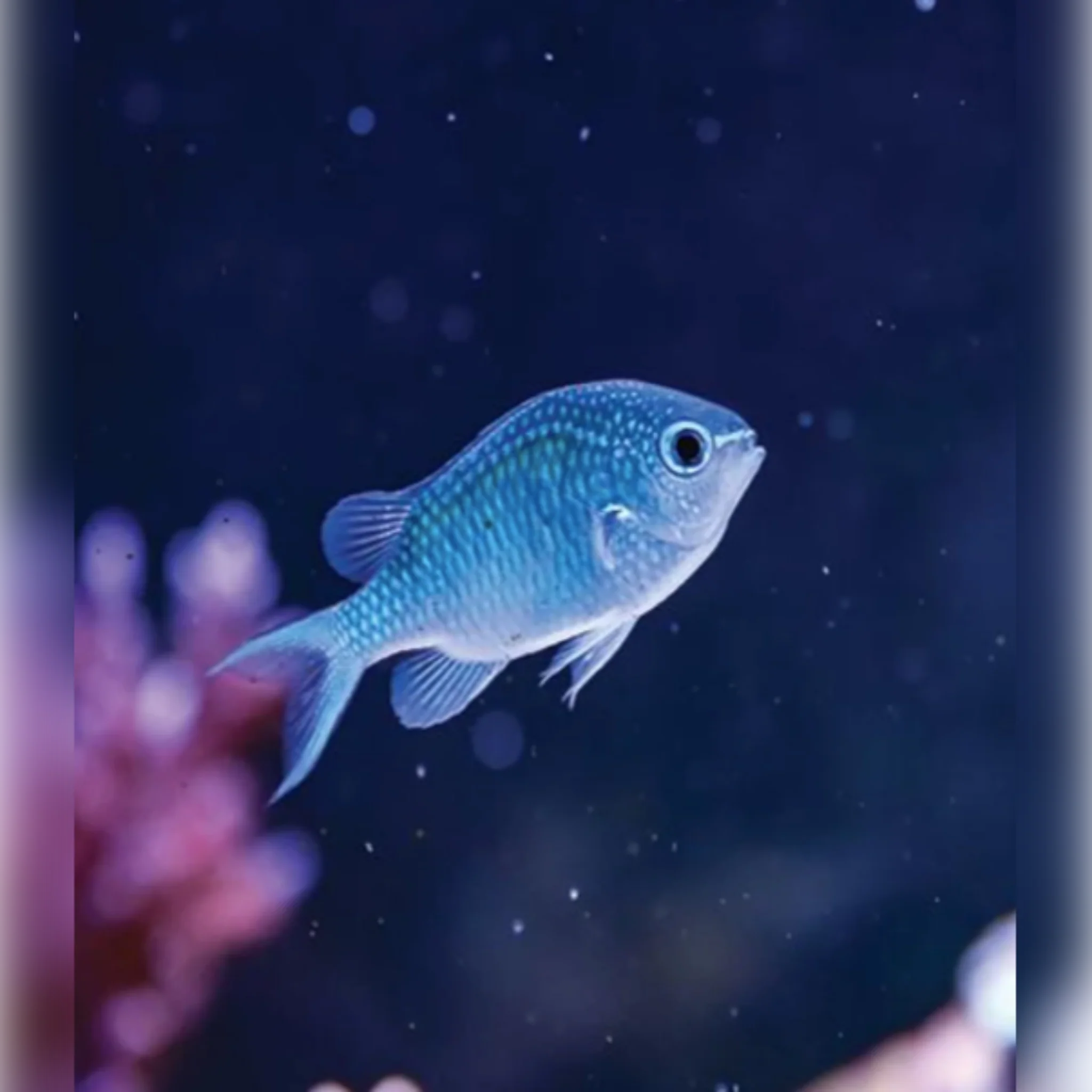
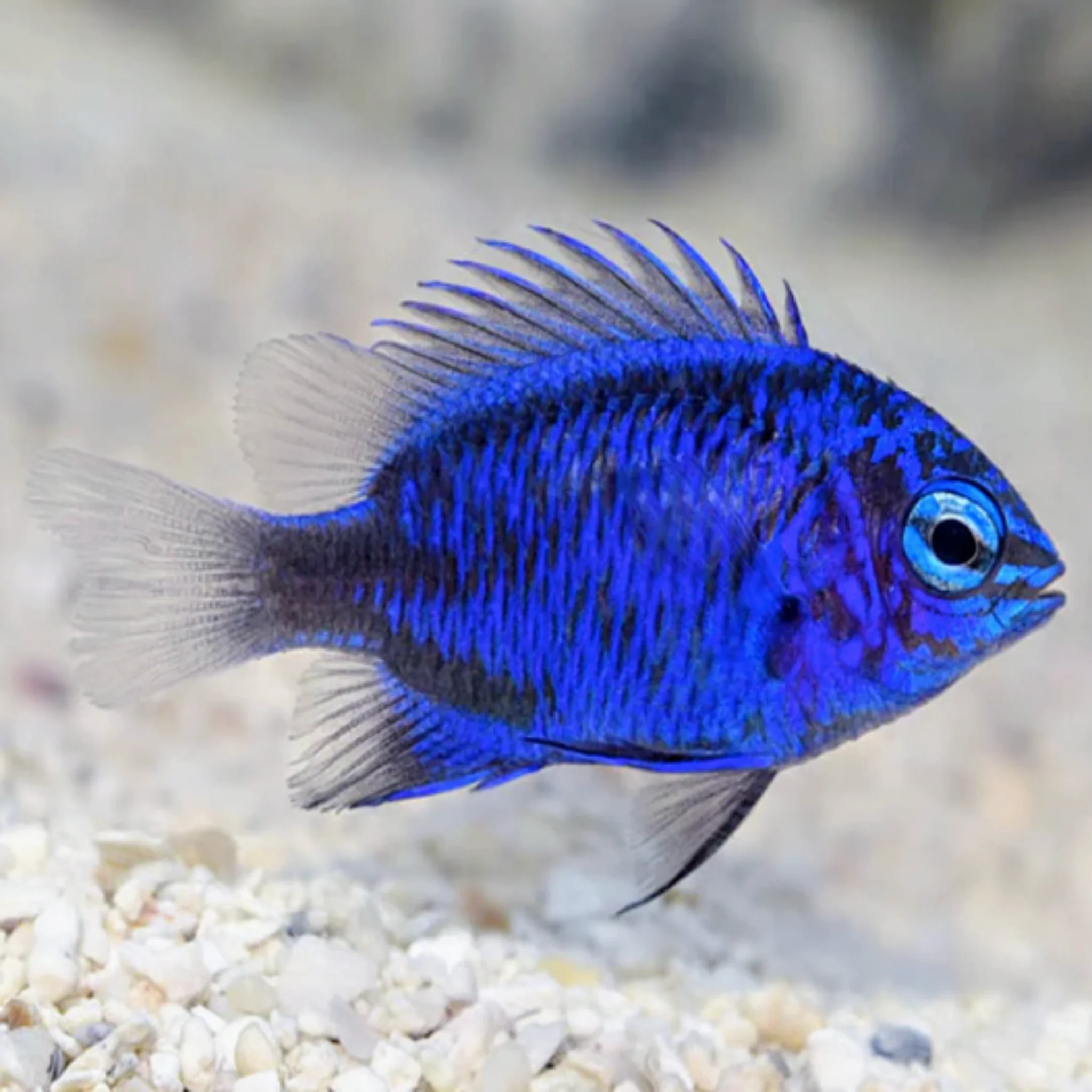
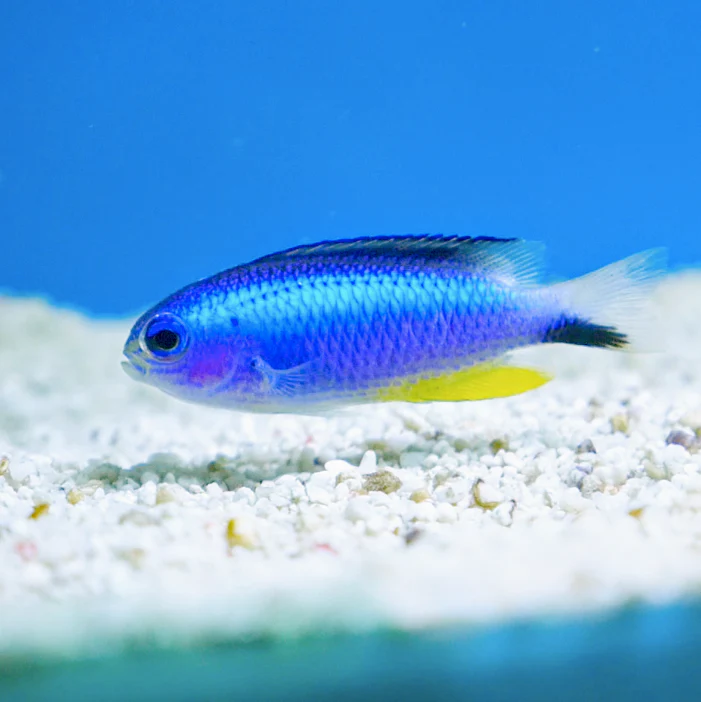
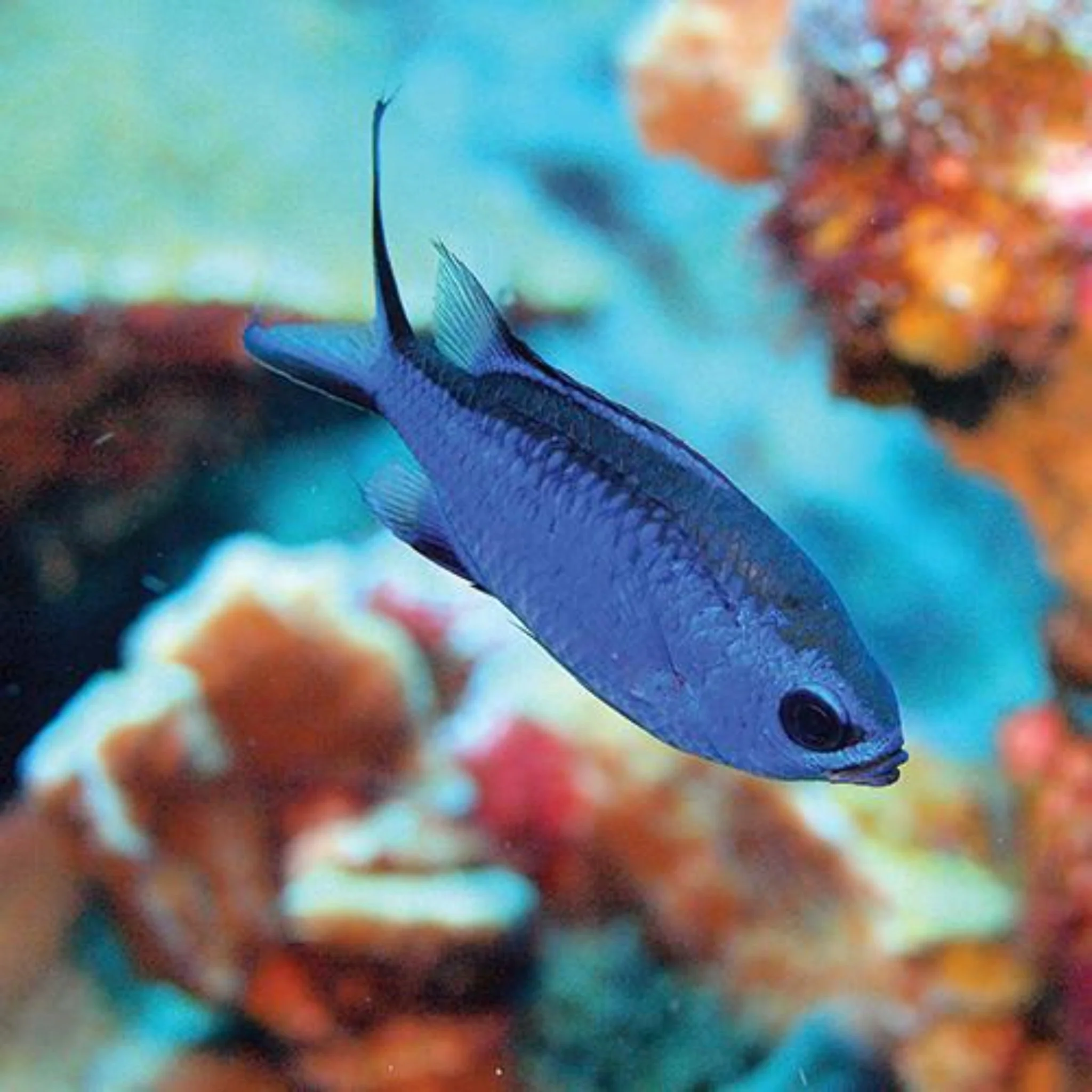
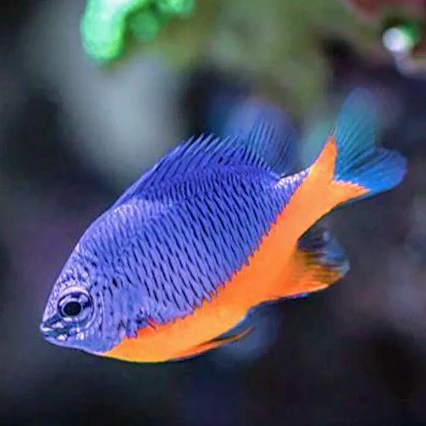
The Yellow Tail Damsel is a small, vibrant marine fish with an electric-blue body and a bright yellow tail, making it one of the most eye-catching yet manageable damselfish for reef aquaria. In the wild it inhabits coral-rich sheltered lagoons and inshore reefs, often living in small groups among branching corals. In captivity it is generally hardier and less aggressive than many damsels, but it can still become territorial with age, so it benefits from a mature aquarium with plenty of rockwork and hiding places.
Common Name:
Yellow Tail Damsel. It is also commonly known as the Yellowtail Blue Damselfish or Goldtail Demoiselle.
Scientific Name (Latin):
Chrysiptera parasema
Maximum Size:
Up to 7 cm in length.
Water Type:
Marine.
Origin / Natural Habitat:
Found in the Western Pacific / Indo-Pacific, where adults inhabit coral-rich sheltered lagoons and inshore coral reefs and are often associated with Acropora coral patches.
Water Parameters:
Temperature: 23–27°C
pH Range: 8.1–8.4
Salinity: 1.020–1.025 SG
Temperament:
Generally peaceful to semi-aggressive. It is one of the less aggressive damselfish, but it may still become territorial, particularly towards its own kind or very timid tankmates if space is limited.
Diet:
Omnivorous / planktivorous. It naturally feeds on zooplankton and does well on a varied diet of small meaty marine foods, along with quality flakes, pellets and some algae-based foods.
Minimum Tank Size:
150 litres is a sensible long-term recommendation, especially if kept with other fish or as part of a reef community.
Behaviour & Activity:
A diurnal, active reef fish that spends much of the day hovering close to rockwork and branching structure. In nature it occurs in small groups, while in captivity it tends to do best as a single specimen, a true pair, or in a well-planned larger group introduced together.
Reef Safe:
Reef Safe
This species is widely regarded as highly suitable for reef aquaria and is not generally associated with coral damage or problems with ornamental invertebrates.
Special Requirements or Care Notes:
Best kept in a well-established marine aquarium with plenty of hiding places among live rock or branching structures. Smaller groups can be unstable, so it is often better to keep one specimen, a compatible pair, or a larger odd-numbered group introduced together. Feed little and often, and avoid overcrowding with very shy species.
Suitable for:
Beginner to Intermediate marine keepers. It is generally hardy and adaptable, but territorial behaviour still needs to be managed sensibly.
Availability:
Regular in trade. It is a commonly kept and widely available marine aquarium species.
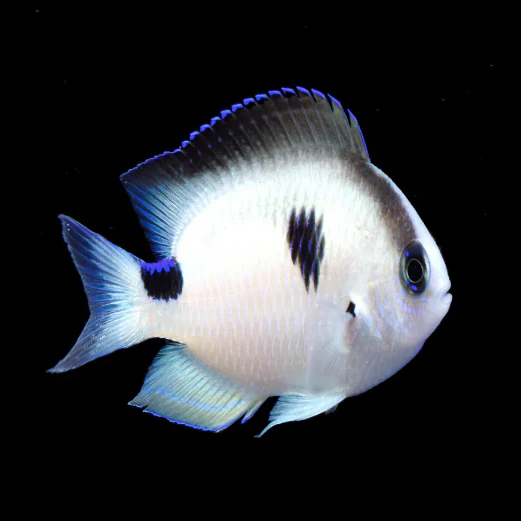
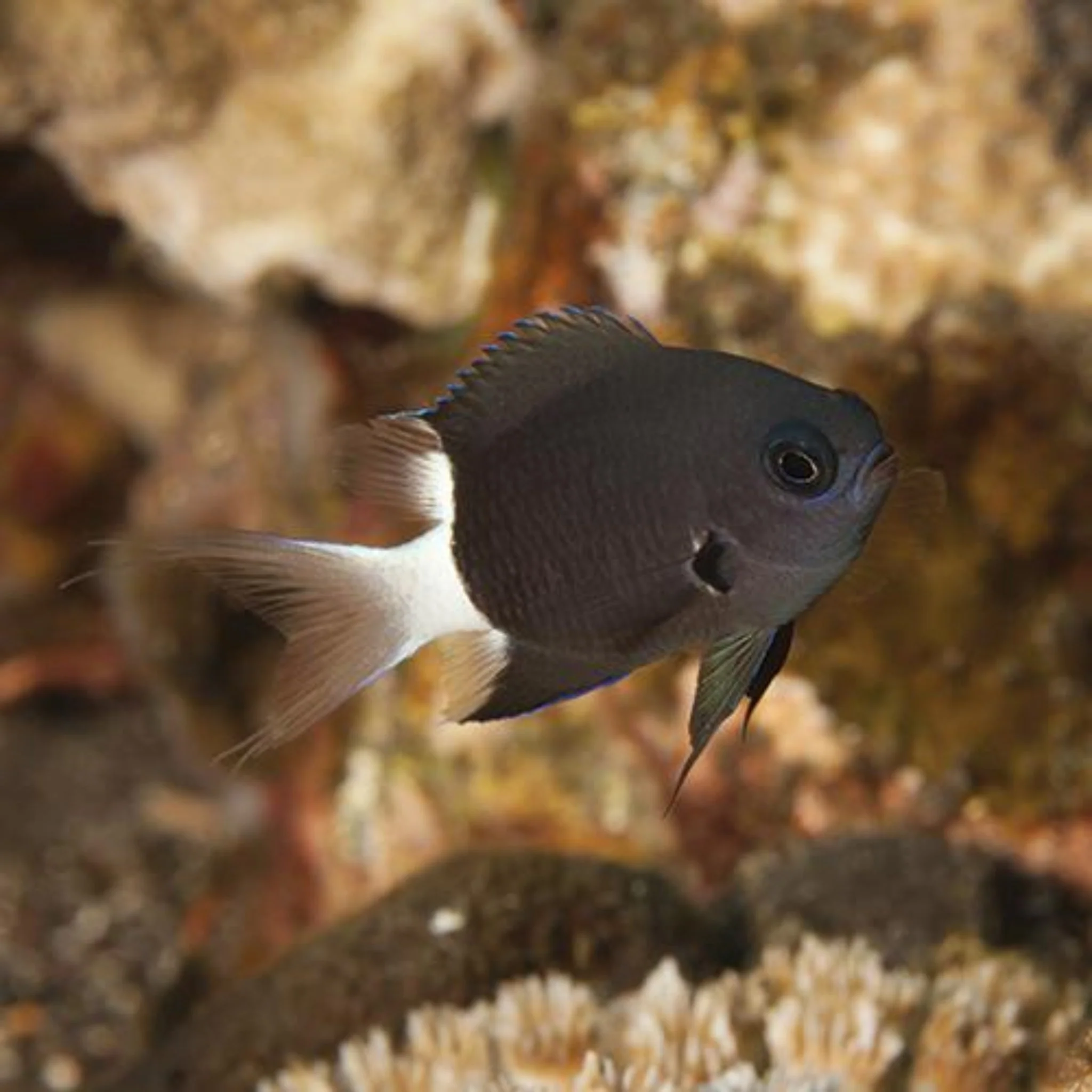
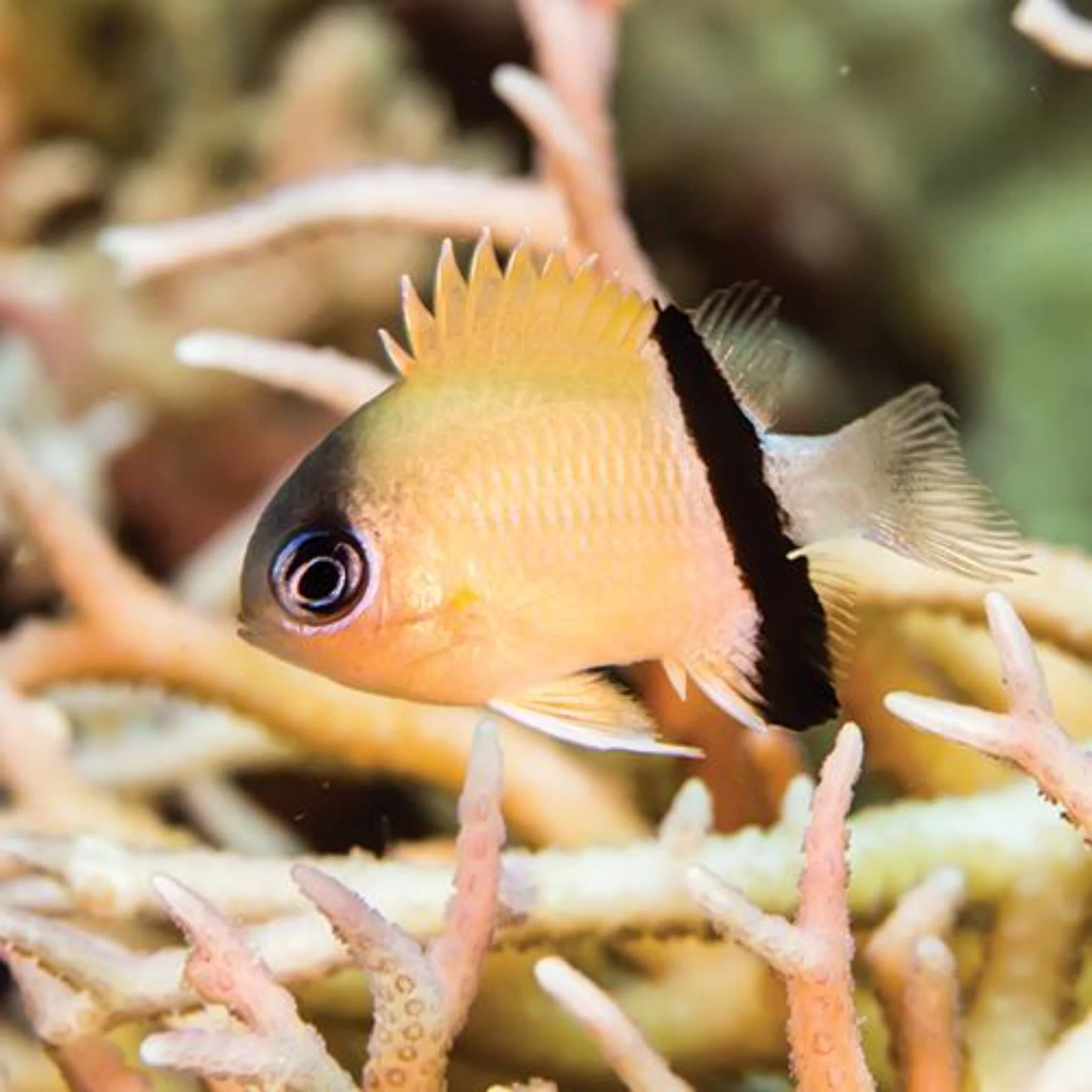
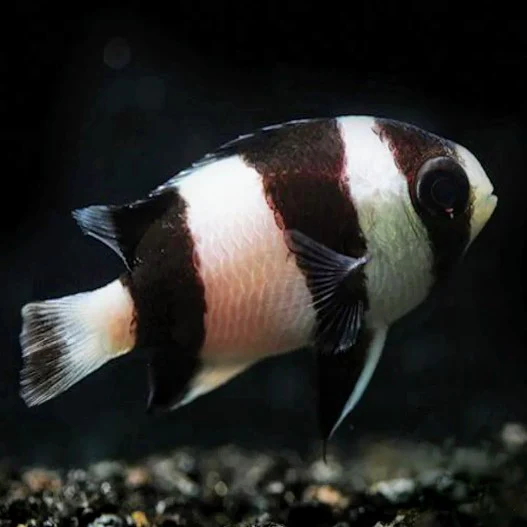
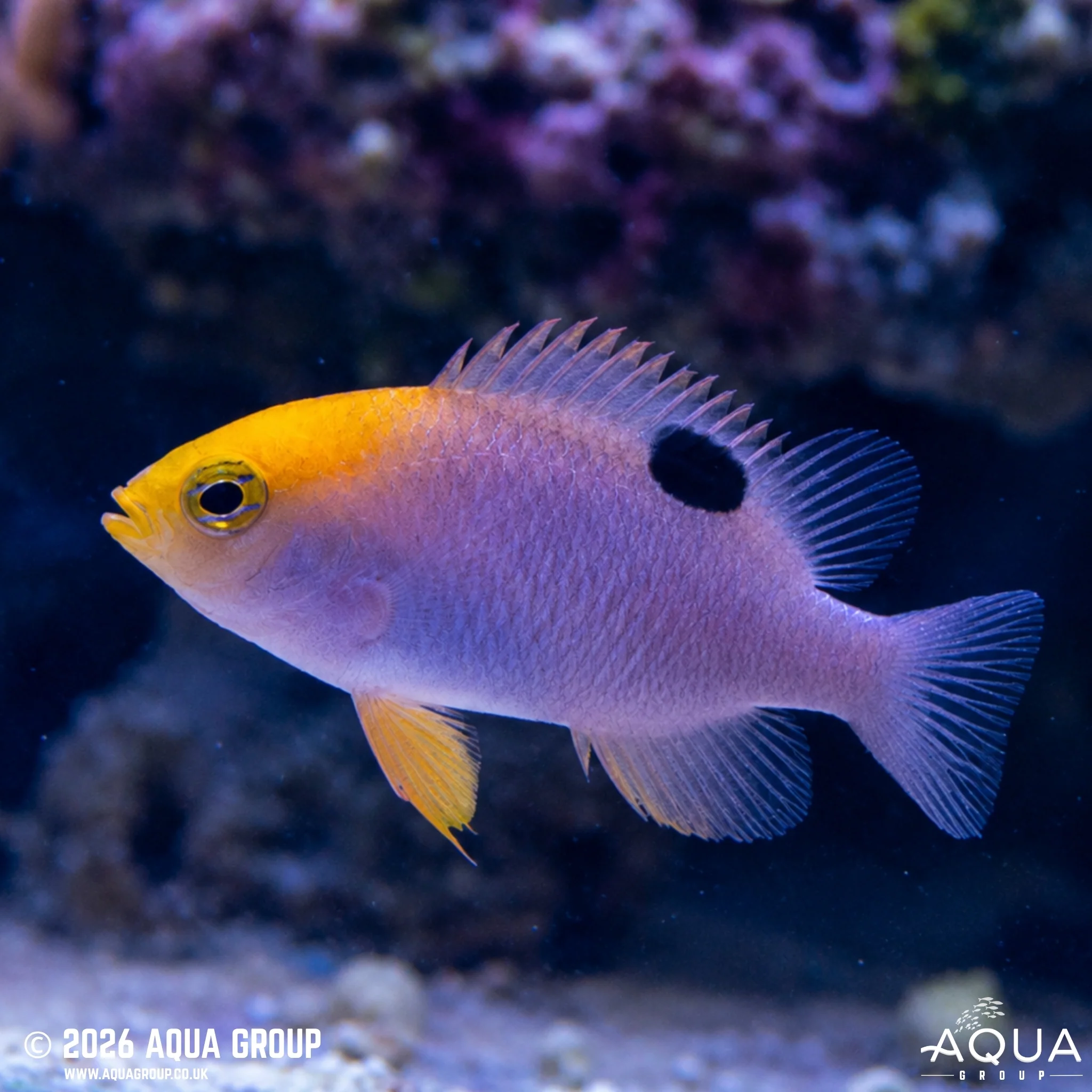
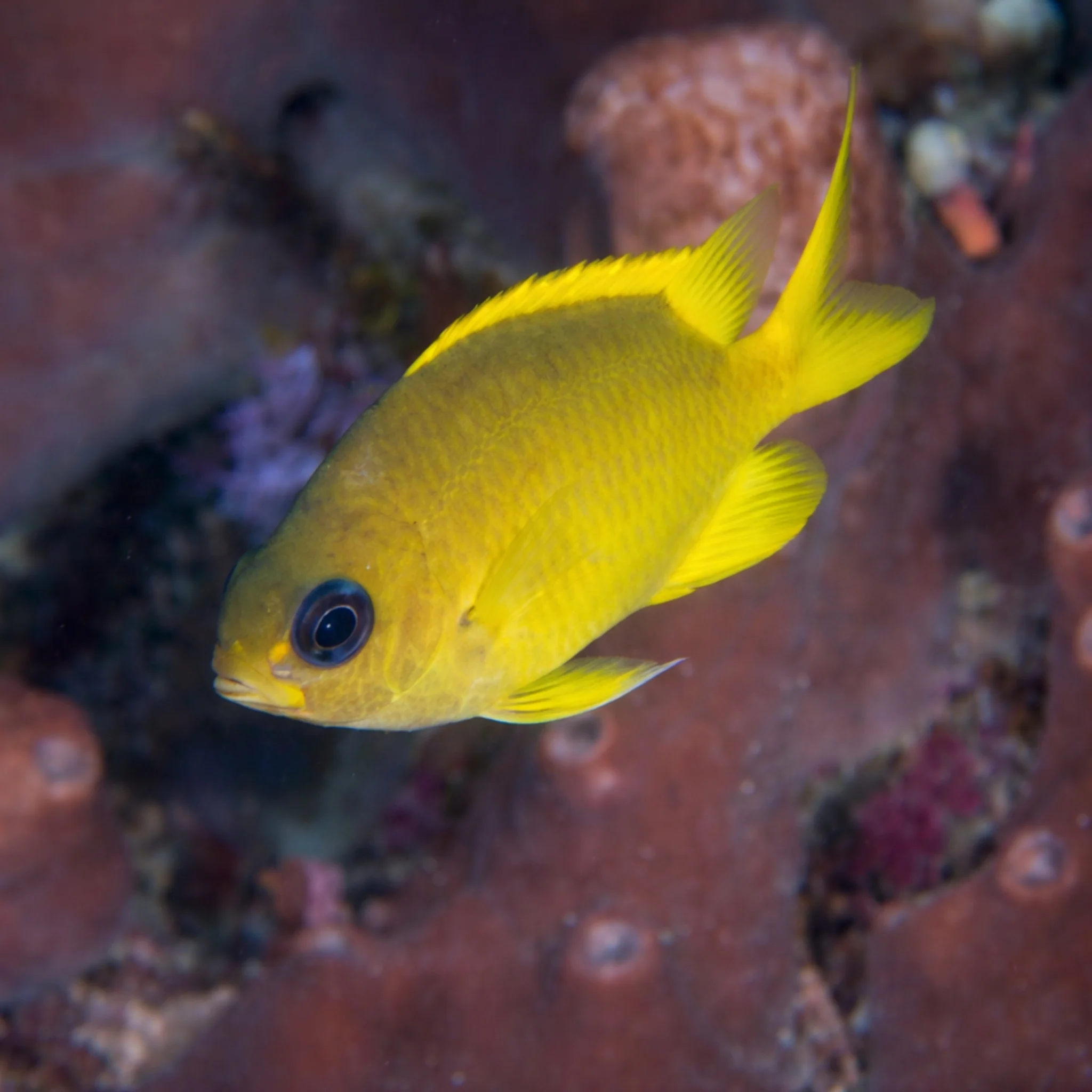
All images are a visual representation of the fish you will receive, made to be as accurate as possible. Please note that Mother Nature is a wonderful thing, and variation in patterns and colours will occur — that is part of the unique beauty of these animals.
Product Information
Product Information
Shipping & Returns
Shipping & Returns
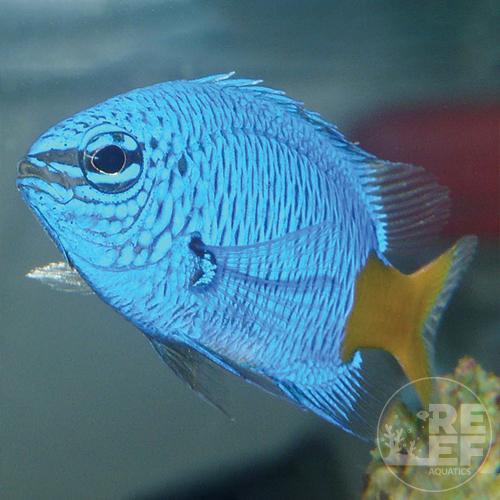
Yellow Tail Damsel - Chrysiptera parasema
Yellow Tail Damsel - Chrysiptera parasema
Yellow Tail Damsel - Chrysiptera parasema
The Yellow Tail Damsel is a small, vibrant marine fish with an electric-blue body and a bright yellow tail, making it one of the most eye-catching yet manageable damselfish for reef aquaria. In the wild it inhabits coral-rich sheltered lagoons and inshore reefs, often living in small groups among branching corals. In captivity it is generally hardier and less aggressive than many damsels, but it can still become territorial with age, so it benefits from a mature aquarium with plenty of rockwork and hiding places.
Common Name:
Yellow Tail Damsel. It is also commonly known as the Yellowtail Blue Damselfish or Goldtail Demoiselle.
Scientific Name (Latin):
Chrysiptera parasema
Maximum Size:
Up to 7 cm in length.
Water Type:
Marine.
Origin / Natural Habitat:
Found in the Western Pacific / Indo-Pacific, where adults inhabit coral-rich sheltered lagoons and inshore coral reefs and are often associated with Acropora coral patches.
Water Parameters:
Temperature: 23–27°C
pH Range: 8.1–8.4
Salinity: 1.020–1.025 SG
Temperament:
Generally peaceful to semi-aggressive. It is one of the less aggressive damselfish, but it may still become territorial, particularly towards its own kind or very timid tankmates if space is limited.
Diet:
Omnivorous / planktivorous. It naturally feeds on zooplankton and does well on a varied diet of small meaty marine foods, along with quality flakes, pellets and some algae-based foods.
Minimum Tank Size:
150 litres is a sensible long-term recommendation, especially if kept with other fish or as part of a reef community.
Behaviour & Activity:
A diurnal, active reef fish that spends much of the day hovering close to rockwork and branching structure. In nature it occurs in small groups, while in captivity it tends to do best as a single specimen, a true pair, or in a well-planned larger group introduced together.
Reef Safe:
Reef Safe
This species is widely regarded as highly suitable for reef aquaria and is not generally associated with coral damage or problems with ornamental invertebrates.
Special Requirements or Care Notes:
Best kept in a well-established marine aquarium with plenty of hiding places among live rock or branching structures. Smaller groups can be unstable, so it is often better to keep one specimen, a compatible pair, or a larger odd-numbered group introduced together. Feed little and often, and avoid overcrowding with very shy species.
Suitable for:
Beginner to Intermediate marine keepers. It is generally hardy and adaptable, but territorial behaviour still needs to be managed sensibly.
Availability:
Regular in trade. It is a commonly kept and widely available marine aquarium species.
All images are a visual representation of the fish you will receive, made to be as accurate as possible. Please note that Mother Nature is a wonderful thing, and variation in patterns and colours will occur — that is part of the unique beauty of these animals.
Original: $17.55
-65%$17.55
$6.14Product Information
Product Information
Shipping & Returns
Shipping & Returns
Description
Yellow Tail Damsel - Chrysiptera parasema
The Yellow Tail Damsel is a small, vibrant marine fish with an electric-blue body and a bright yellow tail, making it one of the most eye-catching yet manageable damselfish for reef aquaria. In the wild it inhabits coral-rich sheltered lagoons and inshore reefs, often living in small groups among branching corals. In captivity it is generally hardier and less aggressive than many damsels, but it can still become territorial with age, so it benefits from a mature aquarium with plenty of rockwork and hiding places.
Common Name:
Yellow Tail Damsel. It is also commonly known as the Yellowtail Blue Damselfish or Goldtail Demoiselle.
Scientific Name (Latin):
Chrysiptera parasema
Maximum Size:
Up to 7 cm in length.
Water Type:
Marine.
Origin / Natural Habitat:
Found in the Western Pacific / Indo-Pacific, where adults inhabit coral-rich sheltered lagoons and inshore coral reefs and are often associated with Acropora coral patches.
Water Parameters:
Temperature: 23–27°C
pH Range: 8.1–8.4
Salinity: 1.020–1.025 SG
Temperament:
Generally peaceful to semi-aggressive. It is one of the less aggressive damselfish, but it may still become territorial, particularly towards its own kind or very timid tankmates if space is limited.
Diet:
Omnivorous / planktivorous. It naturally feeds on zooplankton and does well on a varied diet of small meaty marine foods, along with quality flakes, pellets and some algae-based foods.
Minimum Tank Size:
150 litres is a sensible long-term recommendation, especially if kept with other fish or as part of a reef community.
Behaviour & Activity:
A diurnal, active reef fish that spends much of the day hovering close to rockwork and branching structure. In nature it occurs in small groups, while in captivity it tends to do best as a single specimen, a true pair, or in a well-planned larger group introduced together.
Reef Safe:
Reef Safe
This species is widely regarded as highly suitable for reef aquaria and is not generally associated with coral damage or problems with ornamental invertebrates.
Special Requirements or Care Notes:
Best kept in a well-established marine aquarium with plenty of hiding places among live rock or branching structures. Smaller groups can be unstable, so it is often better to keep one specimen, a compatible pair, or a larger odd-numbered group introduced together. Feed little and often, and avoid overcrowding with very shy species.
Suitable for:
Beginner to Intermediate marine keepers. It is generally hardy and adaptable, but territorial behaviour still needs to be managed sensibly.
Availability:
Regular in trade. It is a commonly kept and widely available marine aquarium species.
All images are a visual representation of the fish you will receive, made to be as accurate as possible. Please note that Mother Nature is a wonderful thing, and variation in patterns and colours will occur — that is part of the unique beauty of these animals.