Yellow Goatfish - Parupeneus cyclostomus
Yellow Goatfish (Parupeneus cyclostomus)
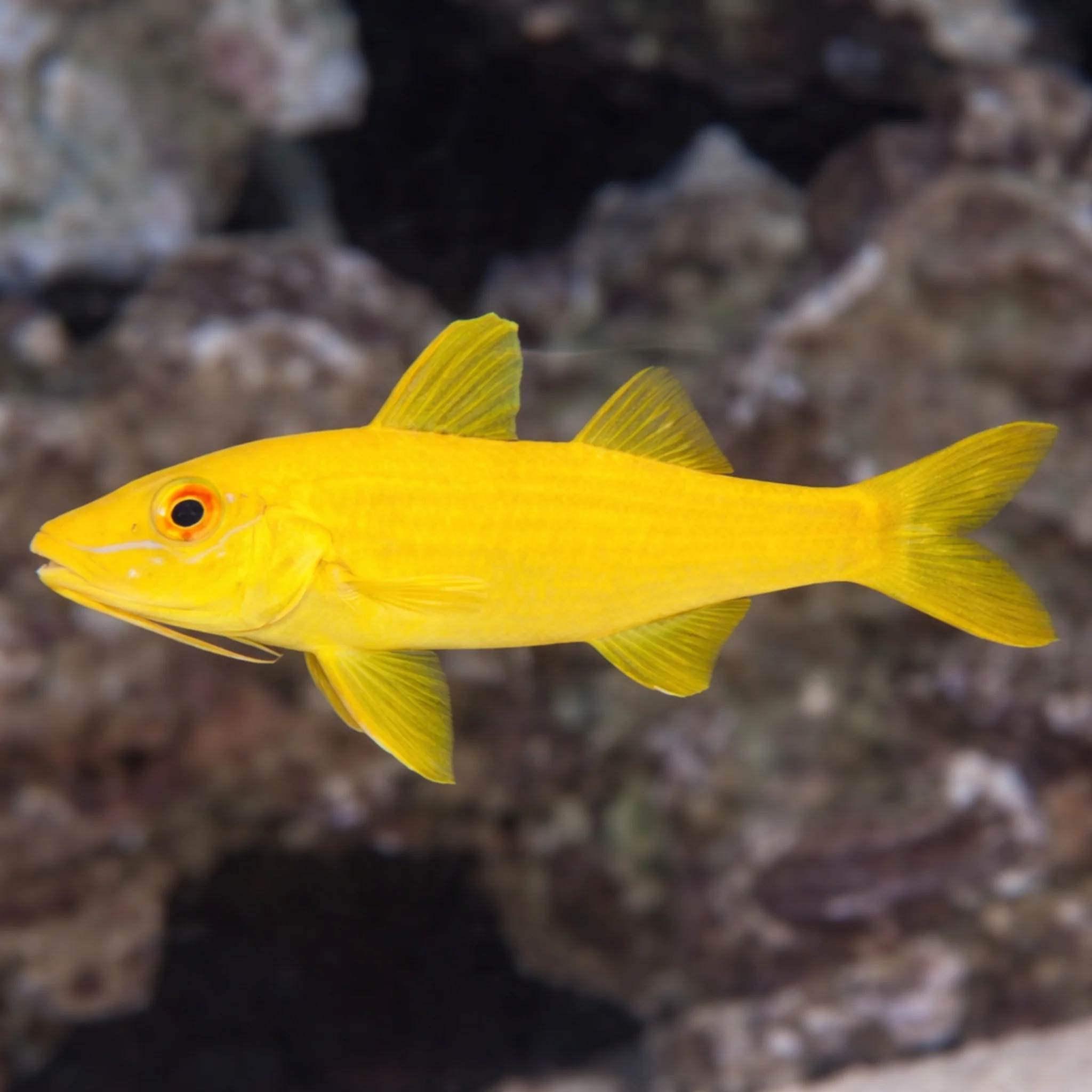
The Yellow Goatfish is a bold, characterful marine species recognised by its elongated body, sensitive chin barbels and the distinctive yellow saddle-like patch near the tail. Some specimens show a more yellow overall colour form, while others are greyer with blue-edged scales and bright facial markings. In the wild it ranges widely across the Indo-Pacific, where it lives around reef-associated habitats, sandy bottoms and coastal reef areas. In captivity it is an active forager that needs plenty of open space, a suitable substrate and regular feeding, making it far better suited to large, mature marine systems than typical reef aquaria.
Common Name:
Yellow Goatfish. It is also commonly known as the Goldsaddle Goatfish or Yellow-saddle Goatfish.
Scientific Name (Latin):
Parupeneus cyclostomus
Maximum Size:
Up to 50 cm in length.
Water Type:
Marine.
Origin / Natural Habitat:
Found across the Indo-Pacific, from the Red Sea and East Africa east to Hawaii, French Polynesia and Pitcairn, and north to Japan and south to Australia. It is a reef-associated species found from very shallow water down to around 125 metres, often over reefs, sand and mixed bottom habitats.
Water Parameters:
Temperature: 22–26°C
pH Range: 8.1–8.4
Salinity: 1.020–1.025 SG
These are sensible stable aquarium conditions for long-term captive care of this tropical marine species.
Temperament:
Generally peaceful, though it may eat very small fish or other suitably sized tankmates if they can fit in its mouth. It does best with calm, non-aggressive companions that will not outcompete it at feeding time.
Diet:
Carnivorous. This species forages using its barbels to locate prey in the substrate and should be offered a varied diet of small meaty marine foods such as mysis, chopped seafood and other protein-rich fare. Frequent feeding is beneficial, as goatfishes have an active metabolism and spend much of the day searching for food.
Minimum Tank Size:
Around 700 litres is a sensible long-term minimum, with larger aquaria strongly preferred for adult specimens due to their size, activity level and foraging behaviour.
Behaviour & Activity:
An active bottom-foraging fish that spends much of the day cruising the aquarium, probing sand and substrate with its barbels and searching for edible items. It needs open swimming and foraging space as well as areas of softer substrate rather than sharp, abrasive material.
Reef Safe:
Reef Safe with Caution
This species is generally not a coral nipper, but caution is needed because it may eat small ornamental shrimps, worms, tiny crustaceans and other meaty invertebrates, and it can disturb the substrate while foraging. Monitor carefully in reef systems, especially where decorative mobile invertebrates or delicate sand-dwelling livestock are present.
Special Requirements or Care Notes:
Best kept in a large, mature marine aquarium with plenty of open floor space, stable water quality and a substrate that allows natural foraging without damaging the barbels. Because of its eventual size and feeding behaviour, it is more suitable for spacious fish-only or carefully planned predator-safe marine setups than compact reef displays.
Suitable for:
Intermediate to Experienced fishkeepers. This is an inference based on its adult size, substantial tank requirement and specialist foraging needs.
Availability:
Occasional in trade. It does appear in the marine trade, but it is more of a specialist larger-system fish than an everyday community species. This is an inference based on current aquarium-trade references.
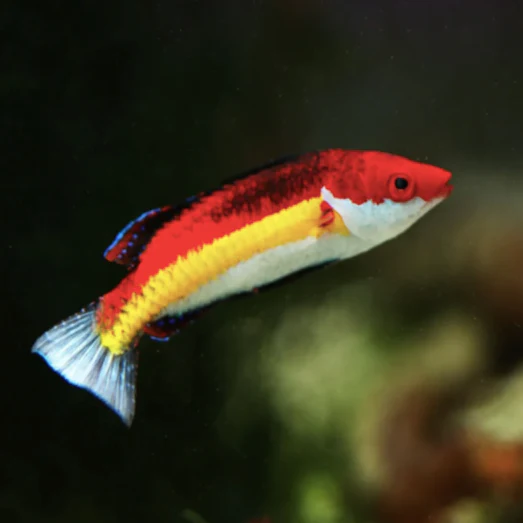
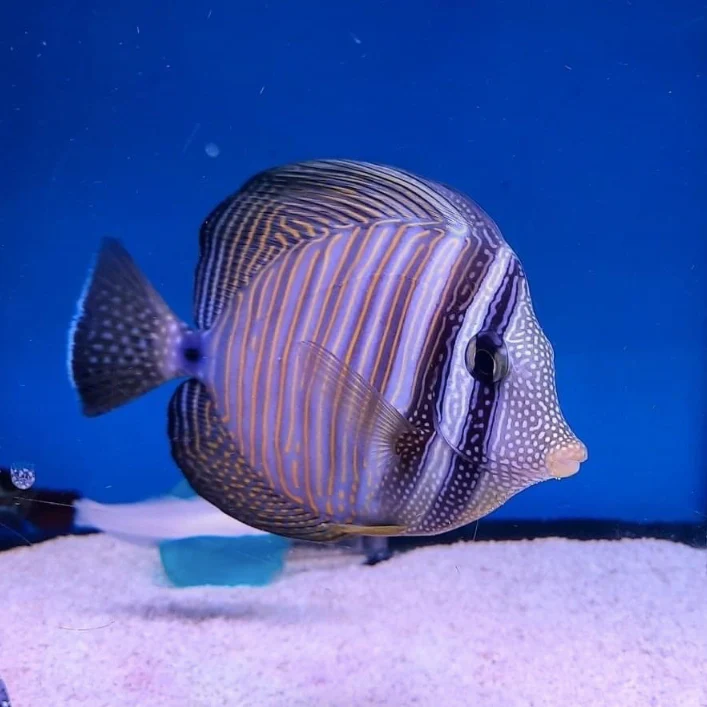
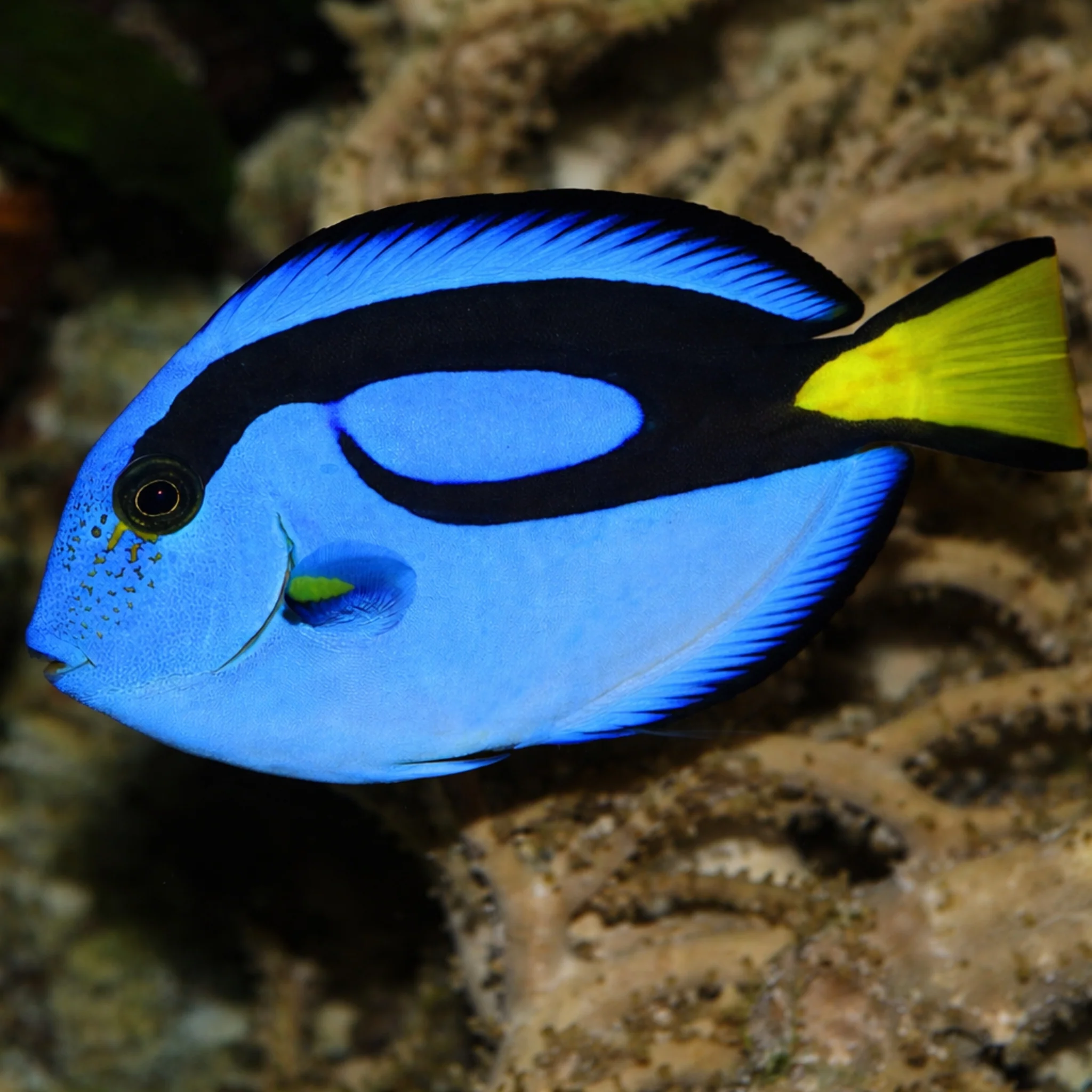
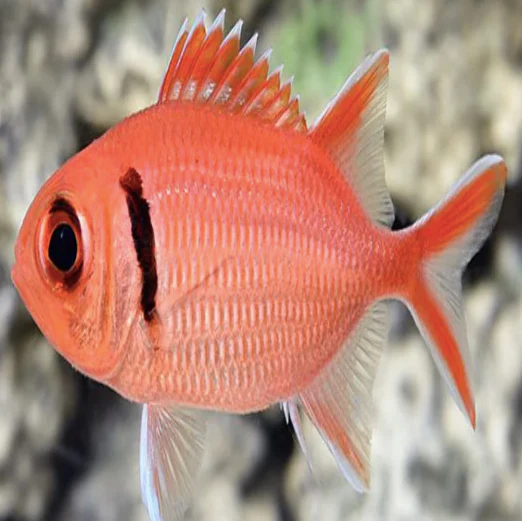
All images are a visual representation of the fish you will receive, made to be as accurate as possible. Please note that Mother Nature is a wonderful thing, and variation in patterns and colours will occur — that is part of the unique beauty of these animals.
Product Information
Product Information
Shipping & Returns
Shipping & Returns
Yellow Goatfish - Parupeneus cyclostomus
Yellow Goatfish - Parupeneus cyclostomus
Yellow Goatfish (Parupeneus cyclostomus)
The Yellow Goatfish is a bold, characterful marine species recognised by its elongated body, sensitive chin barbels and the distinctive yellow saddle-like patch near the tail. Some specimens show a more yellow overall colour form, while others are greyer with blue-edged scales and bright facial markings. In the wild it ranges widely across the Indo-Pacific, where it lives around reef-associated habitats, sandy bottoms and coastal reef areas. In captivity it is an active forager that needs plenty of open space, a suitable substrate and regular feeding, making it far better suited to large, mature marine systems than typical reef aquaria.
Common Name:
Yellow Goatfish. It is also commonly known as the Goldsaddle Goatfish or Yellow-saddle Goatfish.
Scientific Name (Latin):
Parupeneus cyclostomus
Maximum Size:
Up to 50 cm in length.
Water Type:
Marine.
Origin / Natural Habitat:
Found across the Indo-Pacific, from the Red Sea and East Africa east to Hawaii, French Polynesia and Pitcairn, and north to Japan and south to Australia. It is a reef-associated species found from very shallow water down to around 125 metres, often over reefs, sand and mixed bottom habitats.
Water Parameters:
Temperature: 22–26°C
pH Range: 8.1–8.4
Salinity: 1.020–1.025 SG
These are sensible stable aquarium conditions for long-term captive care of this tropical marine species.
Temperament:
Generally peaceful, though it may eat very small fish or other suitably sized tankmates if they can fit in its mouth. It does best with calm, non-aggressive companions that will not outcompete it at feeding time.
Diet:
Carnivorous. This species forages using its barbels to locate prey in the substrate and should be offered a varied diet of small meaty marine foods such as mysis, chopped seafood and other protein-rich fare. Frequent feeding is beneficial, as goatfishes have an active metabolism and spend much of the day searching for food.
Minimum Tank Size:
Around 700 litres is a sensible long-term minimum, with larger aquaria strongly preferred for adult specimens due to their size, activity level and foraging behaviour.
Behaviour & Activity:
An active bottom-foraging fish that spends much of the day cruising the aquarium, probing sand and substrate with its barbels and searching for edible items. It needs open swimming and foraging space as well as areas of softer substrate rather than sharp, abrasive material.
Reef Safe:
Reef Safe with Caution
This species is generally not a coral nipper, but caution is needed because it may eat small ornamental shrimps, worms, tiny crustaceans and other meaty invertebrates, and it can disturb the substrate while foraging. Monitor carefully in reef systems, especially where decorative mobile invertebrates or delicate sand-dwelling livestock are present.
Special Requirements or Care Notes:
Best kept in a large, mature marine aquarium with plenty of open floor space, stable water quality and a substrate that allows natural foraging without damaging the barbels. Because of its eventual size and feeding behaviour, it is more suitable for spacious fish-only or carefully planned predator-safe marine setups than compact reef displays.
Suitable for:
Intermediate to Experienced fishkeepers. This is an inference based on its adult size, substantial tank requirement and specialist foraging needs.
Availability:
Occasional in trade. It does appear in the marine trade, but it is more of a specialist larger-system fish than an everyday community species. This is an inference based on current aquarium-trade references.
All images are a visual representation of the fish you will receive, made to be as accurate as possible. Please note that Mother Nature is a wonderful thing, and variation in patterns and colours will occur — that is part of the unique beauty of these animals.
Original: $47.45
-65%$47.45
$16.61Product Information
Product Information
Shipping & Returns
Shipping & Returns
Description
Yellow Goatfish (Parupeneus cyclostomus)
The Yellow Goatfish is a bold, characterful marine species recognised by its elongated body, sensitive chin barbels and the distinctive yellow saddle-like patch near the tail. Some specimens show a more yellow overall colour form, while others are greyer with blue-edged scales and bright facial markings. In the wild it ranges widely across the Indo-Pacific, where it lives around reef-associated habitats, sandy bottoms and coastal reef areas. In captivity it is an active forager that needs plenty of open space, a suitable substrate and regular feeding, making it far better suited to large, mature marine systems than typical reef aquaria.
Common Name:
Yellow Goatfish. It is also commonly known as the Goldsaddle Goatfish or Yellow-saddle Goatfish.
Scientific Name (Latin):
Parupeneus cyclostomus
Maximum Size:
Up to 50 cm in length.
Water Type:
Marine.
Origin / Natural Habitat:
Found across the Indo-Pacific, from the Red Sea and East Africa east to Hawaii, French Polynesia and Pitcairn, and north to Japan and south to Australia. It is a reef-associated species found from very shallow water down to around 125 metres, often over reefs, sand and mixed bottom habitats.
Water Parameters:
Temperature: 22–26°C
pH Range: 8.1–8.4
Salinity: 1.020–1.025 SG
These are sensible stable aquarium conditions for long-term captive care of this tropical marine species.
Temperament:
Generally peaceful, though it may eat very small fish or other suitably sized tankmates if they can fit in its mouth. It does best with calm, non-aggressive companions that will not outcompete it at feeding time.
Diet:
Carnivorous. This species forages using its barbels to locate prey in the substrate and should be offered a varied diet of small meaty marine foods such as mysis, chopped seafood and other protein-rich fare. Frequent feeding is beneficial, as goatfishes have an active metabolism and spend much of the day searching for food.
Minimum Tank Size:
Around 700 litres is a sensible long-term minimum, with larger aquaria strongly preferred for adult specimens due to their size, activity level and foraging behaviour.
Behaviour & Activity:
An active bottom-foraging fish that spends much of the day cruising the aquarium, probing sand and substrate with its barbels and searching for edible items. It needs open swimming and foraging space as well as areas of softer substrate rather than sharp, abrasive material.
Reef Safe:
Reef Safe with Caution
This species is generally not a coral nipper, but caution is needed because it may eat small ornamental shrimps, worms, tiny crustaceans and other meaty invertebrates, and it can disturb the substrate while foraging. Monitor carefully in reef systems, especially where decorative mobile invertebrates or delicate sand-dwelling livestock are present.
Special Requirements or Care Notes:
Best kept in a large, mature marine aquarium with plenty of open floor space, stable water quality and a substrate that allows natural foraging without damaging the barbels. Because of its eventual size and feeding behaviour, it is more suitable for spacious fish-only or carefully planned predator-safe marine setups than compact reef displays.
Suitable for:
Intermediate to Experienced fishkeepers. This is an inference based on its adult size, substantial tank requirement and specialist foraging needs.
Availability:
Occasional in trade. It does appear in the marine trade, but it is more of a specialist larger-system fish than an everyday community species. This is an inference based on current aquarium-trade references.
All images are a visual representation of the fish you will receive, made to be as accurate as possible. Please note that Mother Nature is a wonderful thing, and variation in patterns and colours will occur — that is part of the unique beauty of these animals.