Goldbar Wrasse - Thalassoma hebraicum
Goldbar Wrasse (Thalassoma hebraicum)
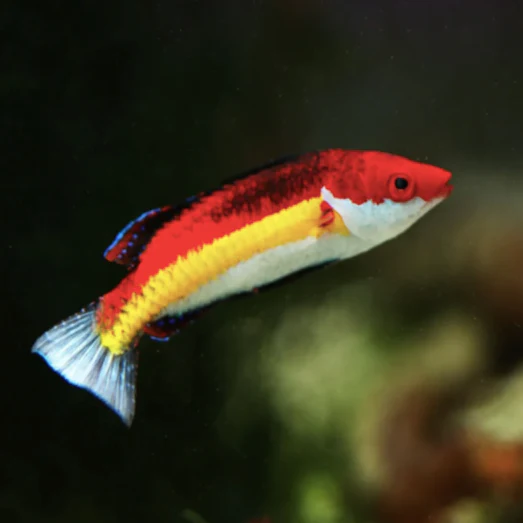
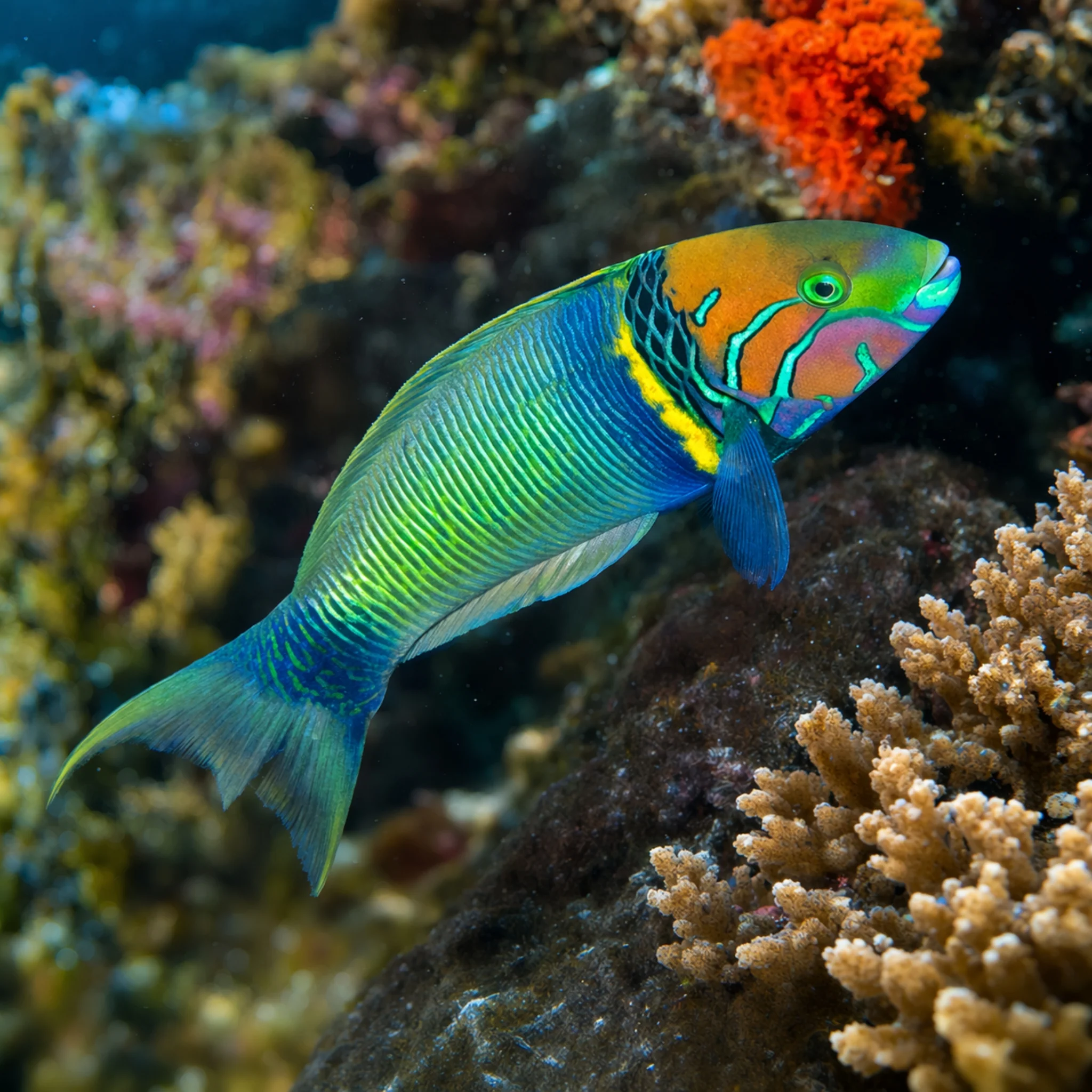
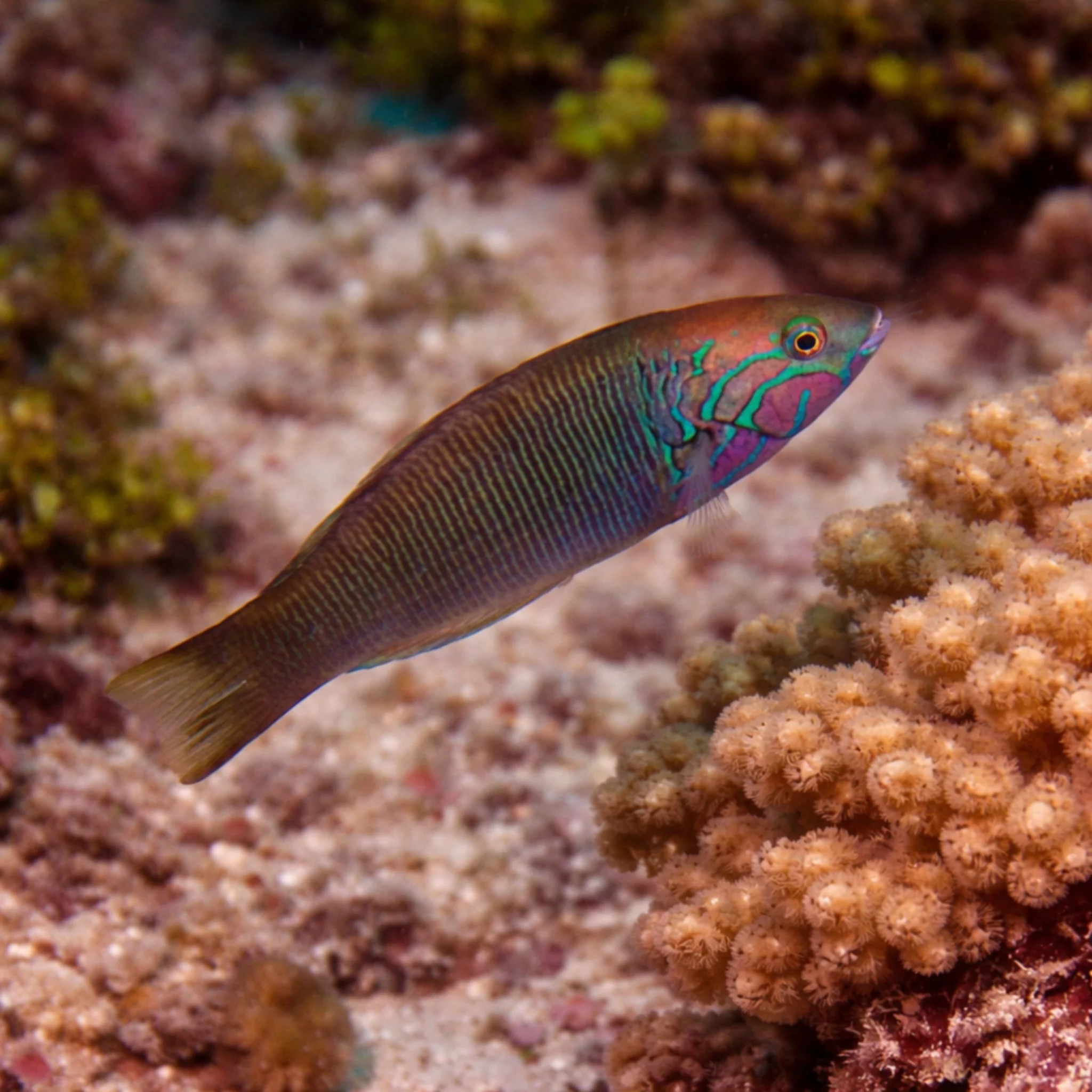
The Goldbar Wrasse is a bold, fast-moving marine wrasse known for its vivid blue-green body, bright yellow-gold bar behind the head and electric blue facial markings. Native to the western Indian Ocean, it is a highly active reef fish that spends much of its time cruising close to the bottom over coral, rubble and sandy areas. In aquaria it makes a striking display fish, but its speed, assertive nature and tendency to prey on small mobile invertebrates mean it is best suited to a large, mature marine system.
Common Name:
Goldbar Wrasse.
Scientific Name (Latin):
Thalassoma hebraicum
Maximum Size:
Up to 23 cm in length.
Water Type:
Marine.
Origin / Natural Habitat:
Found in the western Indian Ocean, from the East African coast south towards KwaZulu-Natal and across towards islands and reef systems of the region, including areas such as Seychelles, Maldives and Chagos. It is associated with reef habitats, especially rubble, sandy areas between corals and shallow to moderately deep seaward reefs.
Water Parameters:
Temperature: 24–26°C
pH Range: 7.9–8.3
Salinity: 1.020–1.025 SG
These values are sensible stable aquarium parameters for larger marine wrasses and reef-associated tropical fish.
Temperament:
Semi-aggressive to aggressive. This species can become territorial and may harass more docile tankmates, particularly once established. It is usually best kept with similarly robust fish and added towards the end of the stocking plan.
Diet:
Carnivorous. Offer a varied diet of meaty marine foods such as mysis, krill, chopped crustacean foods and other protein-rich fare. Natural feeding references indicate it takes small crustaceans, larger crustaceans and other invertebrate prey, with small fish sometimes also taken.
Minimum Tank Size:
At least 475 litres is a sensible practical minimum, though larger systems are strongly preferable for adult specimens because of their activity level and temperament.
Behaviour & Activity:
An active, diurnal wrasse that spends much of the day swimming low over the reef and substrate while searching for food. It appreciates plenty of open swimming room and is also known to be a jumper, so a secure lid is important.
Reef Safe:
Reef Safe with Caution
This species may be a risk to small ornamental shrimps, crabs and other mobile invertebrates, and should be monitored carefully in reef systems. It is generally a better fit for reefs without delicate mobile crustaceans.
Special Requirements or Care Notes:
Best kept in a well-established marine aquarium with strong filtration, secure rockwork, open swimming space and a tight-fitting lid. Because it is active and can become territorial, it is better suited to robust tankmates rather than timid community species.
Suitable for:
Intermediate to Experienced fishkeepers. It is generally hardy once settled, but its aggression, jumping risk and need for a larger aquarium make it a better choice for keepers with some marine experience.
Availability:
Occasional in trade.
Product Information
Product Information
Shipping & Returns
Shipping & Returns
Goldbar Wrasse - Thalassoma hebraicum
Goldbar Wrasse - Thalassoma hebraicum
Goldbar Wrasse (Thalassoma hebraicum)
The Goldbar Wrasse is a bold, fast-moving marine wrasse known for its vivid blue-green body, bright yellow-gold bar behind the head and electric blue facial markings. Native to the western Indian Ocean, it is a highly active reef fish that spends much of its time cruising close to the bottom over coral, rubble and sandy areas. In aquaria it makes a striking display fish, but its speed, assertive nature and tendency to prey on small mobile invertebrates mean it is best suited to a large, mature marine system.
Common Name:
Goldbar Wrasse.
Scientific Name (Latin):
Thalassoma hebraicum
Maximum Size:
Up to 23 cm in length.
Water Type:
Marine.
Origin / Natural Habitat:
Found in the western Indian Ocean, from the East African coast south towards KwaZulu-Natal and across towards islands and reef systems of the region, including areas such as Seychelles, Maldives and Chagos. It is associated with reef habitats, especially rubble, sandy areas between corals and shallow to moderately deep seaward reefs.
Water Parameters:
Temperature: 24–26°C
pH Range: 7.9–8.3
Salinity: 1.020–1.025 SG
These values are sensible stable aquarium parameters for larger marine wrasses and reef-associated tropical fish.
Temperament:
Semi-aggressive to aggressive. This species can become territorial and may harass more docile tankmates, particularly once established. It is usually best kept with similarly robust fish and added towards the end of the stocking plan.
Diet:
Carnivorous. Offer a varied diet of meaty marine foods such as mysis, krill, chopped crustacean foods and other protein-rich fare. Natural feeding references indicate it takes small crustaceans, larger crustaceans and other invertebrate prey, with small fish sometimes also taken.
Minimum Tank Size:
At least 475 litres is a sensible practical minimum, though larger systems are strongly preferable for adult specimens because of their activity level and temperament.
Behaviour & Activity:
An active, diurnal wrasse that spends much of the day swimming low over the reef and substrate while searching for food. It appreciates plenty of open swimming room and is also known to be a jumper, so a secure lid is important.
Reef Safe:
Reef Safe with Caution
This species may be a risk to small ornamental shrimps, crabs and other mobile invertebrates, and should be monitored carefully in reef systems. It is generally a better fit for reefs without delicate mobile crustaceans.
Special Requirements or Care Notes:
Best kept in a well-established marine aquarium with strong filtration, secure rockwork, open swimming space and a tight-fitting lid. Because it is active and can become territorial, it is better suited to robust tankmates rather than timid community species.
Suitable for:
Intermediate to Experienced fishkeepers. It is generally hardy once settled, but its aggression, jumping risk and need for a larger aquarium make it a better choice for keepers with some marine experience.
Availability:
Occasional in trade.
Product Information
Product Information
Shipping & Returns
Shipping & Returns
Description
Goldbar Wrasse (Thalassoma hebraicum)
The Goldbar Wrasse is a bold, fast-moving marine wrasse known for its vivid blue-green body, bright yellow-gold bar behind the head and electric blue facial markings. Native to the western Indian Ocean, it is a highly active reef fish that spends much of its time cruising close to the bottom over coral, rubble and sandy areas. In aquaria it makes a striking display fish, but its speed, assertive nature and tendency to prey on small mobile invertebrates mean it is best suited to a large, mature marine system.
Common Name:
Goldbar Wrasse.
Scientific Name (Latin):
Thalassoma hebraicum
Maximum Size:
Up to 23 cm in length.
Water Type:
Marine.
Origin / Natural Habitat:
Found in the western Indian Ocean, from the East African coast south towards KwaZulu-Natal and across towards islands and reef systems of the region, including areas such as Seychelles, Maldives and Chagos. It is associated with reef habitats, especially rubble, sandy areas between corals and shallow to moderately deep seaward reefs.
Water Parameters:
Temperature: 24–26°C
pH Range: 7.9–8.3
Salinity: 1.020–1.025 SG
These values are sensible stable aquarium parameters for larger marine wrasses and reef-associated tropical fish.
Temperament:
Semi-aggressive to aggressive. This species can become territorial and may harass more docile tankmates, particularly once established. It is usually best kept with similarly robust fish and added towards the end of the stocking plan.
Diet:
Carnivorous. Offer a varied diet of meaty marine foods such as mysis, krill, chopped crustacean foods and other protein-rich fare. Natural feeding references indicate it takes small crustaceans, larger crustaceans and other invertebrate prey, with small fish sometimes also taken.
Minimum Tank Size:
At least 475 litres is a sensible practical minimum, though larger systems are strongly preferable for adult specimens because of their activity level and temperament.
Behaviour & Activity:
An active, diurnal wrasse that spends much of the day swimming low over the reef and substrate while searching for food. It appreciates plenty of open swimming room and is also known to be a jumper, so a secure lid is important.
Reef Safe:
Reef Safe with Caution
This species may be a risk to small ornamental shrimps, crabs and other mobile invertebrates, and should be monitored carefully in reef systems. It is generally a better fit for reefs without delicate mobile crustaceans.
Special Requirements or Care Notes:
Best kept in a well-established marine aquarium with strong filtration, secure rockwork, open swimming space and a tight-fitting lid. Because it is active and can become territorial, it is better suited to robust tankmates rather than timid community species.
Suitable for:
Intermediate to Experienced fishkeepers. It is generally hardy once settled, but its aggression, jumping risk and need for a larger aquarium make it a better choice for keepers with some marine experience.
Availability:
Occasional in trade.