Leopard Angelfish - Pterophyllum scalare
Leopard Angelfish (Pterophyllum scalare)
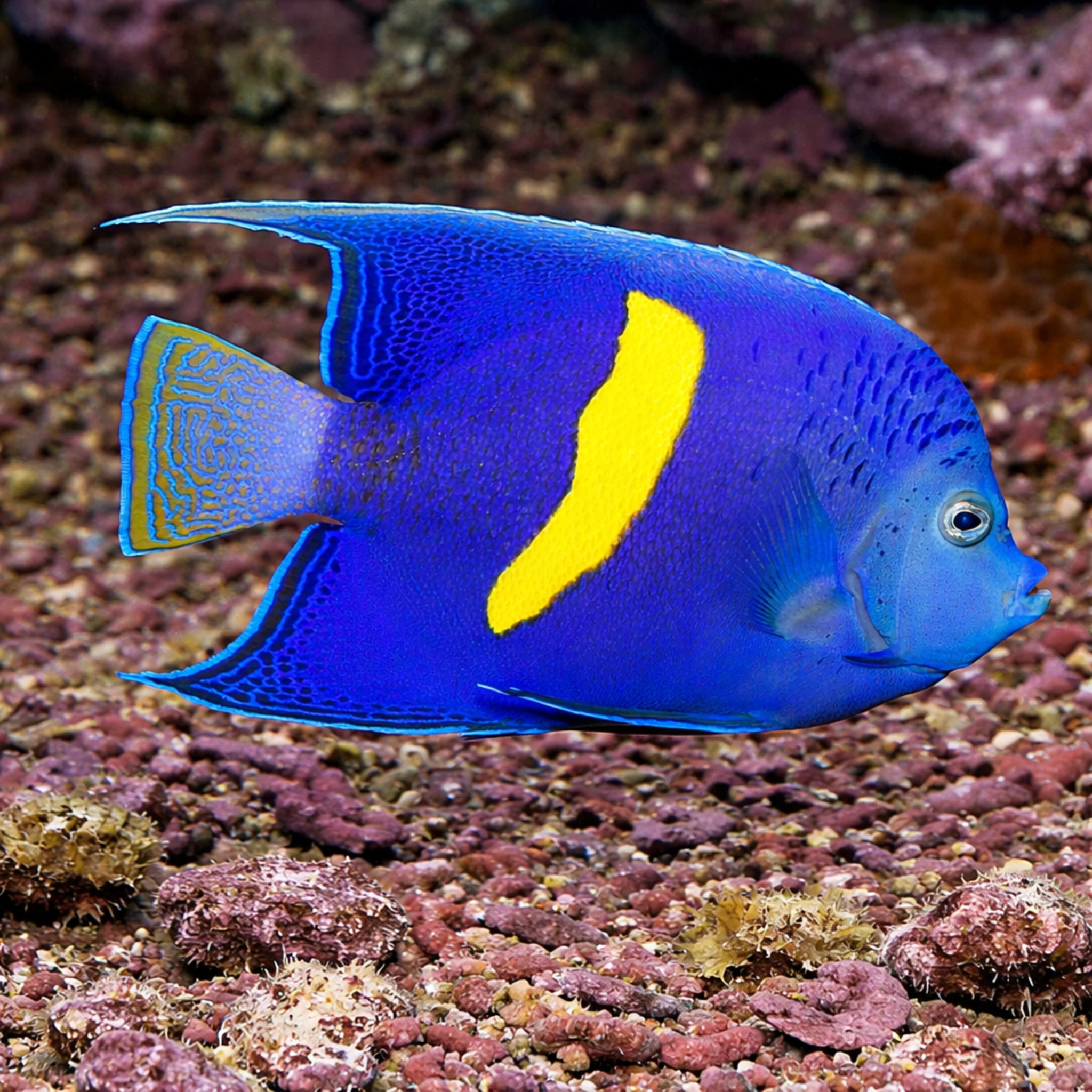
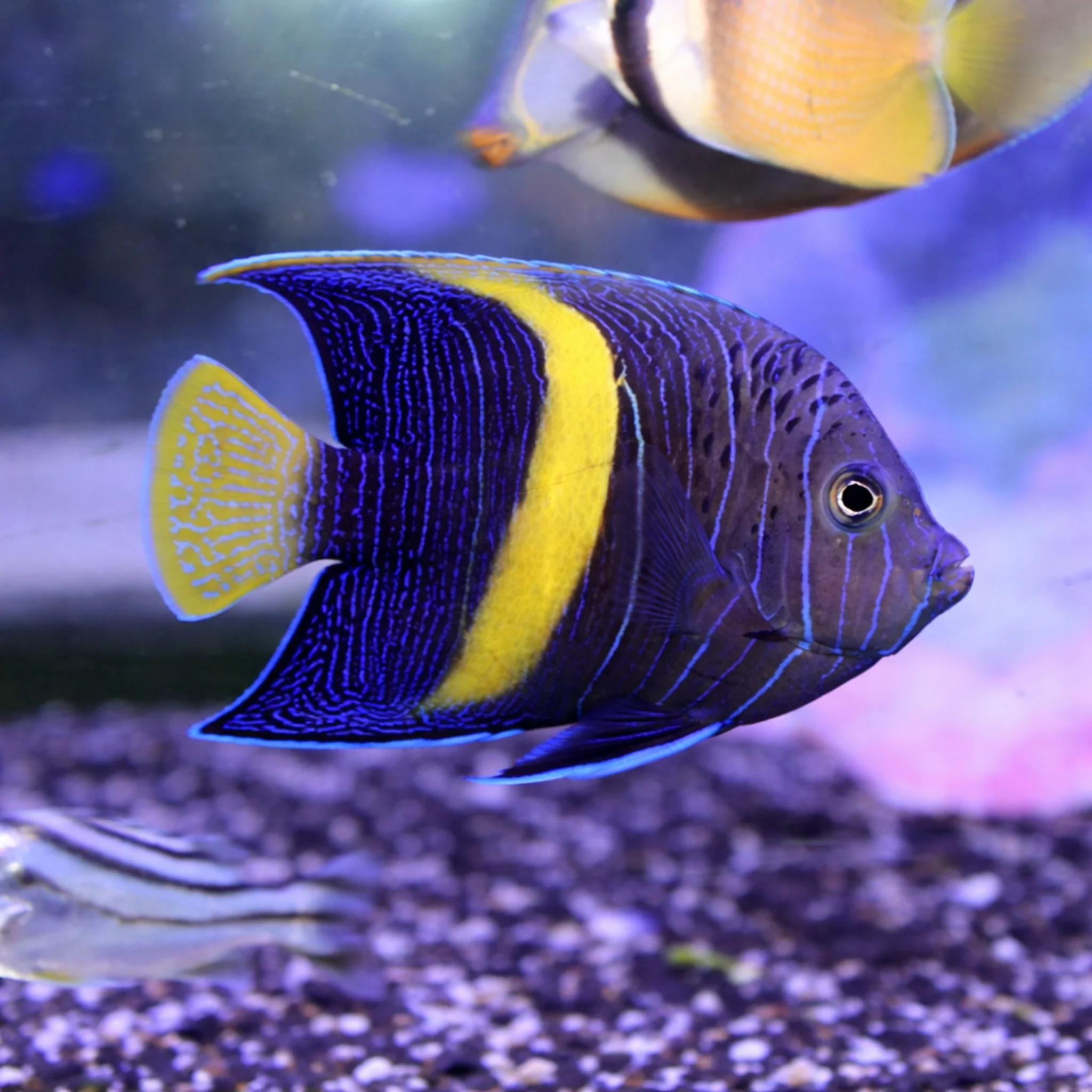
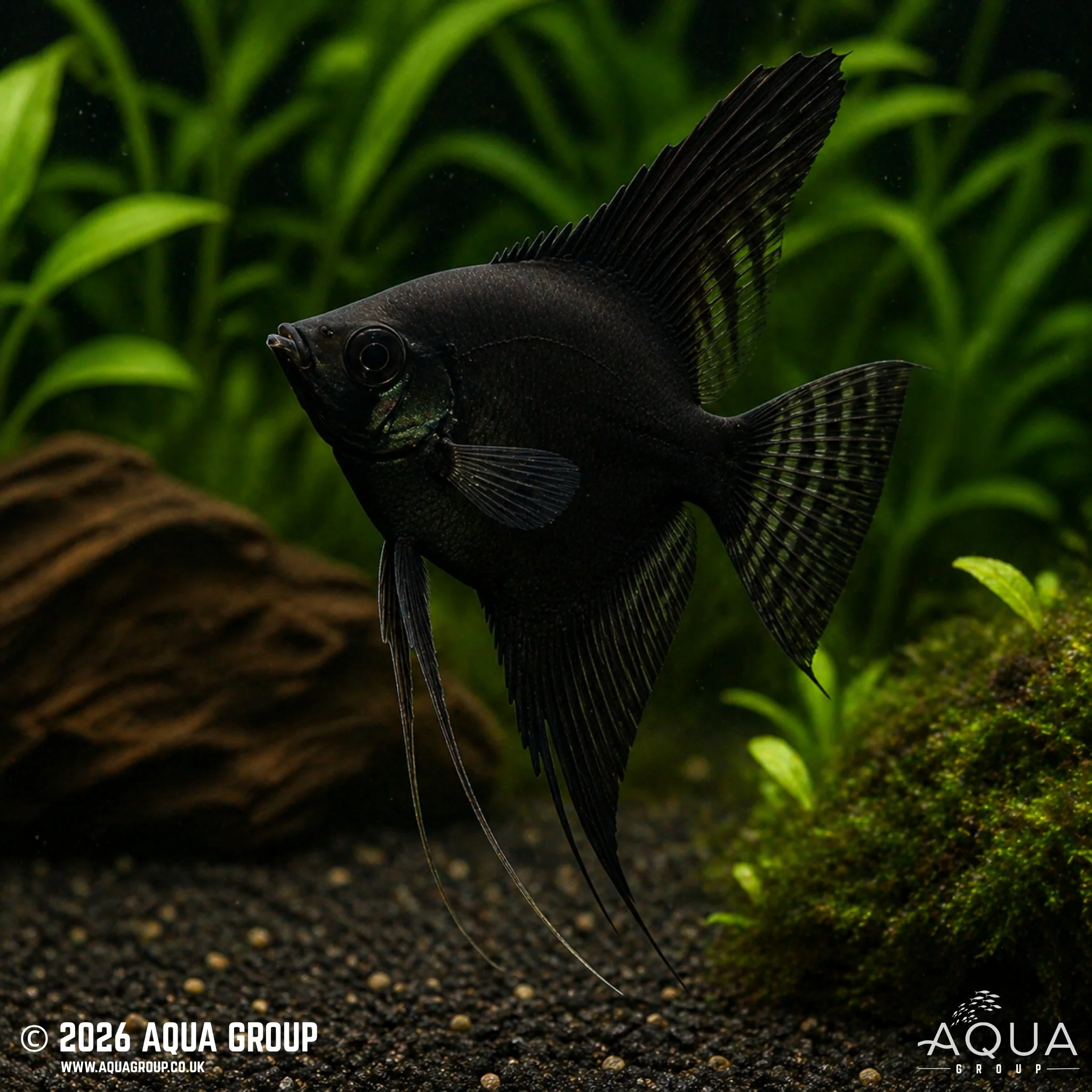
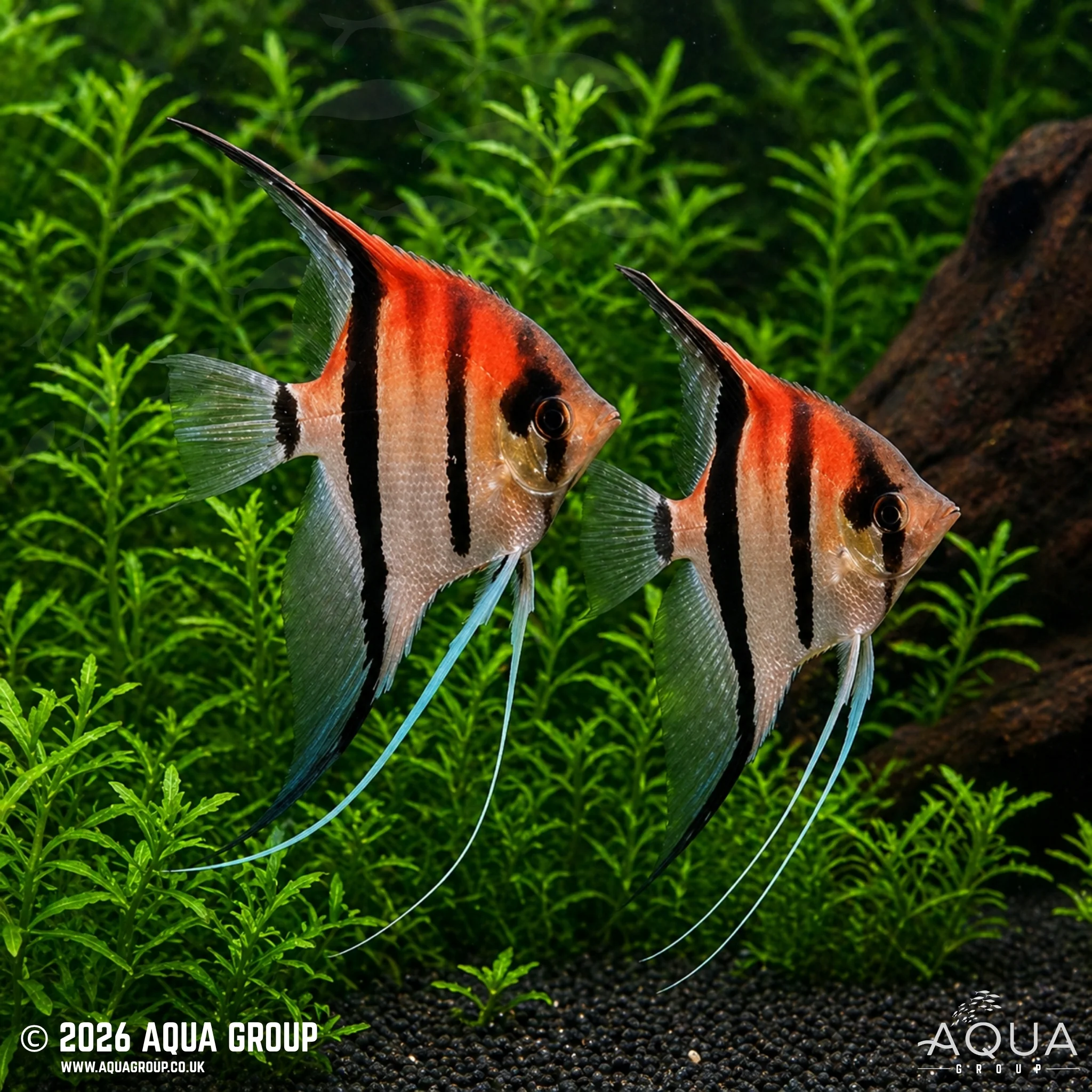
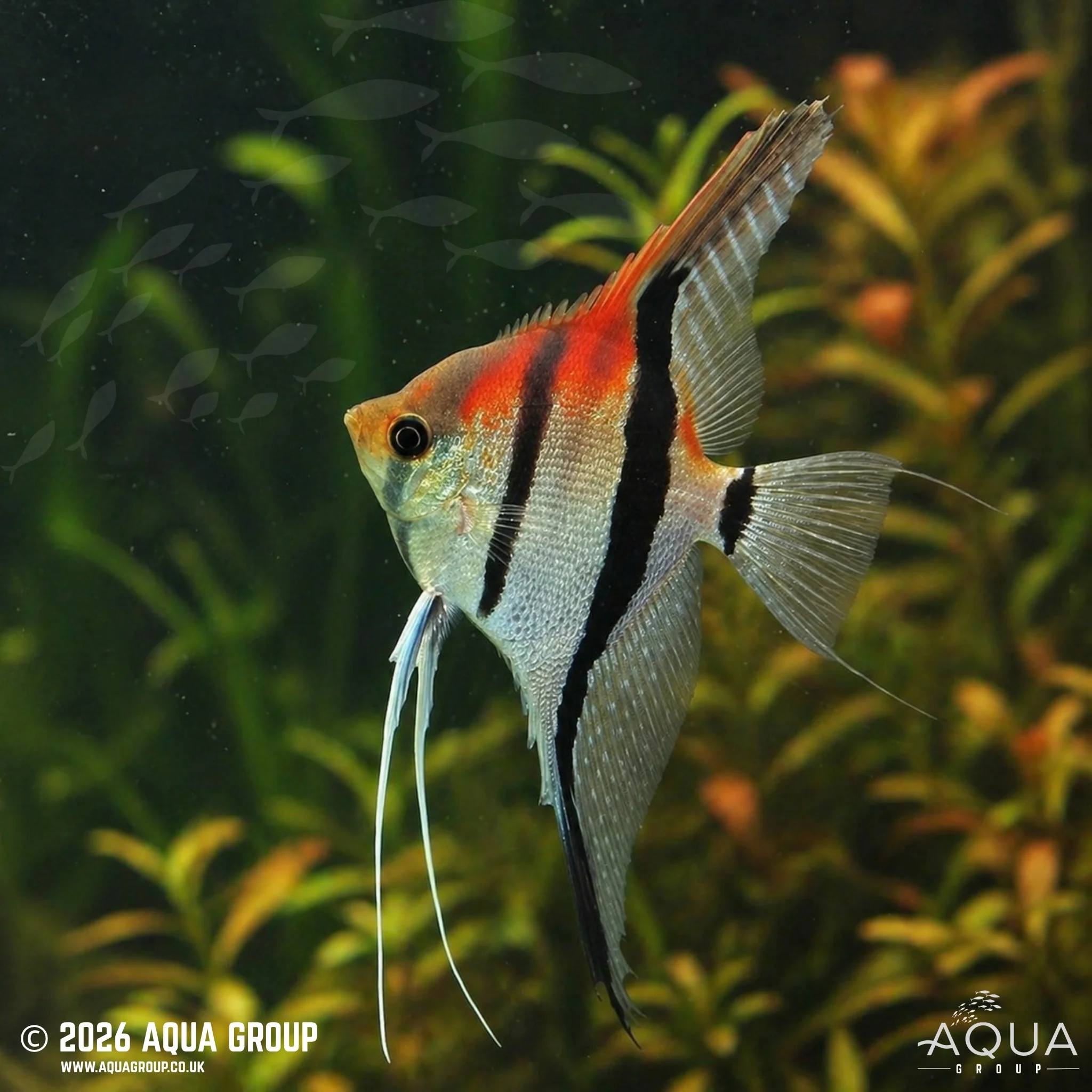
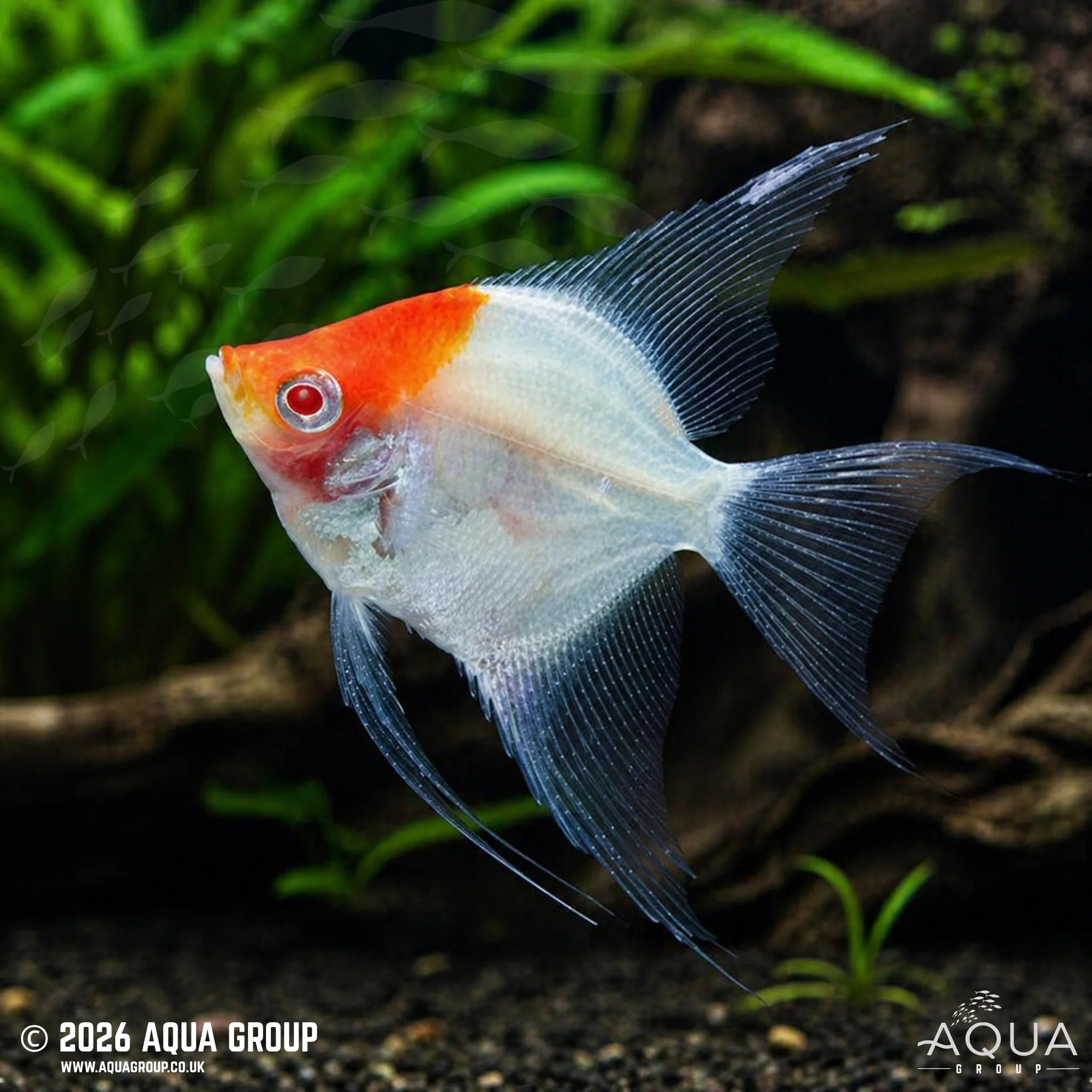
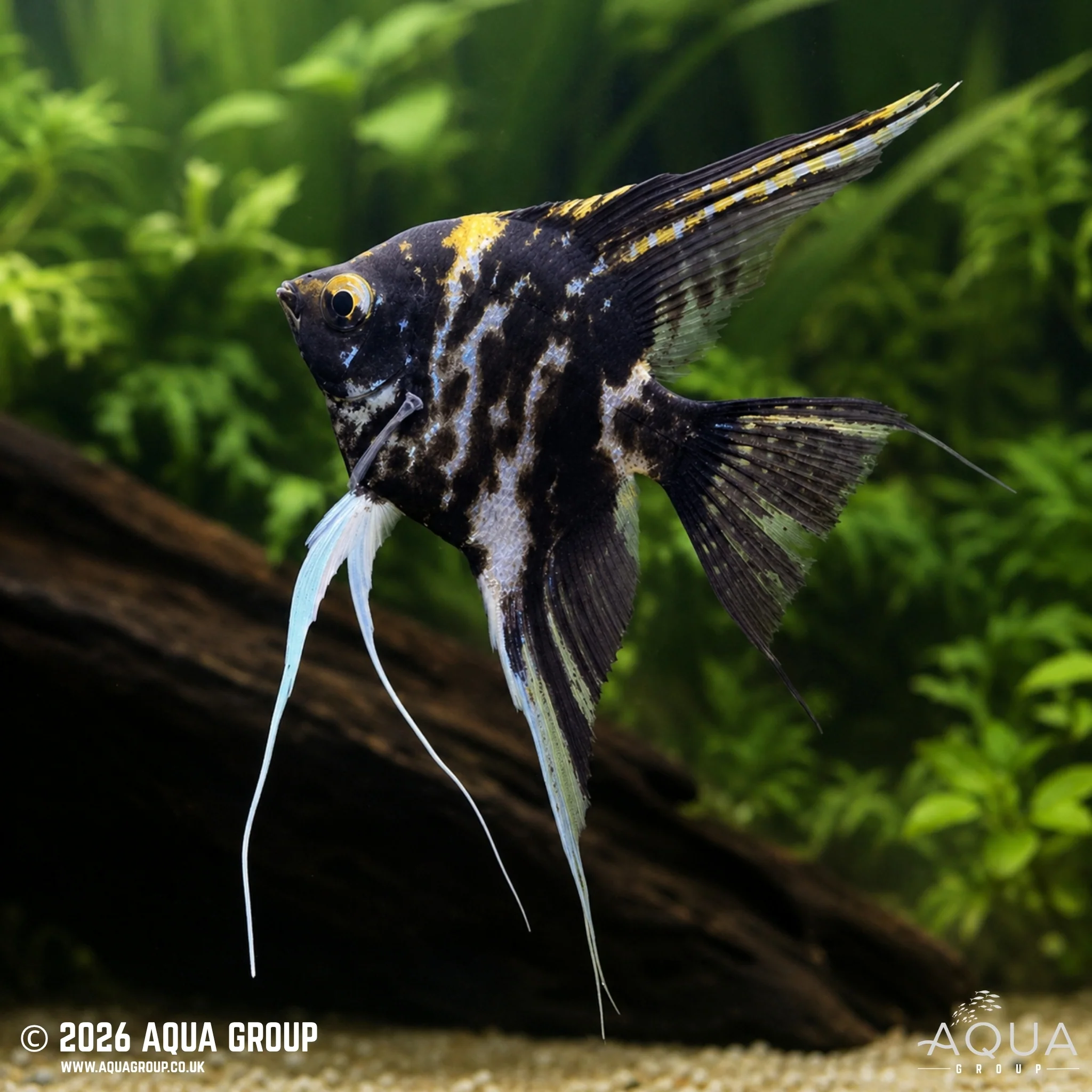
The Leopard Veil Tail Angelfish is a striking ornamental strain of the freshwater angelfish, valued for its spotted leopard-style patterning and long, flowing veil fins. As a captive-bred form of Pterophyllum scalare, it combines the elegant body shape of the classic angelfish with more decorative finnage and pattern. In the aquarium it makes an eye-catching centrepiece fish, but it does best in a tall, well-maintained tropical aquarium with calm tankmates and plenty of vertical structure.
Common Name:
Leopard Veil Tail Angelfish
Scientific Name (Latin):
Pterophyllum scalare
Maximum Size:
Up to 15 cm in body length, with a much taller overall appearance once the extended fins are fully developed.
Water Type:
Freshwater
Origin / Natural Habitat:
This variety is captive-bred, but the species naturally comes from the Amazon basin in South America, where wild angelfish inhabit slow-moving floodplain waters, swamps and vegetated margins.
Water Parameters:
Temperature: 24–30°C
pH Range: 6.0–7.5
Hardness: soft to moderately soft water
Temperament:
Generally peaceful to semi-aggressive. Angelfish are usually calm in a well-planned aquarium, but they can become territorial when breeding and may eat very small fish if those fish can fit in their mouth.
Diet:
Omnivorous. Offer a varied diet of quality flakes, granules or small pellets, along with frozen or live foods such as bloodworm, brineshrimp and daphnia to maintain condition and finnage quality.
Minimum Tank Size:
A practical long-term recommendation is a tall aquarium of at least 120 litres for a pair, with larger aquariums strongly preferred for groups or community setups.
Behaviour & Activity:
Angelfish are graceful mid-water cichlids that appreciate vertical swimming space, planted cover and quiet areas to retreat to. They are pair-forming fish and may choose leaves, slate or other vertical surfaces for spawning once mature.
Aquarium Category:
Semi-Aggressive / Specialist
Best kept with peaceful to moderately calm fish that are too large to be eaten and unlikely to nip fins. Good companions include larger tetras, peaceful rainbowfish, peaceful gouramis, Corydoras and other calm community fish. Avoid fin-nippers such as tiger barbs, very small fish such as neon-sized tetras that may be viewed as food, and overly aggressive cichlids that will bully them. Because this is a veil-tail strain, extra care should be taken to avoid species that target long fins.
Special Requirements or Care Notes:
This fish does best in a mature, well-filtered aquarium with calm flow, warm water and plenty of height. Tall plants, wood and vertical décor help it feel secure. Because of the longer fins, avoid overcrowding and keep away from fish that may nip or damage finnage.
Suitable for:
Beginner to Intermediate fishkeepers. Captive-bred angelfish are generally manageable, but their adult size, breeding behaviour and need for a taller aquarium mean some planning is still important.
Availability:
Regular in trade. Leopard and veil-tail angelfish strains are commonly bred and widely available in the aquarium hobby.
All images are a visual representation of the fish you will receive, made to be as accurate as possible. Please note that Mother Nature is a wonderful thing, and variation in patterns and colours will occur — that is part of the unique beauty of these animals.
Product Information
Product Information
Shipping & Returns
Shipping & Returns
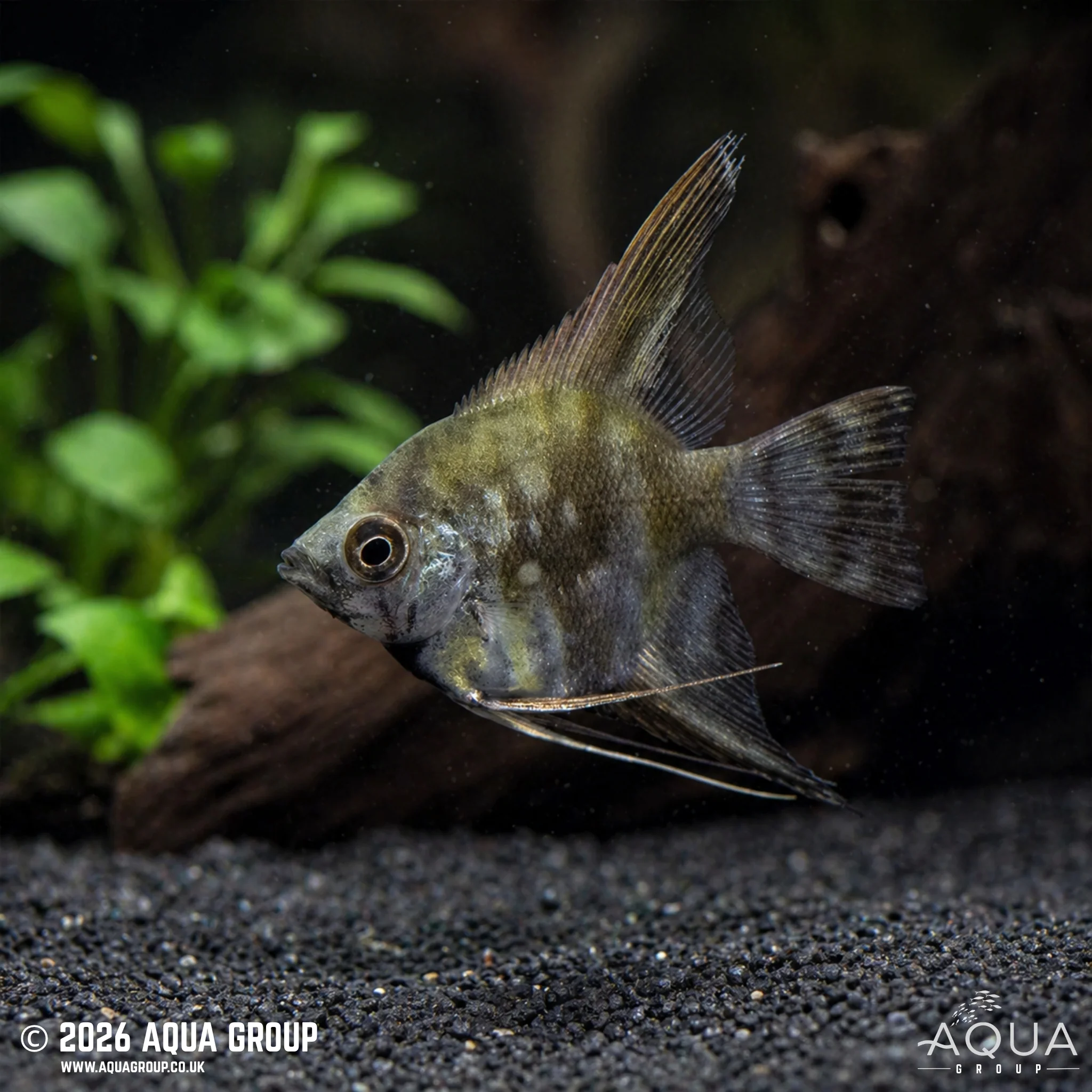
Leopard Angelfish - Pterophyllum scalare
Leopard Angelfish - Pterophyllum scalare
Leopard Angelfish (Pterophyllum scalare)
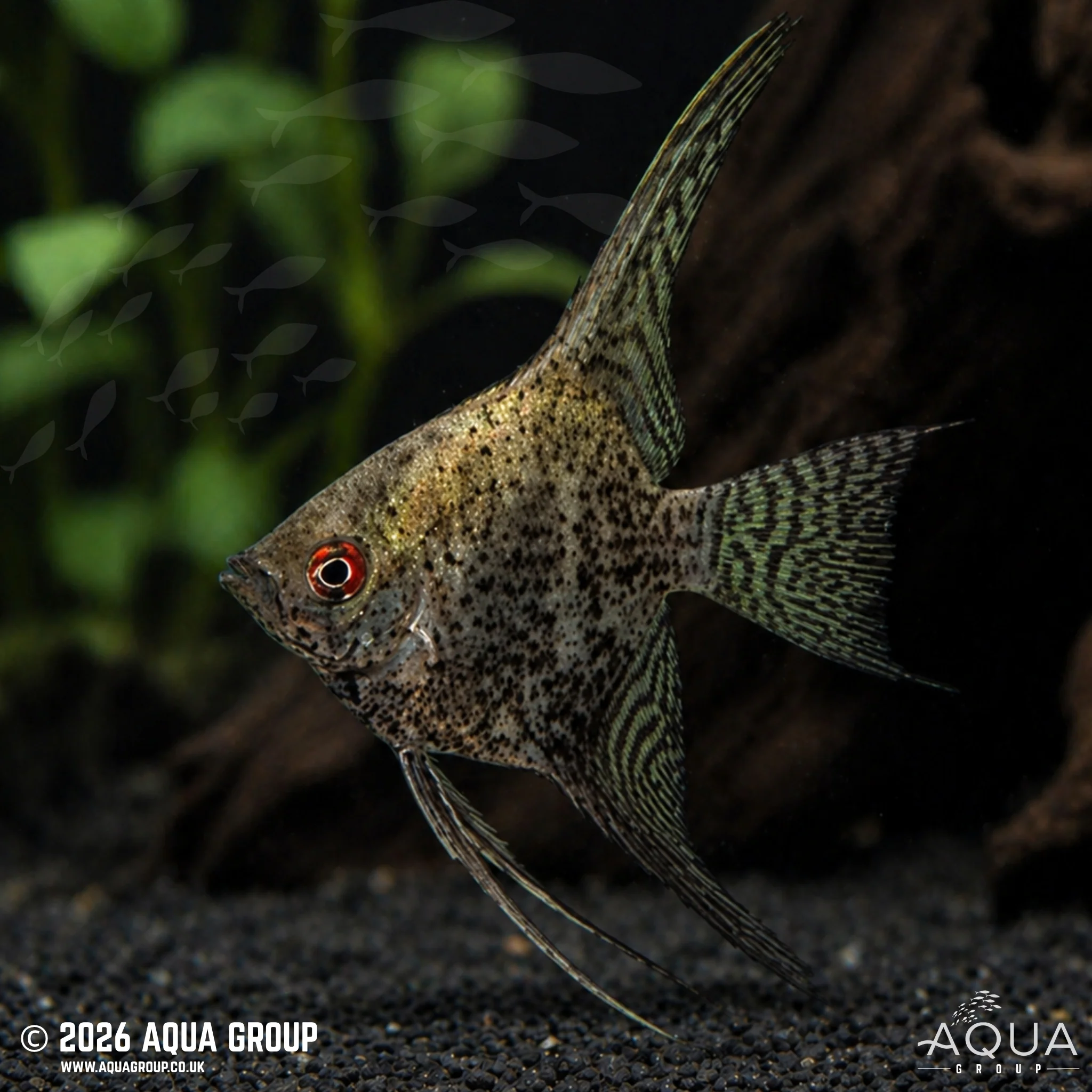
The Leopard Veil Tail Angelfish is a striking ornamental strain of the freshwater angelfish, valued for its spotted leopard-style patterning and long, flowing veil fins. As a captive-bred form of Pterophyllum scalare, it combines the elegant body shape of the classic angelfish with more decorative finnage and pattern. In the aquarium it makes an eye-catching centrepiece fish, but it does best in a tall, well-maintained tropical aquarium with calm tankmates and plenty of vertical structure.
Common Name:
Leopard Veil Tail Angelfish
Scientific Name (Latin):
Pterophyllum scalare
Maximum Size:
Up to 15 cm in body length, with a much taller overall appearance once the extended fins are fully developed.
Water Type:
Freshwater
Origin / Natural Habitat:
This variety is captive-bred, but the species naturally comes from the Amazon basin in South America, where wild angelfish inhabit slow-moving floodplain waters, swamps and vegetated margins.
Water Parameters:
Temperature: 24–30°C
pH Range: 6.0–7.5
Hardness: soft to moderately soft water
Temperament:
Generally peaceful to semi-aggressive. Angelfish are usually calm in a well-planned aquarium, but they can become territorial when breeding and may eat very small fish if those fish can fit in their mouth.
Diet:
Omnivorous. Offer a varied diet of quality flakes, granules or small pellets, along with frozen or live foods such as bloodworm, brineshrimp and daphnia to maintain condition and finnage quality.
Minimum Tank Size:
A practical long-term recommendation is a tall aquarium of at least 120 litres for a pair, with larger aquariums strongly preferred for groups or community setups.
Behaviour & Activity:
Angelfish are graceful mid-water cichlids that appreciate vertical swimming space, planted cover and quiet areas to retreat to. They are pair-forming fish and may choose leaves, slate or other vertical surfaces for spawning once mature.
Aquarium Category:
Semi-Aggressive / Specialist
Best kept with peaceful to moderately calm fish that are too large to be eaten and unlikely to nip fins. Good companions include larger tetras, peaceful rainbowfish, peaceful gouramis, Corydoras and other calm community fish. Avoid fin-nippers such as tiger barbs, very small fish such as neon-sized tetras that may be viewed as food, and overly aggressive cichlids that will bully them. Because this is a veil-tail strain, extra care should be taken to avoid species that target long fins.
Special Requirements or Care Notes:
This fish does best in a mature, well-filtered aquarium with calm flow, warm water and plenty of height. Tall plants, wood and vertical décor help it feel secure. Because of the longer fins, avoid overcrowding and keep away from fish that may nip or damage finnage.
Suitable for:
Beginner to Intermediate fishkeepers. Captive-bred angelfish are generally manageable, but their adult size, breeding behaviour and need for a taller aquarium mean some planning is still important.
Availability:
Regular in trade. Leopard and veil-tail angelfish strains are commonly bred and widely available in the aquarium hobby.
All images are a visual representation of the fish you will receive, made to be as accurate as possible. Please note that Mother Nature is a wonderful thing, and variation in patterns and colours will occur — that is part of the unique beauty of these animals.
Original: $5.35
-65%$5.35
$1.87Product Information
Product Information
Shipping & Returns
Shipping & Returns
Description
Leopard Angelfish (Pterophyllum scalare)
The Leopard Veil Tail Angelfish is a striking ornamental strain of the freshwater angelfish, valued for its spotted leopard-style patterning and long, flowing veil fins. As a captive-bred form of Pterophyllum scalare, it combines the elegant body shape of the classic angelfish with more decorative finnage and pattern. In the aquarium it makes an eye-catching centrepiece fish, but it does best in a tall, well-maintained tropical aquarium with calm tankmates and plenty of vertical structure.
Common Name:
Leopard Veil Tail Angelfish
Scientific Name (Latin):
Pterophyllum scalare
Maximum Size:
Up to 15 cm in body length, with a much taller overall appearance once the extended fins are fully developed.
Water Type:
Freshwater
Origin / Natural Habitat:
This variety is captive-bred, but the species naturally comes from the Amazon basin in South America, where wild angelfish inhabit slow-moving floodplain waters, swamps and vegetated margins.
Water Parameters:
Temperature: 24–30°C
pH Range: 6.0–7.5
Hardness: soft to moderately soft water
Temperament:
Generally peaceful to semi-aggressive. Angelfish are usually calm in a well-planned aquarium, but they can become territorial when breeding and may eat very small fish if those fish can fit in their mouth.
Diet:
Omnivorous. Offer a varied diet of quality flakes, granules or small pellets, along with frozen or live foods such as bloodworm, brineshrimp and daphnia to maintain condition and finnage quality.
Minimum Tank Size:
A practical long-term recommendation is a tall aquarium of at least 120 litres for a pair, with larger aquariums strongly preferred for groups or community setups.
Behaviour & Activity:
Angelfish are graceful mid-water cichlids that appreciate vertical swimming space, planted cover and quiet areas to retreat to. They are pair-forming fish and may choose leaves, slate or other vertical surfaces for spawning once mature.
Aquarium Category:
Semi-Aggressive / Specialist
Best kept with peaceful to moderately calm fish that are too large to be eaten and unlikely to nip fins. Good companions include larger tetras, peaceful rainbowfish, peaceful gouramis, Corydoras and other calm community fish. Avoid fin-nippers such as tiger barbs, very small fish such as neon-sized tetras that may be viewed as food, and overly aggressive cichlids that will bully them. Because this is a veil-tail strain, extra care should be taken to avoid species that target long fins.
Special Requirements or Care Notes:
This fish does best in a mature, well-filtered aquarium with calm flow, warm water and plenty of height. Tall plants, wood and vertical décor help it feel secure. Because of the longer fins, avoid overcrowding and keep away from fish that may nip or damage finnage.
Suitable for:
Beginner to Intermediate fishkeepers. Captive-bred angelfish are generally manageable, but their adult size, breeding behaviour and need for a taller aquarium mean some planning is still important.
Availability:
Regular in trade. Leopard and veil-tail angelfish strains are commonly bred and widely available in the aquarium hobby.
All images are a visual representation of the fish you will receive, made to be as accurate as possible. Please note that Mother Nature is a wonderful thing, and variation in patterns and colours will occur — that is part of the unique beauty of these animals.