Queen Coris - Coris formosa
Queen Coris (Coris formosa)
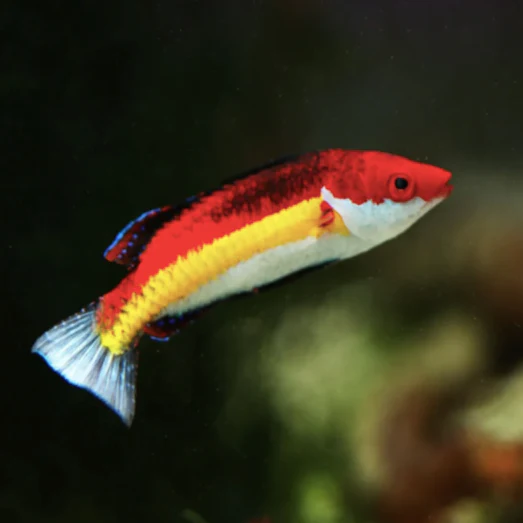
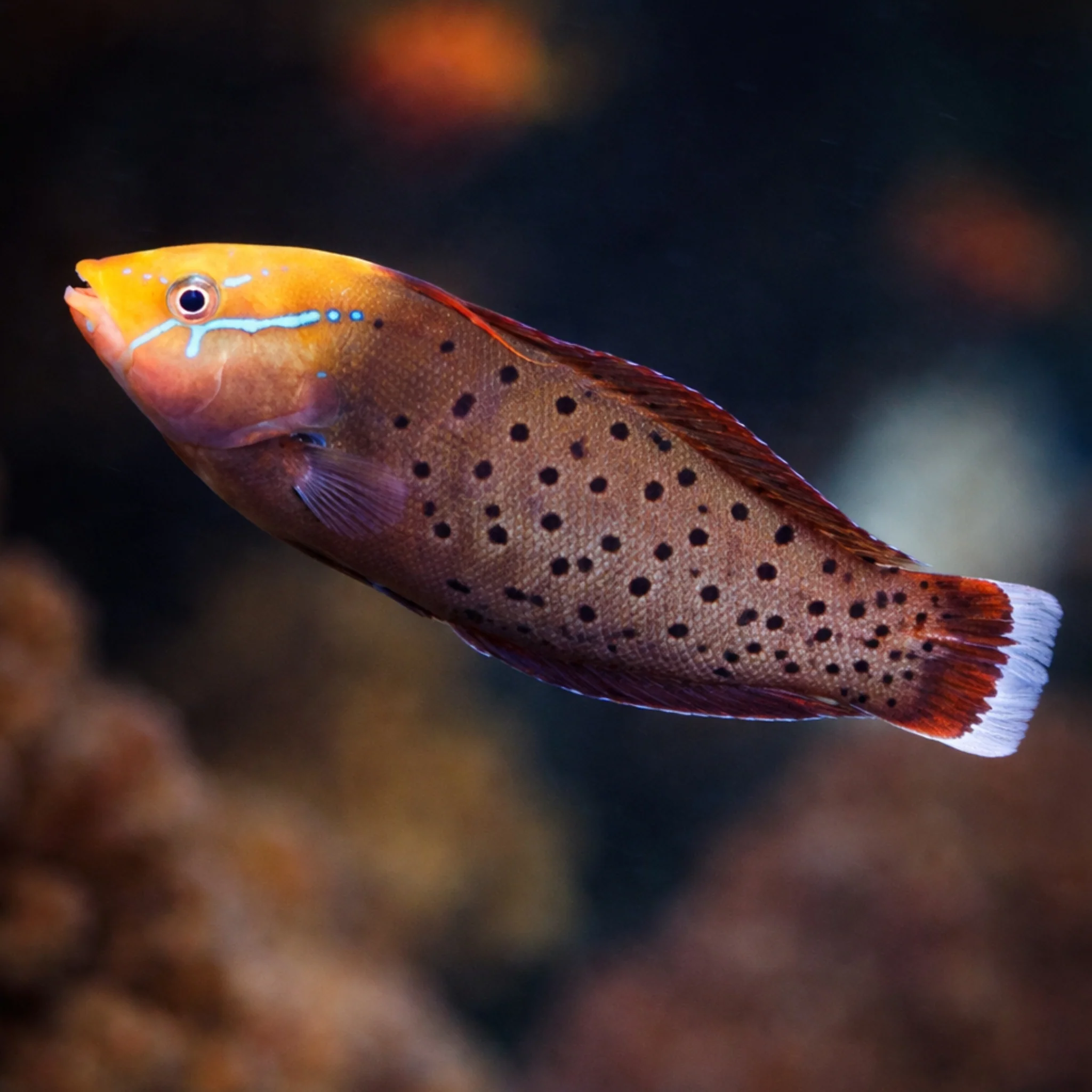
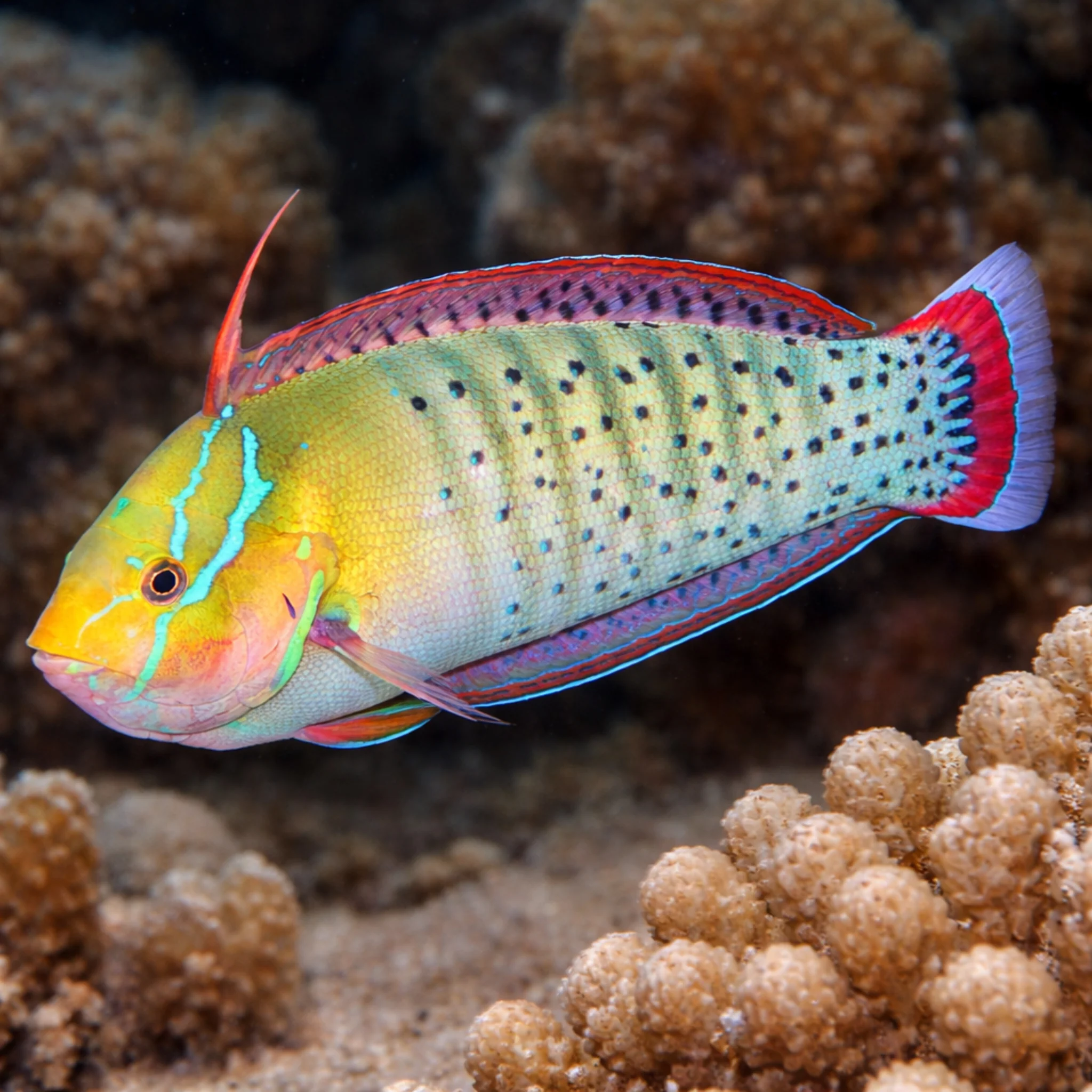
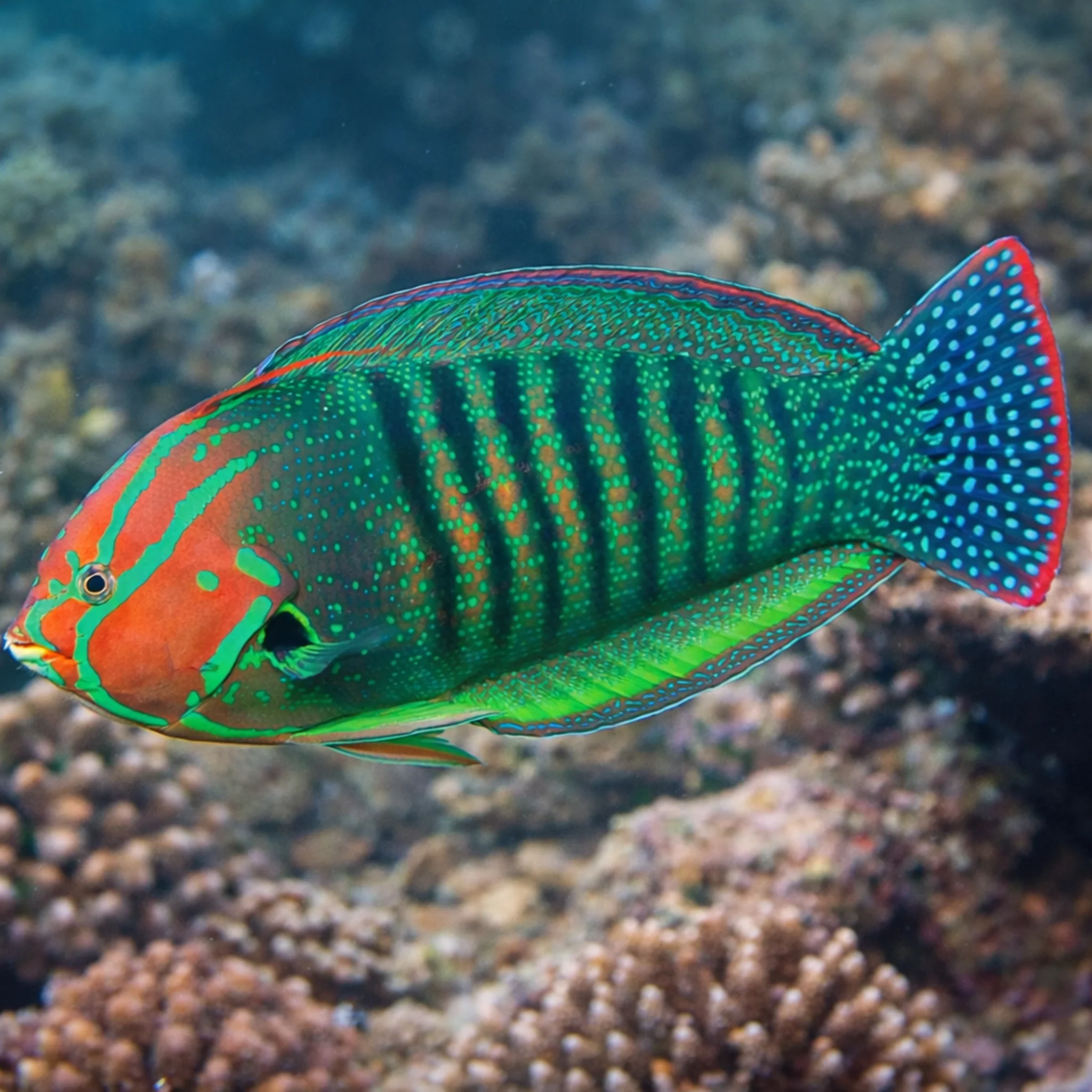
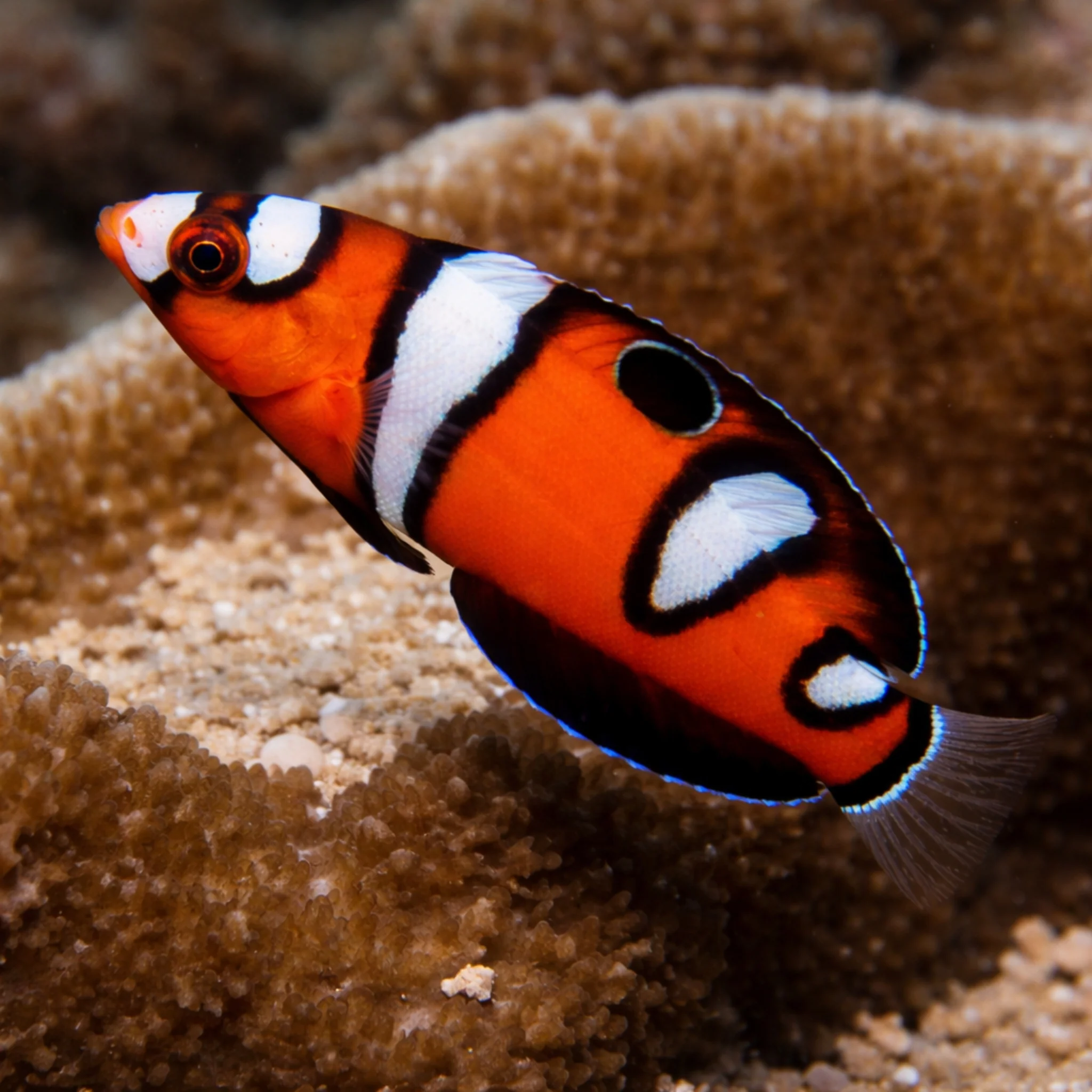
The Queen Coris is a dramatic, fast-growing marine wrasse known for one of the most striking juvenile-to-adult transformations in the hobby. Juveniles are bright orange-red with bold pale dorsal markings edged in dark colour, while adults develop a far more powerful appearance with blue-green, white, black and orange patterning. Native to the western Indian Ocean, this species lives around coral, rock and weedy reef areas, where it forages for hard-shelled prey. In captivity it is a bold, intelligent fish, but it becomes very large, rearranges substrate and décor, and is best suited only to very spacious, mature marine systems.
Common Name:
Queen Coris. It is also commonly known as the Formosa Wrasse, Formosan Coris or Queen Coris Wrasse.
Scientific Name (Latin):
Coris formosa
Maximum Size:
Up to 60 cm in length.
Water Type:
Marine.
Origin / Natural Habitat:
Found in the western Indian Ocean, from the Red Sea and East African coast to Sri Lanka. Juveniles are commonly found in shallow tide pools, while adults occur over coral, rock and weedy reef areas in tropical marine habitat.
Water Parameters:
Temperature: 22–27°C
pH Range: 8.1–8.4
Salinity: 1.020–1.025 SG
These are practical captive-care parameters consistent with marine wrasse husbandry and aquarium references for this species.
Temperament:
Semi-aggressive to aggressive. Larger specimens can become dominant, may harass smaller fish, and are generally better kept with robust tankmates in very large aquaria.
Diet:
Carnivorous. It feeds mainly on hard-shelled prey, including crustaceans, molluscs and sea urchins. In captivity it should be offered a varied diet of substantial meaty marine foods such as mysis, chopped shellfish, crustacean-based foods and other protein-rich fare.
Minimum Tank Size:
1,500 litres minimum is the safest long-term recommendation for this species once adult size, activity level and behaviour are taken into account. Some aquarium references suggest smaller systems for juveniles, but very large aquaria are more realistic for proper long-term care.
Behaviour & Activity:
A highly active, solitary wrasse that spends much of the day searching the substrate and rockwork for food. It is known to dig into sand, move substrate, and rearrange rocks or loose décor, especially as it grows. Juveniles and adults look completely different, which is worth bearing in mind when buying a small specimen.
Reef Safe:
Not Reef Safe
This species is an effective hunter of crustaceans, worms, sea urchins and other invertebrates, may threaten small fish, and can also nibble at clams. It is not suitable for most reef aquaria and is far better suited to a fish-only or carefully planned predator-style marine system.
Special Requirements or Care Notes:
Best kept in a very large, mature marine aquarium with a deep sand bed, secure rockwork and abundant swimming room. This species may bury itself during acclimation or when stressed, and it can become destructive in undersized systems. Because of its eventual size, it should only be purchased with a genuine long-term plan in place.
Suitable for:
Experienced fishkeepers
This species is only suitable with care due to its size, aggression, destructive behaviour and very large aquarium requirement.
Availability:
Occasional in trade.
Product Information
Product Information
Shipping & Returns
Shipping & Returns
Queen Coris - Coris formosa
Queen Coris - Coris formosa
Queen Coris (Coris formosa)
The Queen Coris is a dramatic, fast-growing marine wrasse known for one of the most striking juvenile-to-adult transformations in the hobby. Juveniles are bright orange-red with bold pale dorsal markings edged in dark colour, while adults develop a far more powerful appearance with blue-green, white, black and orange patterning. Native to the western Indian Ocean, this species lives around coral, rock and weedy reef areas, where it forages for hard-shelled prey. In captivity it is a bold, intelligent fish, but it becomes very large, rearranges substrate and décor, and is best suited only to very spacious, mature marine systems.
Common Name:
Queen Coris. It is also commonly known as the Formosa Wrasse, Formosan Coris or Queen Coris Wrasse.
Scientific Name (Latin):
Coris formosa
Maximum Size:
Up to 60 cm in length.
Water Type:
Marine.
Origin / Natural Habitat:
Found in the western Indian Ocean, from the Red Sea and East African coast to Sri Lanka. Juveniles are commonly found in shallow tide pools, while adults occur over coral, rock and weedy reef areas in tropical marine habitat.
Water Parameters:
Temperature: 22–27°C
pH Range: 8.1–8.4
Salinity: 1.020–1.025 SG
These are practical captive-care parameters consistent with marine wrasse husbandry and aquarium references for this species.
Temperament:
Semi-aggressive to aggressive. Larger specimens can become dominant, may harass smaller fish, and are generally better kept with robust tankmates in very large aquaria.
Diet:
Carnivorous. It feeds mainly on hard-shelled prey, including crustaceans, molluscs and sea urchins. In captivity it should be offered a varied diet of substantial meaty marine foods such as mysis, chopped shellfish, crustacean-based foods and other protein-rich fare.
Minimum Tank Size:
1,500 litres minimum is the safest long-term recommendation for this species once adult size, activity level and behaviour are taken into account. Some aquarium references suggest smaller systems for juveniles, but very large aquaria are more realistic for proper long-term care.
Behaviour & Activity:
A highly active, solitary wrasse that spends much of the day searching the substrate and rockwork for food. It is known to dig into sand, move substrate, and rearrange rocks or loose décor, especially as it grows. Juveniles and adults look completely different, which is worth bearing in mind when buying a small specimen.
Reef Safe:
Not Reef Safe
This species is an effective hunter of crustaceans, worms, sea urchins and other invertebrates, may threaten small fish, and can also nibble at clams. It is not suitable for most reef aquaria and is far better suited to a fish-only or carefully planned predator-style marine system.
Special Requirements or Care Notes:
Best kept in a very large, mature marine aquarium with a deep sand bed, secure rockwork and abundant swimming room. This species may bury itself during acclimation or when stressed, and it can become destructive in undersized systems. Because of its eventual size, it should only be purchased with a genuine long-term plan in place.
Suitable for:
Experienced fishkeepers
This species is only suitable with care due to its size, aggression, destructive behaviour and very large aquarium requirement.
Availability:
Occasional in trade.
Product Information
Product Information
Shipping & Returns
Shipping & Returns
Description
Queen Coris (Coris formosa)
The Queen Coris is a dramatic, fast-growing marine wrasse known for one of the most striking juvenile-to-adult transformations in the hobby. Juveniles are bright orange-red with bold pale dorsal markings edged in dark colour, while adults develop a far more powerful appearance with blue-green, white, black and orange patterning. Native to the western Indian Ocean, this species lives around coral, rock and weedy reef areas, where it forages for hard-shelled prey. In captivity it is a bold, intelligent fish, but it becomes very large, rearranges substrate and décor, and is best suited only to very spacious, mature marine systems.
Common Name:
Queen Coris. It is also commonly known as the Formosa Wrasse, Formosan Coris or Queen Coris Wrasse.
Scientific Name (Latin):
Coris formosa
Maximum Size:
Up to 60 cm in length.
Water Type:
Marine.
Origin / Natural Habitat:
Found in the western Indian Ocean, from the Red Sea and East African coast to Sri Lanka. Juveniles are commonly found in shallow tide pools, while adults occur over coral, rock and weedy reef areas in tropical marine habitat.
Water Parameters:
Temperature: 22–27°C
pH Range: 8.1–8.4
Salinity: 1.020–1.025 SG
These are practical captive-care parameters consistent with marine wrasse husbandry and aquarium references for this species.
Temperament:
Semi-aggressive to aggressive. Larger specimens can become dominant, may harass smaller fish, and are generally better kept with robust tankmates in very large aquaria.
Diet:
Carnivorous. It feeds mainly on hard-shelled prey, including crustaceans, molluscs and sea urchins. In captivity it should be offered a varied diet of substantial meaty marine foods such as mysis, chopped shellfish, crustacean-based foods and other protein-rich fare.
Minimum Tank Size:
1,500 litres minimum is the safest long-term recommendation for this species once adult size, activity level and behaviour are taken into account. Some aquarium references suggest smaller systems for juveniles, but very large aquaria are more realistic for proper long-term care.
Behaviour & Activity:
A highly active, solitary wrasse that spends much of the day searching the substrate and rockwork for food. It is known to dig into sand, move substrate, and rearrange rocks or loose décor, especially as it grows. Juveniles and adults look completely different, which is worth bearing in mind when buying a small specimen.
Reef Safe:
Not Reef Safe
This species is an effective hunter of crustaceans, worms, sea urchins and other invertebrates, may threaten small fish, and can also nibble at clams. It is not suitable for most reef aquaria and is far better suited to a fish-only or carefully planned predator-style marine system.
Special Requirements or Care Notes:
Best kept in a very large, mature marine aquarium with a deep sand bed, secure rockwork and abundant swimming room. This species may bury itself during acclimation or when stressed, and it can become destructive in undersized systems. Because of its eventual size, it should only be purchased with a genuine long-term plan in place.
Suitable for:
Experienced fishkeepers
This species is only suitable with care due to its size, aggression, destructive behaviour and very large aquarium requirement.
Availability:
Occasional in trade.