Sixbar Wrasse - Thalassoma hardwicke
Sixbar Wrasse (Thalassoma hardwicke)
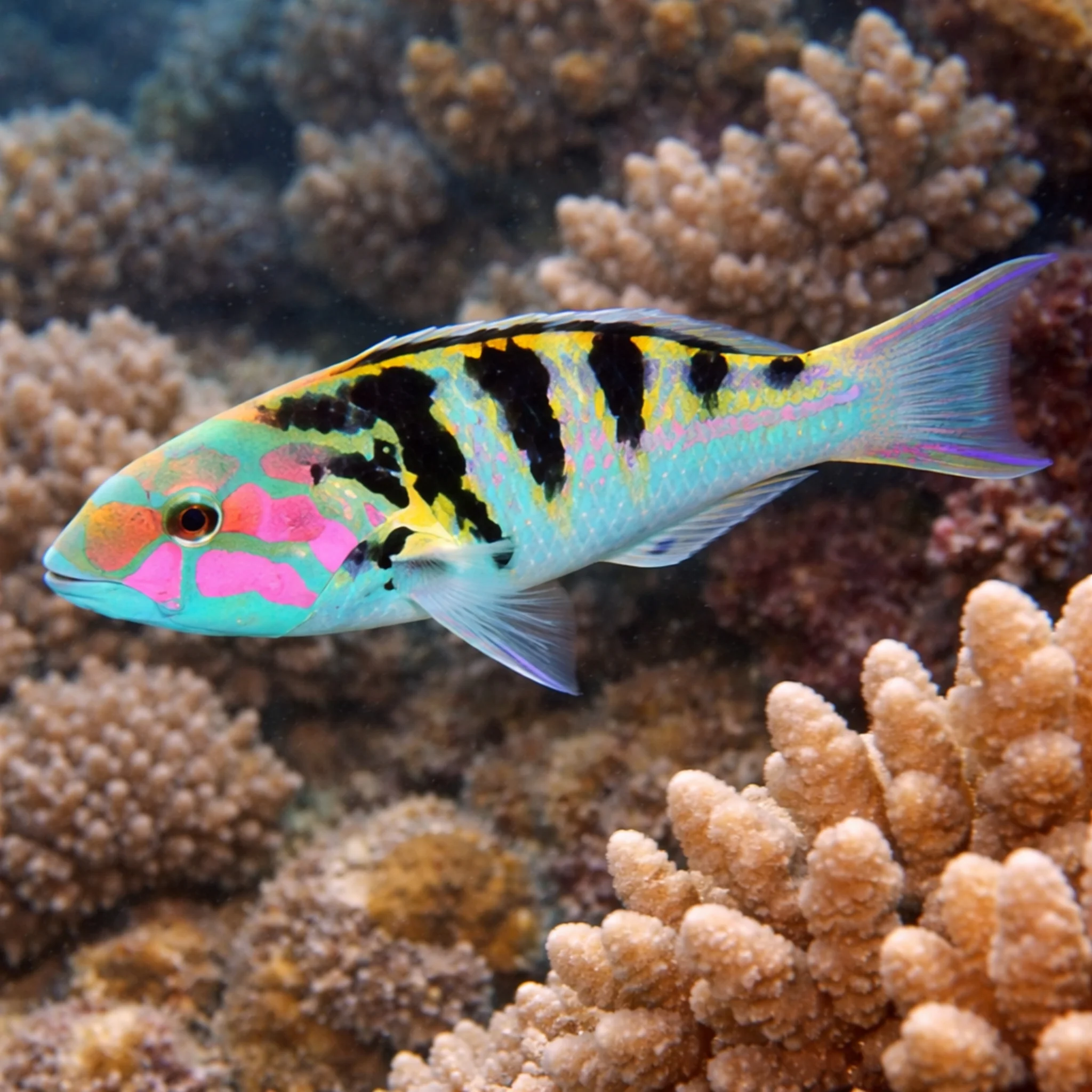
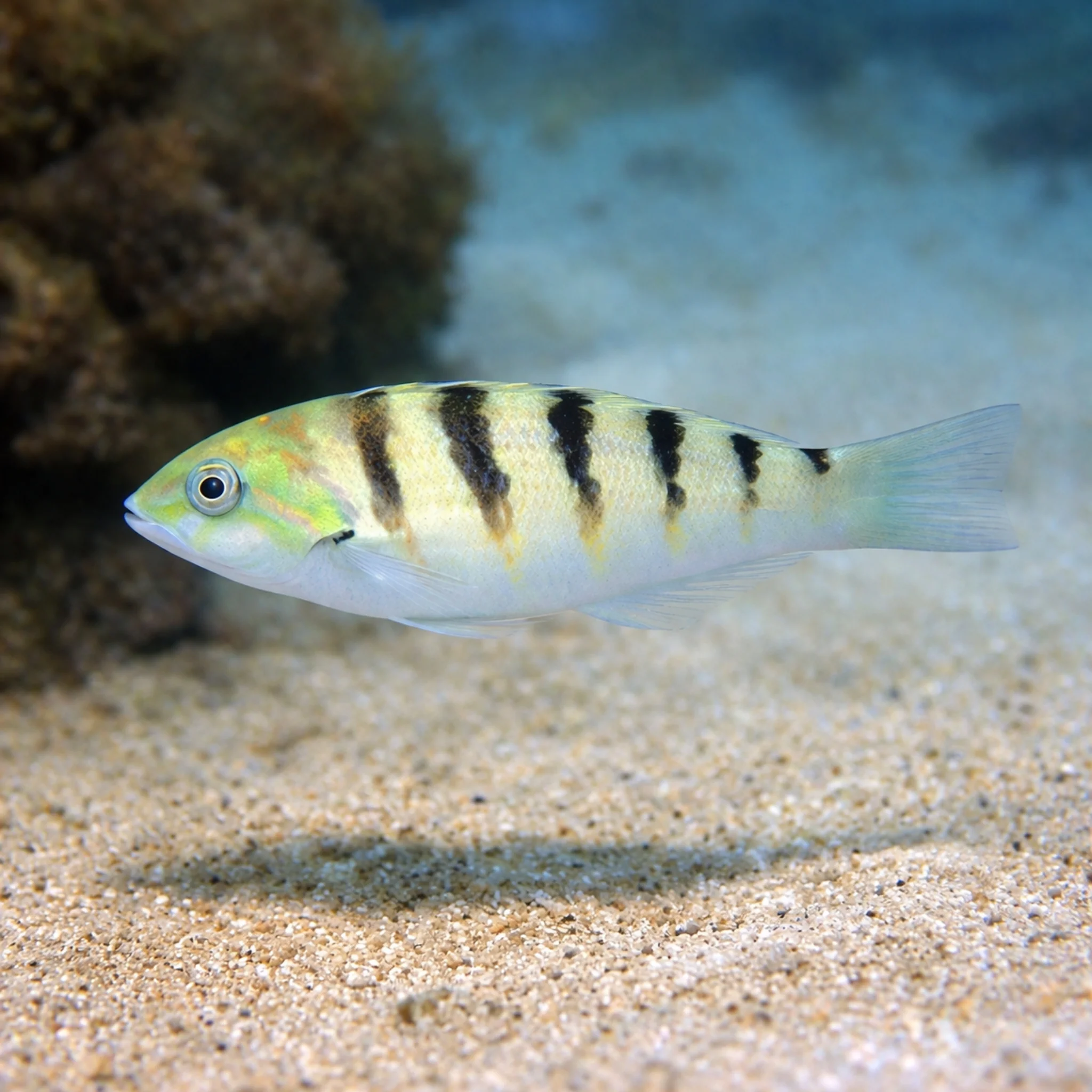
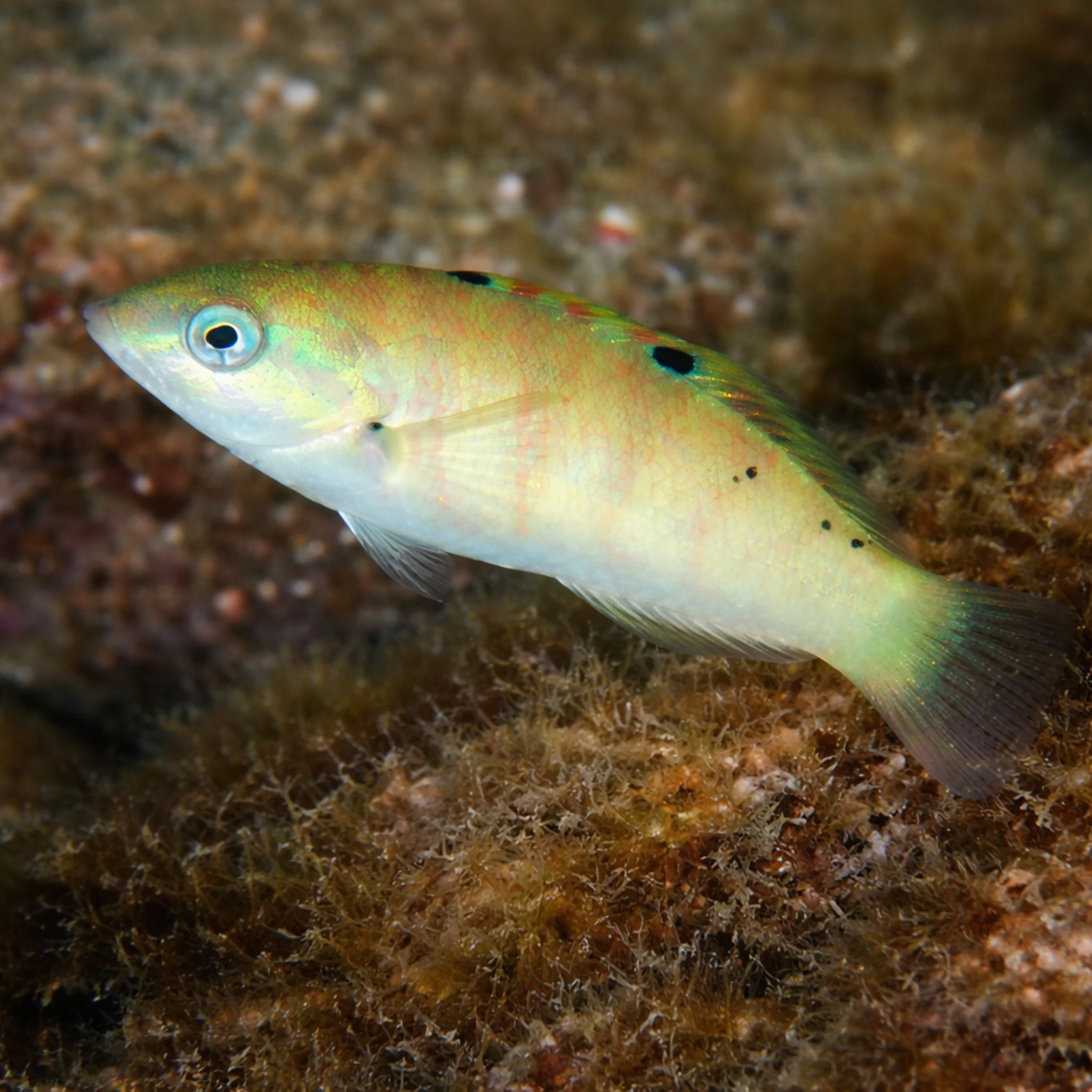
The Sixbar Wrasse is a vivid, fast-moving marine wrasse recognised by its green to bluish-green body, six dark wedge-like bars and pink facial markings radiating from the eye. Males are typically brighter than females. In the wild it inhabits shallow lagoons, seaward reefs, slopes and drop-offs across the Indo-Pacific, where it is usually seen in small, loose groups. It is an active, assertive species best suited to a large, mature marine aquarium with plenty of swimming space.
Common Name:
Sixbar Wrasse. It is also commonly known as the Six-banded Wrasse or Hardwicke’s Wrasse.
Scientific Name (Latin):
Thalassoma hardwicke
Maximum Size:
Up to 25 cm in length.
Water Type:
Marine.
Origin / Natural Habitat:
Found across the Indo-Pacific, from East Africa to the Line and Tuamotu Islands, north to southern Japan and south to Lord Howe and the Austral Islands. It is a reef-associated species found from the surface to around 15 metres, especially around shallow lagoons, seaward reefs and reef slopes.
Water Parameters:
Temperature: 24–26°C
pH Range: 7.9–8.3
Salinity: 1.020–1.025 SG
These are practical aquarium guidelines for marine wrasses and a sensible captive-care baseline for this species.
Temperament:
Semi-aggressive to aggressive. This species is very active and can be pushy with more timid tankmates, especially in smaller aquaria.
Diet:
Carnivorous. In the wild it feeds on benthic and planktonic crustaceans, small fishes and foraminiferans. In captivity it should be offered a varied diet of small meaty marine foods such as mysis, brineshrimp, chopped crustacean foods and other protein-rich fare.
Minimum Tank Size:
A sensible long-term recommendation is 475 litres or more, based on its adult size, constant activity level and general wrasse care guidance.
Behaviour & Activity:
An active, diurnal wrasse that spends much of the day cruising open water and hunting around reef structure. It may use sheltered areas when threatened or resting, so open swimming space and secure rockwork are both important.
Reef Safe:
Reef Safe with Caution
This species may be a risk to small ornamental crustaceans and other mobile invertebrates, as its natural diet includes crustaceans and small fish. In a reef aquarium, monitor carefully around shrimps, tiny crabs and other small motile livestock. This classification is an aquarium-care inference based on its documented natural feeding behaviour.
Special Requirements or Care Notes:
Best kept in a large, well-established marine aquarium with ample open swimming space, rockwork for shelter and a tight-fitting lid, as wrasses are known jumpers. A sand area can also be beneficial for cover-seeking behaviour, and rockwork should be fully secured because active wrasses may disturb the substrate.
Suitable for:
Intermediate to Experienced fishkeepers. That is the safest recommendation based on its size, speed, assertive behaviour and large aquarium requirement.
Availability:
Occasional in trade.
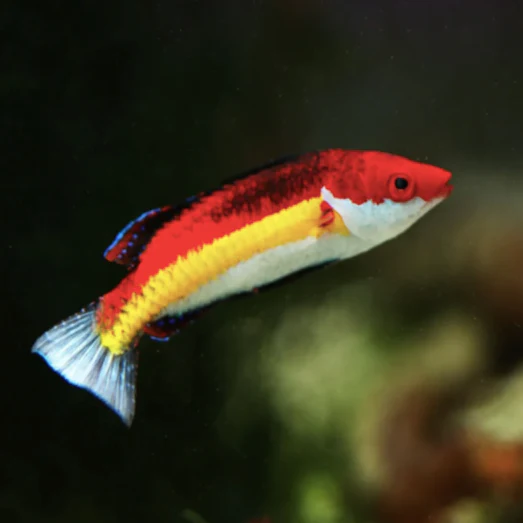
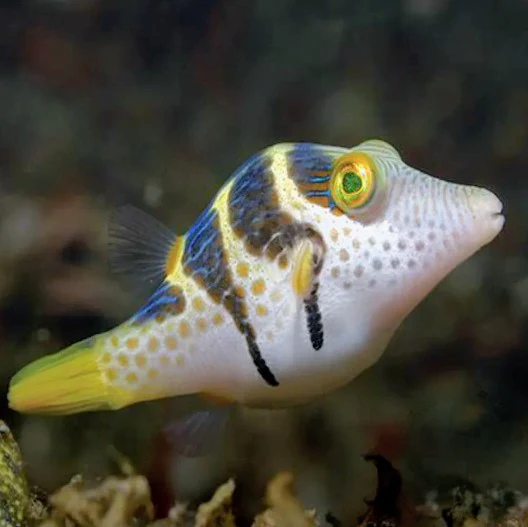
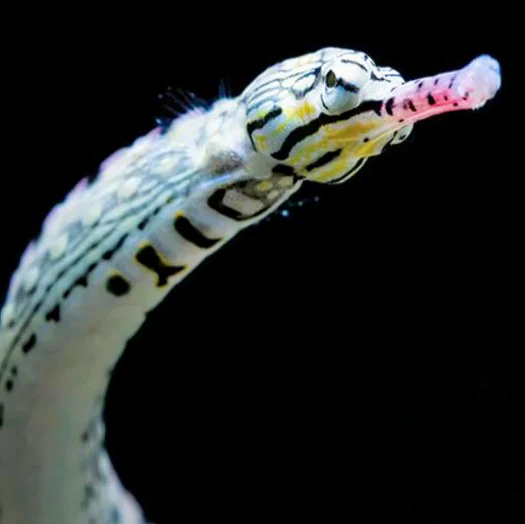
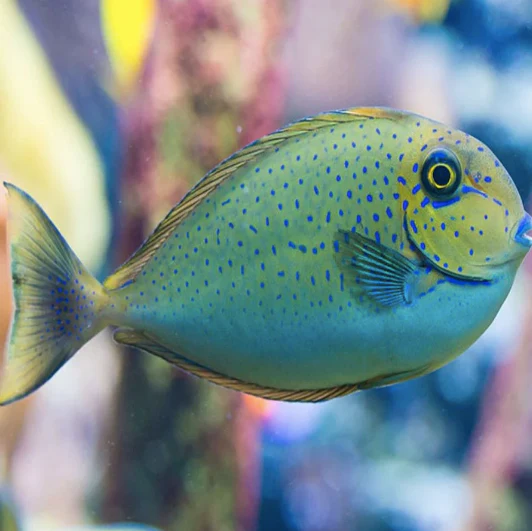
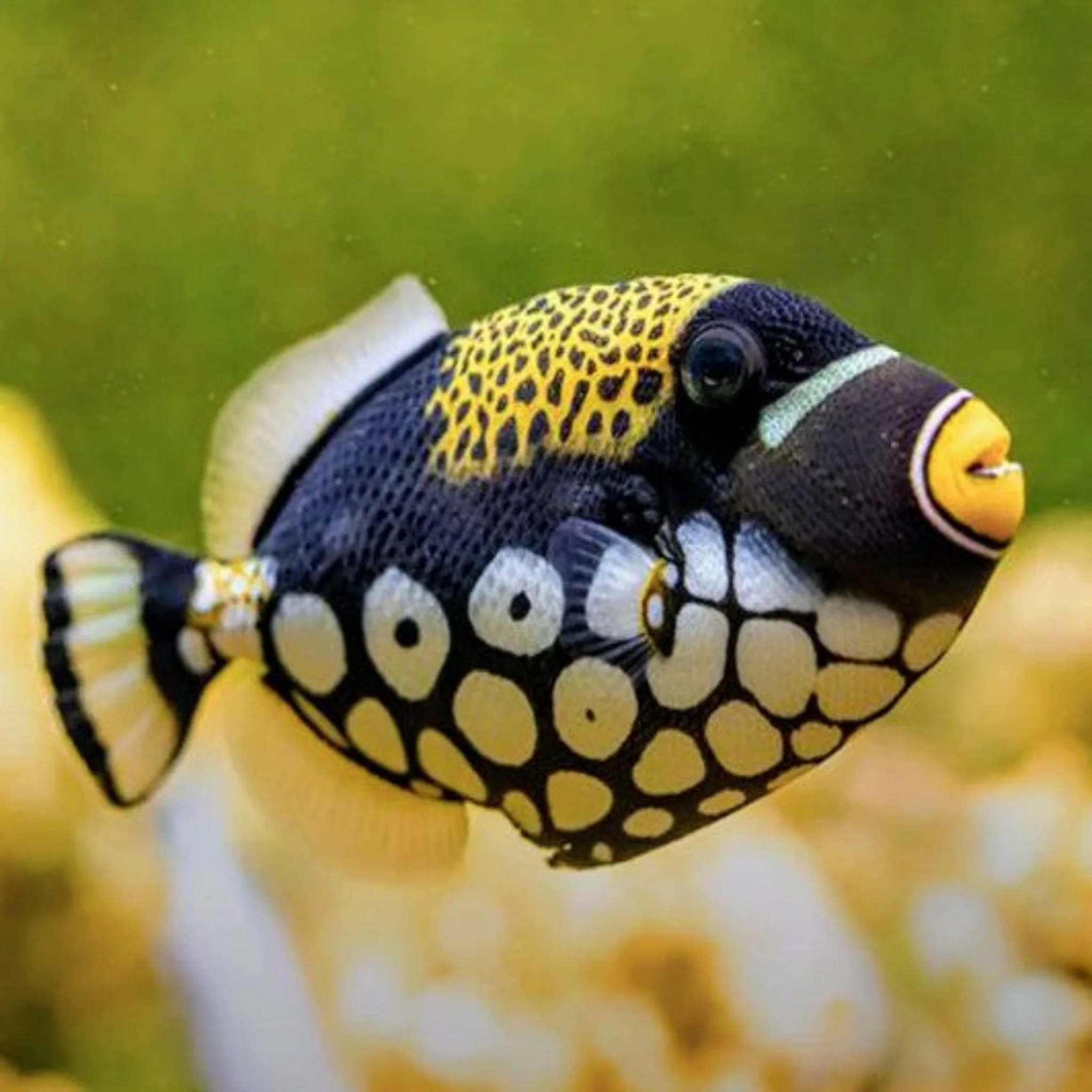
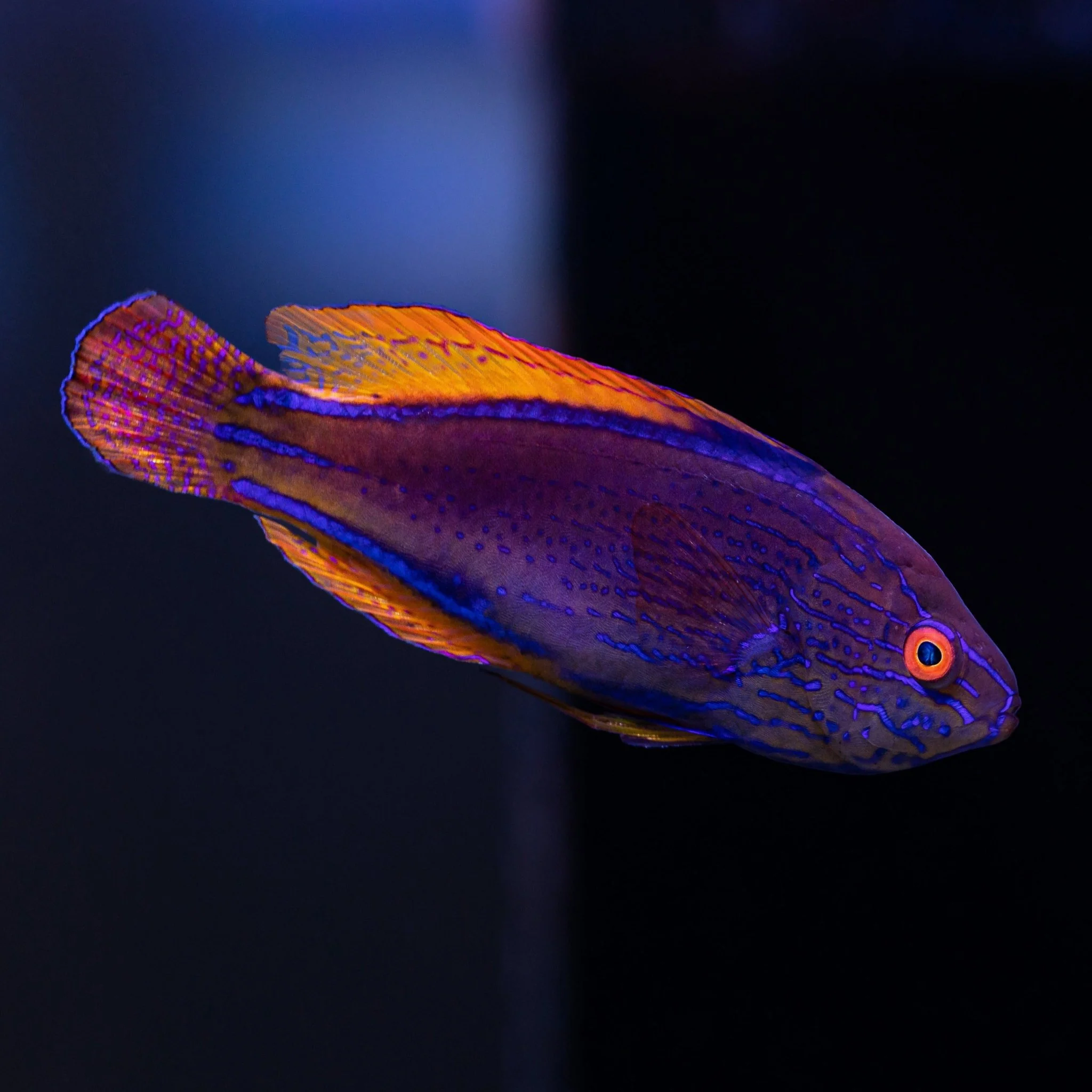
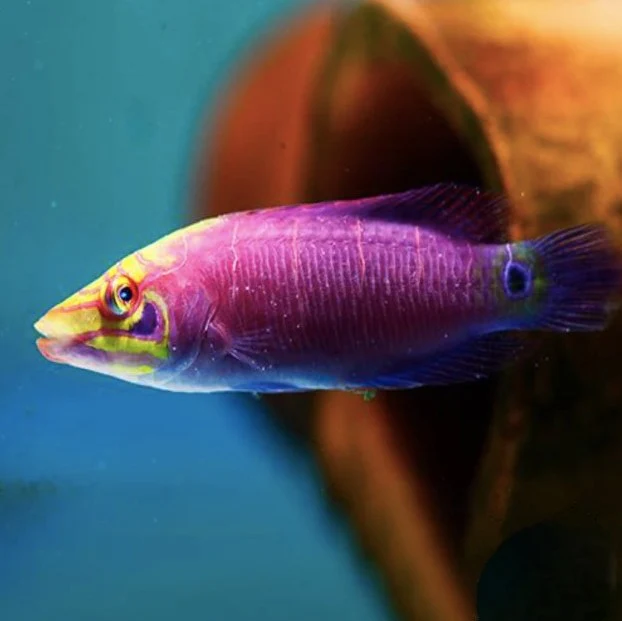
All images are a visual representation of the fish you will receive, made to be as accurate as possible. Please note that Mother Nature is a wonderful thing, and variation in patterns and colours will occur — that is part of the unique beauty of these animals.
Product Information
Product Information
Shipping & Returns
Shipping & Returns
Sixbar Wrasse - Thalassoma hardwicke
Sixbar Wrasse - Thalassoma hardwicke
Sixbar Wrasse (Thalassoma hardwicke)
The Sixbar Wrasse is a vivid, fast-moving marine wrasse recognised by its green to bluish-green body, six dark wedge-like bars and pink facial markings radiating from the eye. Males are typically brighter than females. In the wild it inhabits shallow lagoons, seaward reefs, slopes and drop-offs across the Indo-Pacific, where it is usually seen in small, loose groups. It is an active, assertive species best suited to a large, mature marine aquarium with plenty of swimming space.
Common Name:
Sixbar Wrasse. It is also commonly known as the Six-banded Wrasse or Hardwicke’s Wrasse.
Scientific Name (Latin):
Thalassoma hardwicke
Maximum Size:
Up to 25 cm in length.
Water Type:
Marine.
Origin / Natural Habitat:
Found across the Indo-Pacific, from East Africa to the Line and Tuamotu Islands, north to southern Japan and south to Lord Howe and the Austral Islands. It is a reef-associated species found from the surface to around 15 metres, especially around shallow lagoons, seaward reefs and reef slopes.
Water Parameters:
Temperature: 24–26°C
pH Range: 7.9–8.3
Salinity: 1.020–1.025 SG
These are practical aquarium guidelines for marine wrasses and a sensible captive-care baseline for this species.
Temperament:
Semi-aggressive to aggressive. This species is very active and can be pushy with more timid tankmates, especially in smaller aquaria.
Diet:
Carnivorous. In the wild it feeds on benthic and planktonic crustaceans, small fishes and foraminiferans. In captivity it should be offered a varied diet of small meaty marine foods such as mysis, brineshrimp, chopped crustacean foods and other protein-rich fare.
Minimum Tank Size:
A sensible long-term recommendation is 475 litres or more, based on its adult size, constant activity level and general wrasse care guidance.
Behaviour & Activity:
An active, diurnal wrasse that spends much of the day cruising open water and hunting around reef structure. It may use sheltered areas when threatened or resting, so open swimming space and secure rockwork are both important.
Reef Safe:
Reef Safe with Caution
This species may be a risk to small ornamental crustaceans and other mobile invertebrates, as its natural diet includes crustaceans and small fish. In a reef aquarium, monitor carefully around shrimps, tiny crabs and other small motile livestock. This classification is an aquarium-care inference based on its documented natural feeding behaviour.
Special Requirements or Care Notes:
Best kept in a large, well-established marine aquarium with ample open swimming space, rockwork for shelter and a tight-fitting lid, as wrasses are known jumpers. A sand area can also be beneficial for cover-seeking behaviour, and rockwork should be fully secured because active wrasses may disturb the substrate.
Suitable for:
Intermediate to Experienced fishkeepers. That is the safest recommendation based on its size, speed, assertive behaviour and large aquarium requirement.
Availability:
Occasional in trade.
All images are a visual representation of the fish you will receive, made to be as accurate as possible. Please note that Mother Nature is a wonderful thing, and variation in patterns and colours will occur — that is part of the unique beauty of these animals.
Product Information
Product Information
Shipping & Returns
Shipping & Returns
Description
Sixbar Wrasse (Thalassoma hardwicke)
The Sixbar Wrasse is a vivid, fast-moving marine wrasse recognised by its green to bluish-green body, six dark wedge-like bars and pink facial markings radiating from the eye. Males are typically brighter than females. In the wild it inhabits shallow lagoons, seaward reefs, slopes and drop-offs across the Indo-Pacific, where it is usually seen in small, loose groups. It is an active, assertive species best suited to a large, mature marine aquarium with plenty of swimming space.
Common Name:
Sixbar Wrasse. It is also commonly known as the Six-banded Wrasse or Hardwicke’s Wrasse.
Scientific Name (Latin):
Thalassoma hardwicke
Maximum Size:
Up to 25 cm in length.
Water Type:
Marine.
Origin / Natural Habitat:
Found across the Indo-Pacific, from East Africa to the Line and Tuamotu Islands, north to southern Japan and south to Lord Howe and the Austral Islands. It is a reef-associated species found from the surface to around 15 metres, especially around shallow lagoons, seaward reefs and reef slopes.
Water Parameters:
Temperature: 24–26°C
pH Range: 7.9–8.3
Salinity: 1.020–1.025 SG
These are practical aquarium guidelines for marine wrasses and a sensible captive-care baseline for this species.
Temperament:
Semi-aggressive to aggressive. This species is very active and can be pushy with more timid tankmates, especially in smaller aquaria.
Diet:
Carnivorous. In the wild it feeds on benthic and planktonic crustaceans, small fishes and foraminiferans. In captivity it should be offered a varied diet of small meaty marine foods such as mysis, brineshrimp, chopped crustacean foods and other protein-rich fare.
Minimum Tank Size:
A sensible long-term recommendation is 475 litres or more, based on its adult size, constant activity level and general wrasse care guidance.
Behaviour & Activity:
An active, diurnal wrasse that spends much of the day cruising open water and hunting around reef structure. It may use sheltered areas when threatened or resting, so open swimming space and secure rockwork are both important.
Reef Safe:
Reef Safe with Caution
This species may be a risk to small ornamental crustaceans and other mobile invertebrates, as its natural diet includes crustaceans and small fish. In a reef aquarium, monitor carefully around shrimps, tiny crabs and other small motile livestock. This classification is an aquarium-care inference based on its documented natural feeding behaviour.
Special Requirements or Care Notes:
Best kept in a large, well-established marine aquarium with ample open swimming space, rockwork for shelter and a tight-fitting lid, as wrasses are known jumpers. A sand area can also be beneficial for cover-seeking behaviour, and rockwork should be fully secured because active wrasses may disturb the substrate.
Suitable for:
Intermediate to Experienced fishkeepers. That is the safest recommendation based on its size, speed, assertive behaviour and large aquarium requirement.
Availability:
Occasional in trade.
All images are a visual representation of the fish you will receive, made to be as accurate as possible. Please note that Mother Nature is a wonderful thing, and variation in patterns and colours will occur — that is part of the unique beauty of these animals.