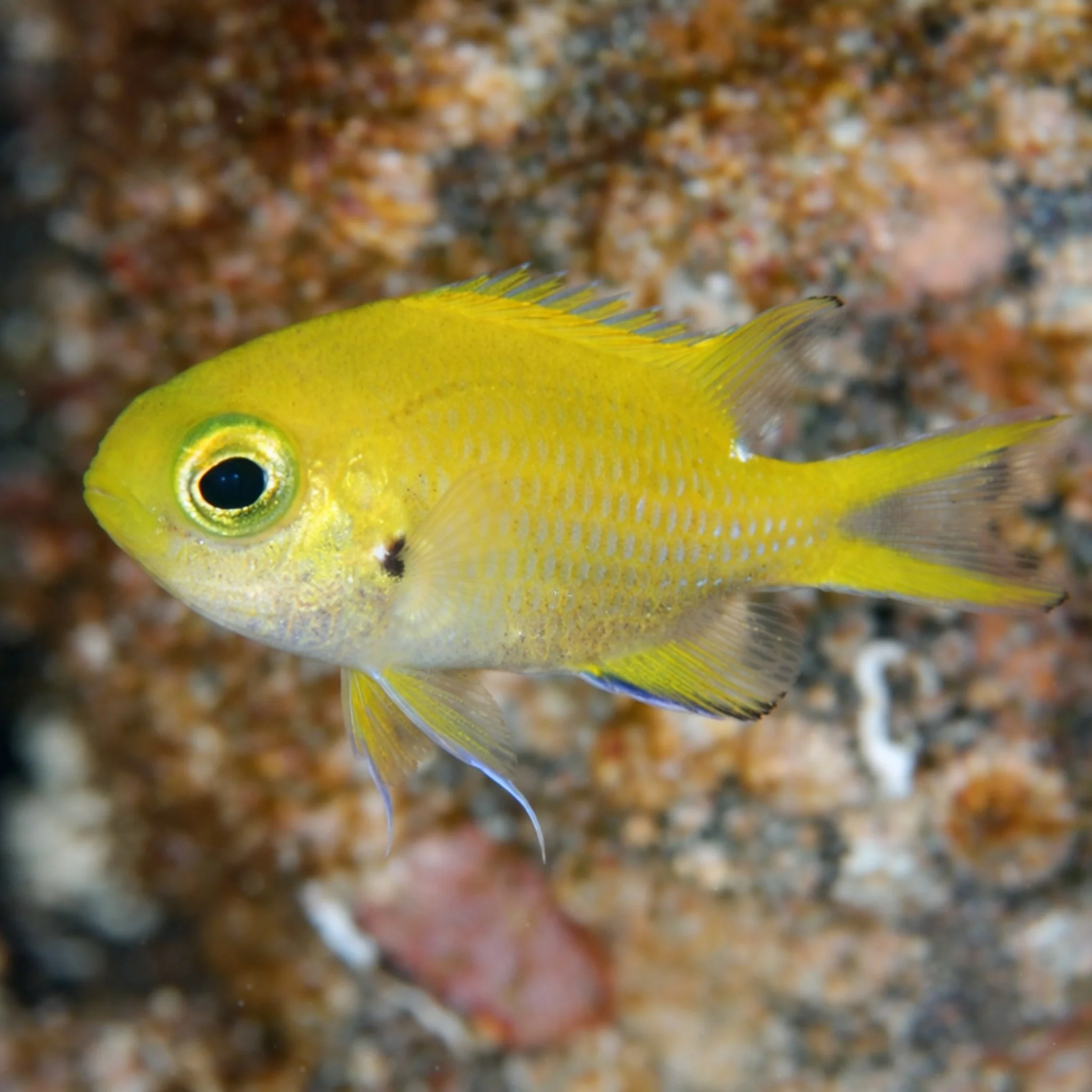
Rolland’s Damsel - Chrysiptera rollandi
Rolland’s Damsel (Chrysiptera rollandi)
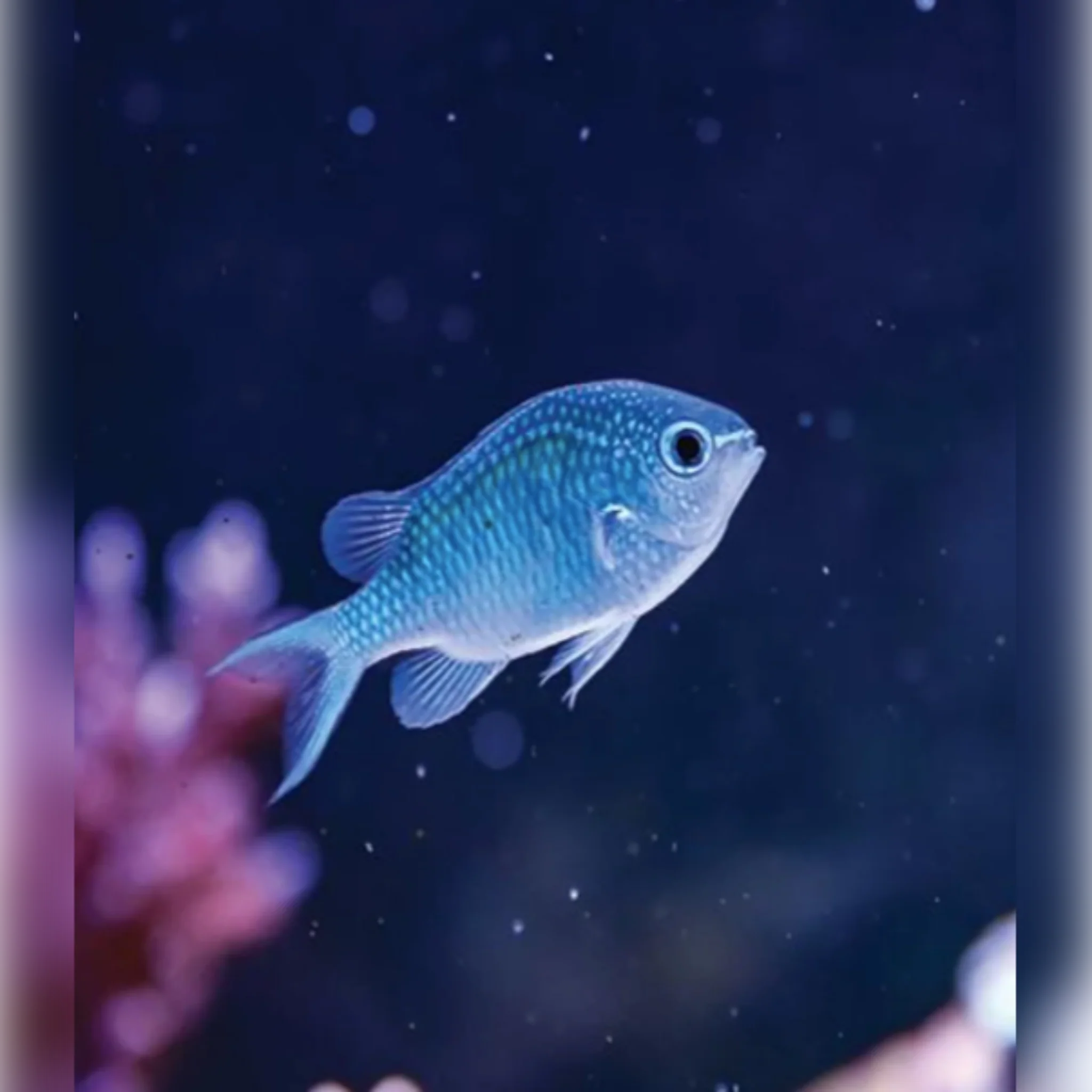
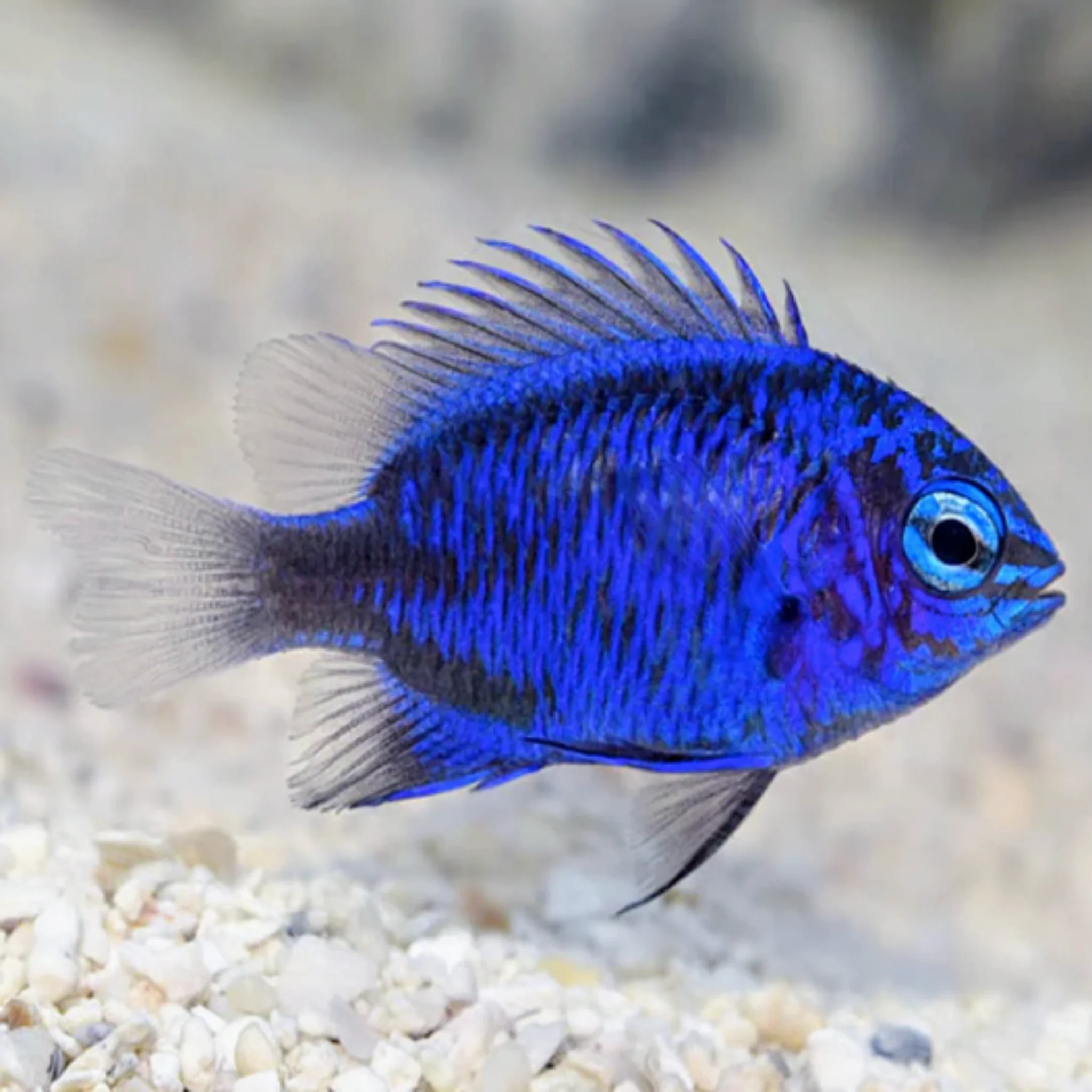
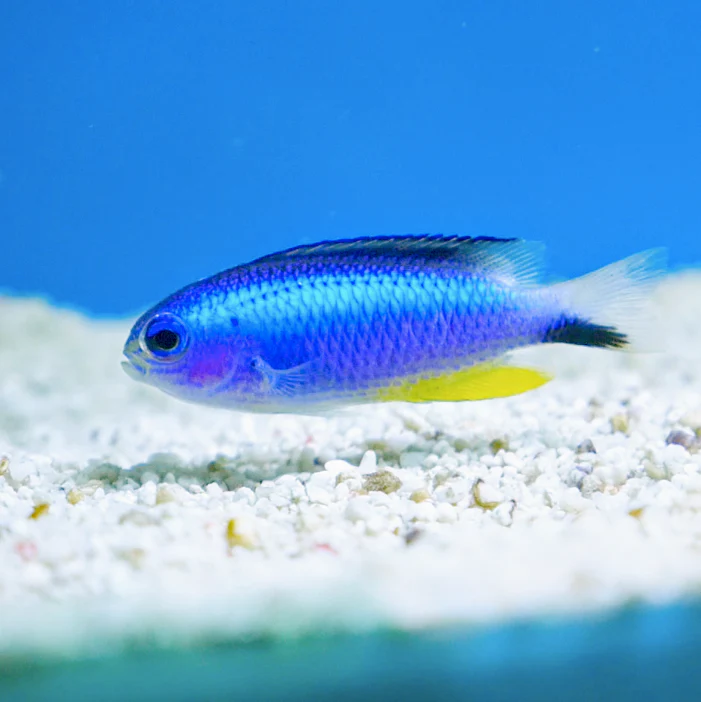
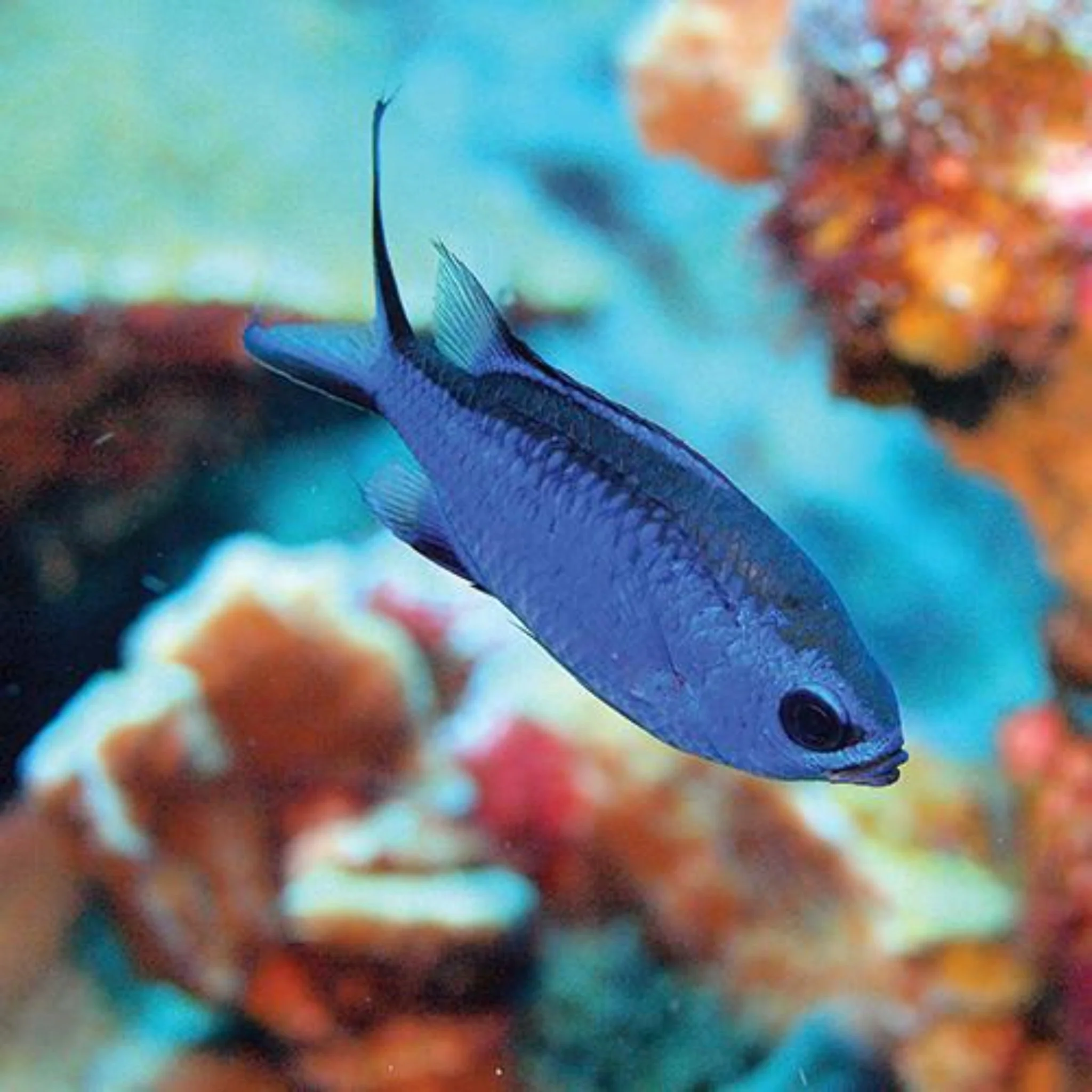
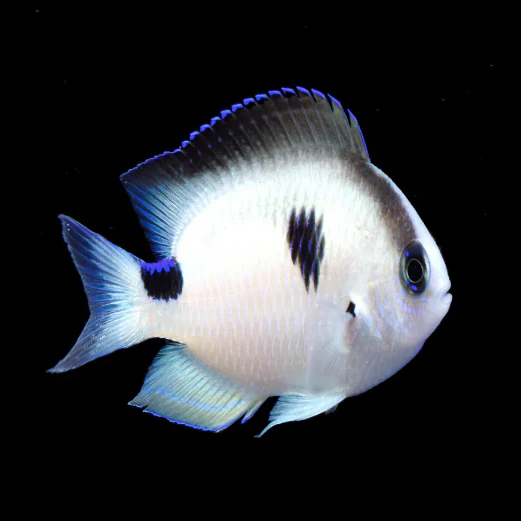
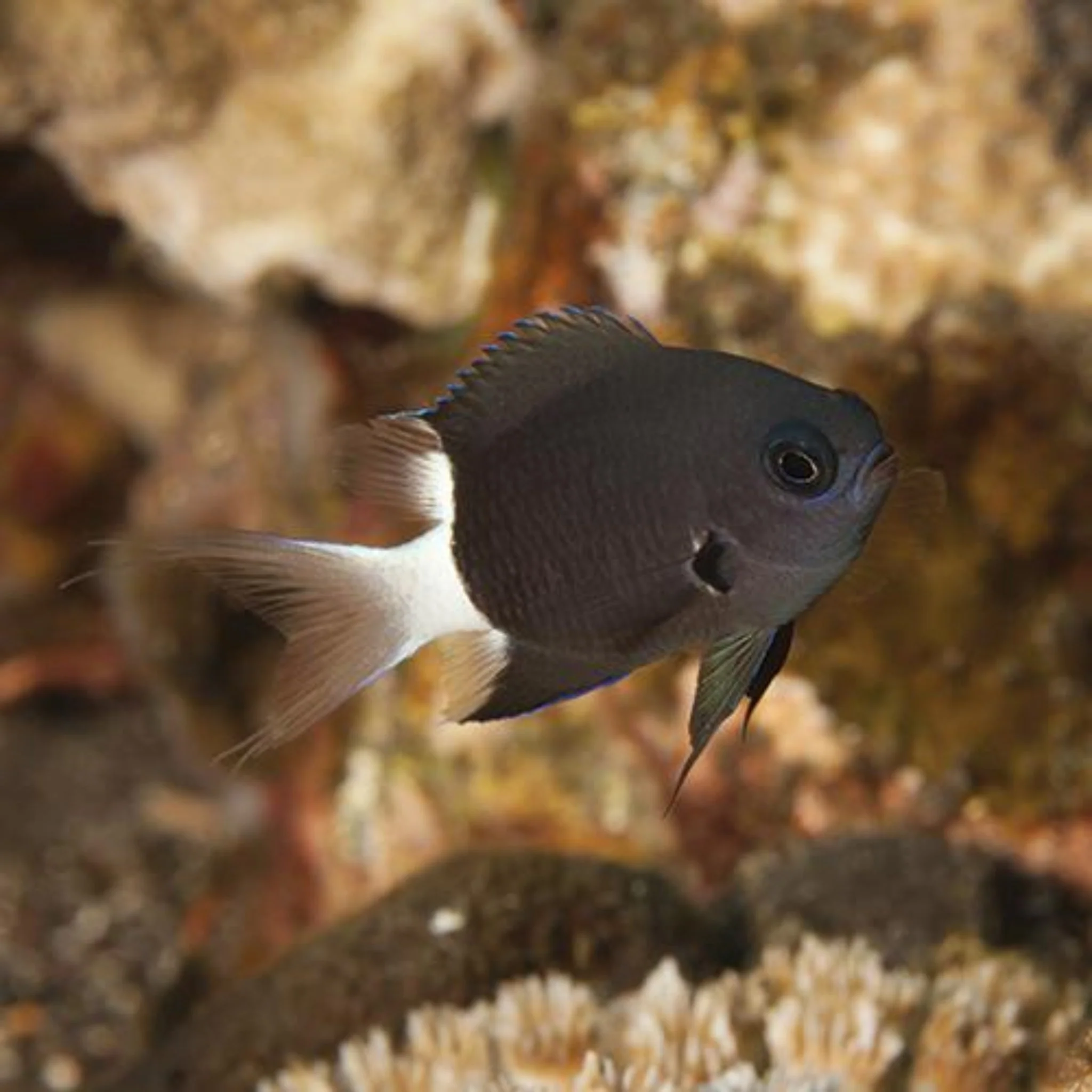
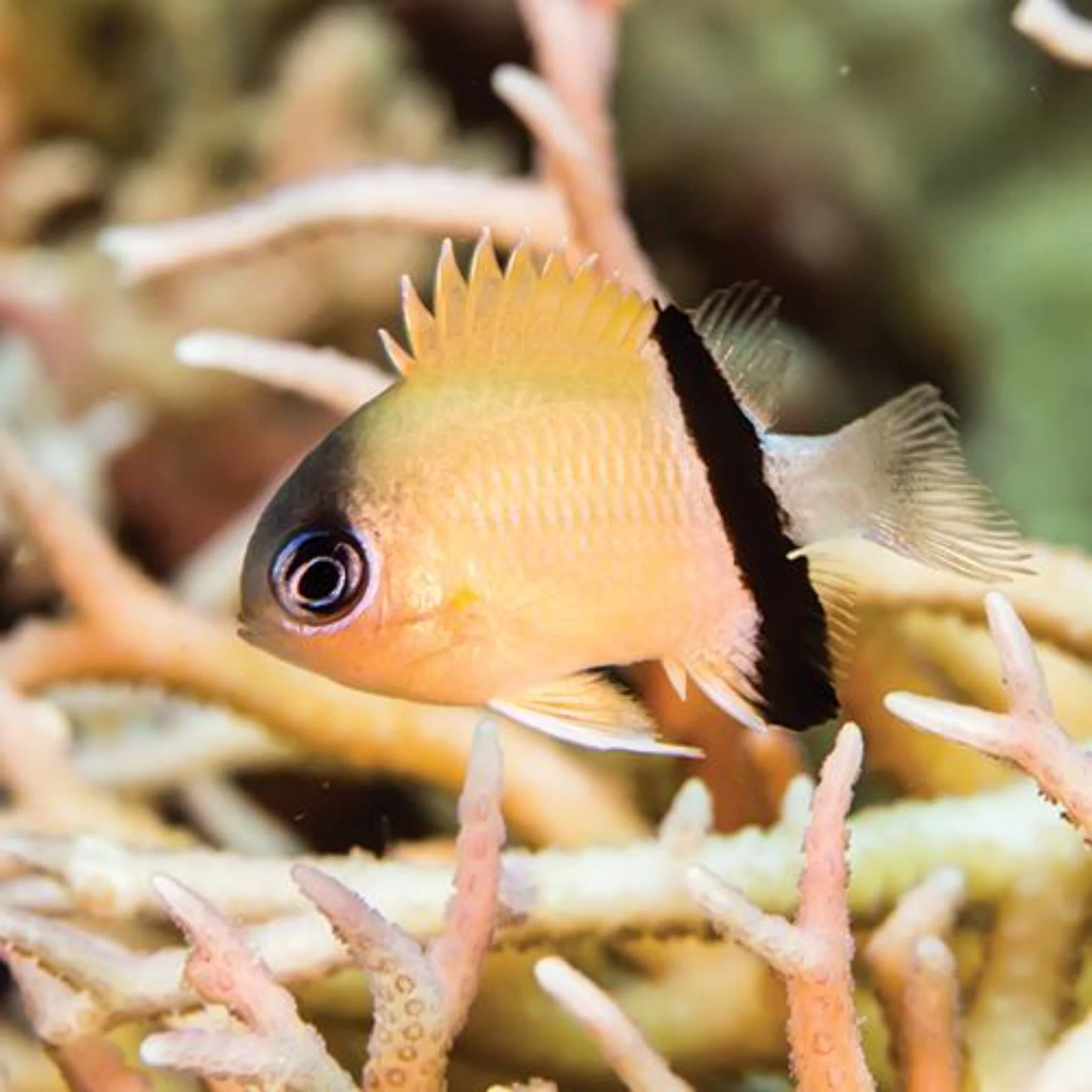
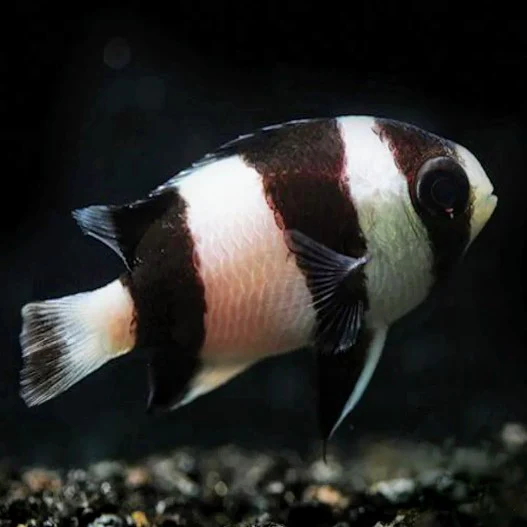
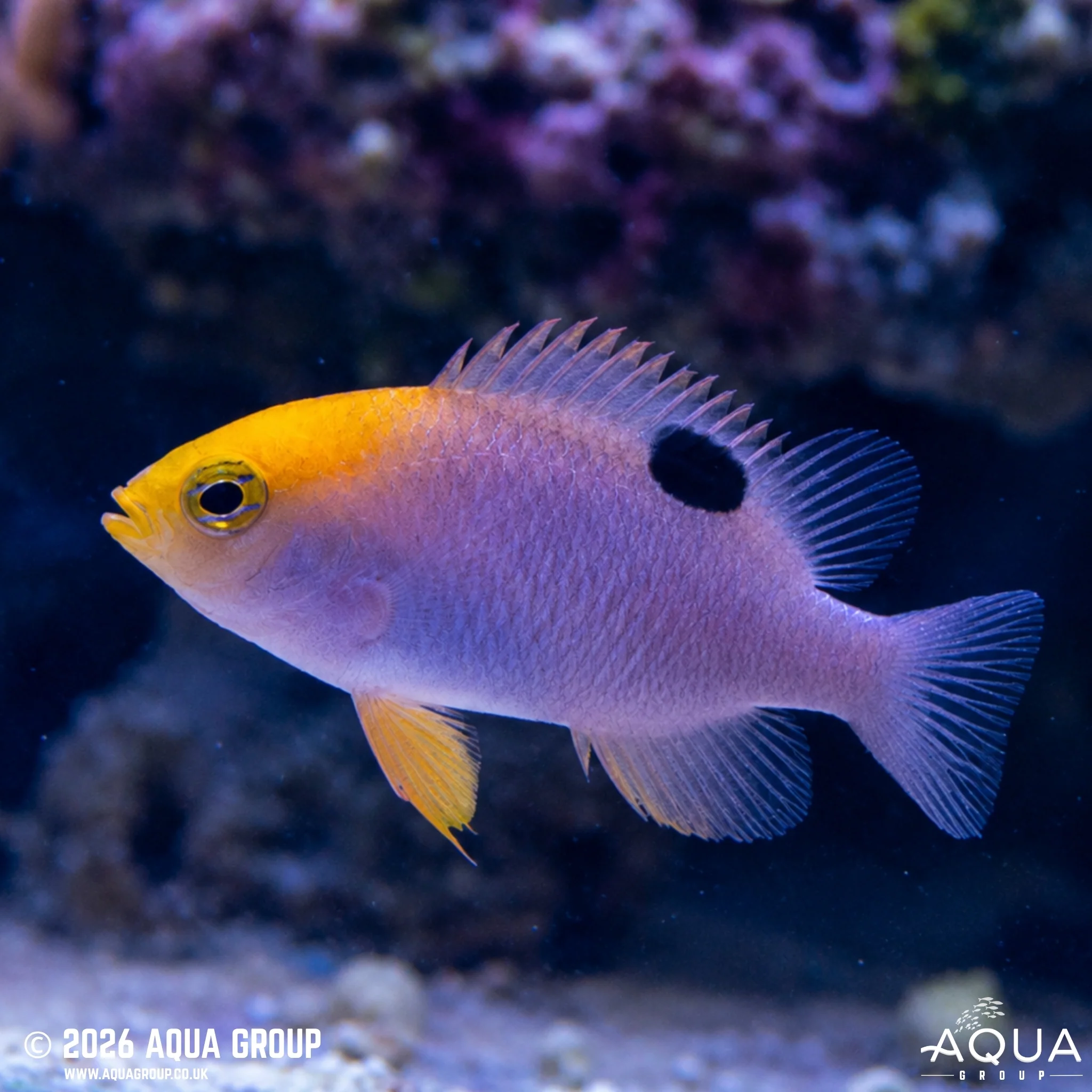
The Rolland’s Damsel is a small, hardy and attractive marine damselfish with a clean contrasting pattern, usually showing a pale body, darker head or upper body markings and subtle yellow tones depending on collection location and individual colour form. Also known as Rolland’s Demoiselle, Blackcap Damsel or Tricolour Damsel, this species is generally more manageable than many aggressive damselfish, but it can still become territorial as it matures. It is a good choice for a mature reef aquarium where it has rockwork, hiding places and enough space to establish a small territory.
Common Name:
Rolland’s Damsel. Also commonly referred to as Rolland’s Demoiselle, Blackcap Damsel, Tricolour Damsel or Rolland’s Damselfish.
Scientific Name (Latin):
Chrysiptera rollandi
Maximum Size:
Around 7–7.5 cm, making it a small damselfish species.
Water Type:
Marine.
Origin / Natural Habitat:
Found across the Eastern Indian Ocean and Western Pacific, including areas from the Andaman Sea through to the Philippines, Great Barrier Reef, New Caledonia and surrounding Indo-Pacific reef regions. In the wild it is usually found singly or in small groups around lagoons, harbours, outer reef slopes, coral rubble and reef structures.
Water Parameters:
Temperature: 24–27°C
pH Range: 8.1–8.4
Salinity: 1.020–1.025 SG
Temperament:
Semi-aggressive. It is usually less aggressive than many larger or more territorial damsels, but it may still defend its chosen area, especially once settled or mature. Best added to a suitable community with enough rockwork and territory breaks.
Diet:
Omnivorous, with a natural diet based heavily around zooplankton. In the aquarium it should be offered a varied diet including quality marine flake, small pellets, frozen mysis, brineshrimp, copepods, finely chopped marine foods and occasional algae-based foods.
Minimum Tank Size:
A practical recommendation is at least 120 litres for a single specimen, with larger aquariums preferred if keeping it with other territorial marine fish.
Behaviour & Activity:
This is an active reef-associated fish that spends much of its time moving around rockwork, coral rubble and open areas close to shelter. It may choose a preferred section of the aquarium and defend it from similar-sized fish. It can be kept singly, and in larger aquariums may be kept in small groups if introduced carefully with enough space and hiding places.
Reef Safe:
Reef Safe
This species is generally considered safe with corals and most invertebrates. Its main consideration in a reef aquarium is territorial behaviour towards other fish rather than coral or invert damage.
Special Requirements or Care Notes:
Best kept in a mature marine aquarium with stable water quality, good oxygenation, live rock and plenty of hiding places. Although hardy once settled, it should still be introduced into a properly cycled system. Avoid keeping it with very timid fish in small aquariums, as even smaller damselfish can become assertive once established.
Suitable for:
Beginner to intermediate marine fishkeepers
Availability:
Occasional in trade
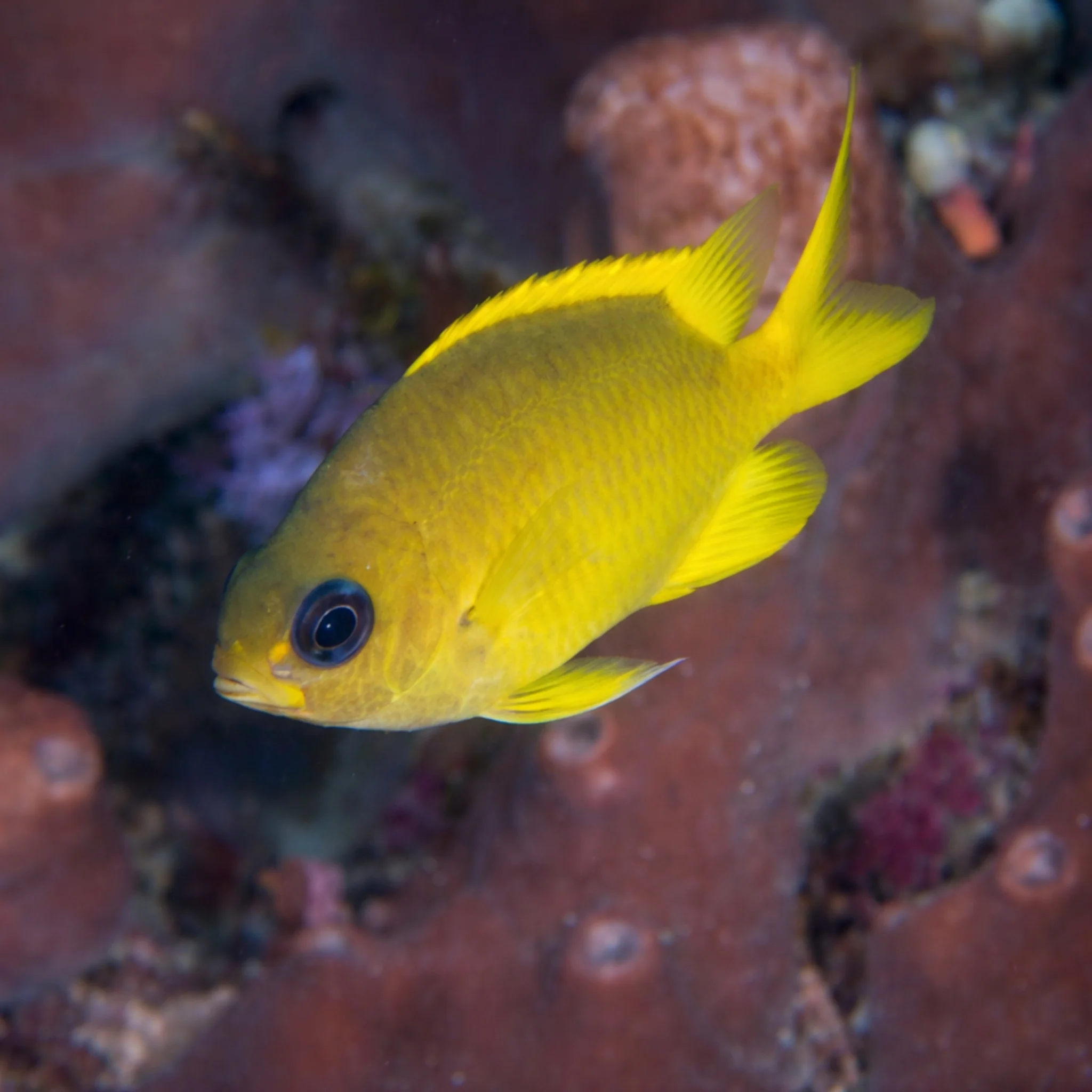
All images are a visual representation of the fish you will receive, made to be as accurate as possible. Please note that Mother Nature is a wonderful thing, and variation in patterns and colours will occur — that is part of the unique beauty of these animals.
Product Information
Product Information
Shipping & Returns
Shipping & Returns
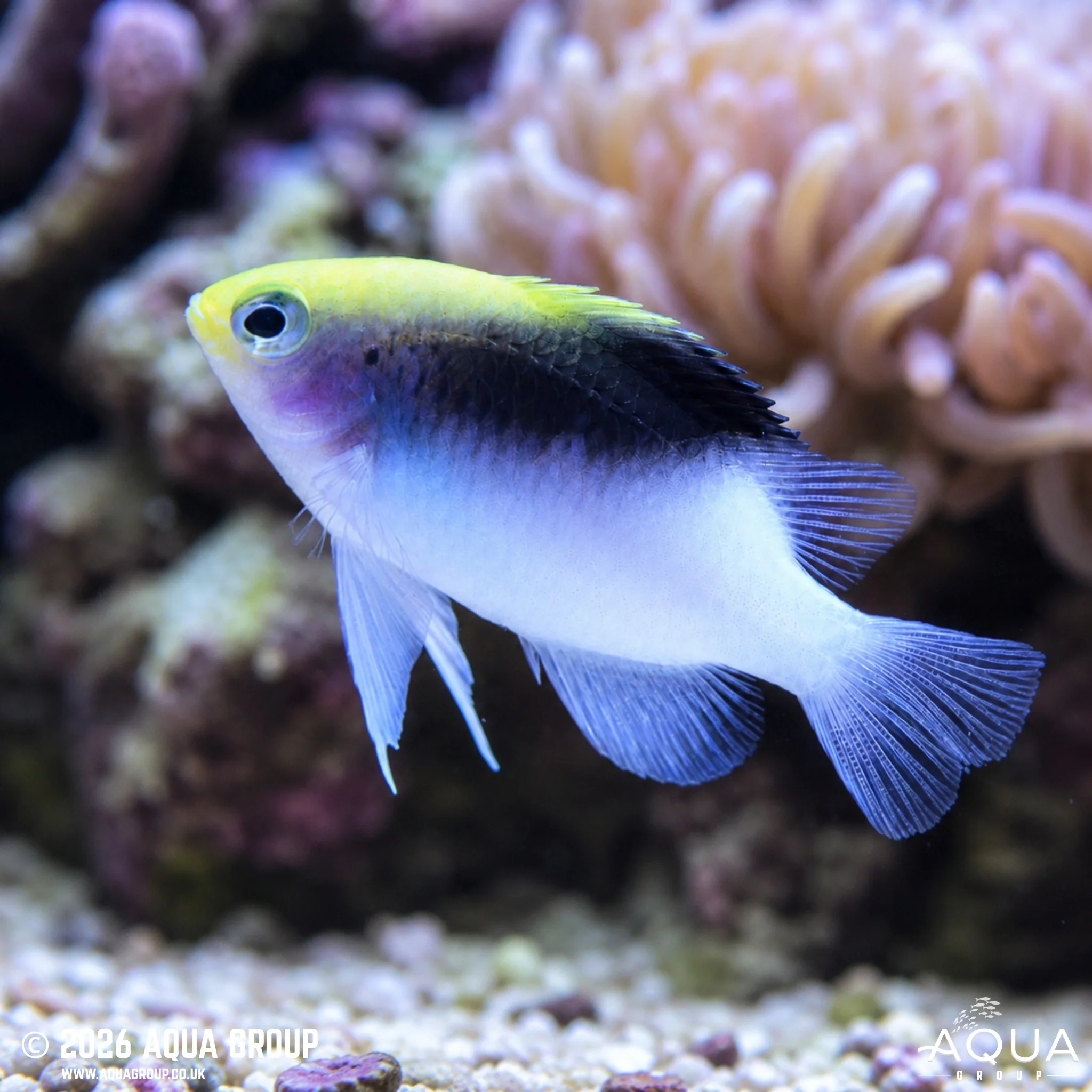
Rolland’s Damsel - Chrysiptera rollandi
Rolland’s Damsel - Chrysiptera rollandi
Rolland’s Damsel (Chrysiptera rollandi)
The Rolland’s Damsel is a small, hardy and attractive marine damselfish with a clean contrasting pattern, usually showing a pale body, darker head or upper body markings and subtle yellow tones depending on collection location and individual colour form. Also known as Rolland’s Demoiselle, Blackcap Damsel or Tricolour Damsel, this species is generally more manageable than many aggressive damselfish, but it can still become territorial as it matures. It is a good choice for a mature reef aquarium where it has rockwork, hiding places and enough space to establish a small territory.
Common Name:
Rolland’s Damsel. Also commonly referred to as Rolland’s Demoiselle, Blackcap Damsel, Tricolour Damsel or Rolland’s Damselfish.
Scientific Name (Latin):
Chrysiptera rollandi
Maximum Size:
Around 7–7.5 cm, making it a small damselfish species.
Water Type:
Marine.
Origin / Natural Habitat:
Found across the Eastern Indian Ocean and Western Pacific, including areas from the Andaman Sea through to the Philippines, Great Barrier Reef, New Caledonia and surrounding Indo-Pacific reef regions. In the wild it is usually found singly or in small groups around lagoons, harbours, outer reef slopes, coral rubble and reef structures.
Water Parameters:
Temperature: 24–27°C
pH Range: 8.1–8.4
Salinity: 1.020–1.025 SG
Temperament:
Semi-aggressive. It is usually less aggressive than many larger or more territorial damsels, but it may still defend its chosen area, especially once settled or mature. Best added to a suitable community with enough rockwork and territory breaks.
Diet:
Omnivorous, with a natural diet based heavily around zooplankton. In the aquarium it should be offered a varied diet including quality marine flake, small pellets, frozen mysis, brineshrimp, copepods, finely chopped marine foods and occasional algae-based foods.
Minimum Tank Size:
A practical recommendation is at least 120 litres for a single specimen, with larger aquariums preferred if keeping it with other territorial marine fish.
Behaviour & Activity:
This is an active reef-associated fish that spends much of its time moving around rockwork, coral rubble and open areas close to shelter. It may choose a preferred section of the aquarium and defend it from similar-sized fish. It can be kept singly, and in larger aquariums may be kept in small groups if introduced carefully with enough space and hiding places.
Reef Safe:
Reef Safe
This species is generally considered safe with corals and most invertebrates. Its main consideration in a reef aquarium is territorial behaviour towards other fish rather than coral or invert damage.
Special Requirements or Care Notes:
Best kept in a mature marine aquarium with stable water quality, good oxygenation, live rock and plenty of hiding places. Although hardy once settled, it should still be introduced into a properly cycled system. Avoid keeping it with very timid fish in small aquariums, as even smaller damselfish can become assertive once established.
Suitable for:
Beginner to intermediate marine fishkeepers
Availability:
Occasional in trade
All images are a visual representation of the fish you will receive, made to be as accurate as possible. Please note that Mother Nature is a wonderful thing, and variation in patterns and colours will occur — that is part of the unique beauty of these animals.
Original: $39.24
-65%$39.24
$13.73Product Information
Product Information
Shipping & Returns
Shipping & Returns
Description
Rolland’s Damsel (Chrysiptera rollandi)
The Rolland’s Damsel is a small, hardy and attractive marine damselfish with a clean contrasting pattern, usually showing a pale body, darker head or upper body markings and subtle yellow tones depending on collection location and individual colour form. Also known as Rolland’s Demoiselle, Blackcap Damsel or Tricolour Damsel, this species is generally more manageable than many aggressive damselfish, but it can still become territorial as it matures. It is a good choice for a mature reef aquarium where it has rockwork, hiding places and enough space to establish a small territory.
Common Name:
Rolland’s Damsel. Also commonly referred to as Rolland’s Demoiselle, Blackcap Damsel, Tricolour Damsel or Rolland’s Damselfish.
Scientific Name (Latin):
Chrysiptera rollandi
Maximum Size:
Around 7–7.5 cm, making it a small damselfish species.
Water Type:
Marine.
Origin / Natural Habitat:
Found across the Eastern Indian Ocean and Western Pacific, including areas from the Andaman Sea through to the Philippines, Great Barrier Reef, New Caledonia and surrounding Indo-Pacific reef regions. In the wild it is usually found singly or in small groups around lagoons, harbours, outer reef slopes, coral rubble and reef structures.
Water Parameters:
Temperature: 24–27°C
pH Range: 8.1–8.4
Salinity: 1.020–1.025 SG
Temperament:
Semi-aggressive. It is usually less aggressive than many larger or more territorial damsels, but it may still defend its chosen area, especially once settled or mature. Best added to a suitable community with enough rockwork and territory breaks.
Diet:
Omnivorous, with a natural diet based heavily around zooplankton. In the aquarium it should be offered a varied diet including quality marine flake, small pellets, frozen mysis, brineshrimp, copepods, finely chopped marine foods and occasional algae-based foods.
Minimum Tank Size:
A practical recommendation is at least 120 litres for a single specimen, with larger aquariums preferred if keeping it with other territorial marine fish.
Behaviour & Activity:
This is an active reef-associated fish that spends much of its time moving around rockwork, coral rubble and open areas close to shelter. It may choose a preferred section of the aquarium and defend it from similar-sized fish. It can be kept singly, and in larger aquariums may be kept in small groups if introduced carefully with enough space and hiding places.
Reef Safe:
Reef Safe
This species is generally considered safe with corals and most invertebrates. Its main consideration in a reef aquarium is territorial behaviour towards other fish rather than coral or invert damage.
Special Requirements or Care Notes:
Best kept in a mature marine aquarium with stable water quality, good oxygenation, live rock and plenty of hiding places. Although hardy once settled, it should still be introduced into a properly cycled system. Avoid keeping it with very timid fish in small aquariums, as even smaller damselfish can become assertive once established.
Suitable for:
Beginner to intermediate marine fishkeepers
Availability:
Occasional in trade
All images are a visual representation of the fish you will receive, made to be as accurate as possible. Please note that Mother Nature is a wonderful thing, and variation in patterns and colours will occur — that is part of the unique beauty of these animals.