Yellow Scopas Tang - Zebrasoma scopas
Yellow Scopas Tang (Zebrasoma scopas)
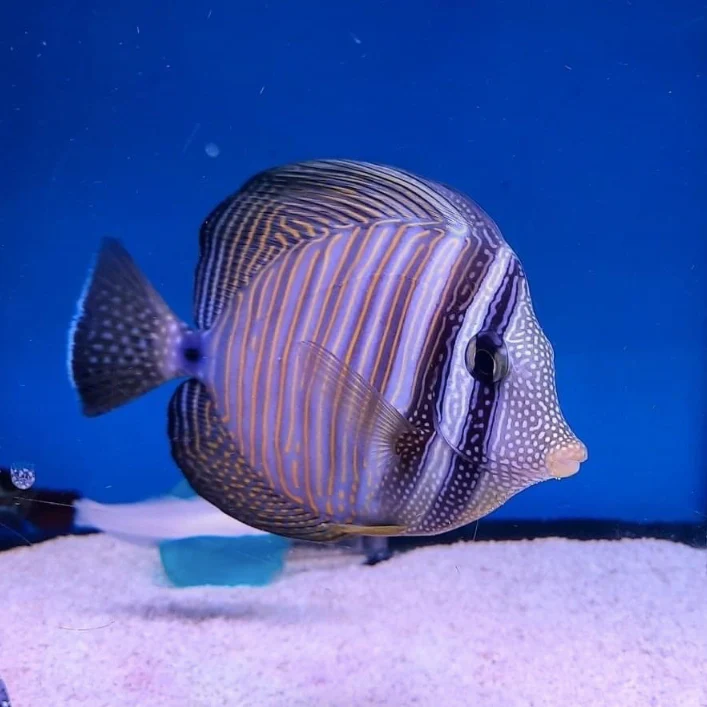
The Yellow Scopas Tang is generally treated in the aquarium trade as a yellow or xanthic colour form of the Scopas Tang, rather than a separate species. While standard Zebrasoma scopas are usually brown to two-tone in appearance, the species is known for colour variation, and rarer bright yellow specimens do occur. In the wild, Zebrasoma scopas is a widespread Indo-Pacific surgeonfish found around lagoon and reef habitats, where it spends much of the day grazing algae. In captivity it is an active, attractive tang that does best in a mature marine aquarium with strong water quality, open swimming room and regular access to algae-based foods.
Common Name:
Yellow Scopas Tang. This name is most commonly used for the yellow colour morph of the Scopas Tang. The standard species is also known as the Scopas Tang, Brown Sailfin Tang or Twotone Tang.
Scientific Name (Latin):
Zebrasoma scopas
Maximum Size:
Up to 25 cm in length.
Water Type:
Marine.
Origin / Natural Habitat:
Found widely across the Indo-Pacific, including reef and lagoon habitats from East Africa to Polynesia, with records around lagoons, coral reefs and outer reef areas.
Water Parameters:
Temperature: 23–27°C
pH Range: 8.1–8.4
Salinity: 1.020–1.025 SG
Temperament:
Generally semi-aggressive. Like many tangs, it is usually manageable with dissimilar fish, but it may become territorial towards other tangs or similarly shaped species, especially where space is limited.
Diet:
Primarily herbivorous / algivorous. It should be offered a diet rich in marine algae, nori, spirulina-based foods and other algae-led fare, with occasional meaty foods only as a supplement.
Minimum Tank Size:
A practical long-term recommendation is at least 475 litres, with larger aquaria strongly preferred for adult fish due to their size and activity level.
Behaviour & Activity:
This is an active, diurnal grazer that spends much of the day swimming and browsing rock surfaces for algae. It benefits from open swimming space as well as rockwork for grazing and shelter, particularly when newly introduced.
Reef Safe:
Reef Safe
This species is generally regarded as suitable for reef aquaria and is commonly classed as reef safe, although keeping it well fed is still important.
Special Requirements or Care Notes:
Best kept in a well-established marine aquarium with stable water quality, good oxygenation, plenty of algae to graze and enough room to swim properly. As with other surgeonfish, care should be taken during handling because of the sharp caudal spine near the tail.
Suitable for:
Intermediate fishkeepers. This fits its average hardiness, algae-based feeding needs and the space required for proper long-term care.
Availability:
Rare in the trade. The standard Scopas Tang is widely known in the hobby, but the yellow form is better treated as a less common colour variant rather than routine stock.
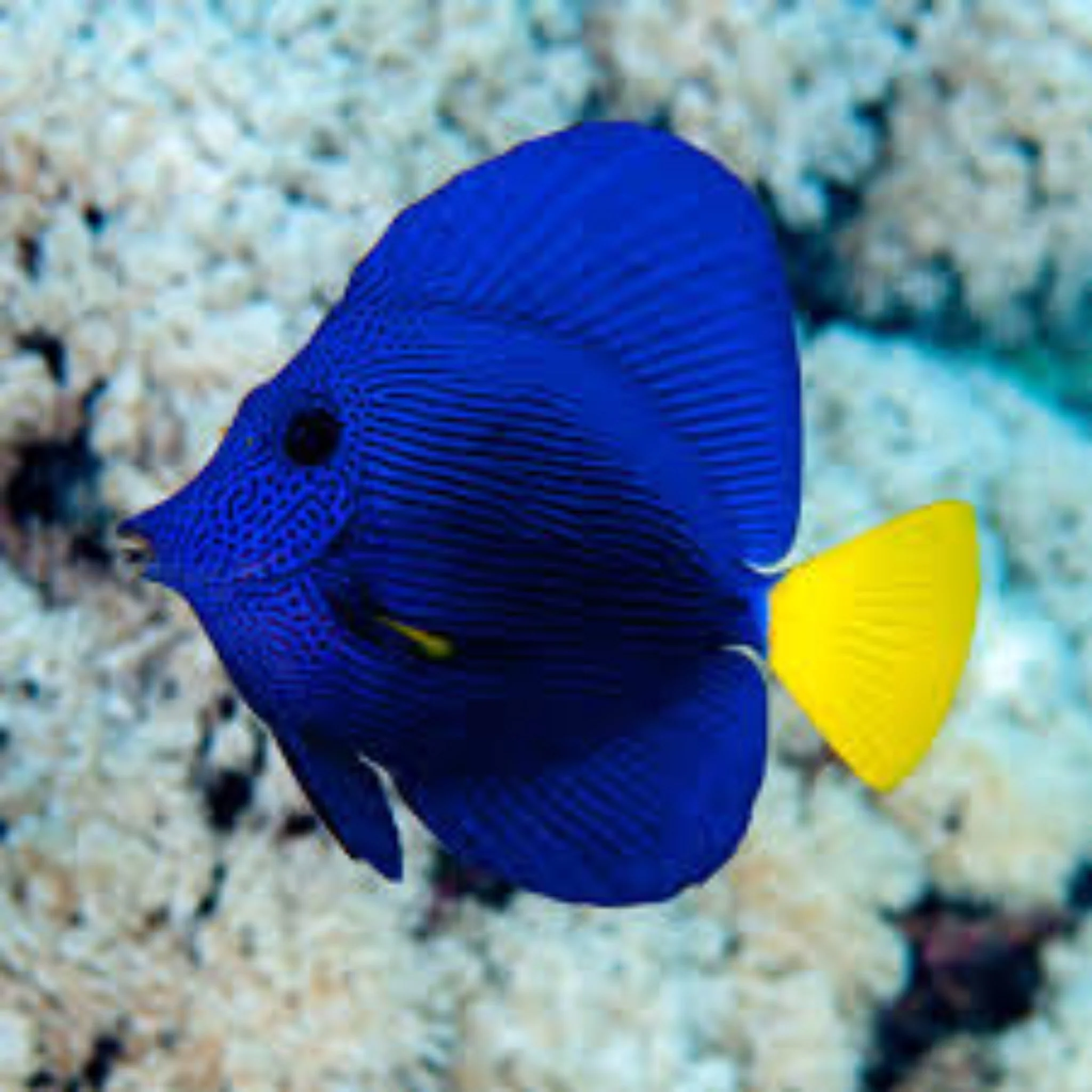
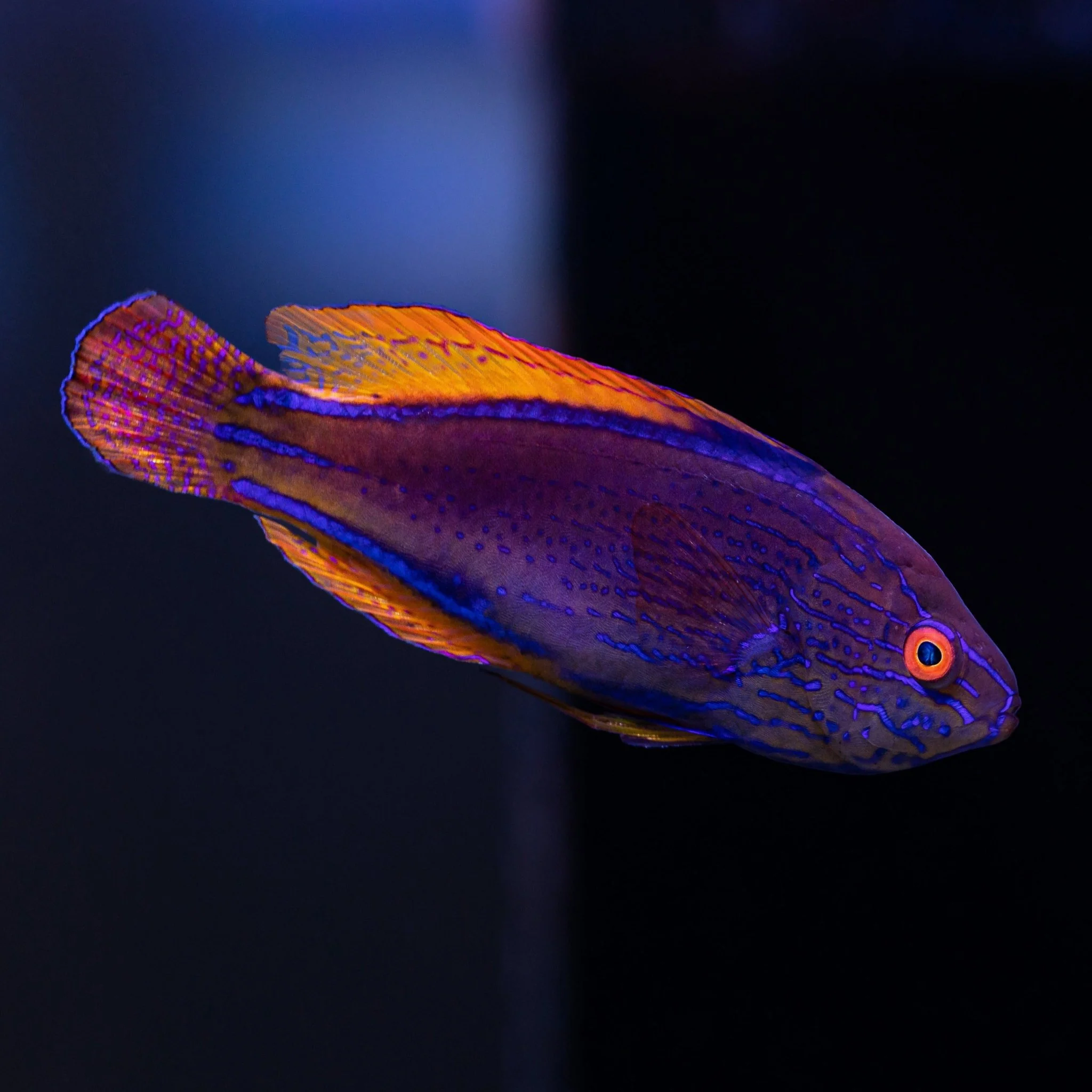
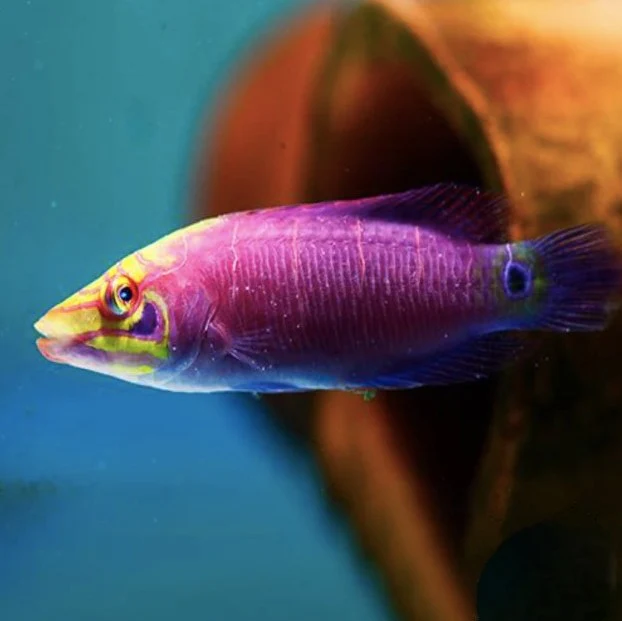
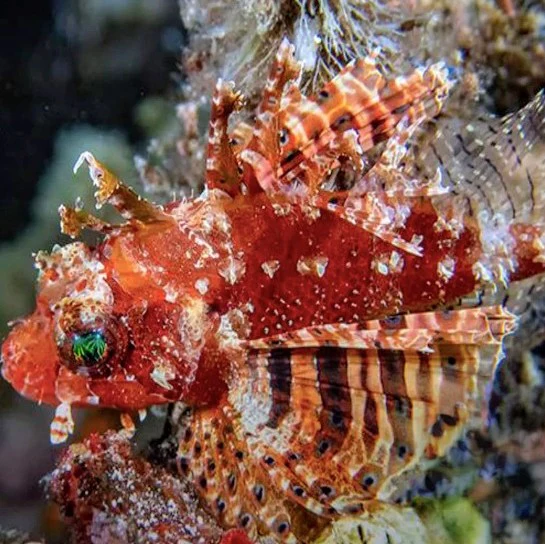
All images are a visual representation of the fish you will receive, made to be as accurate as possible. Please note that Mother Nature is a wonderful thing, and variation in patterns and colours will occur — that is part of the unique beauty of these animals.
Product Information
Product Information
Shipping & Returns
Shipping & Returns
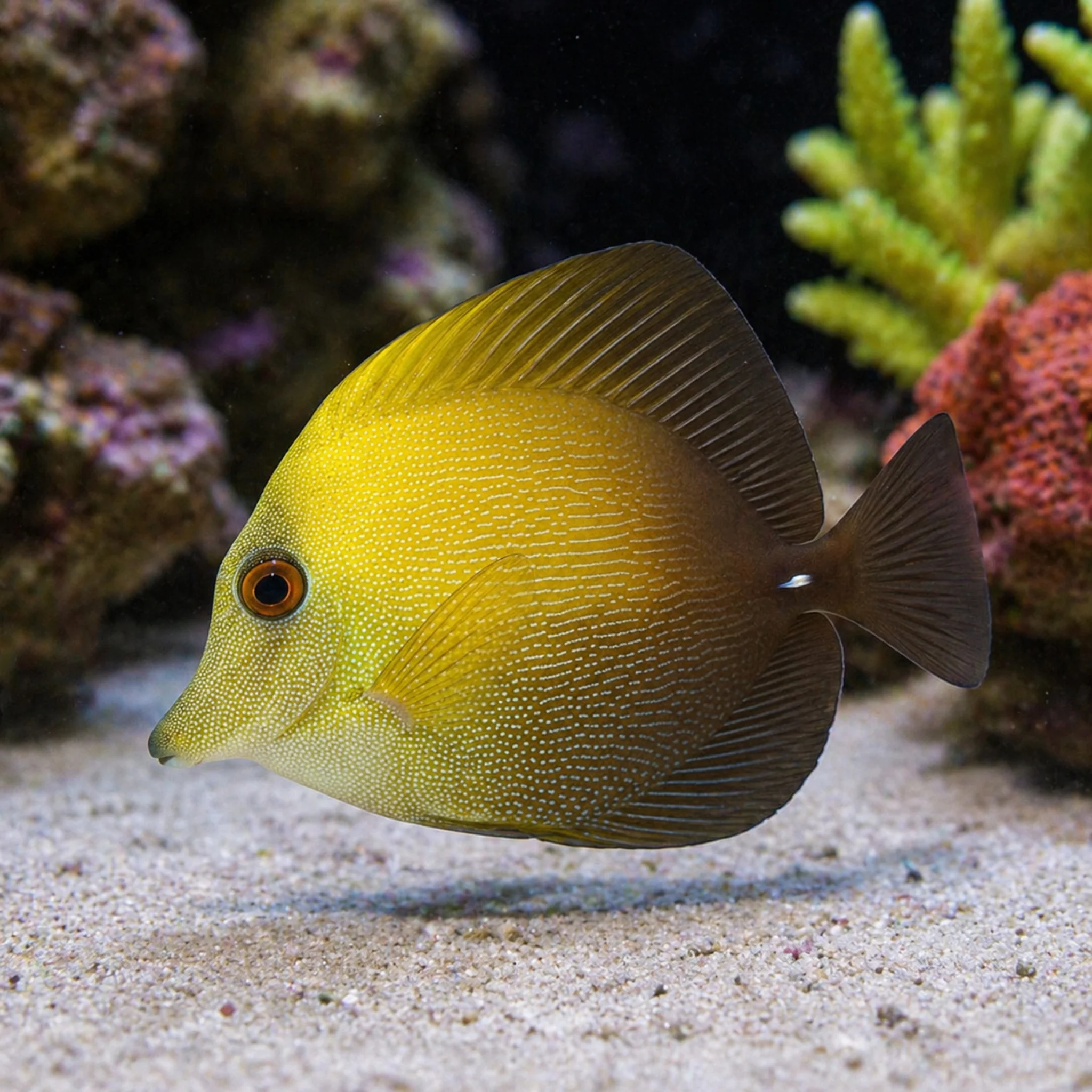
Yellow Scopas Tang - Zebrasoma scopas
Yellow Scopas Tang - Zebrasoma scopas
Yellow Scopas Tang (Zebrasoma scopas)
The Yellow Scopas Tang is generally treated in the aquarium trade as a yellow or xanthic colour form of the Scopas Tang, rather than a separate species. While standard Zebrasoma scopas are usually brown to two-tone in appearance, the species is known for colour variation, and rarer bright yellow specimens do occur. In the wild, Zebrasoma scopas is a widespread Indo-Pacific surgeonfish found around lagoon and reef habitats, where it spends much of the day grazing algae. In captivity it is an active, attractive tang that does best in a mature marine aquarium with strong water quality, open swimming room and regular access to algae-based foods.
Common Name:
Yellow Scopas Tang. This name is most commonly used for the yellow colour morph of the Scopas Tang. The standard species is also known as the Scopas Tang, Brown Sailfin Tang or Twotone Tang.
Scientific Name (Latin):
Zebrasoma scopas
Maximum Size:
Up to 25 cm in length.
Water Type:
Marine.
Origin / Natural Habitat:
Found widely across the Indo-Pacific, including reef and lagoon habitats from East Africa to Polynesia, with records around lagoons, coral reefs and outer reef areas.
Water Parameters:
Temperature: 23–27°C
pH Range: 8.1–8.4
Salinity: 1.020–1.025 SG
Temperament:
Generally semi-aggressive. Like many tangs, it is usually manageable with dissimilar fish, but it may become territorial towards other tangs or similarly shaped species, especially where space is limited.
Diet:
Primarily herbivorous / algivorous. It should be offered a diet rich in marine algae, nori, spirulina-based foods and other algae-led fare, with occasional meaty foods only as a supplement.
Minimum Tank Size:
A practical long-term recommendation is at least 475 litres, with larger aquaria strongly preferred for adult fish due to their size and activity level.
Behaviour & Activity:
This is an active, diurnal grazer that spends much of the day swimming and browsing rock surfaces for algae. It benefits from open swimming space as well as rockwork for grazing and shelter, particularly when newly introduced.
Reef Safe:
Reef Safe
This species is generally regarded as suitable for reef aquaria and is commonly classed as reef safe, although keeping it well fed is still important.
Special Requirements or Care Notes:
Best kept in a well-established marine aquarium with stable water quality, good oxygenation, plenty of algae to graze and enough room to swim properly. As with other surgeonfish, care should be taken during handling because of the sharp caudal spine near the tail.
Suitable for:
Intermediate fishkeepers. This fits its average hardiness, algae-based feeding needs and the space required for proper long-term care.
Availability:
Rare in the trade. The standard Scopas Tang is widely known in the hobby, but the yellow form is better treated as a less common colour variant rather than routine stock.
All images are a visual representation of the fish you will receive, made to be as accurate as possible. Please note that Mother Nature is a wonderful thing, and variation in patterns and colours will occur — that is part of the unique beauty of these animals.
Original: $318.56
-65%$318.56
$111.50Product Information
Product Information
Shipping & Returns
Shipping & Returns
Description
Yellow Scopas Tang (Zebrasoma scopas)
The Yellow Scopas Tang is generally treated in the aquarium trade as a yellow or xanthic colour form of the Scopas Tang, rather than a separate species. While standard Zebrasoma scopas are usually brown to two-tone in appearance, the species is known for colour variation, and rarer bright yellow specimens do occur. In the wild, Zebrasoma scopas is a widespread Indo-Pacific surgeonfish found around lagoon and reef habitats, where it spends much of the day grazing algae. In captivity it is an active, attractive tang that does best in a mature marine aquarium with strong water quality, open swimming room and regular access to algae-based foods.
Common Name:
Yellow Scopas Tang. This name is most commonly used for the yellow colour morph of the Scopas Tang. The standard species is also known as the Scopas Tang, Brown Sailfin Tang or Twotone Tang.
Scientific Name (Latin):
Zebrasoma scopas
Maximum Size:
Up to 25 cm in length.
Water Type:
Marine.
Origin / Natural Habitat:
Found widely across the Indo-Pacific, including reef and lagoon habitats from East Africa to Polynesia, with records around lagoons, coral reefs and outer reef areas.
Water Parameters:
Temperature: 23–27°C
pH Range: 8.1–8.4
Salinity: 1.020–1.025 SG
Temperament:
Generally semi-aggressive. Like many tangs, it is usually manageable with dissimilar fish, but it may become territorial towards other tangs or similarly shaped species, especially where space is limited.
Diet:
Primarily herbivorous / algivorous. It should be offered a diet rich in marine algae, nori, spirulina-based foods and other algae-led fare, with occasional meaty foods only as a supplement.
Minimum Tank Size:
A practical long-term recommendation is at least 475 litres, with larger aquaria strongly preferred for adult fish due to their size and activity level.
Behaviour & Activity:
This is an active, diurnal grazer that spends much of the day swimming and browsing rock surfaces for algae. It benefits from open swimming space as well as rockwork for grazing and shelter, particularly when newly introduced.
Reef Safe:
Reef Safe
This species is generally regarded as suitable for reef aquaria and is commonly classed as reef safe, although keeping it well fed is still important.
Special Requirements or Care Notes:
Best kept in a well-established marine aquarium with stable water quality, good oxygenation, plenty of algae to graze and enough room to swim properly. As with other surgeonfish, care should be taken during handling because of the sharp caudal spine near the tail.
Suitable for:
Intermediate fishkeepers. This fits its average hardiness, algae-based feeding needs and the space required for proper long-term care.
Availability:
Rare in the trade. The standard Scopas Tang is widely known in the hobby, but the yellow form is better treated as a less common colour variant rather than routine stock.
All images are a visual representation of the fish you will receive, made to be as accurate as possible. Please note that Mother Nature is a wonderful thing, and variation in patterns and colours will occur — that is part of the unique beauty of these animals.