Blue Cheek Goby - Valenciennea strigata
Blue Cheek Goby (Valenciennea strigata)
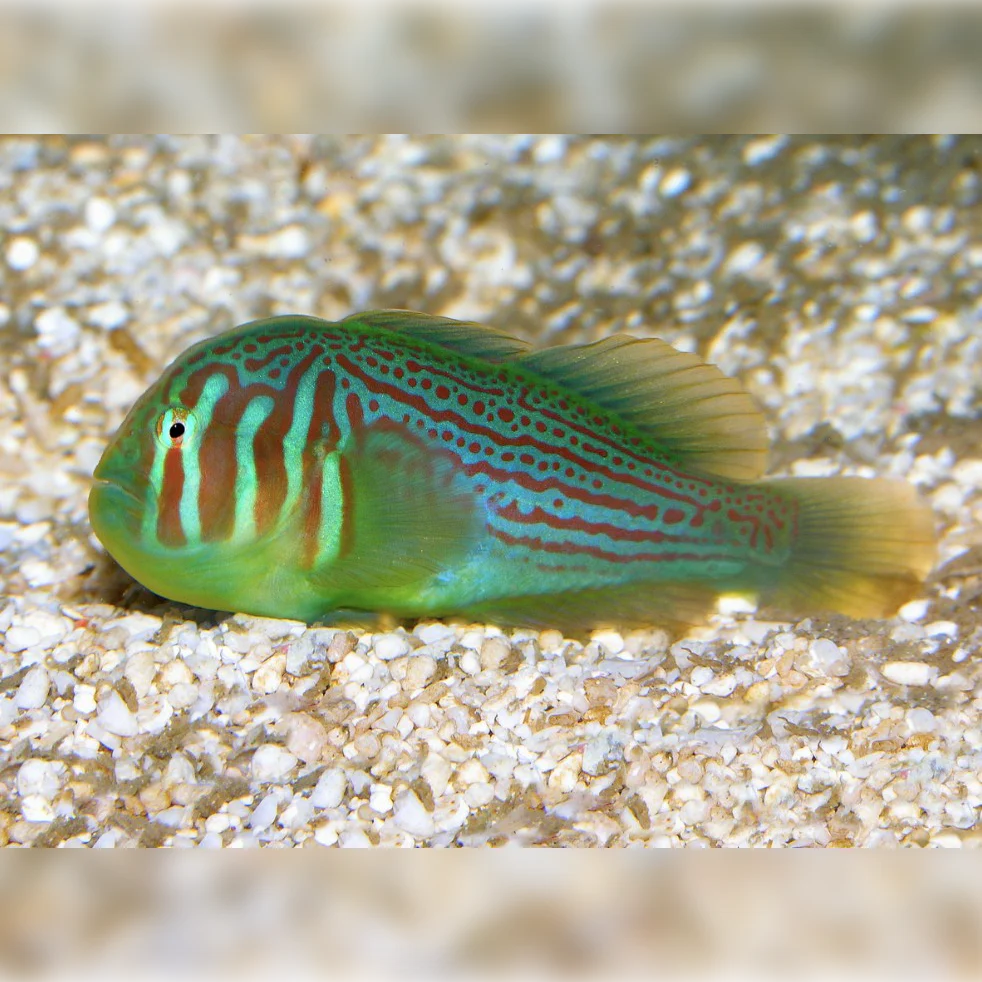
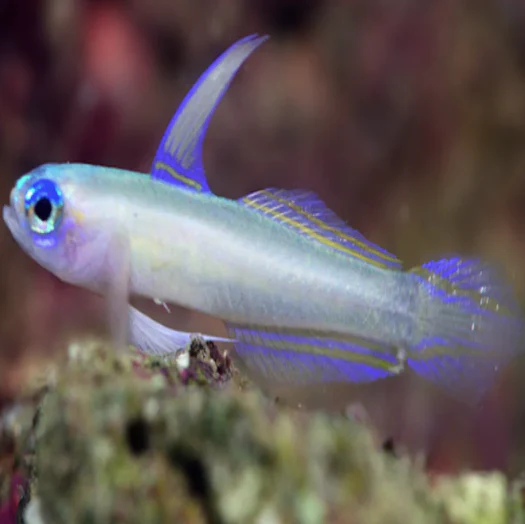
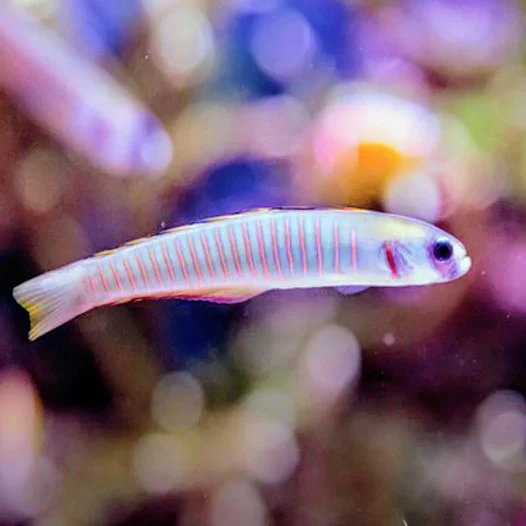
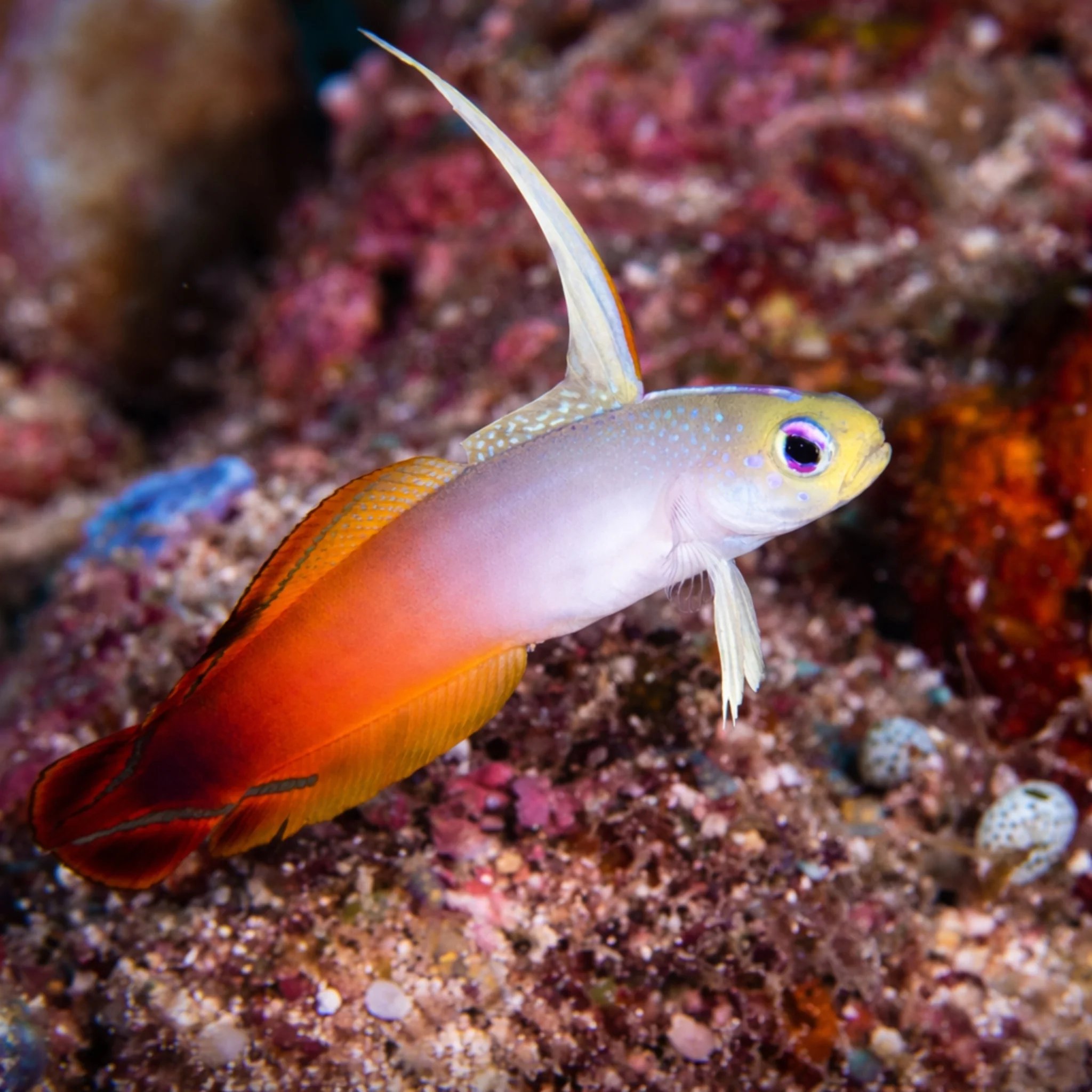
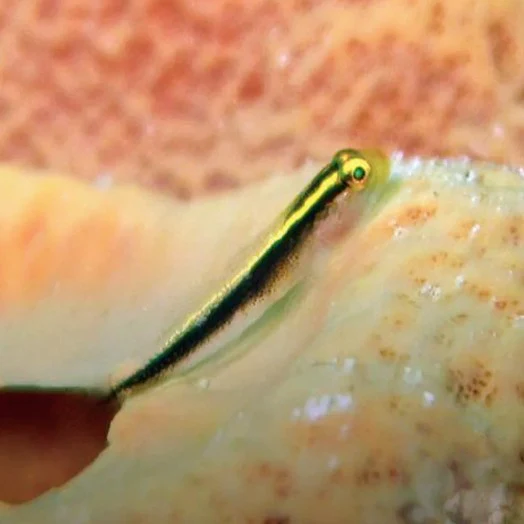
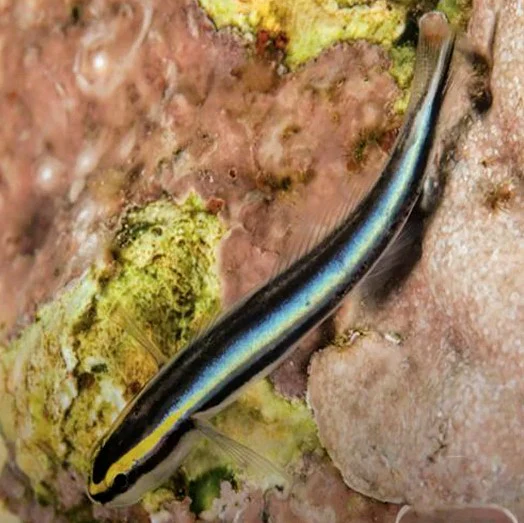
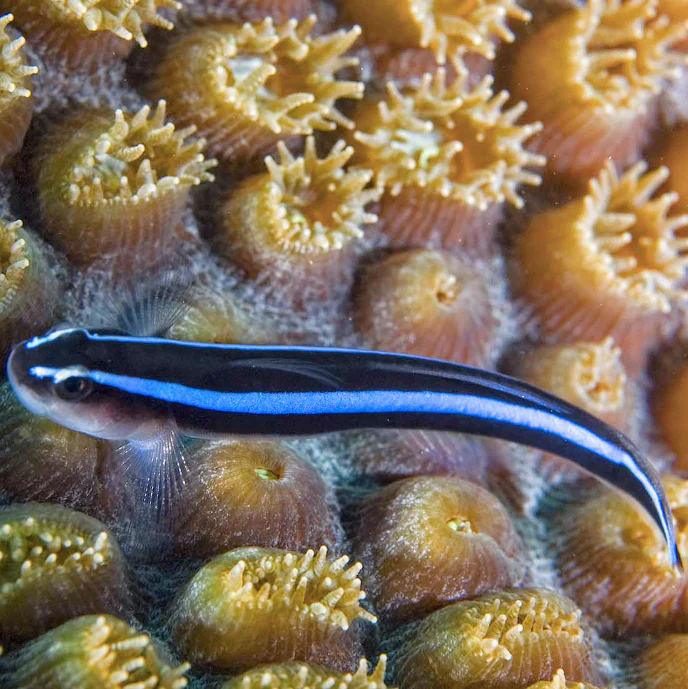
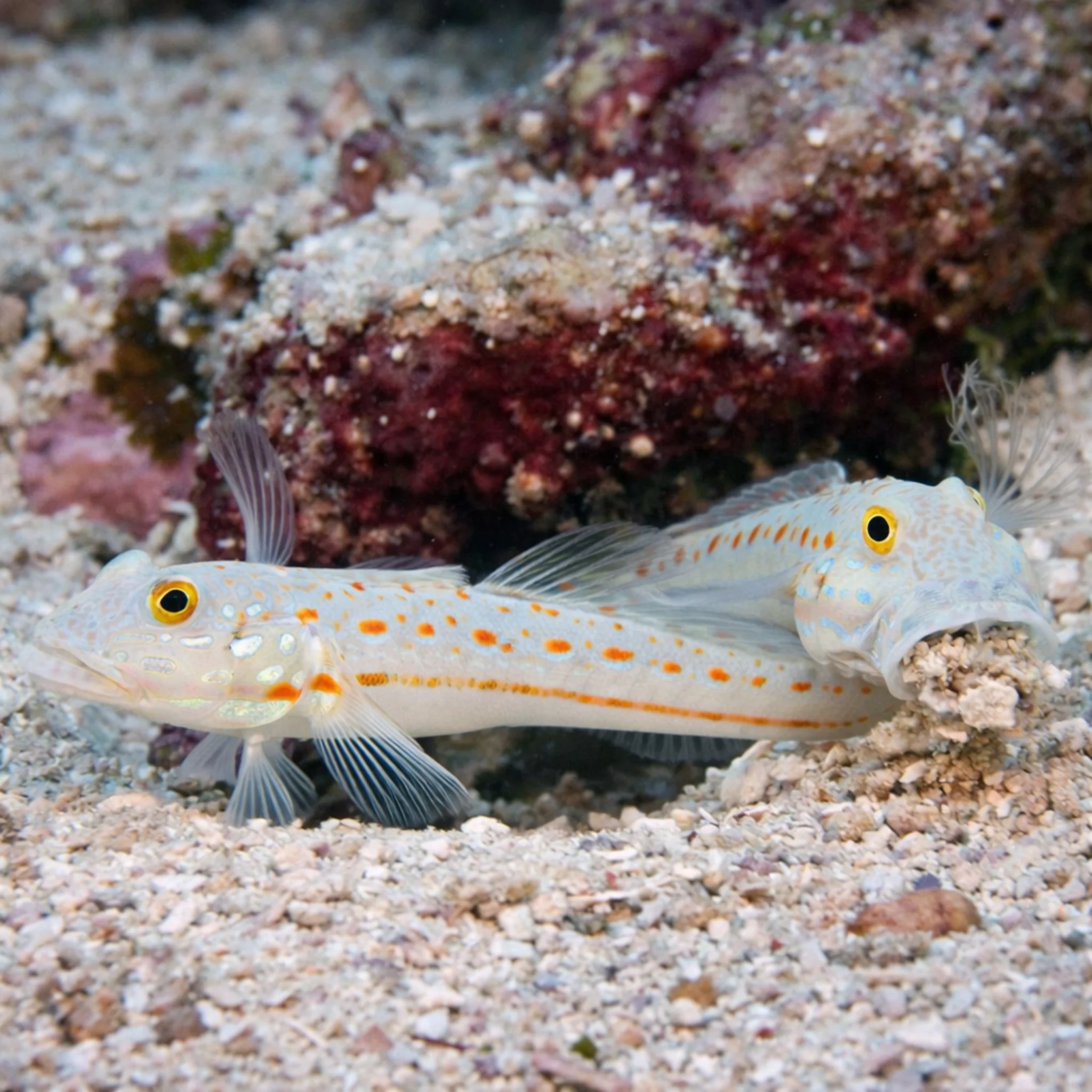
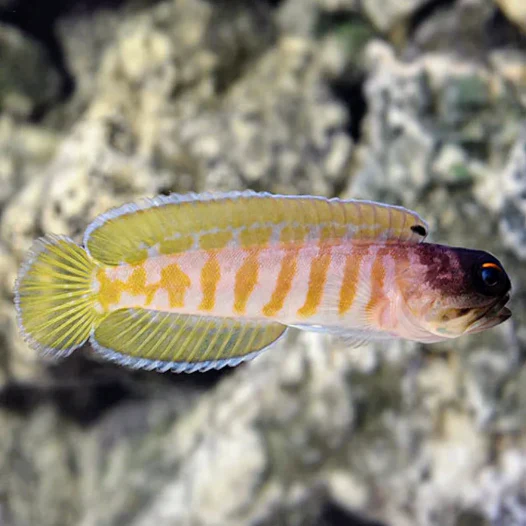
The Blue Cheek Goby is a graceful sand-sifting goby admired for its pale body, yellow-gold head and vivid electric-blue cheek lines. In the wild it is found across the Indo-Pacific on outer lagoons and seaward reefs, usually hovering close to a burrow and often seen in pairs. In the aquarium it adds constant movement and natural foraging behaviour, but it does best in a mature marine setup with a proper sand bed and regular feeding, making it better suited to aquarists with some marine experience.
Common Name:
Blue Cheek Goby. It is also commonly sold as the Yellowheaded Sleeper Goby or Sleeper Gold Head Goby.
Scientific Name (Latin):
Valenciennea strigata
Maximum Size:
Up to 18 cm in captivity.
Water Type:
Marine.
Origin / Natural Habitat:
Widespread across the Indo-Pacific, from East Africa to the Tuamotu Islands, north to the Ryukyu Islands and south to Sydney and Lord Howe Island. It is commonly found in clear outer lagoons and seaward reefs, over hard bottom, sand and rubble, typically in shallow reef areas.
Water Parameters:
Temperature: 23–27°C
pH Range: 8.1–8.4
Salinity: 1.020–1.025 SG
Temperament:
Peaceful, though it may be territorial towards its own kind unless kept as a genuine pair. It is usually best kept with calm, non-aggressive tankmates.
Diet:
Carnivorous / micro-predatory sand sifter. In nature it feeds by taking mouthfuls of sand and extracting small benthic invertebrates, tiny fishes and fish eggs. In captivity it should be offered a varied diet of mysis, enriched brineshrimp, other small frozen foods and suitable prepared meaty foods, and it should not be expected to live on sand-bed fauna alone.
Minimum Tank Size:
250 litres is a sensible minimum for long-term care, with a mature sand bed and good open bottom area. Some sources list smaller minimums, but a larger footprint is the safer recommendation for an adult specimen that constantly sifts substrate.
Behaviour & Activity:
An active bottom-dweller that spends much of the day sifting sand, hovering near its burrow and moving substrate. It is often seen in pairs in the wild and may excavate beneath rocks or coral bases, so secure aquascaping is important.
Reef Safe:
Reef Safe
It is generally considered suitable for reef aquaria and is widely sold as reef compatible, but caution is sensible because heavy sand-sifting can disturb corals placed low down, cloud fine substrate, and reduce beneficial sand-bed microfauna over time. Monitor around sand-sitting corals, and make sure the fish is feeding well rather than relying entirely on natural fauna.
Special Requirements or Care Notes:
A mature aquarium with a proper sandy substrate is important. A tight-fitting lid is strongly recommended, as this species may jump. It also benefits from a well-established system with regular feeding and plenty of open sand to work through naturally.
Suitable for:
Intermediate fishkeepers. Retail and care references generally describe it as a species that needs experience, preparation or moderate care, mainly because of its feeding needs and dependence on the right substrate setup.
Availability:
Occasional in trade.
Product Information
Product Information
Shipping & Returns
Shipping & Returns
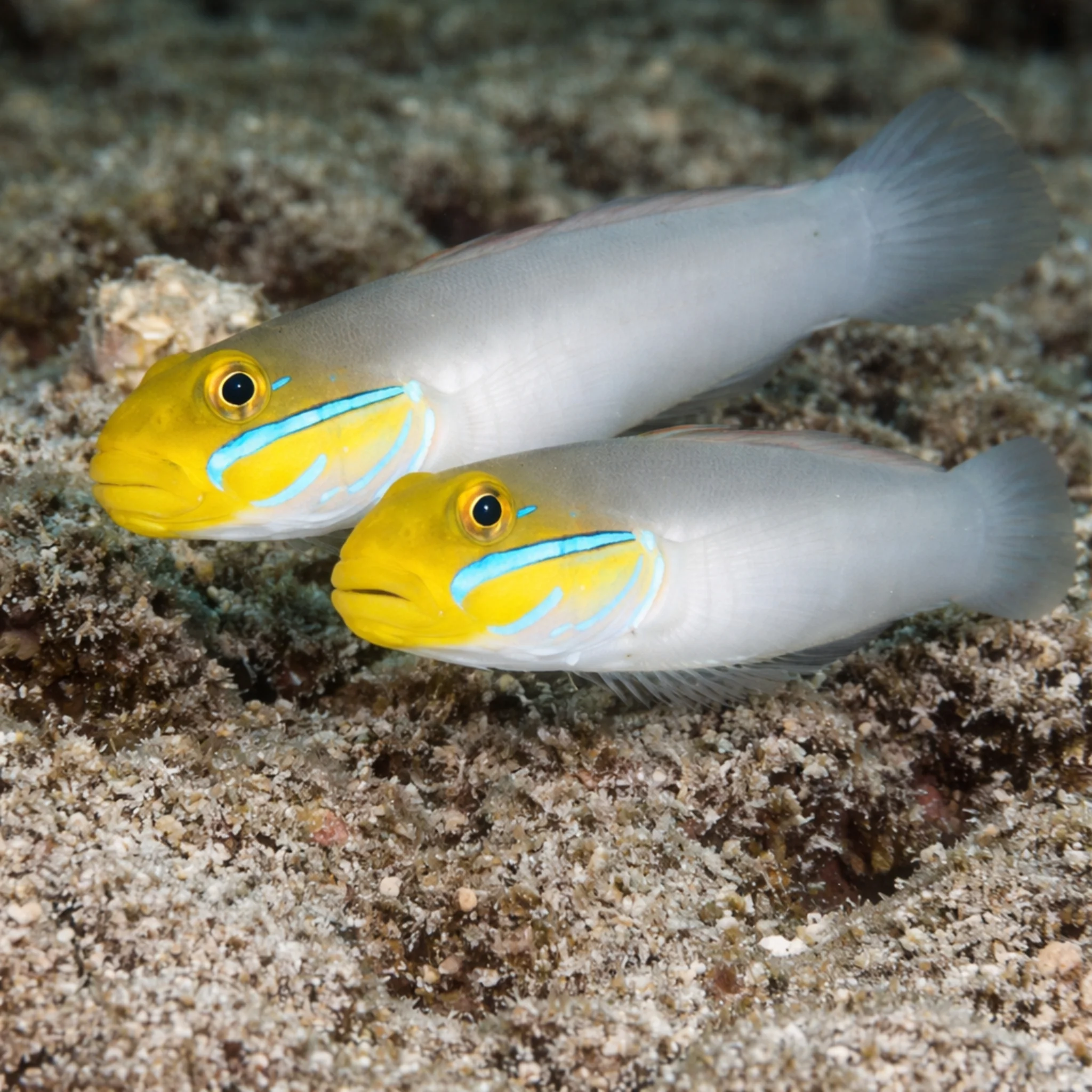
Blue Cheek Goby - Valenciennea strigata
Blue Cheek Goby - Valenciennea strigata
Blue Cheek Goby (Valenciennea strigata)
The Blue Cheek Goby is a graceful sand-sifting goby admired for its pale body, yellow-gold head and vivid electric-blue cheek lines. In the wild it is found across the Indo-Pacific on outer lagoons and seaward reefs, usually hovering close to a burrow and often seen in pairs. In the aquarium it adds constant movement and natural foraging behaviour, but it does best in a mature marine setup with a proper sand bed and regular feeding, making it better suited to aquarists with some marine experience.
Common Name:
Blue Cheek Goby. It is also commonly sold as the Yellowheaded Sleeper Goby or Sleeper Gold Head Goby.
Scientific Name (Latin):
Valenciennea strigata
Maximum Size:
Up to 18 cm in captivity.
Water Type:
Marine.
Origin / Natural Habitat:
Widespread across the Indo-Pacific, from East Africa to the Tuamotu Islands, north to the Ryukyu Islands and south to Sydney and Lord Howe Island. It is commonly found in clear outer lagoons and seaward reefs, over hard bottom, sand and rubble, typically in shallow reef areas.
Water Parameters:
Temperature: 23–27°C
pH Range: 8.1–8.4
Salinity: 1.020–1.025 SG
Temperament:
Peaceful, though it may be territorial towards its own kind unless kept as a genuine pair. It is usually best kept with calm, non-aggressive tankmates.
Diet:
Carnivorous / micro-predatory sand sifter. In nature it feeds by taking mouthfuls of sand and extracting small benthic invertebrates, tiny fishes and fish eggs. In captivity it should be offered a varied diet of mysis, enriched brineshrimp, other small frozen foods and suitable prepared meaty foods, and it should not be expected to live on sand-bed fauna alone.
Minimum Tank Size:
250 litres is a sensible minimum for long-term care, with a mature sand bed and good open bottom area. Some sources list smaller minimums, but a larger footprint is the safer recommendation for an adult specimen that constantly sifts substrate.
Behaviour & Activity:
An active bottom-dweller that spends much of the day sifting sand, hovering near its burrow and moving substrate. It is often seen in pairs in the wild and may excavate beneath rocks or coral bases, so secure aquascaping is important.
Reef Safe:
Reef Safe
It is generally considered suitable for reef aquaria and is widely sold as reef compatible, but caution is sensible because heavy sand-sifting can disturb corals placed low down, cloud fine substrate, and reduce beneficial sand-bed microfauna over time. Monitor around sand-sitting corals, and make sure the fish is feeding well rather than relying entirely on natural fauna.
Special Requirements or Care Notes:
A mature aquarium with a proper sandy substrate is important. A tight-fitting lid is strongly recommended, as this species may jump. It also benefits from a well-established system with regular feeding and plenty of open sand to work through naturally.
Suitable for:
Intermediate fishkeepers. Retail and care references generally describe it as a species that needs experience, preparation or moderate care, mainly because of its feeding needs and dependence on the right substrate setup.
Availability:
Occasional in trade.
Product Information
Product Information
Shipping & Returns
Shipping & Returns
Description
Blue Cheek Goby (Valenciennea strigata)
The Blue Cheek Goby is a graceful sand-sifting goby admired for its pale body, yellow-gold head and vivid electric-blue cheek lines. In the wild it is found across the Indo-Pacific on outer lagoons and seaward reefs, usually hovering close to a burrow and often seen in pairs. In the aquarium it adds constant movement and natural foraging behaviour, but it does best in a mature marine setup with a proper sand bed and regular feeding, making it better suited to aquarists with some marine experience.
Common Name:
Blue Cheek Goby. It is also commonly sold as the Yellowheaded Sleeper Goby or Sleeper Gold Head Goby.
Scientific Name (Latin):
Valenciennea strigata
Maximum Size:
Up to 18 cm in captivity.
Water Type:
Marine.
Origin / Natural Habitat:
Widespread across the Indo-Pacific, from East Africa to the Tuamotu Islands, north to the Ryukyu Islands and south to Sydney and Lord Howe Island. It is commonly found in clear outer lagoons and seaward reefs, over hard bottom, sand and rubble, typically in shallow reef areas.
Water Parameters:
Temperature: 23–27°C
pH Range: 8.1–8.4
Salinity: 1.020–1.025 SG
Temperament:
Peaceful, though it may be territorial towards its own kind unless kept as a genuine pair. It is usually best kept with calm, non-aggressive tankmates.
Diet:
Carnivorous / micro-predatory sand sifter. In nature it feeds by taking mouthfuls of sand and extracting small benthic invertebrates, tiny fishes and fish eggs. In captivity it should be offered a varied diet of mysis, enriched brineshrimp, other small frozen foods and suitable prepared meaty foods, and it should not be expected to live on sand-bed fauna alone.
Minimum Tank Size:
250 litres is a sensible minimum for long-term care, with a mature sand bed and good open bottom area. Some sources list smaller minimums, but a larger footprint is the safer recommendation for an adult specimen that constantly sifts substrate.
Behaviour & Activity:
An active bottom-dweller that spends much of the day sifting sand, hovering near its burrow and moving substrate. It is often seen in pairs in the wild and may excavate beneath rocks or coral bases, so secure aquascaping is important.
Reef Safe:
Reef Safe
It is generally considered suitable for reef aquaria and is widely sold as reef compatible, but caution is sensible because heavy sand-sifting can disturb corals placed low down, cloud fine substrate, and reduce beneficial sand-bed microfauna over time. Monitor around sand-sitting corals, and make sure the fish is feeding well rather than relying entirely on natural fauna.
Special Requirements or Care Notes:
A mature aquarium with a proper sandy substrate is important. A tight-fitting lid is strongly recommended, as this species may jump. It also benefits from a well-established system with regular feeding and plenty of open sand to work through naturally.
Suitable for:
Intermediate fishkeepers. Retail and care references generally describe it as a species that needs experience, preparation or moderate care, mainly because of its feeding needs and dependence on the right substrate setup.
Availability:
Occasional in trade.