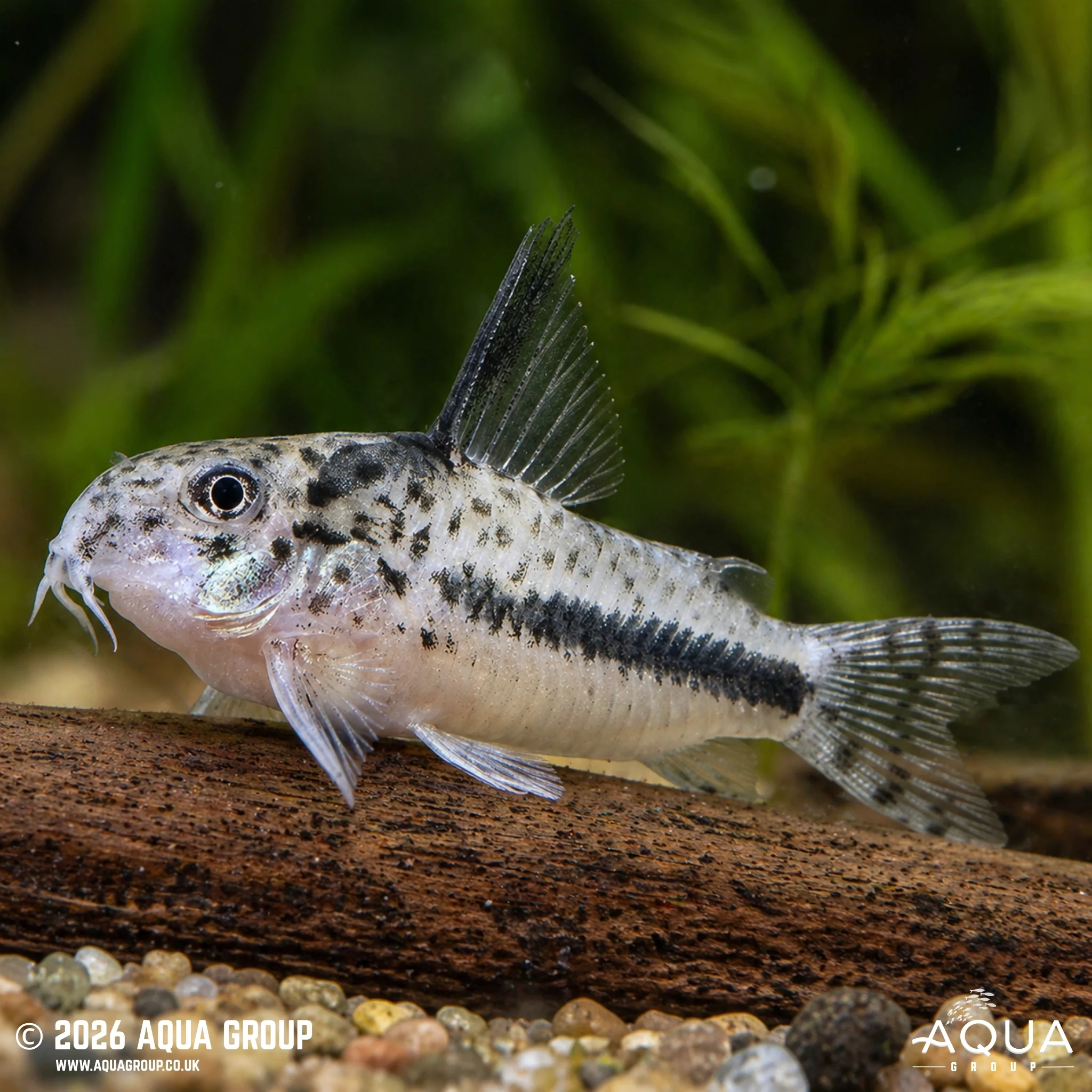
Albino Panda Cory - Hoplisoma panda
Albino Panda Cory (Hoplisoma panda)
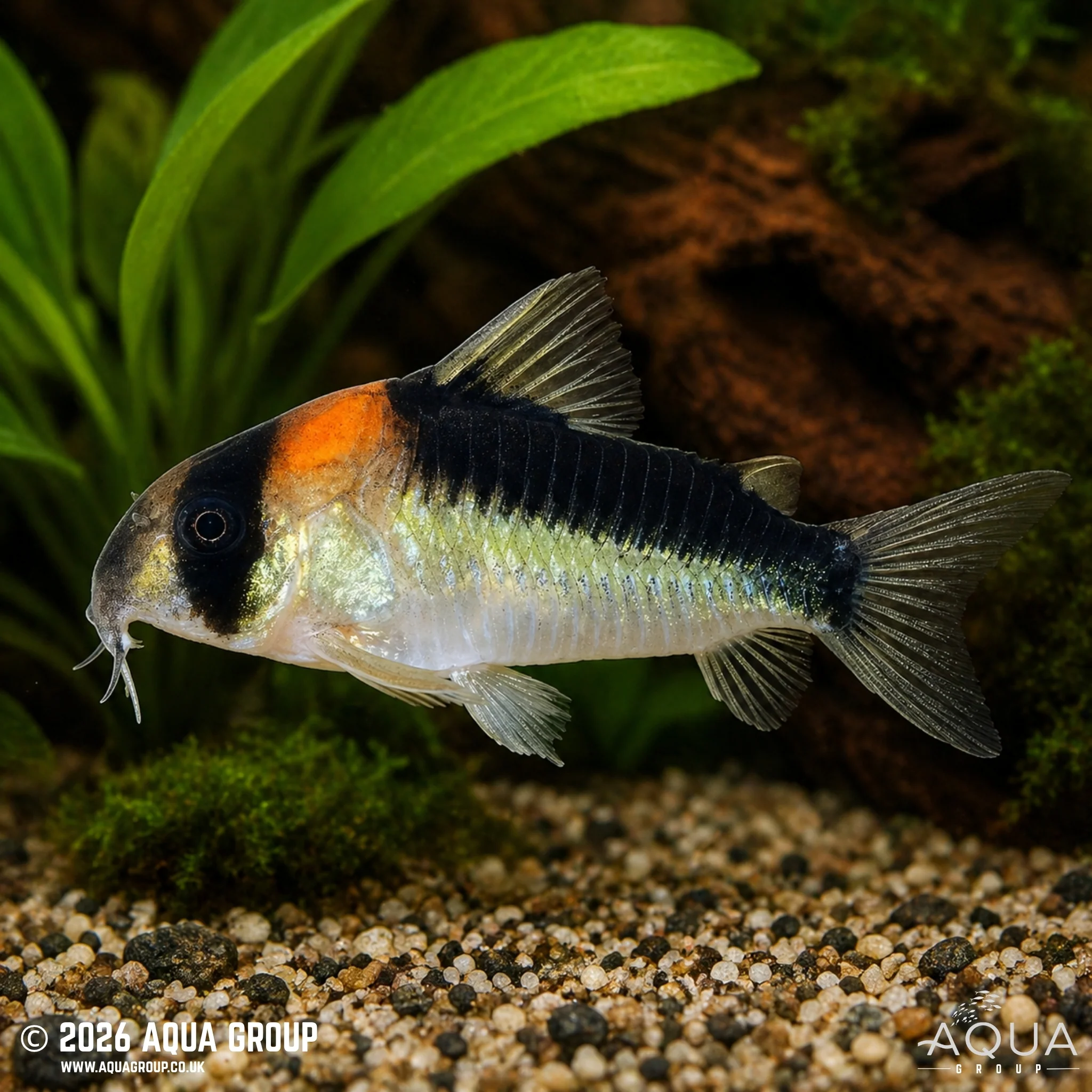
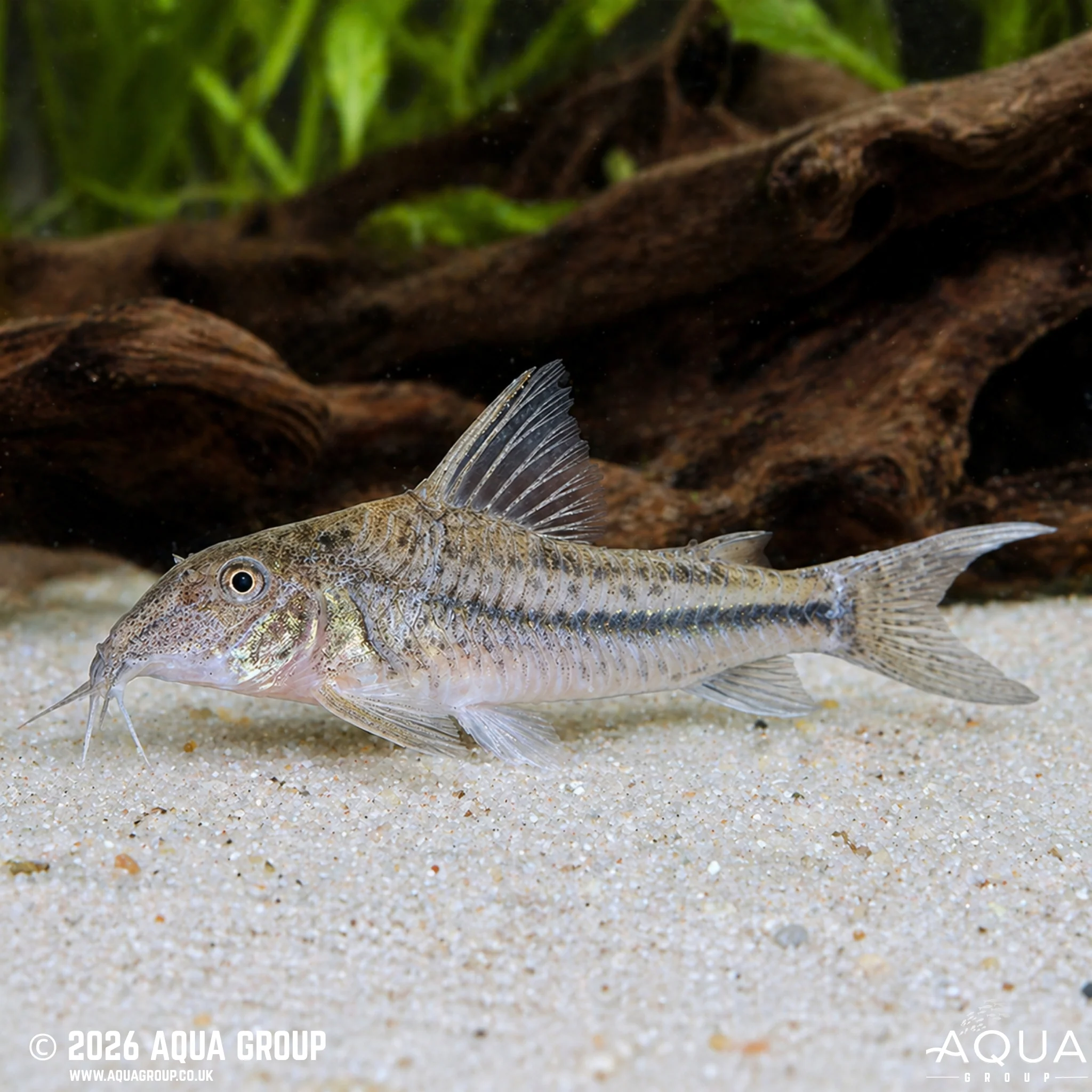
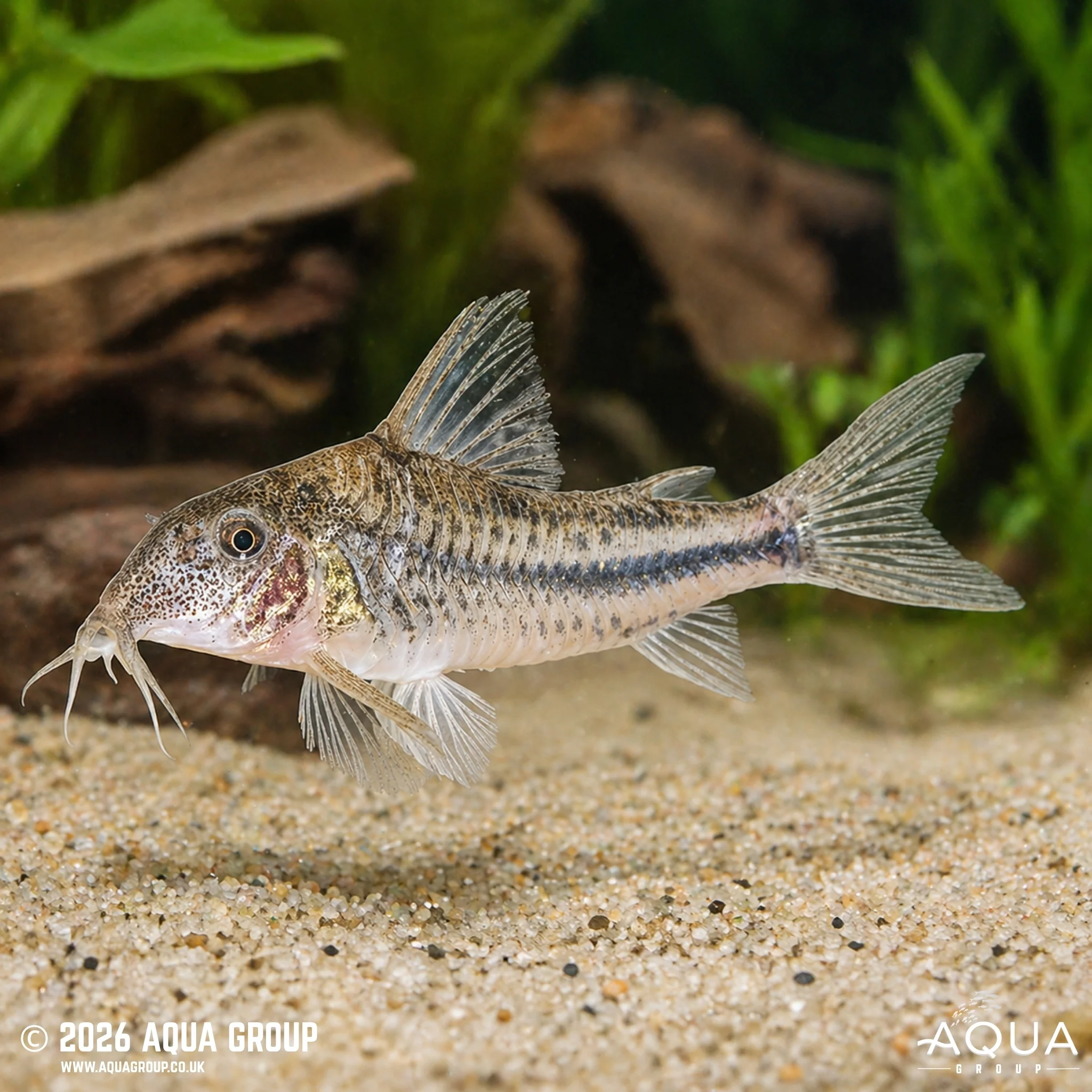
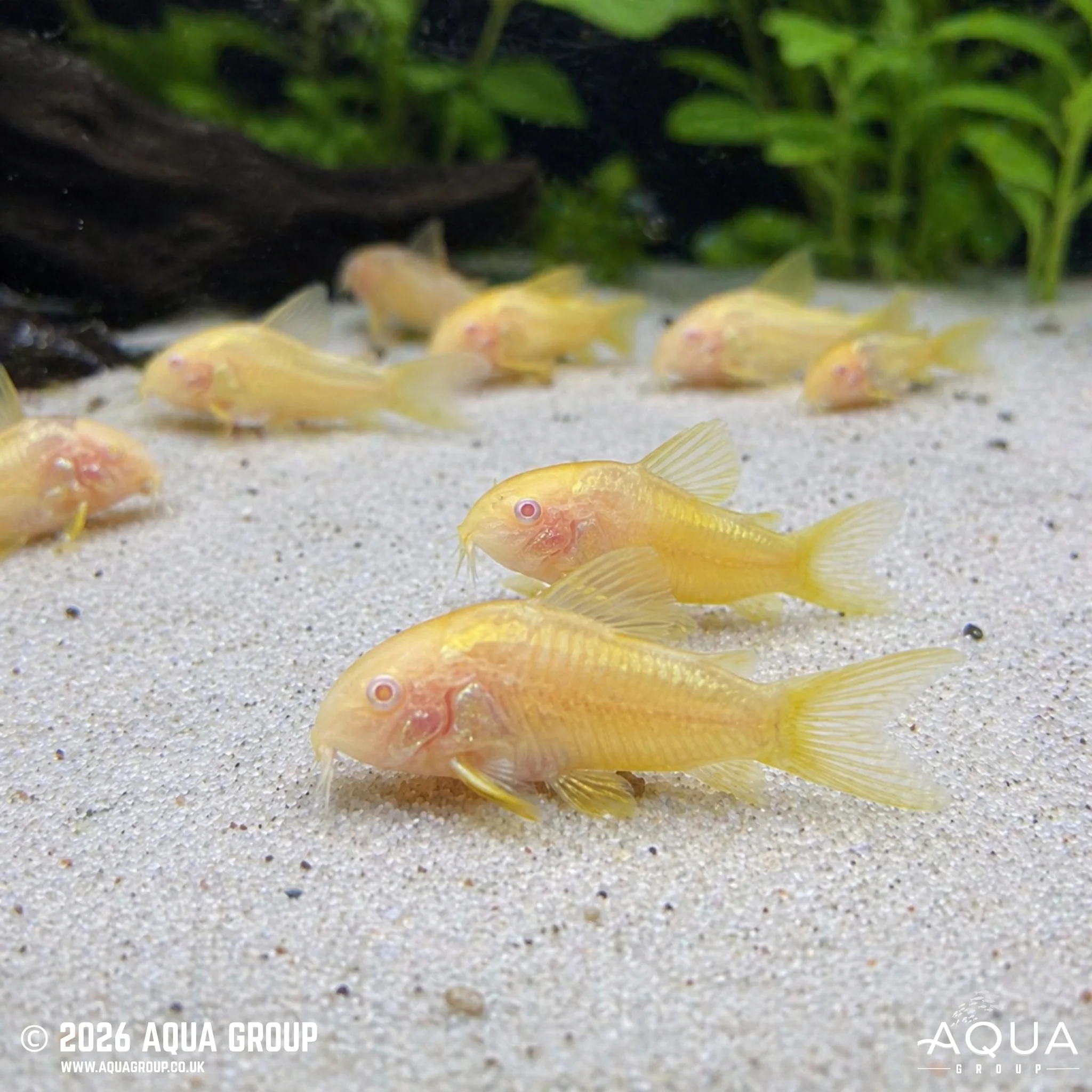
The Albino Panda Cory is a pale, selectively bred colour form of the Panda Cory, valued for its soft pinkish-white body, gentle nature and constant bottom-dwelling activity. It is a small South American armoured catfish that does best in groups and brings both movement and personality to the lower levels of the aquarium. The “var” label simply indicates this is a variety / morph of the standard species rather than a separate species of its own. Modern references now place Panda Corys in Hoplisoma, although many aquarists will still recognise the older name Corydoras panda.
Common Name:
Albino Panda Cory. This is a captive-bred albino variety of the Panda Cory.
Scientific Name (Latin):
Hoplisoma panda
Older name: Corydoras panda.
Maximum Size:
Up to 4–5 cm in length. FishBase lists a maximum of 3.8 cm standard length, while aquarium care references commonly round this to about 4–5 cm overall.
Water Type:
Freshwater.
Origin / Natural Habitat:
This variety is captive-bred, but the species naturally comes from the Upper Amazon River basin in Peru, especially the Río Pachitea / Ucayali system. Panda Corys are demersal catfish associated with soft-bottomed freshwater habitats.
Water Parameters:
Temperature: 20–25°C
pH Range: 6.0–8.0
Hardness: 2–25 dH
Panda Corys are often kept slightly cooler than many tropical community fish, and captive-raised specimens are usually adaptable provided water quality is consistently high.
Temperament:
Generally peaceful and sociable. This is a group-living catfish that feels more secure in the company of its own kind and is well suited to calm community aquaria.
Diet:
Omnivorous. Offer a varied diet of quality sinking foods, alongside frozen or live foods such as bloodworm, daphnia and similar small protein-rich options. It should not be expected to live on leftovers alone.
Minimum Tank Size:
A practical recommendation is 60 litres or more for a proper group, with a larger footprint always preferred over a tall, narrow tank.
Behaviour & Activity:
This is an active bottom-dweller that spends much of the day foraging through the substrate and exploring the tank floor. Like other corys, it is best kept in a group of at least 6, as small numbers tend to leave them less settled and less natural in behaviour.
Aquarium Category:
Community Fish
Best kept with peaceful, non-aggressive community fish that will not bully it or outcompete it at feeding time. Good companions include small tetras, rasboras, peaceful livebearers, dwarf gouramis and other calm bottom dwellers. Watch out for large predatory fish, aggressive cichlids and very boisterous species, as Panda Corys are small, gentle catfish that rely on group security rather than aggression. Keep them in a proper group of their own kind for the best behaviour and confidence. This compatibility guidance is based on published care references describing Panda Corys as peaceful, schooling / social bottom-dwellers suited to community aquaria.
Special Requirements or Care Notes:
A soft sand or very smooth fine substrate is strongly recommended because corys use sensitive barbels to search for food. They should only be added to mature, well-maintained aquariums, as pristine water quality is important for long-term health. Plenty of cover and shaded resting spots will help them feel secure.
Suitable for:
Beginner to Intermediate fishkeepers. Panda Corys are widely regarded as excellent community catfish, but they still do best when their need for clean water, soft substrate and group living is properly understood.
Availability:
Regular in trade. Panda Corys are a common aquarium species, and albino ornamental forms are a natural extension of that captive-bred availability. This is an inference based on the species’ widespread aquarium presence and regular care coverage.
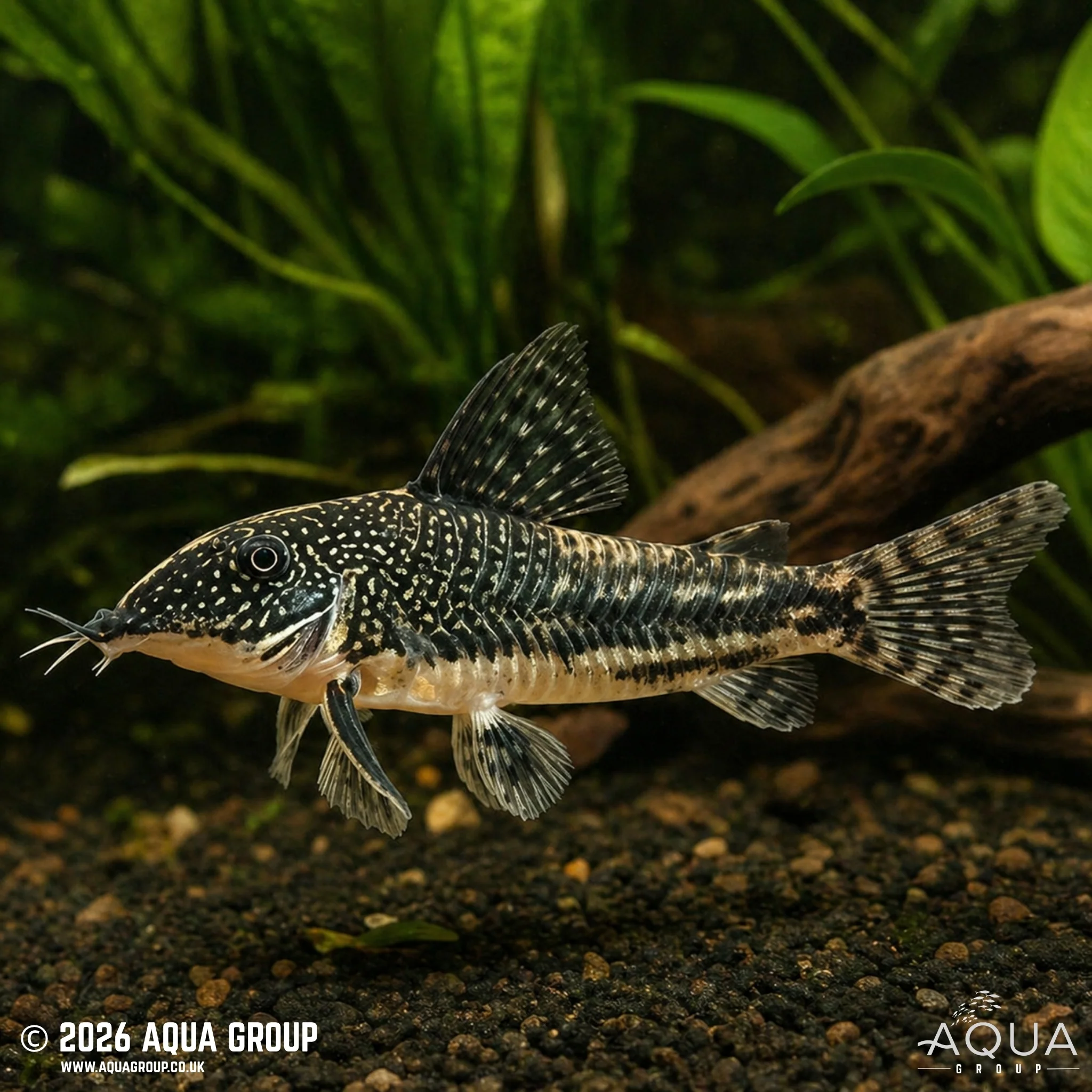
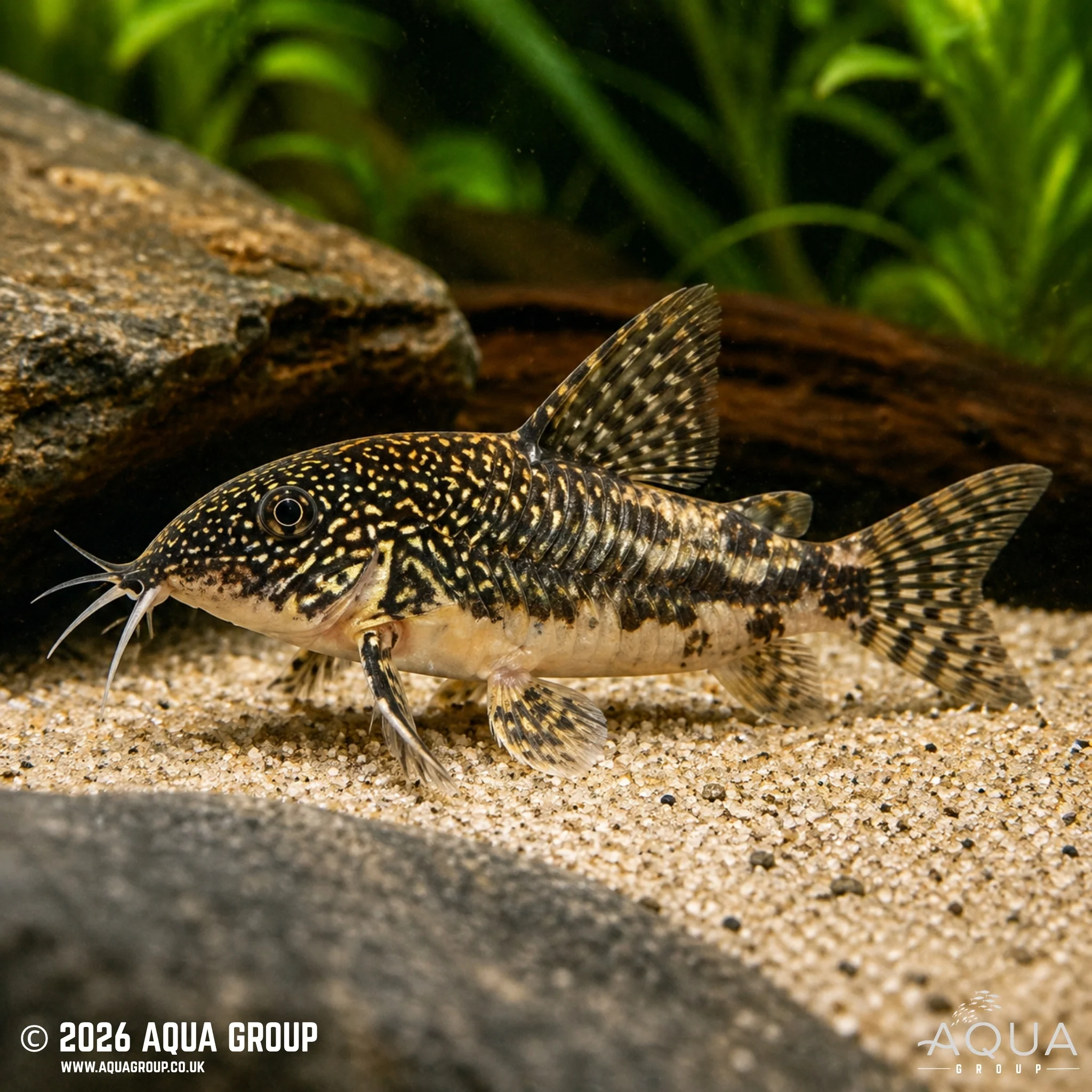
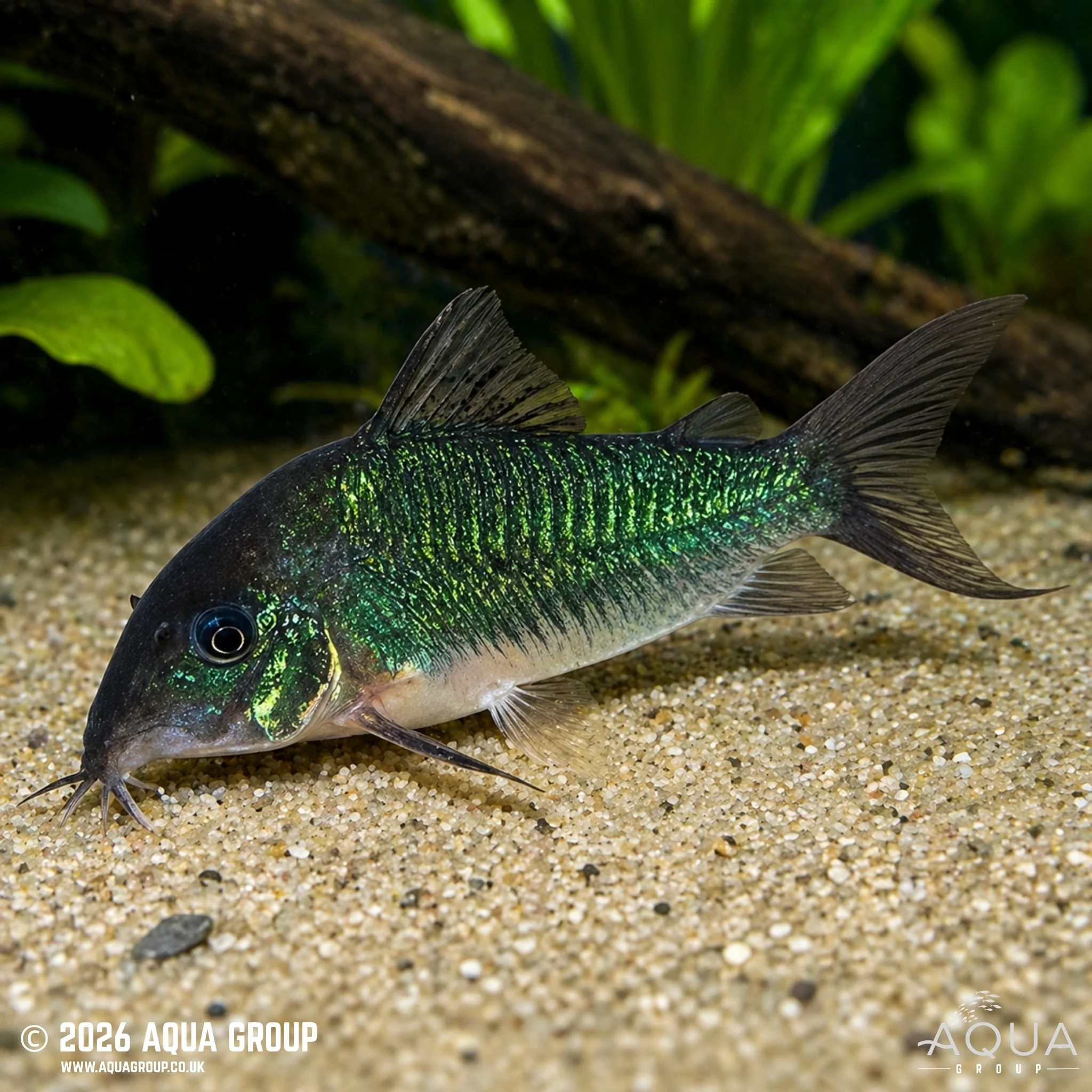
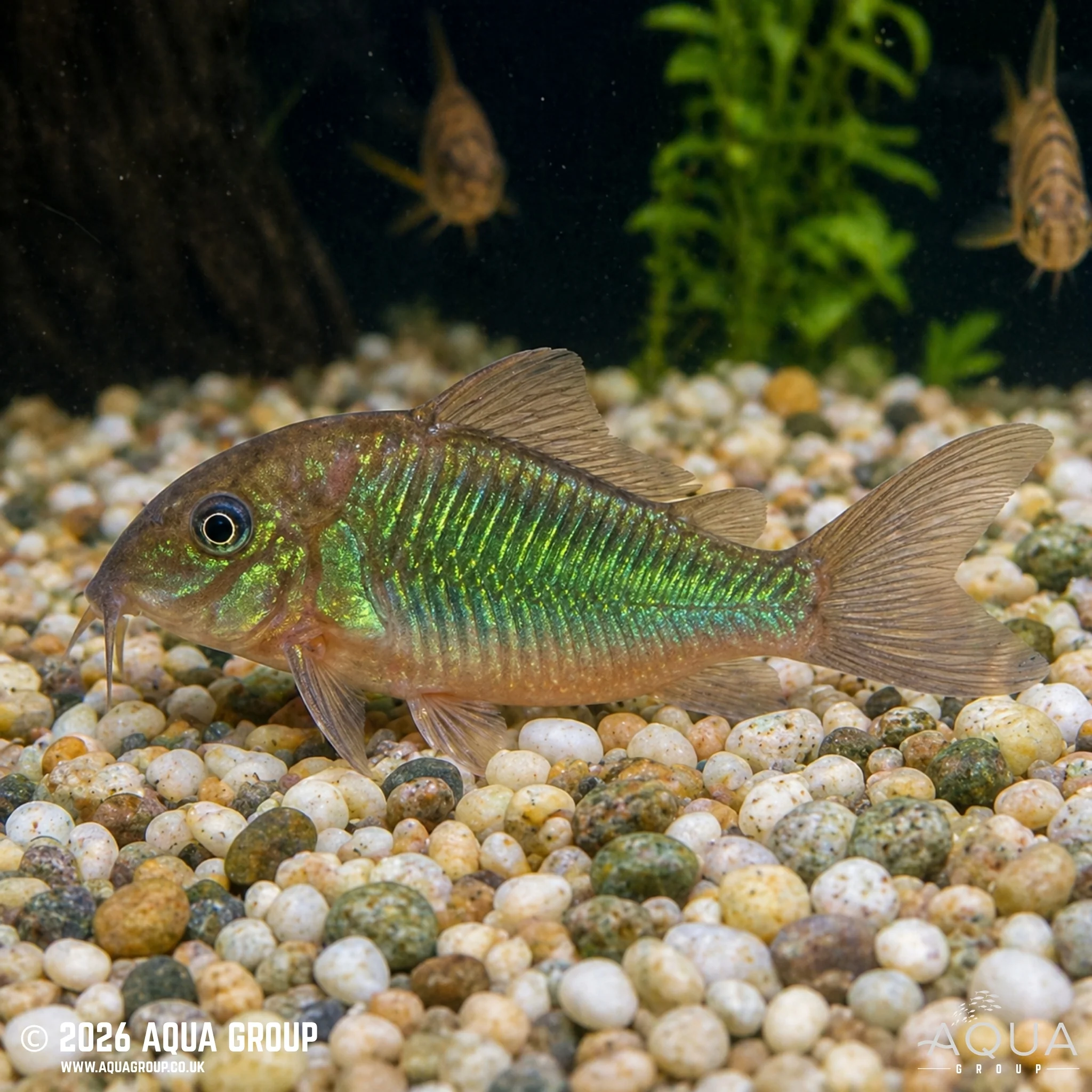
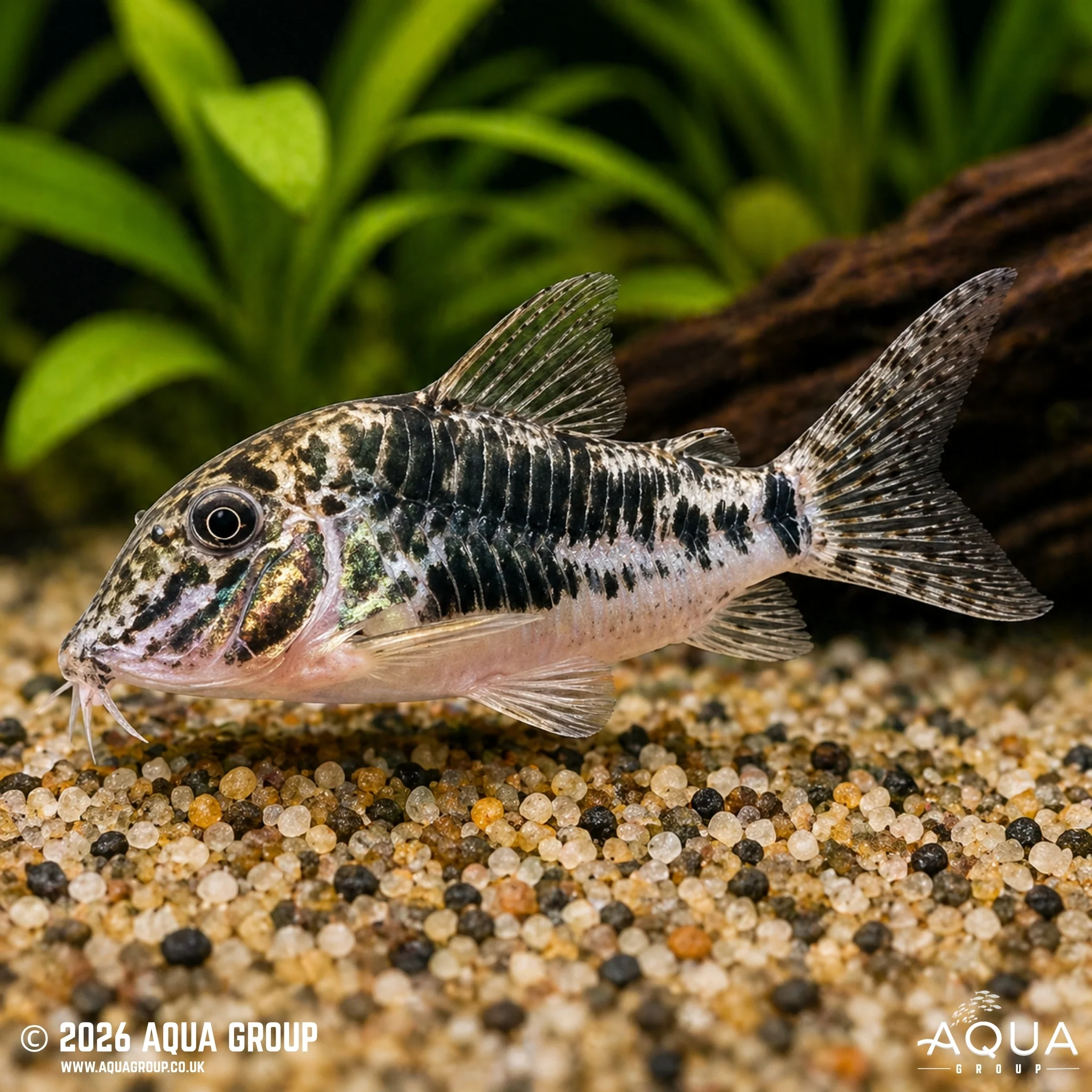
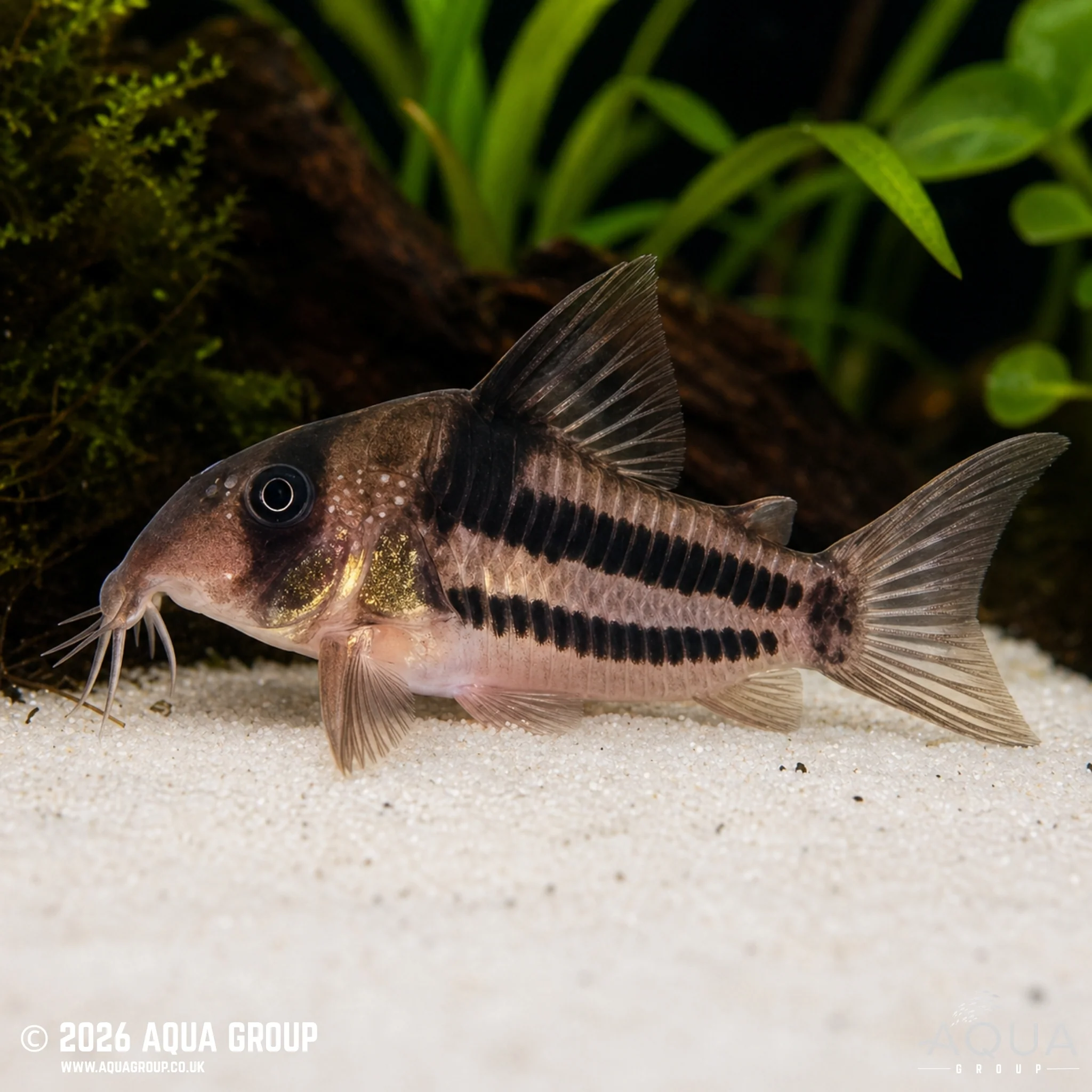
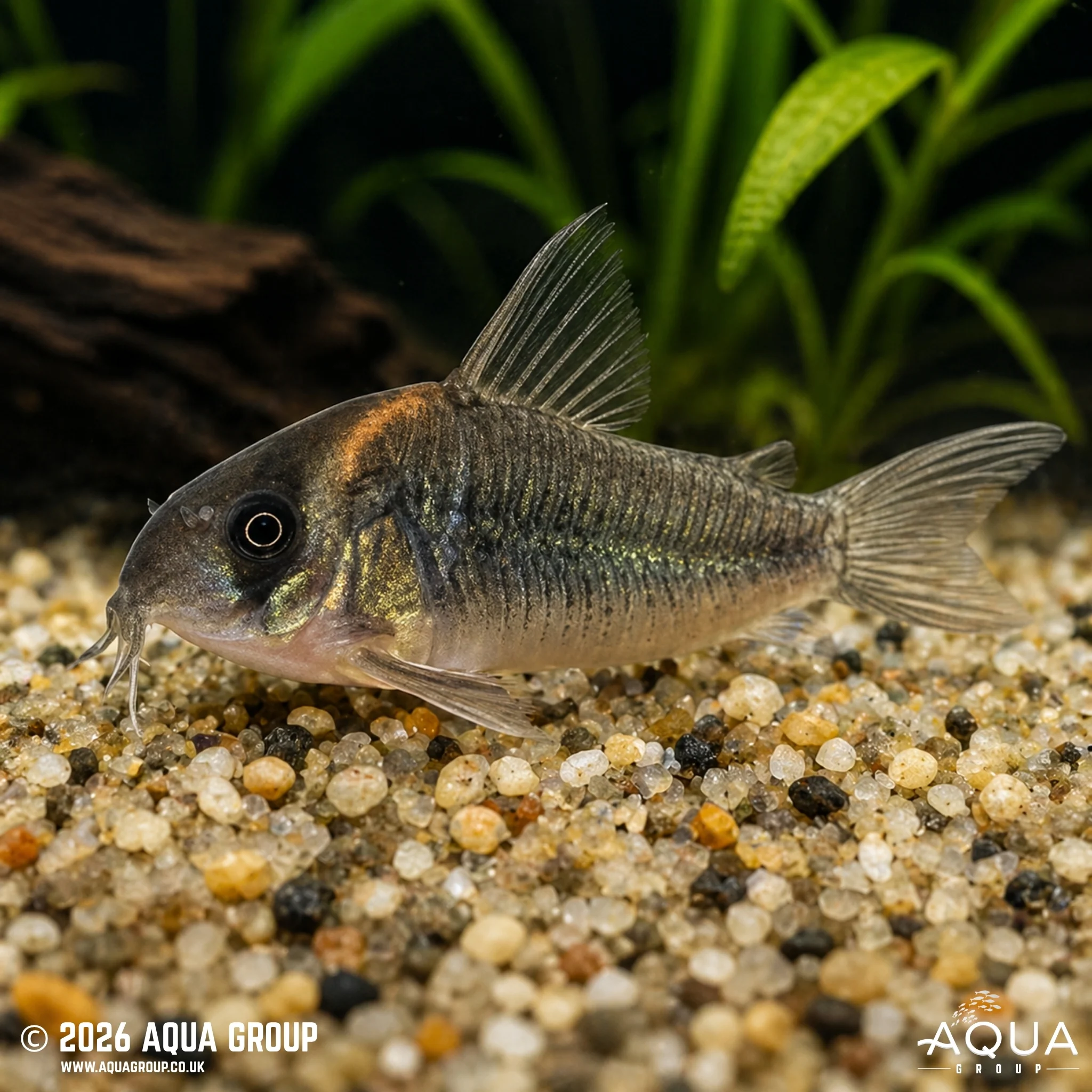
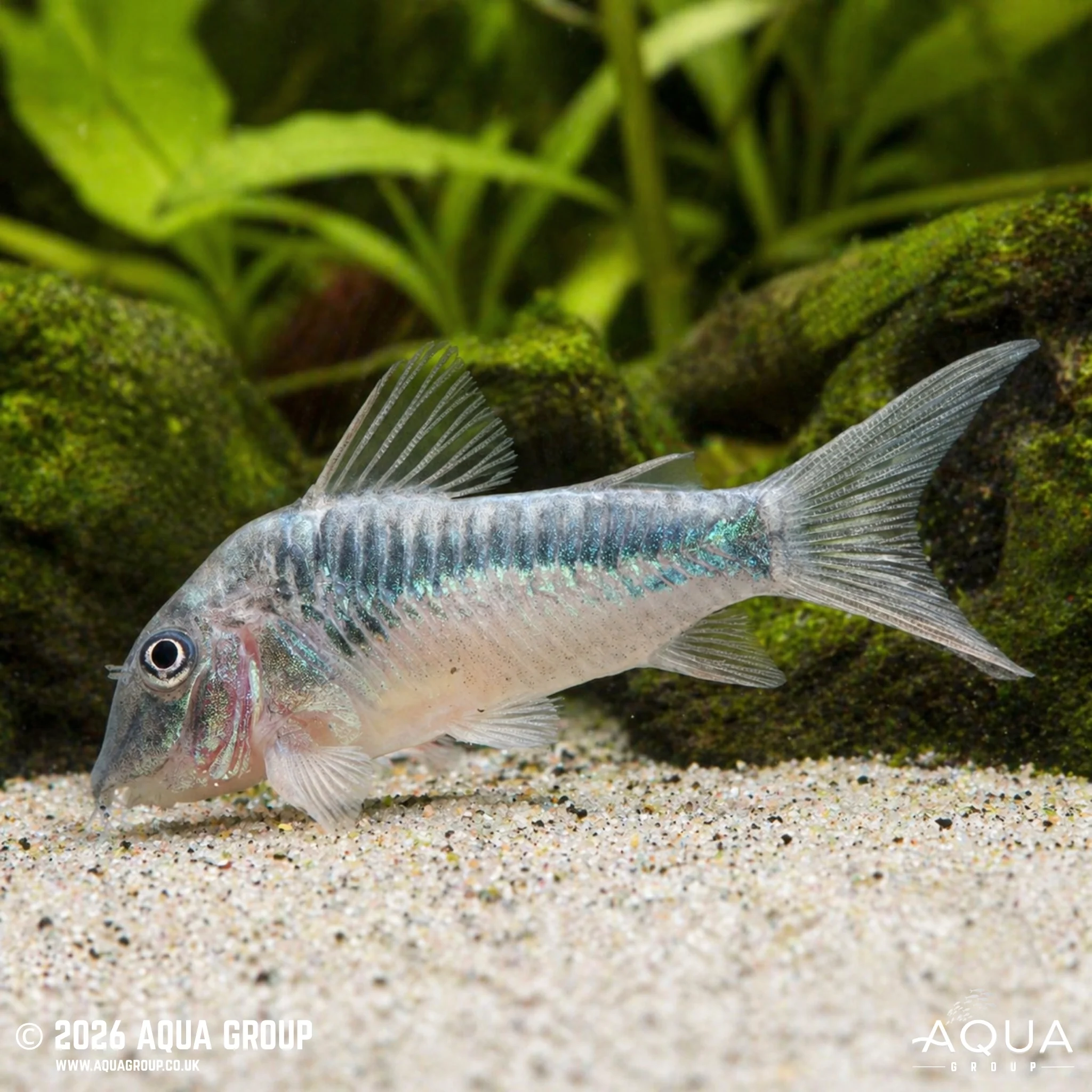
All images are a visual representation of the fish you will receive, made to be as accurate as possible. Please note that Mother Nature is a wonderful thing, and variation in patterns and colours will occur — that is part of the unique beauty of these animals.
Product Information
Product Information
Shipping & Returns
Shipping & Returns
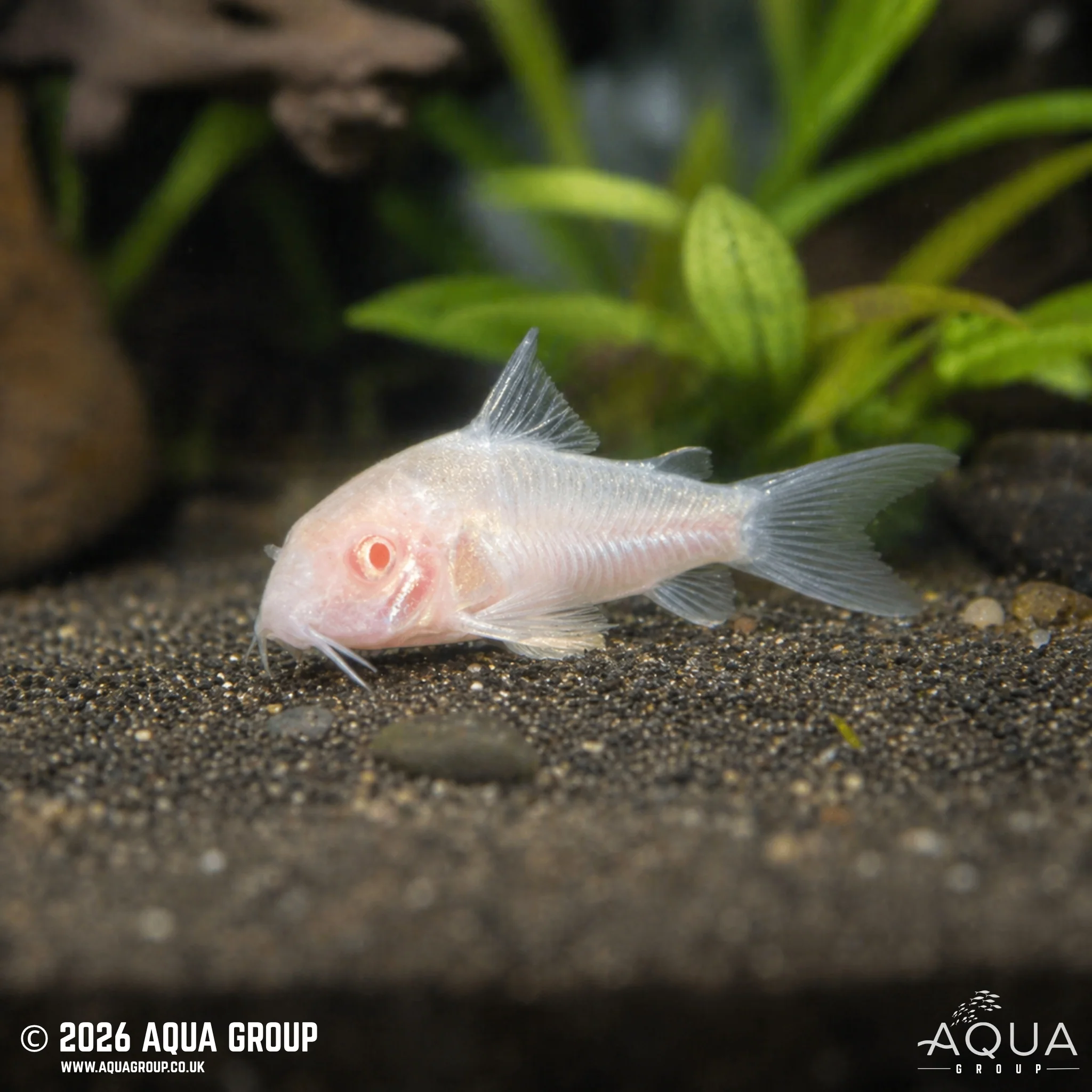
Albino Panda Cory - Hoplisoma panda
Albino Panda Cory - Hoplisoma panda
Albino Panda Cory (Hoplisoma panda)
The Albino Panda Cory is a pale, selectively bred colour form of the Panda Cory, valued for its soft pinkish-white body, gentle nature and constant bottom-dwelling activity. It is a small South American armoured catfish that does best in groups and brings both movement and personality to the lower levels of the aquarium. The “var” label simply indicates this is a variety / morph of the standard species rather than a separate species of its own. Modern references now place Panda Corys in Hoplisoma, although many aquarists will still recognise the older name Corydoras panda.
Common Name:
Albino Panda Cory. This is a captive-bred albino variety of the Panda Cory.
Scientific Name (Latin):
Hoplisoma panda
Older name: Corydoras panda.
Maximum Size:
Up to 4–5 cm in length. FishBase lists a maximum of 3.8 cm standard length, while aquarium care references commonly round this to about 4–5 cm overall.
Water Type:
Freshwater.
Origin / Natural Habitat:
This variety is captive-bred, but the species naturally comes from the Upper Amazon River basin in Peru, especially the Río Pachitea / Ucayali system. Panda Corys are demersal catfish associated with soft-bottomed freshwater habitats.
Water Parameters:
Temperature: 20–25°C
pH Range: 6.0–8.0
Hardness: 2–25 dH
Panda Corys are often kept slightly cooler than many tropical community fish, and captive-raised specimens are usually adaptable provided water quality is consistently high.
Temperament:
Generally peaceful and sociable. This is a group-living catfish that feels more secure in the company of its own kind and is well suited to calm community aquaria.
Diet:
Omnivorous. Offer a varied diet of quality sinking foods, alongside frozen or live foods such as bloodworm, daphnia and similar small protein-rich options. It should not be expected to live on leftovers alone.
Minimum Tank Size:
A practical recommendation is 60 litres or more for a proper group, with a larger footprint always preferred over a tall, narrow tank.
Behaviour & Activity:
This is an active bottom-dweller that spends much of the day foraging through the substrate and exploring the tank floor. Like other corys, it is best kept in a group of at least 6, as small numbers tend to leave them less settled and less natural in behaviour.
Aquarium Category:
Community Fish
Best kept with peaceful, non-aggressive community fish that will not bully it or outcompete it at feeding time. Good companions include small tetras, rasboras, peaceful livebearers, dwarf gouramis and other calm bottom dwellers. Watch out for large predatory fish, aggressive cichlids and very boisterous species, as Panda Corys are small, gentle catfish that rely on group security rather than aggression. Keep them in a proper group of their own kind for the best behaviour and confidence. This compatibility guidance is based on published care references describing Panda Corys as peaceful, schooling / social bottom-dwellers suited to community aquaria.
Special Requirements or Care Notes:
A soft sand or very smooth fine substrate is strongly recommended because corys use sensitive barbels to search for food. They should only be added to mature, well-maintained aquariums, as pristine water quality is important for long-term health. Plenty of cover and shaded resting spots will help them feel secure.
Suitable for:
Beginner to Intermediate fishkeepers. Panda Corys are widely regarded as excellent community catfish, but they still do best when their need for clean water, soft substrate and group living is properly understood.
Availability:
Regular in trade. Panda Corys are a common aquarium species, and albino ornamental forms are a natural extension of that captive-bred availability. This is an inference based on the species’ widespread aquarium presence and regular care coverage.
All images are a visual representation of the fish you will receive, made to be as accurate as possible. Please note that Mother Nature is a wonderful thing, and variation in patterns and colours will occur — that is part of the unique beauty of these animals.
Original: $12.13
-65%$12.13
$4.25Product Information
Product Information
Shipping & Returns
Shipping & Returns
Description
Albino Panda Cory (Hoplisoma panda)
The Albino Panda Cory is a pale, selectively bred colour form of the Panda Cory, valued for its soft pinkish-white body, gentle nature and constant bottom-dwelling activity. It is a small South American armoured catfish that does best in groups and brings both movement and personality to the lower levels of the aquarium. The “var” label simply indicates this is a variety / morph of the standard species rather than a separate species of its own. Modern references now place Panda Corys in Hoplisoma, although many aquarists will still recognise the older name Corydoras panda.
Common Name:
Albino Panda Cory. This is a captive-bred albino variety of the Panda Cory.
Scientific Name (Latin):
Hoplisoma panda
Older name: Corydoras panda.
Maximum Size:
Up to 4–5 cm in length. FishBase lists a maximum of 3.8 cm standard length, while aquarium care references commonly round this to about 4–5 cm overall.
Water Type:
Freshwater.
Origin / Natural Habitat:
This variety is captive-bred, but the species naturally comes from the Upper Amazon River basin in Peru, especially the Río Pachitea / Ucayali system. Panda Corys are demersal catfish associated with soft-bottomed freshwater habitats.
Water Parameters:
Temperature: 20–25°C
pH Range: 6.0–8.0
Hardness: 2–25 dH
Panda Corys are often kept slightly cooler than many tropical community fish, and captive-raised specimens are usually adaptable provided water quality is consistently high.
Temperament:
Generally peaceful and sociable. This is a group-living catfish that feels more secure in the company of its own kind and is well suited to calm community aquaria.
Diet:
Omnivorous. Offer a varied diet of quality sinking foods, alongside frozen or live foods such as bloodworm, daphnia and similar small protein-rich options. It should not be expected to live on leftovers alone.
Minimum Tank Size:
A practical recommendation is 60 litres or more for a proper group, with a larger footprint always preferred over a tall, narrow tank.
Behaviour & Activity:
This is an active bottom-dweller that spends much of the day foraging through the substrate and exploring the tank floor. Like other corys, it is best kept in a group of at least 6, as small numbers tend to leave them less settled and less natural in behaviour.
Aquarium Category:
Community Fish
Best kept with peaceful, non-aggressive community fish that will not bully it or outcompete it at feeding time. Good companions include small tetras, rasboras, peaceful livebearers, dwarf gouramis and other calm bottom dwellers. Watch out for large predatory fish, aggressive cichlids and very boisterous species, as Panda Corys are small, gentle catfish that rely on group security rather than aggression. Keep them in a proper group of their own kind for the best behaviour and confidence. This compatibility guidance is based on published care references describing Panda Corys as peaceful, schooling / social bottom-dwellers suited to community aquaria.
Special Requirements or Care Notes:
A soft sand or very smooth fine substrate is strongly recommended because corys use sensitive barbels to search for food. They should only be added to mature, well-maintained aquariums, as pristine water quality is important for long-term health. Plenty of cover and shaded resting spots will help them feel secure.
Suitable for:
Beginner to Intermediate fishkeepers. Panda Corys are widely regarded as excellent community catfish, but they still do best when their need for clean water, soft substrate and group living is properly understood.
Availability:
Regular in trade. Panda Corys are a common aquarium species, and albino ornamental forms are a natural extension of that captive-bred availability. This is an inference based on the species’ widespread aquarium presence and regular care coverage.
All images are a visual representation of the fish you will receive, made to be as accurate as possible. Please note that Mother Nature is a wonderful thing, and variation in patterns and colours will occur — that is part of the unique beauty of these animals.